
Free Tool · Indian Diet Calibrated
Calorie Calculator India
Stop guessing. This calculator tells you exactly how many calories to eat per day: for fat loss, maintenance, or muscle gain, calibrated using the Mifflin-St Jeor formula validated on Indian populations.
Also shows your protein, carbs, and fat split in Indian portions: how many katoris of dal, eggs, paneer pieces actually hit your target.
Your Details
Your results will appear here
Fill in the form and tap Calculate to see your daily calorie target, protein, carbs, and fat split: calibrated for Indian bodies and meals.
Turn the numbers into meals
Knowing the calories is the easy part. Eating to them through a normal Indian week is where most people slip.
A YourTrainer coach plans your week around the dal, roti, rice and sabzi you already eat, reviews your plate photos and adjusts every week. It runs fully online, so it works the same in Bengaluru or Boston.
Start Your Journey →Coached online, wherever you live:Online personal trainer in India·Coaching for Indians in the USA·Online coaching for NRIs
How Many Calories Should Indians Actually Eat?
The honest answer: it depends on you. A 30-year-old desk-bound IT professional in Bellandur has nothing in common with a 40-year-old field engineer. A 24-year-old woman managing PCOS has different needs than her sedentary mother. So the "Indians need 2000 kcal" rule you see in magazines is fiction. Your number is yours.
That said, here are realistic ranges for most Indian adults:
- Sedentary woman (desk job, no exercise): 1700-2000 kcal
- Lightly active woman (3 workouts/week): 2000-2300 kcal
- Active woman (5+ workouts/week): 2300-2600 kcal
- Sedentary man: 2200-2600 kcal
- Lightly active man: 2500-2900 kcal
- Active man: 2800-3300 kcal
The calculator above gives you your precise number. But here's the part most people get wrong:
Most People Overestimate Their Activity Level
If you go to the gym 3 days a week but otherwise sit at a desk and have a car-and-elevator life, you are lightly active, not moderately active. "Moderately active" means you're actually moving most of the day: physical job, daily long walks, or 5+ training days a week. Pick the lower category and check your weight changes after 2 weeks. If you're not losing/gaining as expected, adjust.
This is the single biggest reason fat loss plans "don't work", people eat for an activity level they don't actually have.
Why the Macros Matter More Than the Calorie Number
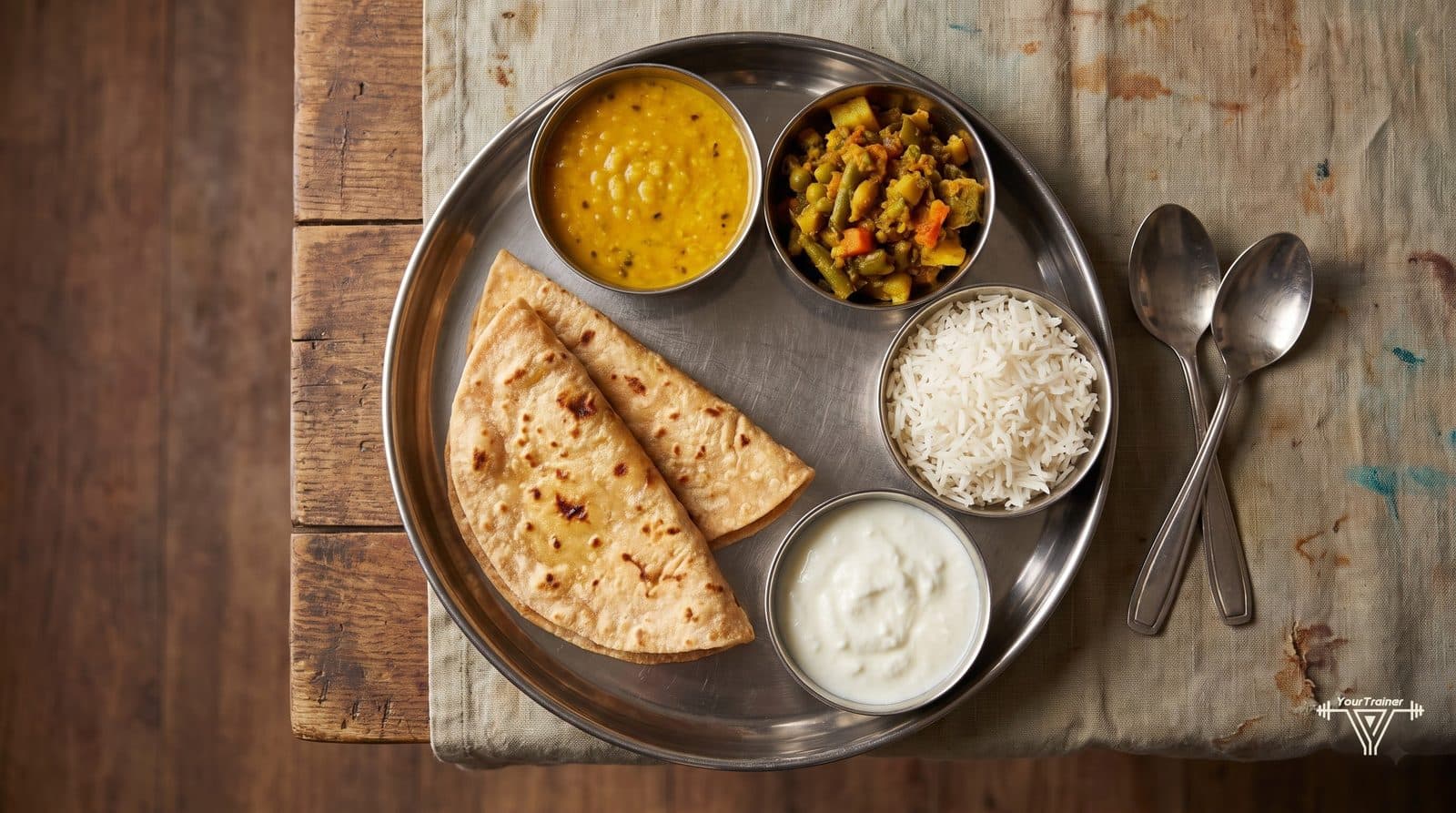
Two people eating 2000 kcal can have very different outcomes. One eats 2000 kcal of biryani and roti: feels hungry by evening, loses muscle, gains belly fat. The other eats 2000 kcal split as 150g protein, 200g carbs, 55g fat: feels full, holds onto muscle, drops fat steadily. Same calories. Completely different bodies after 12 weeks.
The macros are what protect your muscle while you lose fat. Protein is non-negotiable: 1.6g per kg minimum if active, 2g per kg if in fat loss. The calculator above sets this automatically based on your goal.
Hitting Protein on an Indian Diet (Even Vegetarian)
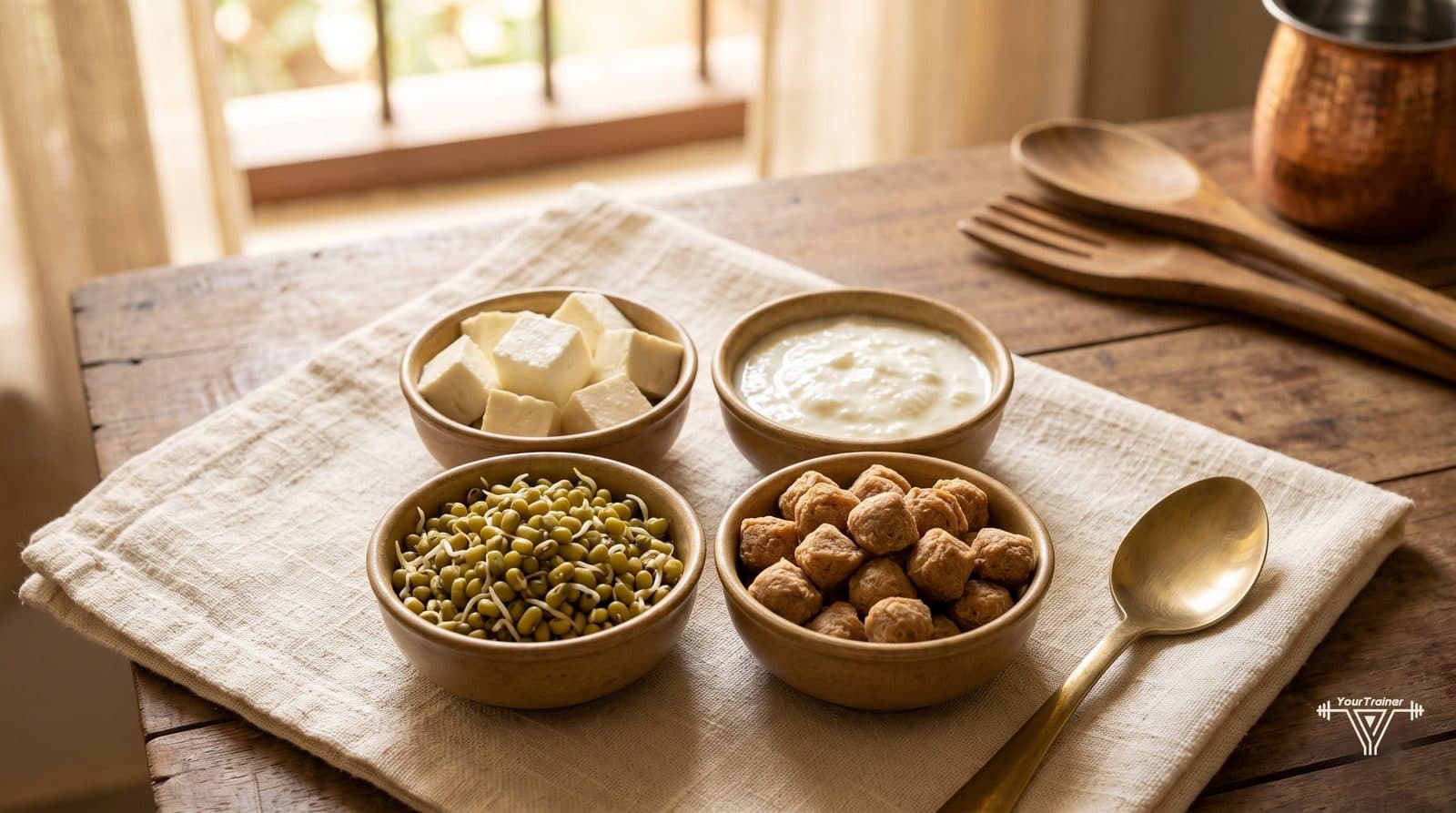
The big lie: you need whey, you need to eat chicken every day. Total nonsense. Here's an 80g protein day on pure Indian vegetarian food:
- Breakfast: 3 egg paneer chilla (24g protein)
- Mid-morning: 1 cup curd + handful of sprouts (12g)
- Lunch: 2 rotis + 1 katori dal + 100g paneer sabzi (28g)
- Snack: 1 katori roasted chana (12g)
- Dinner: 1 katori rajma + 1 roti + curd (16g)
That's 92g protein on regular Indian vegetarian food. No supplements required. This recipe blog has 5 more high-protein Indian breakfasts.
Why Your Calorie Number Will Change Over Time
As you lose fat, your maintenance calories drop (smaller body needs fewer calories). As you gain muscle, your BMR goes up slightly. After 4-6 weeks, recalculate using your new weight. This is why a fixed diet from a generic plan stops working at week 8, your numbers changed but the plan didn't.
For most people, recalculating every 4-6 weeks and adjusting by 100-200 kcal is enough. If you're training seriously or have hormonal conditions like PCOS or thyroid, you may need a coach to navigate the adjustments. That's where structured nutrition coaching earns its money: not the "diet plan PDF", but the weekly course correction.
Useful next tools
- BMI Calculator (Indian thresholds) : see where you stand on the Asian-Indian chart
- Macro Calculator (Indian portions) : deeper macro breakdown by food
- Ideal Weight Calculator : your healthy weight range
- The Complete Indian Fat Loss Guide : the full playbook
Free Consultation
Got your numbers? Let's build the meal plan.
In a free 30-minute call, we'll review your calorie target and lifestyle, then design an Indian meal plan around your goal. No obligation.
What members actually eat, for comparison
Your calculator result is a target. Food logs from our members show what real days look like next to one.
A fully logged day, members' median
1,532 kcal
median on a fully logged day
91 g
median protein on a fully logged day
63 to 118 g
protein range of the middle half of days
36%
of logged snacks reached 20 g of protein
Source: A sample of member food logs from the YourTrainer app, 19 April to 17 September 2026, members only, aggregated
Main meals usually reached 20 g of protein. Snacks usually did not, which is where most days lose their protein. Treat your calculator number as the target and your own log as the check.
Free on iPhone and Android
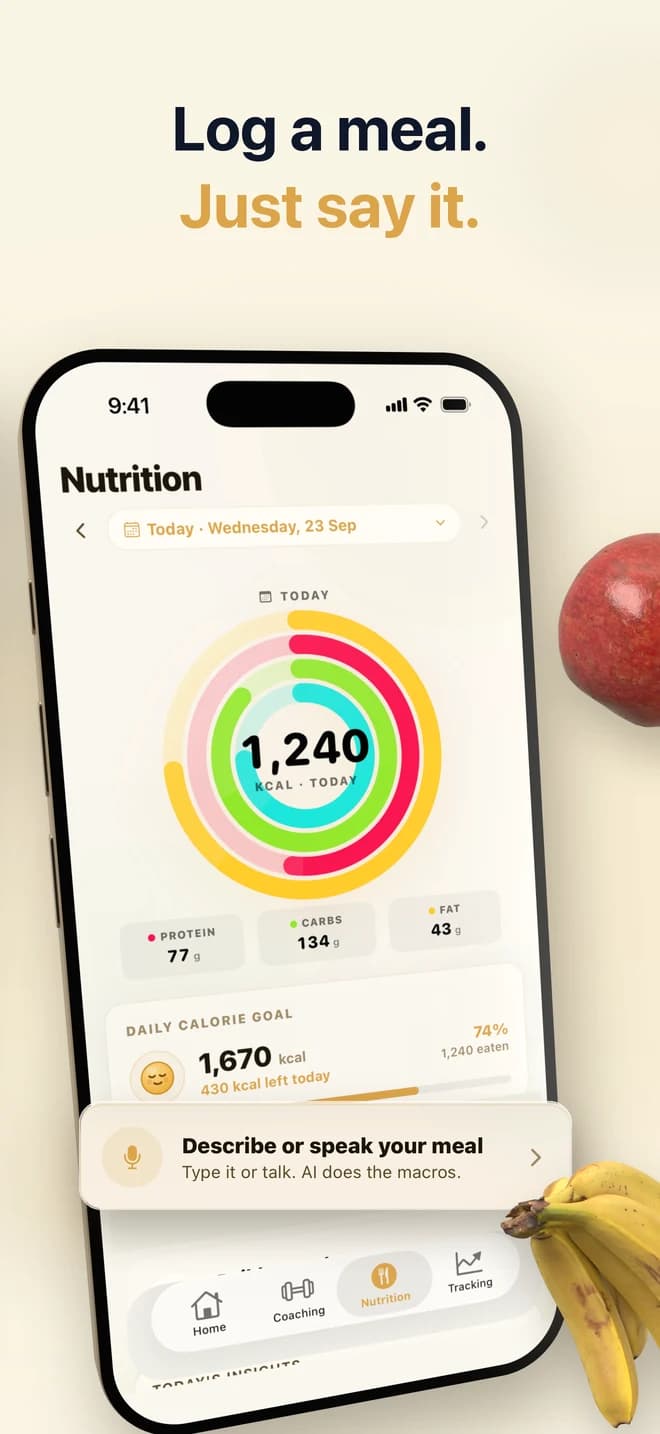
Log this in the YourTrainer app
Search or photograph an Indian dish, set your portion, and the app keeps your calories and protein for the day.
Real members, their own words
Eating to a target without giving up Indian food
“They do not ask you to transform your diet completely, because that is not sustainable in the long run.”
“The main changes I've done in my nutrition is learn to make it more of a balanced meal with also learning how to include protein in each of my meals.”
Quotes are from members' own video testimonials. Individual results; every starting point is different, and these are not promises. Watch the member videos
FAQ
Frequently asked questions
How many calories should an Indian eat per day?
Daily calorie needs depend on your age, gender, height, weight, and activity level. As a rough guide: sedentary Indian women need ~1700-2000 kcal, active women ~2100-2400 kcal, sedentary men ~2200-2600 kcal, active men ~2700-3200 kcal. This calculator gives you a precise number using the Mifflin-St Jeor formula, validated as the most accurate predictor for Indian bodies in recent studies.
How many calories to lose 1 kg per week?
1 kg of body fat is ~7700 kcal. To lose 1 kg per week, you'd need a 1100 kcal/day deficit: which is too aggressive for most people and causes muscle loss and metabolic adaptation. A safer target is 500 kcal/day deficit, losing 0.4-0.5 kg per week. This calculator defaults to that sustainable deficit for fat loss goals.
Are calorie calculators accurate for Indians?
Most online calorie calculators use the Mifflin-St Jeor equation, which has been validated on Indian populations and is accurate within 5-10% for most people. The bigger source of error is overestimating your activity level. Most people who think they're 'moderately active' are actually lightly active. Track for 2 weeks, then adjust your intake based on real weight changes.
How much protein should an Indian eat for fat loss?
During fat loss, protein needs go up to 1.8-2.2g per kg of body weight (compared to 1.4-1.6g during maintenance). Higher protein preserves muscle in a deficit and keeps you full. Indian vegetarians can absolutely hit this with paneer (18g/100g), dal (12g/katori), curd (8g/cup), sprouts (8g/katori), eggs (6g each), and optionally 1-2 scoops of whey. This calculator suggests 2g/kg when you select 'lose fat' as your goal.
Can I trust this calculator if I'm vegetarian?
Yes, the calorie and macro math is identical regardless of diet. The macro suggestion (~1.6-2g protein per kg) is achievable on a structured Indian vegetarian diet through paneer, dal, curd, eggs (if ovo-veg), and optionally whey. Many of our Bengaluru clients hit 120g+ protein per day on pure vegetarian diets. If you're pure vegan, dal, soya chunks, tofu, and pea protein become your primary sources.
What's the difference between BMR, TDEE, and calorie target?
BMR (Basal Metabolic Rate) is calories you burn at complete rest: heart, breathing, organs. TDEE (Total Daily Energy Expenditure) is BMR plus all the calories you burn moving, working, exercising. Calorie target is TDEE adjusted for your goal: TDEE minus 500 for fat loss, TDEE plus 300 for muscle gain, or TDEE exactly for maintenance. This calculator computes all three so you can see the full picture.