
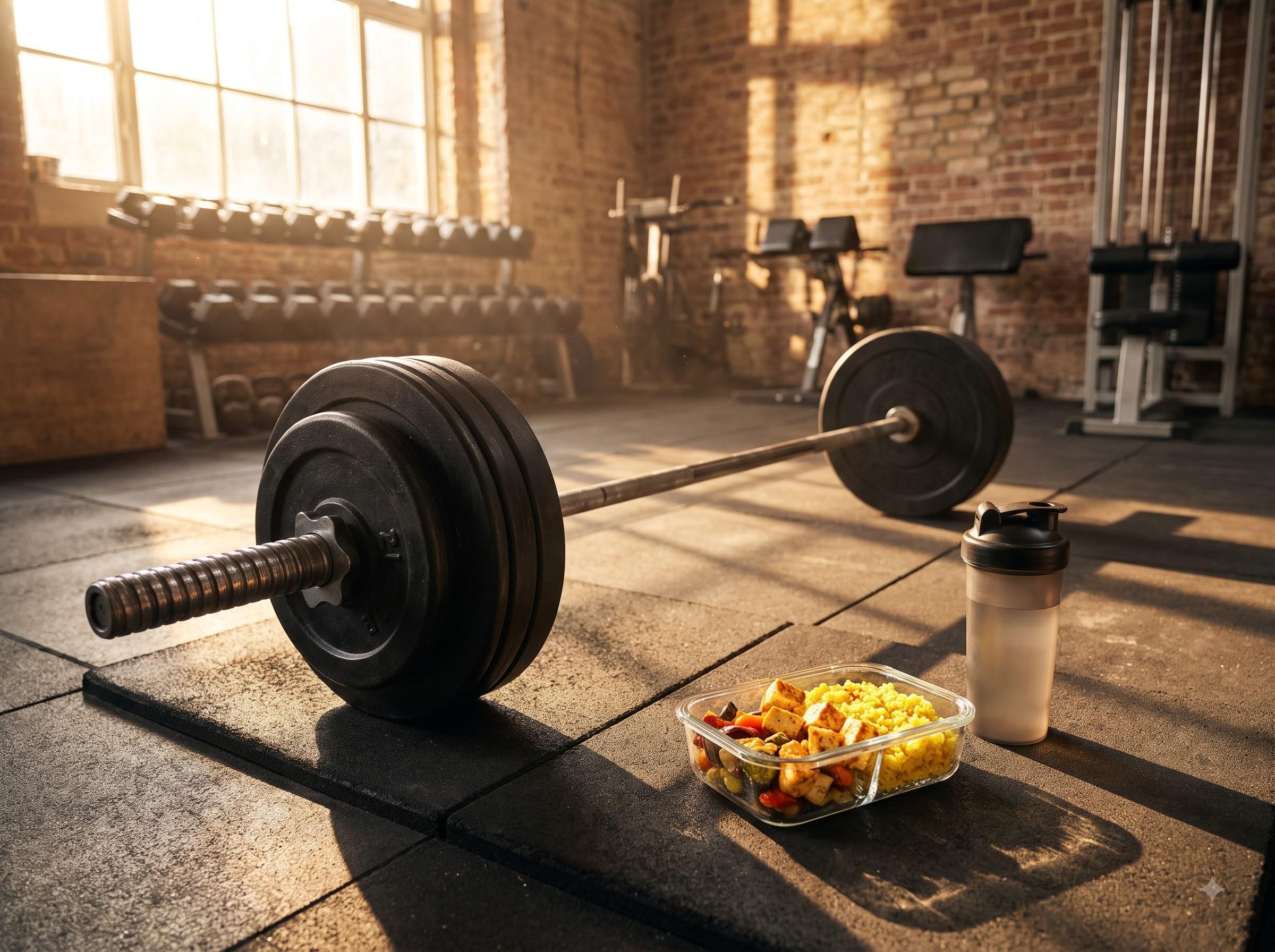
12-week online strength program · India
12-Week Online Strength Training for Indians. Vegetarian-Friendly.
A 12-week, coach-run strength plan for people who train at home or in a gym: weekly plans, three sessions a week and one dedicated nutritionist. It is built around progressive loads, an Indian meal plan with a protein target, and a coach who checks your form and your numbers every week. This is 1-on-1 coaching, not a live group class. Want a coach watching your form live on video instead? See online personal trainer in India. Women who want programming built around their cycle and life stage can see online strength training for women in India. If you want a class format instead, see online fitness classes.
- Weekly plans
- 3 sessions a week
- One dedicated nutritionist
What a week looks like
A week of three strength sessions
Your days, your times. You pick the days and the hours, in your own time zone, and a session can move when your week changes.
See the week day by day
- MonStrength: upper bodyPress, row and pull. Every load and rep is logged.
- TueActive recoveryHit the step target your coach set. An easy pace counts.
- WedStrength: lower bodySquat or goblet squat, hinge, and one core lift.
- ThuActive recoveryPlay a sport you enjoy, swim, cycle or walk.
- FriStrength: full bodyThe main lifts again, with the load set from your log.
- SatNutrition callYour weekly call with your dedicated nutritionist.
- SunRestFull rest. A walk if you feel like it.
A new plan every week. Sessions fall on alternate days, so your muscles recover in between, and your coach sets the days and loads with you.
Fit check
Who it suits, and who it does not
It suits you if
- You are new to lifting, or you have trained on and off and want a plan that goes up over time.
- You can train three days a week, at home with dumbbells or in a gym.
- You are vegetarian and want the protein plan worked out with Indian food.
- You want your form checked on video, not guessed at from a PDF.
It is not the right fit if
- You want a result in two or three weeks. Strength changes over months.
- You have no access to any load at all and no plan to get some.
- You have an active injury or a medical condition that has not been cleared by your doctor.
- You want live group classes. Look at our group classes page instead.
Our own data
What our sampled sessions and food logs show
Equipment share is from sampled sessions in the case-study review. Food figures are medians from members who logged food, with the app's database values for each portion. Full data on the research page.
The training science
The training and nutrition science behind the plan
The ACSM position stand says a beginner can start with 8 to 12 repetitions, 2 to 3 days a week, and raise the load by 2 to 10 percent once one or two reps beyond the target can be done [2].
Pooled analysis of 49 trials. The benefit was greater in people who were already resistance-trained [1].
In active vegans eating 0.98 g per kg a day, soreness after exercise damage was greater than in omnivores eating 2.14 g per kg [5]. That is why the plan sets a protein target before it sets a menu.
A 2026 meta-analysis of high-intensity, impact and strength training found effects on bone density in women were small, most clearly in postmenopausal women [6].
From Google reviews
In members' own words
“I took strength training from YourTrainer and I am 100% happy with their training and services. They give thorough guidance on your overall fitness journey starting from nutrition diet, lifestyle habits to the workout plan. Kudos to the whole team for their dedication”
“Been training for 3 months, has been a great experience. Received really good guidance for form, nutrition. Would highly recommend anyone struggling to get going or maintain a routine to go ahead with them.”
Quoted word for word from our Google Business Profile, copied 20 Oct 2026. Reviews are not a promise of a result.
The three blocks
How the 12 weeks are built
“Last time we did 12 12 9, this time let's aim for 12 12 12.”
The vegetarian plate
What a protein target looks like on an Indian plate
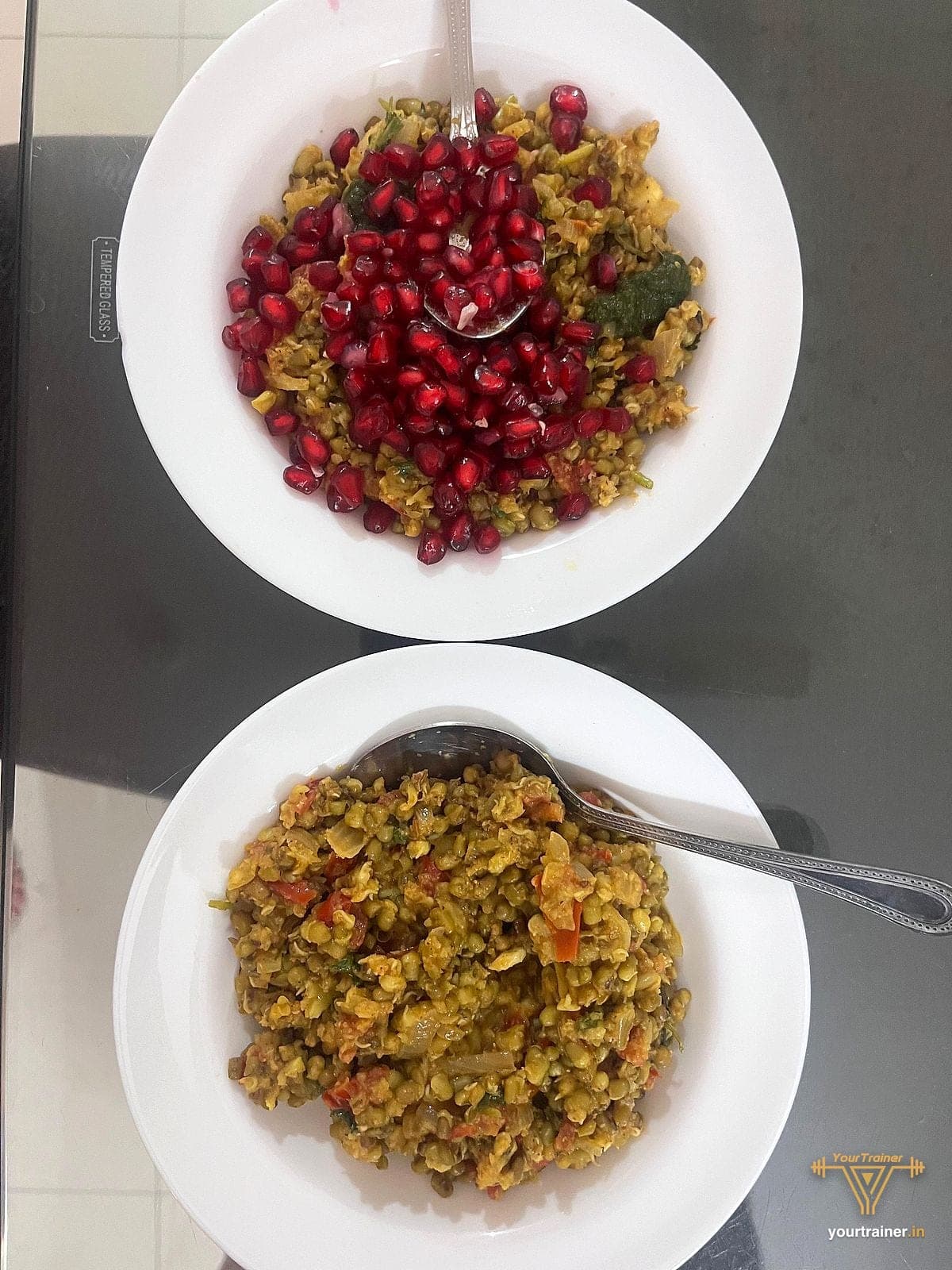
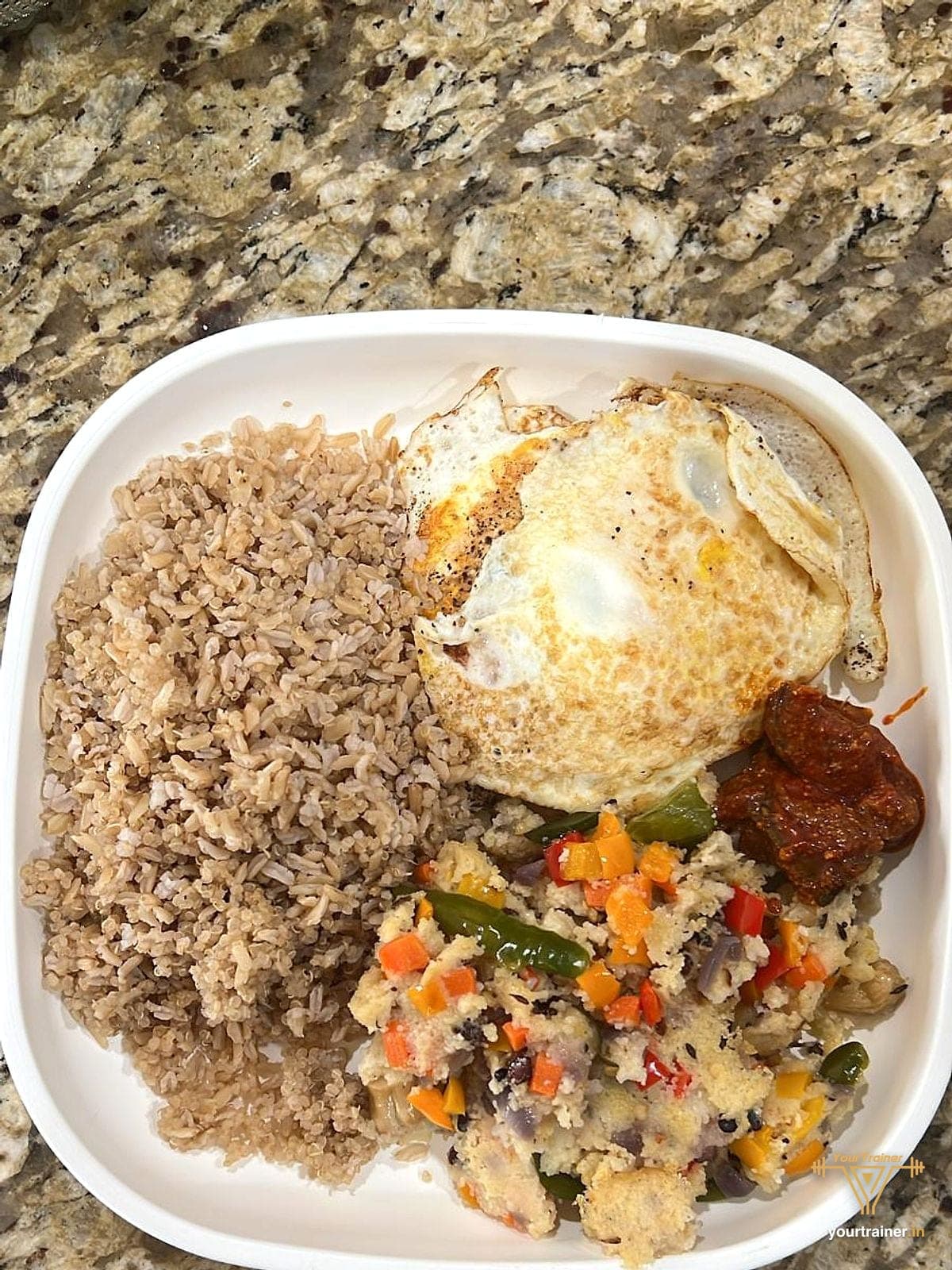
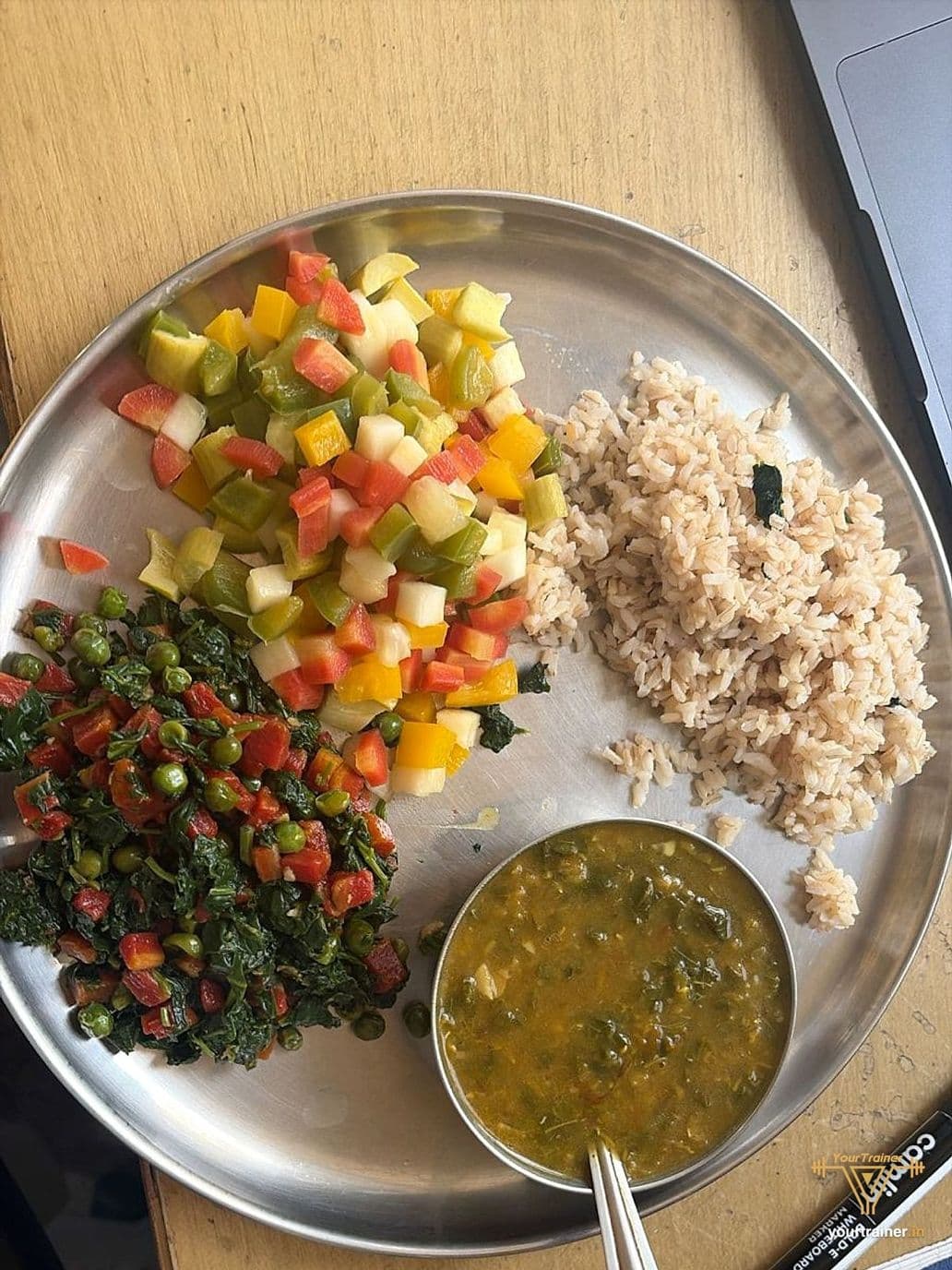
Paneer is common in member logs, and so is a plate with no protein food at all. One bowl of dal gives about 9 g of protein for about 150 kcal. In member meals, rice with a protein food reached a median of 27.2 g protein, and rice with no dal and no protein food reached 15.6 g. That gap is the first thing the meal plan fixes.
Coach tip
Log one week of food before you change anything. Most people find the same gap, a rice meal with no protein food, and it is the quickest one to close.
Home or gym
Strength training at home, or in a gym with a plan
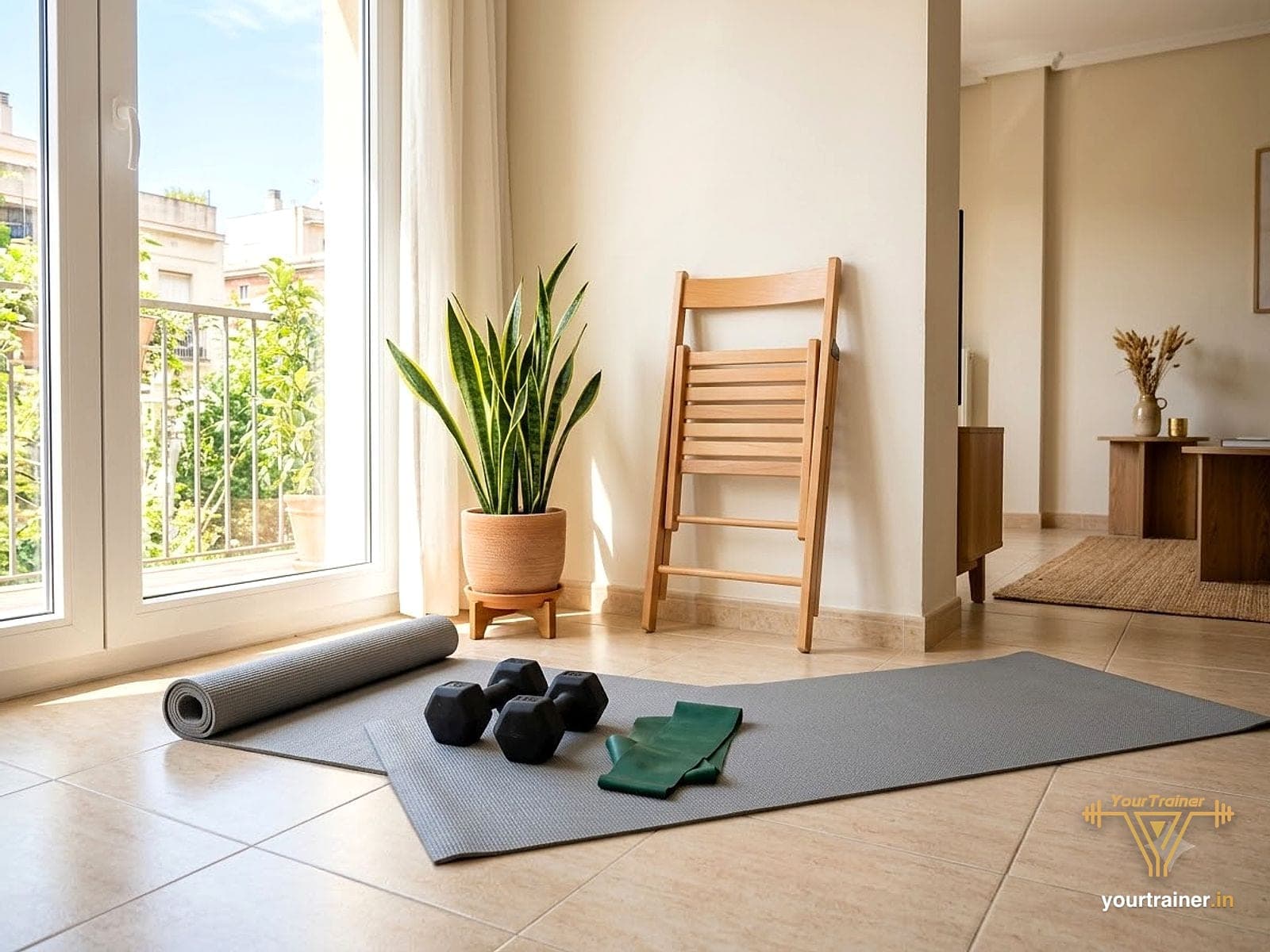
For the first weeks, a set of adjustable dumbbells, bands and a sturdy chair or bench is enough for most of the plan. Once the top set of a lift is easy, the load has to rise, and a home set-up needs heavier weights to keep going. A gym gives you that range. Ask us which set-up fits your space.
Looking for the best online fitness classes in India? If you prefer classes, our group fitness classes are live but not planned for you. The plan on this page is the 1-on-1 version.
Where to go next
Other ways into the same plan
FAQ
Ten questions before you start
There is no honest single number without your starting point. Beginners usually change fastest, intermediates more slowly, and the scale is a poor guide in the first weeks because water and glycogen move first. Your coach tracks your lift numbers and photos, which show muscle change before the scale does.
Yes, with enough protein. Morton and colleagues found no further gain in fat-free mass from extra protein above about 1.6 g per kg of body weight a day in resistance-trained people. A 2026 study of active vegans found more soreness after exercise damage on a low-protein diet (0.98 g per kg) than in omnivores eating 2.14 g per kg, so the target matters. Our plans use paneer, dal, soya, curd and eggs if you eat them. Median protein on a fully logged member day was 82 g.
Weekly plans, three coached sessions a week, and one dedicated nutritionist. That means a certified strength coach matched to your level, a custom plan (the default is an upper and lower split, or the frequency you prefer), week-by-week progression tracking, an Indian meal plan from your nutritionist built around your protein target, daily WhatsApp check-ins, weekly video form checks, weekly progress reviews and the content library. It is one plan for the 12 weeks, adjusted as your numbers change.
You can start at home. In our sampled home sessions, 88% used bodyweight moves and 78% used dumbbells. Progression needs a load that can go up, though. The ACSM position stand on progression says load should rise once you can complete one or two reps beyond the target, so a home set-up needs heavier dumbbells, bands or a gym as you get stronger.
You record one or two sets of each main exercise (squat, deadlift, bench, row) and your coach reviews them within 24 hours with voice or video feedback. For complex lifts, especially the deadlift, we schedule live video calls in the first month so the coach can correct in real time.
Visible bulk takes years of heavy training and a calorie surplus. On this program, most people build a firmer, stronger look. Resistance training helps bone density in women, but a 2026 meta-analysis found the effects were small in postmenopausal women, so it is one part of a plan and not a cure.
No. Food and a plan do most of the work. We do not sell supplements, and a vegetarian protein powder is only a convenience if you cannot reach your protein target from food. Ask your doctor before you start any supplement, especially if you have a kidney condition.
A complete beginner, or someone with a fair amount of fat to lose, can often lose fat and gain some strength at the same time for a while. After that, you choose between a small calorie surplus to build muscle and a deficit to lose fat. Your coach will say which fits your starting point in the trial.
Tell us in the first consultation. We swap movements that load a painful joint (for example a goblet squat for a barbell squat) and coordinate with your physiotherapist where needed. Do not start a heavy program with an active injury until your doctor or physio has cleared it.
A PDF gives you exercises. This program gives you progression based on your own numbers, changes each week based on what happened, and a coach who checks your form and your food. The PDF is the smallest part of the program.
See whether the 12-week plan fits your goal.
Weekly plans, three sessions a week and one dedicated nutritionist. Answer seven quick questions about your goal, your gym or home set-up and your injuries, and we will tell you whether this program is the right one.
Sources
Where the numbers come from
- [1] Morton RW, Murphy KT, McKellar SR et al. A systematic review, meta-analysis and meta-regression of the effect of protein supplementation on resistance training-induced gains in muscle mass and strength in healthy adults. Br J Sports Med. 2018;52(6):376-384. doi.org/10.1136/bjsports-2017-097608 (checked 21 Oct 2026)
- [2] American College of Sports Medicine. Progression models in resistance training for healthy adults (position stand). Med Sci Sports Exerc. 2009;41(3):687-708. doi.org/10.1249/mss.0b013e3181915670 (checked 21 Oct 2026)
- [3] YourTrainer case-study review of coaching sessions, 17 Aug to 7 Sep 2026, client names removed. Our own data, see the data study. /blog/what-you-get-in-a-personal-training-session-case-studies (checked 21 Oct 2026)
- [4] A sample of member food logs from the YourTrainer app, 19 April to 17 September 2026. Members only, aggregated, using the app's food-database values for the portion logged. Our own data, see the research hub. /research (checked 21 Oct 2026)
- [5] Mendes-Netto RS et al. Similar muscle recovery but greater soreness in active vegans on low-protein diets compared to high-protein omnivores following exercise-induced damage. Nutrition Bulletin, 2026. doi.org/10.1111/nbu.70064 (checked 21 Oct 2026)
- [6] Jones E, Starrs P, Hunter B et al. A systematic review and meta-analysis of the effects of high-intensity, impact, and strength training on bone mineral density in premenopausal and postmenopausal women. Menopause, 2026. doi.org/10.1097/gme.0000000000002839 (checked 21 Oct 2026)