Why Seeds Are the Most Underrated Superfood in Your Indian Kitchen
Influencers discovered chia in 2018. Your dadi has added flax to roti for 50 years. A no-hype guide to which seeds matter, and which are expensive marketing.
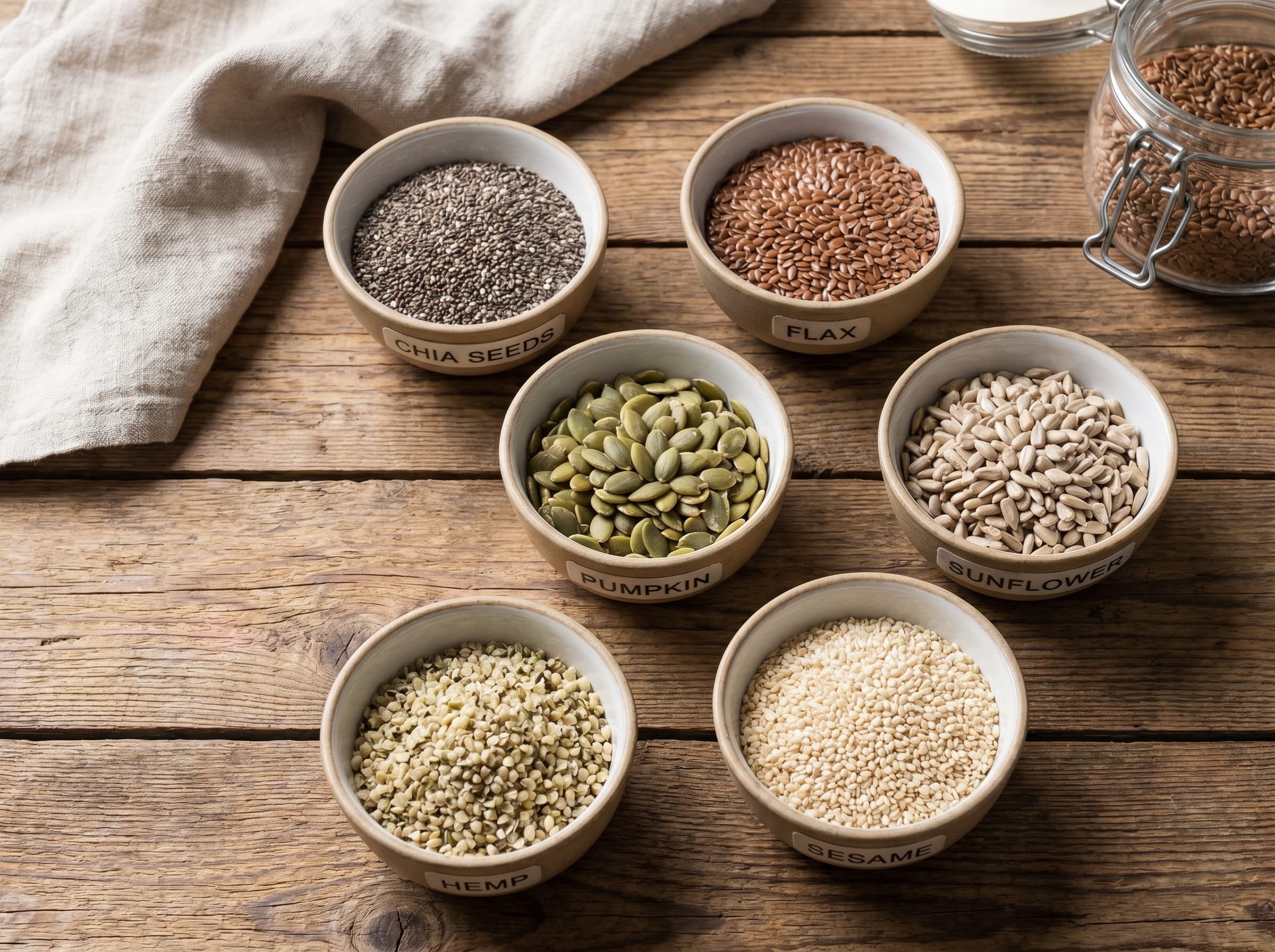
About four years ago, every wellness account on Instagram suddenly discovered chia seeds. ₹800 for a small packet of "premium imported chia." Aesthetic shots. Big claims.
Meanwhile my grandmother, and probably yours, has been mixing alsi (flax) into atta for as long as anyone can remember. No Instagram captions. No premium pricing. Just real food.
I want to demystify seeds. Some genuinely deserve a place in your daily kitchen. Some are wildly overhyped. And almost everyone uses way too much of them, expecting magic.
The 5 Seeds That Actually Earn Their Spot
1. Flax seeds (Alsi)
The undisputed champion if you're a woman, especially with PCOS or hormonal issues. Flax is rich in lignans, plant compounds that mildly balance estrogen, and omega-3s (ALA form). For my PCOS clients, this is the first seed I add to their daily plan.
How much: 1-2 tablespoons (10-20g) per day, ground. Whole flax passes through your gut undigested. Always grind it, buy a small mill or grind weekly in batches.
How to use: Mix into atta, sprinkle on curd, blend into smoothies, add to chutneys.
2. Chia seeds
Chia gets the most hype but actually holds up to most of it. High in fibre (almost 10g per 2 tablespoons), omega-3s, and they swell up, which is genuinely helpful for fat-loss appetite control.
How much: 1 tablespoon (about 12g) per day is plenty. Anything more and you're just paying for fibre you don't need.
How to use: Soak overnight in milk or coconut water for a "pudding." Toss in yoghurt. Stir into oats. Skip the trendy 4-tablespoon influencer recipes, they cause bloating.
3. Pumpkin seeds (Kaddu ke beej)
This is the seed almost no one talks about, and it's the most useful one for an active person. Pumpkin seeds are surprisingly high in protein, about 8g per 30g serving, and packed with magnesium and zinc, both of which we're chronically low in if we eat a typical Indian diet heavy on grains.
How much: 30g (a small handful) makes a great mid-evening snack.
How to use: Roast lightly with a bit of salt and roast jeera. Sprinkle on salads. Eat as-is with chai instead of biscuits.
4. Sunflower seeds
The neglected middle child. Sunflower seeds are an excellent source of vitamin E (an antioxidant), magnesium, and decent protein (~6g per 30g). They're also the cheapest of this list, about ₹150/kg locally.
How much: 30g per day, as snack or salad topper.
How to use: Roast with chaat masala. Add to home-made trail mix. Mix into peanut butter.
5. Sesame seeds (Til)
The seed most Indian kitchens already have. Both white and black til are calcium powerhouses, particularly relevant for women approaching menopause or anyone not consuming much dairy. They're also great for skin and joint health.
How much: 1 tablespoon per day, ideally roasted.
How to use: Til ki chutney, tilkut, sprinkle on rotis before frying, mix into laddoos. In winter, til chikki is genuinely good for you (mostly).
The Seeds That Are Overhyped
Quinoa "seeds"
Technically a seed, sold as a superfood. But for the price (often ₹400+/kg), you can get the same nutritional value from a mix of moong sprouts and brown rice. Eat it if you like it. Don't expect it to do anything magical.
Hemp seeds
Genuinely nutritious, but you're paying 8x the price of flax for similar benefits. Unless you have a specific deficiency, save your money.
Goji berries (often grouped with seeds)
Marketing. They're a fruit. Indian amla beats them on vitamin C, ten times cheaper.
Coaching that does this for you
Reading is step one. A coach turns it into a plan built around your body, food & schedule.
100% online · Indian meal plans · weekly progress reviews · daily WhatsApp support.
Start Your Journey →How to Add Seeds to a Normal Indian Day
You don't need a separate "seed routine." Layer them into food you already eat.
- Breakfast: 1 tbsp ground flax + 1 tbsp chia mixed into curd or oats
- Mid-morning: Handful of pumpkin seeds with chai
- Lunch: Sesame chutney with your meal
- Snack: Roasted sunflower seeds with cucumber slices
- Dinner: Sprinkle a teaspoon of mixed seeds onto your salad or roti
That's about 50g of seeds total, roughly 250 kcal, 15g of protein, plenty of fibre, and significant micronutrients. Costs maybe ₹40-60 a day if you buy seeds in 500g packs from any local kirana.
Special Note for Women
If you have PCOS, irregular periods, or are perimenopausal, there's a well-known practice called "seed cycling" where you alternate between flax + pumpkin seeds (first half of cycle) and sesame + sunflower seeds (second half). The research is mixed, but several of my clients report better cycle regulation after 3 months of doing it consistently. It's free, food-based, and has zero downside. Worth trying if you have hormone-related issues.
Seeds: Useful, Not Magic
Seeds aren't magic. They're concentrated nutrition packed in small amounts, which makes them genuinely useful when added to an already-decent diet. But they won't fix a bad diet, and you don't need expensive imported ones to get the benefits.
Two tablespoons of mixed seeds a day, for ₹30, will outperform any ₹2000 multivitamin bottle for most people.
If you want a meal plan that includes the right seeds for your specific goal, whether that's fat loss, PCOS, or just feeling less tired by 3 PM, book a free consultation with our nutrition team. We'll build it around food you already cook.
- Coach Nancy, Senior Coach at YourTrainer
Specialist in Women's Fitness, PCOS & Hormonal Health · Serving Bengaluru
Sources
- Indian Food Composition Tables (IFCT) 2017 · ICMR, National Institute of Nutrition
- Nutrient Requirements for Indians (RDA and EAR) · ICMR, National Institute of Nutrition
- Healthy diet · World Health Organization
- Dietary profiles and associated metabolic risk factors in India (ICMR-INDIAB survey) · Nature Medicine
Figures for Indian foods follow IFCT 2017 (ICMR-NIN). Coaching guidance on this site is educational and is not a substitute for medical advice. See how we use sources.
Did you find this helpful?
About Coach Nancy
Coach Nancy coaches YourTrainer members live on video and in Bengaluru, with training and Indian-food nutrition plans built around each member's week and reviewed with Coach Anish. Read the YourTrainer story for how the team works.
Online 1-on-1 Coaching
Start Your Journey
Get a personalised training + Indian nutrition plan built around your goal, coached online, anywhere in India or abroad.
Trusted by 1,000+ clients coached across India & abroad
Free 30-min discovery call · No obligation