Diabetes Management Diet: 7-Day Indian Vegetarian Meal Plan (ICMR-Aligned)
1 in 4 Indians is diabetic or pre-diabetic. Here's an evidence-informed Indian vegetarian meal plan for type 2 diabetes.
Take it with you
Save this 7 day plan as a PDF or print it for the fridge. The meals, the grocery list and the swaps come through, the menus and adverts do not.
India has 101 million diabetics, the largest diabetes population in the world per the ICMR-INDIAB 2023 study. Another 136 million are pre-diabetic. That's nearly 1 in 4 Indian adults with broken glucose control.
And here's the part many people miss: for some people, type 2 diabetes can go into remission. It is not guaranteed, and it is more likely in people diagnosed recently who lose weight. The landmark DiRECT trial (Lancet, 2018) showed 46% remission at 1 year with a supervised weight-loss programme, against 4% on usual care. Remission is possible for some people and is not guaranteed.
This is the 7-day vegetarian meal plan we use with our diabetes management clients at YourTrainer. It's built on ICMR's 2024 dietary guidelines for diabetics, adapted for normal Indian kitchens. Pair it with the ten-minute habit in post-meal walking for blood sugar.
First, Some Hard Truths About Indian Diabetes
- Indians get diabetes at lower BMI than Westerners. The "thin-fat Indian" phenomenon, high visceral fat with normal weight, means you can be 65 kg and pre-diabetic. Use our Asian-Indian BMI calculator for accurate thresholds (overweight cutoff in India is 23, not 25).
- "I don't eat much sugar" doesn't matter. The Indian diet is 65-70% carbohydrate, rice, roti, idli, dosa, biscuits, namkeen. The volume of refined carbs is the issue, not the sugar in your chai.
- Jaggery is not "healthy sugar". It's mostly sucrose with trace minerals, and it raises blood sugar much like white sugar. We bust this and other myths in our Indian fat loss pillar guide.
- "Fruit juice is healthy", no. A glass of mosambi juice contains 4 oranges' worth of sugar with the fibre stripped out. Worse than coke for diabetics. Eat the fruit whole, with skin where possible.
- Ghee is fine in moderation. The "no fat" advice given to diabetics in the 90s is outdated. Fat doesn't spike blood sugar; carbs do. Moderate ghee (1-2 tsp/day) is supported by current ICMR guidelines.
The Core Principles This Plan Is Built On
1. Protein at every meal (25-30g)
Protein is the single most under-eaten macro in Indian diabetic diets. It blunts glucose spikes, preserves muscle (muscle is your biggest glucose-disposal tissue), and reduces hunger between meals. For full vegetarian protein strategies, see our deep dive on Indian protein myths.
2. Fibre first, carbs second
Always eat your sabzi/salad/dal first, your rice/roti last. This single sequencing trick lowers the post-meal blood sugar rise in multiple clinical studies.
3. Replace refined grains with whole grains + millets
White rice → red rice, brown rice, hand-pounded rice, or millet (foxtail, kodo, little). Maida roti → atta roti, jowar roti, bajra roti, ragi roti. This isn't optional, refined carbs are the engine driving Indian diabetes.
4. Eat by glycemic load, not just glycemic index
Watermelon has a high GI (72) but low GL because there's so little sugar per slice. Basmati rice has a moderate GI but high GL because you eat 200g of it. Volume × GI = the real impact.
5. Walk after every meal
A 10-minute walk after a meal blunts the post-meal glucose spike, per a 2022 meta-analysis. This is one of the highest-leverage habits a diabetic Indian can adopt.
Glycemic Load: 30 Common Indian Foods Ranked
Eat freely (Low GL: under 10 per serving)
- Methi, palak, lauki, karela, bhindi, baingan, cabbage, all green vegetables
- Paneer, tofu, dahi, milk (unsweetened), Greek yogurt
- Eggs (if you eat them), sprouted moong, chana, rajma
- Almonds, walnuts, peanuts (raw or roasted, not sugar-coated)
- Apple, pear, guava, papaya (whole, with skin)
- Chia seeds, flax seeds, sesame, sabja
Eat in measured portions (Moderate GL: 10-20)
- Whole wheat roti (1 medium = ~12 GL)
- Brown/red rice (½ katori = ~14 GL)
- Idli (2 medium = ~16 GL, better with sambar + coconut chutney + ghee)
- Dosa (1 medium = ~18 GL, pair with paneer/egg)
- Banana, mango (medium portion)
Limit or avoid (High GL: over 20)
- White rice in restaurant portions (1 plate = 30+ GL)
- Maida items, naan, kulcha, biscuits, samosa, kachori
- Fruit juice (any kind, even fresh)
- Sweets, burfi, gulab jamun, jalebi, kheer (festival days only)
- Sugary drinks, coke, sprite, packaged lassi, energy drinks
- Cornflakes, instant noodles, pizza, white bread
The 7-Day Diabetes Management Meal Plan (Indian Vegetarian)
Target: ~1500-1800 kcal, 90-110g protein, 35g+ fibre, under 180g carbs per day. Adjust portions using our calorie calculator for your specific weight + goals.
Monday
- Wake (7 AM): Warm water with 1 tsp methi seeds (soaked overnight)
- Breakfast (8 AM): 2 ragi dosa + 100g paneer bhurji + coconut chutney
- Mid-morning (11 AM): 1 katori dahi + 1 tbsp flax seeds + 8 almonds
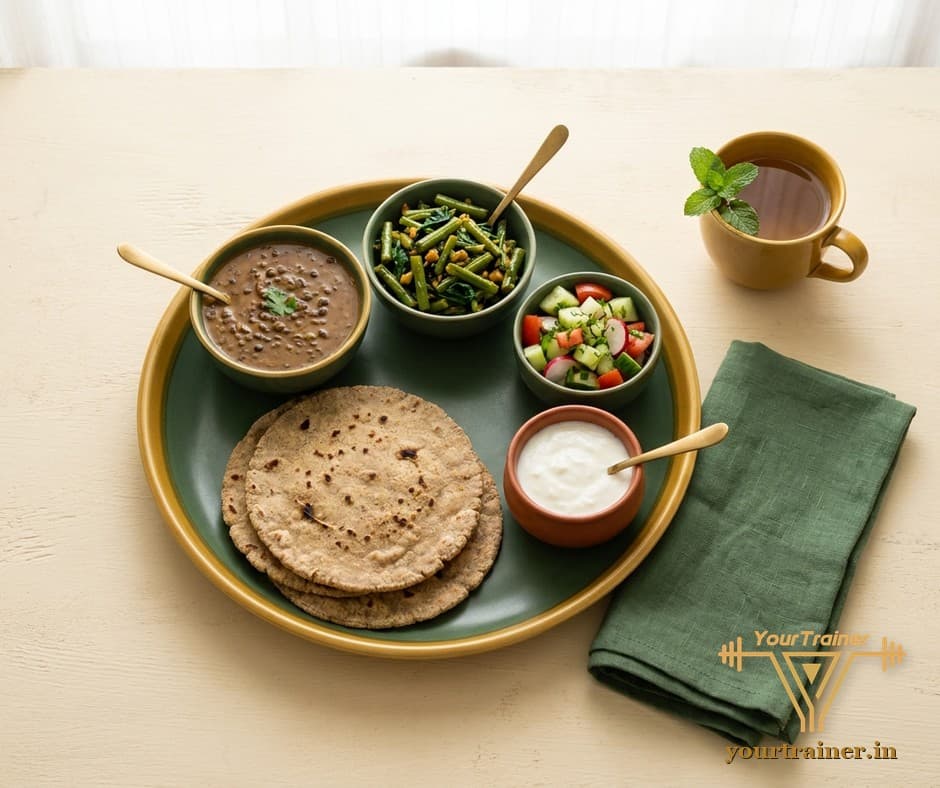
- Lunch (1 PM): 1 katori brown rice + 1 katori dal + palak paneer + cucumber raita + green salad
- Snack (5 PM): 1 fistful roasted chana + green tea
- Dinner (7:30 PM): 2 jowar roti + bhindi sabzi + 100g tofu/paneer + dahi
- Walk (8:30 PM): 10 min slow walk after dinner
Tuesday
- Breakfast: Vegetable poha (made with millet poha if available) + 1 boiled egg or 100g paneer
- Mid-morning: 1 apple + 2 walnuts
- Lunch: 2 atta roti + 1 katori rajma + cabbage sabzi + onion-tomato salad + dahi
- Snack: Sprouted moong chaat (1 katori) + lemon
- Dinner: Vegetable + paneer Indo-Chinese stir-fry (no cornflour) + 1 katori brown rice
Wednesday
- Breakfast: Besan chilla (2) stuffed with paneer + mint chutney
- Mid-morning: 1 cup dahi with cinnamon + 1 tsp chia
- Lunch: 1 katori red rice + chole (kabuli chana curry) + cucumber-onion salad
- Snack: Roasted makhana (1 katori, dry-roasted in ghee + black salt)
- Dinner: Khichdi (moong + brown rice, 1:1) + ghee + curd + sliced beetroot
Thursday
- Breakfast: Vegetable upma (made with broken wheat or millet rava) + 1 boiled egg or 30g paneer
- Mid-morning: 1 pear + 5 cashews
- Lunch: 2 bajra roti + masoor dal + lauki sabzi + dahi
- Snack: Whey/pea protein shake in unsweetened almond milk OR 1 katori greek yogurt
- Dinner: Paneer tikka (3-4 pieces) + grilled vegetables + 1 small jowar roti
Friday
- Breakfast: Oats porridge (½ katori oats) cooked in milk + chia + cinnamon + 5 almonds
- Mid-morning: 1 katori sprouts chaat
- Lunch: 1 plate millet pulao (foxtail or kodo) + raita + green salad + 100g paneer cubes
- Snack: 2 dates + green tea (yes, dates, measured)
- Dinner: 2 ragi roti + methi-aloo (limit aloo to 1 small) + curd
Saturday
- Breakfast: Moong dal cheela + tomato chutney + 1 small bowl curd
- Mid-morning: 1 guava + 1 tbsp peanut butter
- Lunch: Brown rice biryani (vegetable + paneer), 1 plate, no more, with raita and salad
- Snack: Khakhra (2) with hummus or curd-based dip
- Dinner: Soup (any veg-based, no cornflour) + grilled paneer + sautéed vegetables
Sunday (the planned-treat day)
- Breakfast: 2 idli + sambar + coconut chutney + a teaspoon of ghee on the idli
- Mid-morning: 1 small bowl of fruit (any in-season, mixed)
- Lunch: 1 katori white rice + sambar + thoran + curd + 1 small piece traditional sweet (eg, 1 small piece burfi), this is your weekly buffer
- Snack: Coconut water + a fistful of peanuts
- Dinner: Vegetable khichdi (millet base) + ghee + curd + papad
Note the Sunday "buffer": it's intentional. Restrictive plans fail. A planned weekly treat keeps adherence high without spiking your weekly average glucose meaningfully.
Coaching that does this for you
Reading is step one. A coach turns it into a plan built around your body, food & schedule.
100% online · Indian meal plans · weekly progress reviews · daily WhatsApp support.
Start Your Journey →The Bangalore-Specific Grocery List
What to stock from Big Bazaar / FreshToHome / your local kirana:
- Grains: Brown basmati rice, red rice, foxtail millet, ragi flour, jowar flour, bajra flour, atta (use whole-grain stoneground)
- Pulses: Moong dal, chana dal, masoor dal, rajma, chana (kabuli + black), sprouted moong
- Dairy: Full-fat paneer (not low-fat, that's higher carb), Greek yogurt (Epigamia, Nestle a+), Amul milk
- Seeds: Flax, chia, sesame, pumpkin (raw, refrigerate after opening)
- Nuts: Almonds, walnuts, peanuts, cashews (limited)
- Fats: Cold-pressed groundnut oil or kachi ghani mustard oil for cooking, ghee for tadka, virgin coconut oil for Kerala-style cooking
- Vegetables: Spinach, methi, palak, cauliflower, broccoli, bottle gourd, ridge gourd, bitter gourd, okra, eggplant, beans, cabbage, fill your fridge
- Spices: Cinnamon, turmeric, methi seeds, jeera, mustard seeds
What to Avoid Buying (Even When the Packet Says 'Sugar-Free' or 'Diabetic-Friendly')
- "Diabetic" biscuits, breads, sweets, almost all use maida + artificial sweeteners that still spike insulin
- Packaged fruit juice, even 100% no-sugar-added
- "Multigrain" bread (usually 80% maida)
- Cornflakes, muesli with hidden sugar (read label, under 5g sugar / 100g is the bar)
- Flavoured yogurt, lassi, "fruit dahi"
- Brown sugar, honey, jaggery, palm sugar, all sugar with marketing
The Numbers to Track (and How Often)
- Fasting glucose: Weekly (home glucometer is fine)
- Post-meal glucose (2 hours): Random checks weekly. Ask your doctor for your target
- HbA1c: Every 3 months. Ask your doctor for your target (below 5.7% is the normal range)
- Weight + waist circumference: Weekly. Waist matters more than weight (visceral fat is the real driver)
- Lipid profile: Every 6 months
Frequently Asked Questions
Can I really come off Metformin / insulin with diet alone?
Some people can reduce or stop medication after major weight loss, as in the DiRECT trial, but many cannot. This decision is made only with your endocrinologist, based on your HbA1c progression. Never stop medication on your own.
Is intermittent fasting safe for Indian diabetics?
For most Type 2 diabetics not on insulin or sulfonylureas, a 12-14 hour eating window (eg, 8 AM to 8 PM) is safe and often beneficial. Longer fasts require medical supervision because hypoglycemia risk rises sharply.
Can I eat mangoes?
Yes, in measured portions, half a mango with a meal, not a whole one alone. Eaten with curd or after a protein-rich meal, the glycemic impact is manageable.
Why is rice always "bad" in diabetic plans?
It's not "bad", refined white rice in restaurant portions is the issue. ½ katori of brown/red/hand-pounded rice with vegetables and protein is fine for most diabetics. Quality and quantity matter; total elimination is rarely necessary.
What about Ayurvedic remedies: karela juice, jamun, etc.?
Karela has weak blood-sugar lowering evidence. Jamun seed powder has slightly better data but still small effect size. These can complement diet + exercise + medication. They are not replacements.
How long until HbA1c changes?
HbA1c moves slowly because red blood cells live ~90 days. Re-check at 3 months and talk to your doctor about what to expect. Remission, where it is possible, takes longer. Be patient.
Where to Go From Here
If you're newly diagnosed and want a coach to walk this with you, through the food shifts, the workout integration, the blood report reviews, that's our Diabetes Management coaching programme.
If you want to start lighter: book a ₹499 trial session, we'll review your latest reports, discuss your current eating pattern, and tell you honestly whether you can manage this independently or whether you'll benefit from structured coaching.
And before you start: run our calorie calculator and macro calculator so the meal portions above are personalised to your weight + activity. The plan above is a 65 kg adult baseline, adjust accordingly.
Steady, evidence-based habits are one of the most useful things you can do for type 2 diabetes. Work with your doctor, and give it time.
- Coach Anish, Founder & Head Coach at YourTrainer
Certified Personal Trainer · Nutrition Specialist · Working with Bengaluru diabetics since 2022
Sources
- High prevalence of metabolic obesity in India: the ICMR-INDIAB national study · Indian Journal of Medical Research
- Appropriate body-mass index for Asian populations · WHO Expert Consultation, The Lancet (2004)
- Guidelines on physical activity and sedentary behaviour (2020) · World Health Organization
Coaching guidance on this site is educational and is not a substitute for medical advice. See how we use sources.
Did you find this helpful?

About Anish Agarwal
Founder & Head Coach, YourTrainer · NASM & K11 Certified Personal Trainer · coaching since 2022
Featured in Dietitians.io, Fitness Interview, NRI Pulse. Press and media
Anish Agarwal is a NASM and K11 certified personal trainer coaching fat loss, body transformation, strength, and nutrition for clients across India since 2022. He founded YourTrainer to make expert, science-based coaching accessible online and in Bengaluru. Coach Anish's profile and the YourTrainer story.
Online 1-on-1 Coaching
Start Your Journey
Get a personalised training + Indian nutrition plan built around your goal, coached online, anywhere in India or abroad.
Trusted by 1,000+ clients coached across India & abroad
Free 30-min discovery call · No obligation