
PCOD and PCOS, coached in India and abroad
PCOS and PCOD: strength training and Indian food that work with insulin
In India the two names are often used for the same condition. Our PCOS personal training and fitness coaching plans start with muscle, daily walking and a plate that suits your kitchen. Your doctor stays in charge of medication.
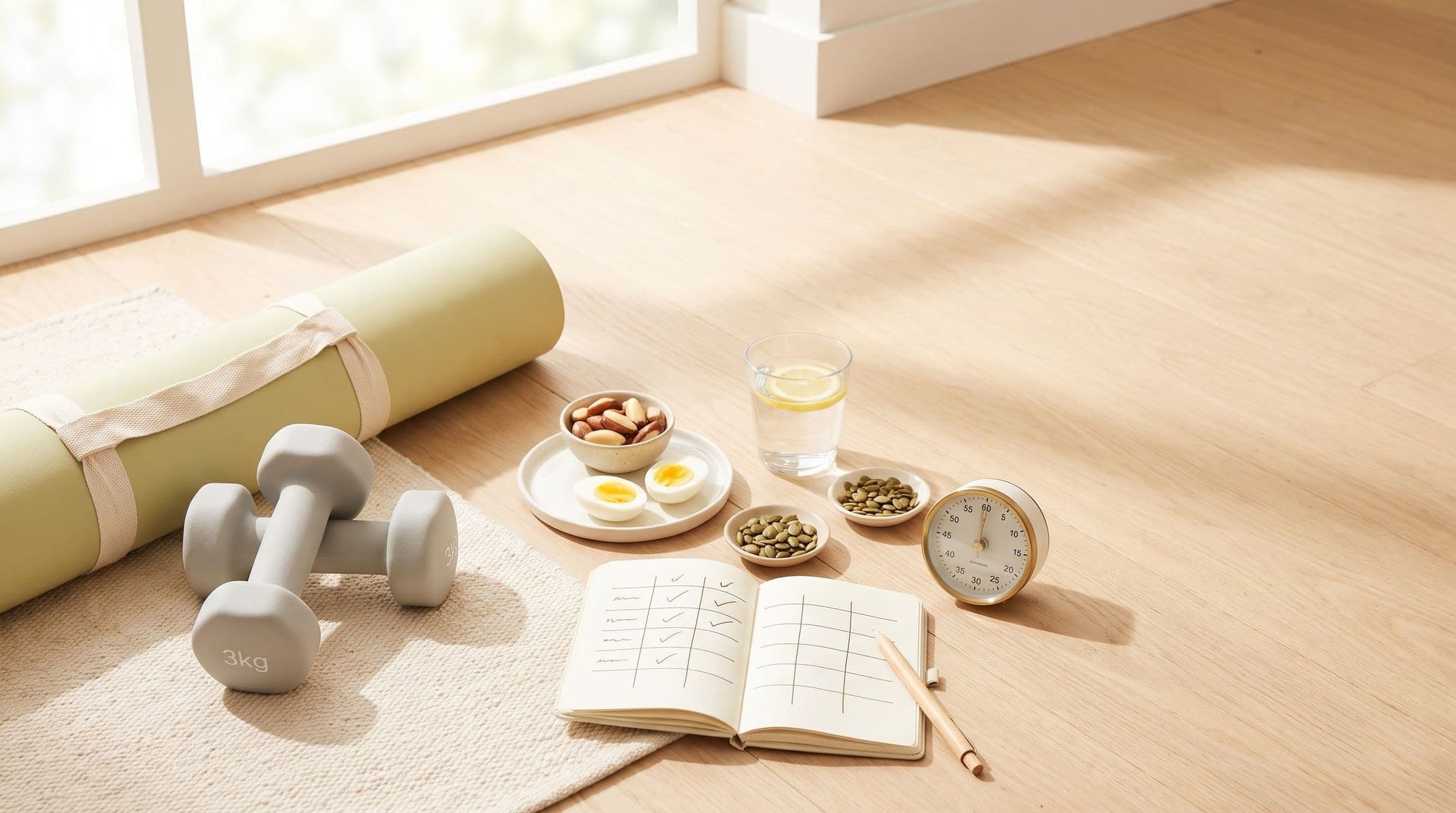
YourTrainer's PCOS and PCOD coaching helps Indian women build strength training and an Indian food plan around their cycle, with a coach who checks in each week. It works alongside your doctor's care and does not replace medical treatment. Plans run ₹8,000 to ₹18,000 a month, with a ₹499 trial session first. Start Your Journey
- 18.3%of website questionnaire forms ticked PCOS or PCOD (2 Jun to 14 Oct 2026, counted once per person)
- 1 in 7people filling our coaching assessment ticked PCOS or PCOD (Sep to Oct 2026)
- 18.5%of the same questionnaire forms reported insulin resistance or pre-diabetes
- 33% vs 29%median share of calories from fat on fully logged member days with a fried item, vs days without (19 Apr to 13 Oct 2026)
YourTrainer data, from the windows shown in each figure. Numbers are shares or medians, rounded, and are published with their method on our research page.
What PCOS does to weight and energy
Insulin is the thread that runs through most PCOS symptoms
PCOS is a syndrome, not a single test. Insulin resistance is common in it and raises the risk of type 2 diabetes and cardiovascular events over time1. Across India, the national ICMR-INDIAB survey found diabetes in 11.4% of adults and prediabetes in 15.3%, with generalised obesity at 28.6%4. That is why we look at energy and weight as well as the cycle.
Weight
Why the scale moves slowly
In our coaching, the waist and the weekly weight average move before the scale does, so we measure both from week one. Strength work is the first lever we pull, because the ESSA statement treats it as first-line alongside walking [3].
Energy
Why afternoons crash
In our sessions the afternoon slump usually follows a heavy lunch and a long gap. We move carbs to the part of the day you are active, add protein and fibre to every meal, and keep a short walk after the biggest meal.
From our questionnaire
What people who fill our website form tick
Share of website coaching questionnaires that ticked each condition. Counted once per person, 2 Jun to 14 Oct 2026. Stress is the top answer, and PCOS or PCOD sits level with insulin resistance.
What training helps
Two strength days, a walk most days, and rest that is planned
The ESSA position statement, built on the 2023 guideline, asks for 150 to 300 minutes of moderate activity or 75 to 150 minutes of vigorous activity a week, plus muscle-strengthening on two non-consecutive days3. Our coaches set the week so those targets are met without an hour a day in the gym.
A sample week
Strength lands on Monday and Wednesday, two non-consecutive days. The Tuesday and Thursday walks and the Friday intervals build the aerobic minutes, and your coach adds the week up against the 150 minute floor.
Your days, your times. You pick the days and the hours, in your own time zone, and a session can move when your week changes.
See the week day by day
- MonStrength and conditioningStrength A, about 35 min: goblet squat, one-arm row, incline push-up, glute bridge, plank (3 sets each). Then a 10 min walk after dinner.
- TueActive recoveryBrisk walk, 30 min, at a pace where you can talk in full sentences. Add 4 short hill or stair bursts if the week feels easy.
- WedStrength and conditioningStrength B, about 35 min: Romanian deadlift with light dumbbells, split squat, band row, shoulder press, dead bug. Then a 10 min walk.
- ThuActive recoveryA 30 min brisk walk, a cycle ride or a family game. Count the minutes, not the steps.
- FriHIIT, scaledShort bursts with longer rests, scaled to your energy and where you are in your cycle. Gentler on a low-energy day.
- SatNutrition callWeekly call with your nutritionist: the plate, your food photos and what changes next week.
- SunRestFull rest. A slow walk, sleep before midnight and a log of how you feel.
Sessions fall on alternate days, so your muscles get a day to recover in between.
“Exercises will make us strong but we also need the recovery to happen because the muscle is growing in the rest days.”
How we coach
How your coach runs every session
- Form corrected as you moveYour coach watches every rep on video and fixes your position in real time.About 10 corrections in a typical session
- Shown first, then you tryThe coach demonstrates the movement on camera, then watches you do it.67% of sessions
- Every rep counted with youYour coach counts the reps aloud and pushes you through the last ones.Every session we reviewed
- Mobility to startJoints and spine warmed up before any load goes on.At least 82% of sessions
- Stretching to finishSessions close with stretches for the muscles you trained.At least 84% of sessions
- Knowledge you keepThe coach explains why each exercise and cue matters, so you can train well on your own.About 2 in 3 sessions
- Habits for the days betweenSteps, water, sleep and protein tasks, checked at your next session.Water and steps come up in about 6 in 10 sessions
Corrections, explaining why, water and steps: a sample of recorded coached sessions, 17 Aug to 21 Oct 2026. The rest: 1-on-1 sessions recorded 1 to 21 October 2026, each reviewed in full. Some recordings start after the warm-up, so the mobility and stretching shares are a floor.
- Week 1 to 2: Learn the squat, hinge and row with light weight. Walks start at 20 minutes and rise to 30.
- Week 3 to 6: Add a set or a few reps when the log says you can. Strength B gets its first load increase.
- Week 7 to 12: Review the waist, the strength log and sleep together, then change one thing at a time.
Food changes in an Indian kitchen
A plate with real portions, not a list of banned foods
Our clinical nutritionist, Priyanka Dey (M.Sc Clinical Nutrition and Dietetics), builds the food plan around the meals you already eat. This is the plate guide we start from. Portions are for an adult woman, and we adjust them with your doctor.
Half
Vegetables
- 1 to 1.5 katori of cooked sabzi, or a bowl of salad
- Cook with 1 tsp measured oil, not a pour
- Cabbage, beans, gourd, spinach and tomato all count
Quarter
Protein
- 1 katori dal or chana, or 100 g paneer or tofu
- Or 2 eggs, or 100 g chicken or fish
- A katori of curd with lunch or dinner
Quarter
Whole grains
- 1 to 2 whole wheat rotis, or 3/4 katori of brown rice or millet
- Jowar, bajra or ragi roti on some days
- Keep the grain portion the same at every meal
| Usual | Swap |
|---|---|
| Two bowls of white rice with dal | One and a half katori rice, or 1 to 2 whole wheat rotis, with a full katori of dal and a vegetable |
| Maida parotha or a stuffed paratha with butter | Whole wheat roti with a teaspoon of ghee or none, plus sabzi and curd |
| Samosa, pakora or vada as an evening snack | Roasted chana, sprouts chaat or a boiled egg, with a small fruit |
| Sweet tea or coffee with 3 sugars through the day | Chai with less sugar, and a glass of water before each cup |
| Fried curry or a deep-fried side at lunch | Same curry made with 1 tsp measured oil, grilled paneer or tofu instead of fried |
What we track
Six numbers, reviewed every week with your coach
Weight trend, not the daily number
A weekly average from the same scale, with the waist measured at the navel every two weeks.
Strength log
Load and reps for each exercise. We look for the same weight done for more reps, which shows progress even when the scale is slow.
Walks and steps
Minutes of brisk walking per week against the 150 minute target from the ESSA statement.
Cycle and symptoms
Period dates, cycle length and two lines on sleep and energy each week, so the coach can see patterns with your doctor.
Food log
Only the fried items, sweet drinks and meals you skip. Not a calorie count you have to fight with daily.
Lab results you bring
Your doctor's reports, such as HbA1c or thyroid tests, are read with your doctor. We do not diagnose from them.
How the coach and nutritionist work with your doctor
Your doctor makes the medical calls. We make the weekly plan.
Your doctor
Diagnoses PCOS, prescribes and changes medication, orders tests and reads them.
Your coach
Plans the training and walking week, tracks the log and adjusts it when your energy, sleep or cycle changes.
Keep taking any medicine as prescribed. If your doctor changes it, or a lab result changes, tell your coach so the plan can follow. The team includes Coach Tanmanna, a women's strength and conditioning coach, and our clinical nutritionist.
Women members, in their own words
What women who train with us say about strength and energy
In their own words, from their video reviews. They talk about training with us in general, not about PCOS. Results vary from person to person.
“Now it's been more than two months and I can see the far difference between now and then. Now I feel very strengthened and energetic and happy and lively and more or less I can play with my son.”
“I'm a working woman, along with that, I'm doing some household work. So earlier I used to be very stressful and not able to manage anything.”
“My trainer really understands my requirements. He understands my lifestyle and he has catered a schedule and a diet that suits me.”
“I am able to do my classes regularly, and I have certainly felt an increase in my strength and flexibility.”
Questions people ask
PCOS and PCOD: answers from our coaches
How is this program different from a regular fitness program?
Our PCOS plans start from lifestyle change, which the ESSA statement describes as first-line in PCOS care, with muscle strength and a steady walking habit [2][3]. The strength work is built to be done at home or in a gym, and the food plan uses the Indian kitchen you already have.
Will exercise help with my PCOD/PCOS symptoms?
Exercise is a first-line part of PCOS care, and the ESSA statement describes structured programmes for it [3]. What changes first is usually strength, energy and how you feel. Cycle and blood markers are followed with your doctor. We do not promise changes in them.
Do I need a strict diet to manage PCOS?
No crash diet. We ask for protein at each meal, vegetables on half the plate and fewer fried items. In our member food logs, days with a fried item had a median 33% of calories from fat, against 29% on days without one (19 Apr to 13 Oct 2026). Small swaps add up without giving up rice, roti or your favourite curry.
How long until I see results with PCOS?
We judge progress over 8 to 12 weeks, through the strength log, the weekly weight average, waist and sleep. Medical markers such as HbA1c, androgens or cycle changes come from your doctor's tests, and they can take longer to move.
What is the best exercise for PCOS?
The ESSA statement asks for 150 to 300 minutes of moderate activity, or 75 to 150 minutes of vigorous activity, each week, plus muscle-strengthening on two non-consecutive days [3]. Our sample week above does this with brisk walks and two strength sessions. The 2023 guideline is the basis for the international recommendations [2].
What is the difference between PCOD and PCOS?
In India the two names are often used for the same condition. Doctors use the Rotterdam criteria: the diagnosis needs ovarian dysfunction, signs of excess androgen or polycystic ovaries on scan, and no single criterion is enough on its own [1]. Some clinicians now use the name PMOS, which describes the wider metabolic picture. Your doctor makes the diagnosis; we plan training and food around it.
Is there a 7-day Indian diet plan for PCOS?
Our free 7-day Indian vegetarian PCOS diet plan is on the blog and gives a starting shape. The coached plan is built from your own kitchen, your cooking oil, your work hours and your doctor's advice, and it changes week to week as the logs come in.
Can I do this program from home?
Yes. Home training, gym training and online coaching are all available. The sample week uses bodyweight and light dumbbells, so it works in a small room. Your coach changes the exercises to match what you own.
Do you change my PCOS medication?
No. Medication stays with your doctor. Keep taking what you are prescribed, and tell your coach if your doctor changes it, so the training and food plan can match.
Can I train during my period?
Yes, most people can. Lower the load on heavy days, keep the walk, and skip any session that brings on dizziness or pain that you cannot train through. Tell your coach, and your doctor if the pain is severe or new.
Sources
- Rotterdam ESHRE/ASRM-sponsored PCOS Consensus Workshop Group. Revised 2003 consensus on diagnostic criteria and long-term health risks related to polycystic ovary syndrome. Fertility and Sterility. 2004. https://pubmed.ncbi.nlm.nih.gov/14711538/
- Teede HJ, Tay CT, Laven JJE, et al. Recommendations from the 2023 International Evidence-based Guideline for the Assessment and Management of Polycystic Ovary Syndrome. Fertility and Sterility. 2023. doi:10.1016/j.fertnstert.2023.07.025. https://pubmed.ncbi.nlm.nih.gov/37589624/
- Exercise and Sports Science Australia. Exercise in the management of polycystic ovary syndrome: a position statement. Journal of Science and Medicine in Sport. 2024. https://pubmed.ncbi.nlm.nih.gov/38960811/
- Anjana RM, Unnikrishnan R, Deepa M, et al. Metabolic non-communicable disease health report of India: the ICMR-INDIAB national cross-sectional study. Lancet Diabetes and Endocrinology. 2023. https://pubmed.ncbi.nlm.nih.gov/37301218/
- YourTrainer data: website coaching questionnaires, 2 Jun to 14 Oct 2026; coaching assessments, Sep to Oct 2026; member food logs, 19 Apr to 13 Oct 2026. Shares and medians, aggregated and anonymised. Method at /research.
PCOS and PCOD topic
Related pages
All health coaching: PCOS, diabetes, thyroid and pain
- PCOD vs PCOS: is there really a difference?
- PCOS renamed PMOS: what it means for Indian women
- PCOS workout plan: a 4-week home routine
- 7-day Indian vegetarian PCOS diet plan
- PCOS weight loss: a 12-week Indian plan
- PCOS or thyroid? How to tell the weight gain apart
- Period weight gain: what our coaches change
- PCOS coaching for Indians in the USA
- PCOS coaching in Dubai
- PCOS diet coaching: a plan from your food log
- PCOS diet for Indian women abroad
- PCOS breakfast bowl with Greek yogurt and sprouts
- PCOS coaching in Singapore
- Female personal trainers across India
- PCOS, thyroid and hormonal weight topics
Keep reading
- PCOS week plannerPlan the week for training and meals
- Health coaching hubPCOS, diabetes, thyroid and pain
- Thyroid coachingWhen thyroid and PCOS come together
- Diabetes reversal coachingFor people with type 2 diabetes or pre-diabetes
- YourTrainer health dataThe numbers on this page, with the method
- Start Your JourneyA free consultation to plan your weeks
Plan your first four weeks with a coach
Share your routine, your kitchen and your doctor's notes. We plan the training and food around them.
Start Your JourneyGet started
Ready to take control of your health?
Book a free consultation and let's discuss your health goals. We'll create a personalized cycle-synced plan just for you. Want to see how our coaches handle period symptoms during training? Read what the coaches change.
- 0130-minute call with a fitness expert
- 02Personalized cycle-synced program recommendation
- 03No commitment required
- 04Female coaches available, just ask at your consultation
Let's Get Started
Fill in your details and our expert will reach out to you.
Not ready for coaching yet?