How Much Protein Should an Indian Eat? (Vegetarian Chart Included)
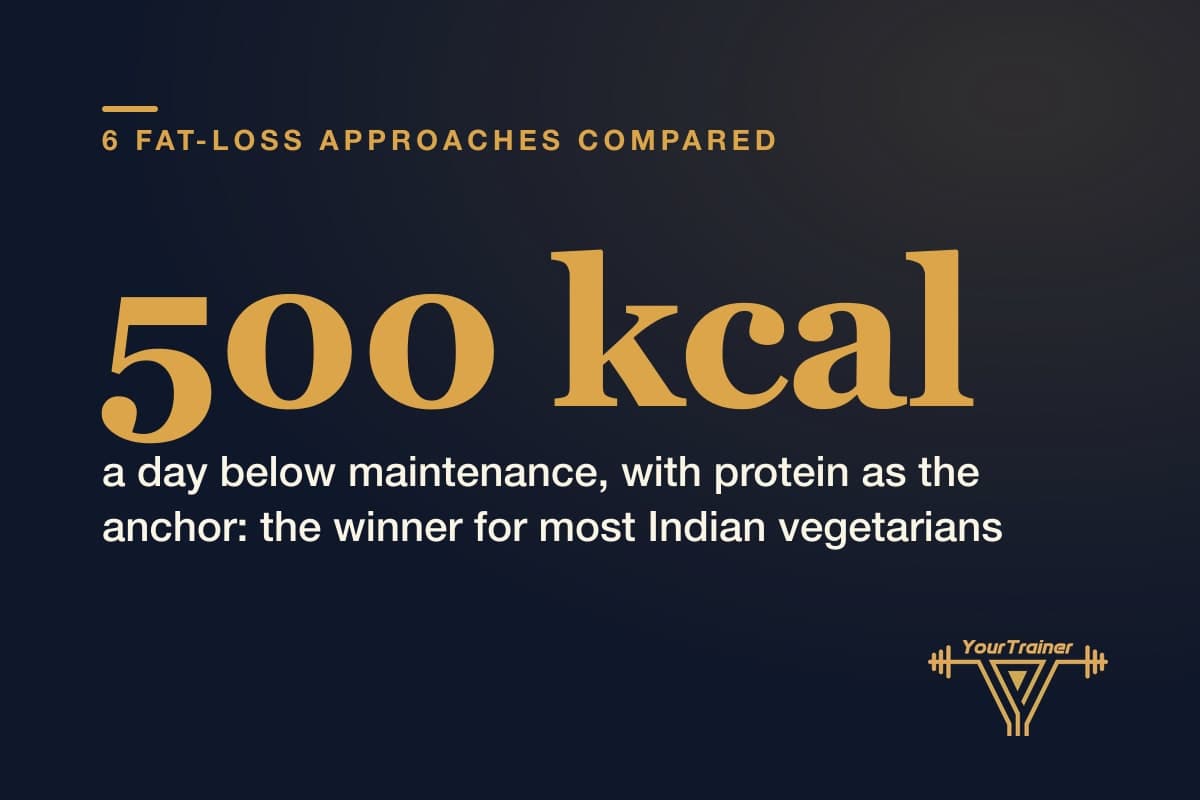
Protein targets by goal, veg and non-veg sources with quantities, a 30-food chart, and how to hit 100 to 150 g a day on Indian food without whey.
Free interactive tool
Enter your weight and goal to get your number, translated into real Indian food servings.
Calculate your protein target →Quick answer: Indians need 0.8-2.0g protein per kg body weight depending on goal. Sedentary adults: 0.8-1.0g/kg. Active (3-5 workouts/week) or fat loss: 1.4-1.8g/kg. Building muscle: 1.6-2.0g/kg. For a 65 kg adult, that's 52g (sedentary) up to 130g (muscle gain). Indian vegetarians can absolutely hit 130-160g/day on dal, paneer, soya, curd, and eggs without supplements. Full chart of 30 Indian foods + 5 daily meal templates below.
The daily total matters less than how it is split; see protein per meal on an Indian plate.
What coached members actually reached
91 g
median protein on a fully logged day
60%
of fully logged days reached 80 g
80 to 110 g
the daily target our coaches set for women
20 g
per meal, the split coaches recommend
Source: A sample of member food logs from the YourTrainer app, 19 April to 17 September 2026. Members only, aggregated, each food logged by at least three members in the sample, using the app's food-database values for the portion logged; targets from A sample of YourTrainer coaching sessions reviewed as case studies, 17 Aug to 7 Sep 2026, client names removed
Here is how members in the sample got there with ordinary Indian food. Read the food-log study.
The Big Indian Protein Problem
The average Indian adult eats around 40-50g protein per day. The lowest end of need is 50g. Most active Indians and anyone trying to lose fat or build muscle is grossly under-eating protein, and wondering why they feel hungry, lose muscle when they cut calories, and gain back weight every time.
This is fixable in one week. You don't need supplements. You don't need to give up vegetarian. You need to know exactly how much of which food gets you to your number.
Your Daily Protein Target (By Goal)
Sedentary maintenance: 0.8-1.0g per kg body weight
Desk job, no structured exercise. Per kg of body weight, not per kg of ideal weight. 65 kg adult: 52-65g/day.
Active general fitness: 1.2-1.6g per kg
3-5 workouts/week (gym, sport, yoga). 65 kg adult: 78-104g/day.
Fat loss / cutting: 1.6-2.0g per kg
In a calorie deficit, protein protects muscle. 65 kg adult: 104-130g/day.
Muscle building: 1.6-2.2g per kg
Strength training + calorie surplus. 65 kg adult: 104-143g/day.
Special populations
Pregnant + lactating: +25g/day on top of baseline. PCOS / insulin resistance: trend toward higher end (1.6-2.0g/kg), protein improves satiety + insulin sensitivity. Elderly (60+): higher than younger adults (1.2-1.4g/kg minimum) to fight sarcopenia.
Use our calorie calculator + macro calculator to get your exact numbers.
Why Indians Specifically Need More Protein (Not Less)
- Higher visceral fat at lower weights: the "thin-fat Indian" phenotype means we need protein to build the muscle that fights this.
- PCOS prevalence in women: one in five Indian women. Higher protein improves insulin response.
- Vegetarianism + carb-heavy traditional diet: traditional Indian eating is rice + roti + sabzi heavy, dal-light. Protein takes deliberate planning.
- Sarcopenia in 50+: Indians lose muscle mass faster after 50 due to lower lifetime protein intake.
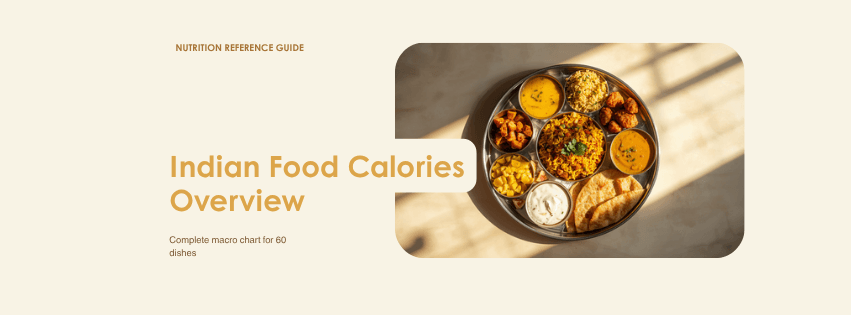
The 30-Food Indian Protein Chart
Vegetarian sources (per typical serving)
| Food | Serving | Protein |
|---|---|---|
| Paneer (full fat) | 100g | 18g |
| Soya chunks (dry weight) | 30g (~70g cooked) | 16g |
| Tofu (firm) | 100g | 14g |
| Sprouts (moong / mixed) | 1 cup (~80g) | 14g |
| Dal (toor / moong / masoor) | 1 katori (~200g cooked) | 10g |
| Rajma (cooked) | 1 katori | 10g |
| Chole / kabuli chana (cooked) | 1 katori | 9g |
| Greek yogurt (low fat) | 1 cup (200g) | 17g |
| Regular dahi (full fat) | 1 cup (200g) | 8g |
| Whole milk | 1 cup (200ml) | 7g |
| Cottage cheese / chenna | 100g | 11g |
| Egg (whole) | 1 large | 6g |
| Egg white | 1 | 3.5g |
| Roasted chana | 1 fistful (40g) | 8g |
| Peanuts (raw, shelled) | 30g | 8g |
| Almonds | 10 nuts (~14g) | 3g |
| Roti (atta) | 1 medium | 3g |
| Brown rice (cooked) | 1 katori | 4g |
| Besan (chickpea flour) | 30g (1 chilla) | 6g |
| Hemp / pumpkin seeds | 1 tbsp | 3g |
Non-veg sources
| Food | Serving | Protein |
|---|---|---|
| Chicken breast (cooked) | 100g | 31g |
| Chicken thigh (cooked) | 100g | 26g |
| Fish, rohu / surmai / pomfret | 100g cooked | 22g |
| Prawns (cooked) | 100g | 24g |
| Mutton / kheema (lean, cooked) | 100g | 26g |
| Tuna (canned, water) | 100g | 26g |
| Anda bhurji (3 eggs) | 1 plate | 18g |
Optional supplements (if not hitting target)
| Food | Serving | Protein |
|---|---|---|
| Whey protein concentrate | 1 scoop (30g) | 22-24g |
| Whey isolate | 1 scoop (30g) | 25-27g |
| Plant protein (pea + rice) | 1 scoop (30g) | 20-22g |
Coaching that does this for you
Reading is step one. A coach turns it into a plan built around your body, food & schedule.
100% online · Indian meal plans · weekly progress reviews · daily WhatsApp support.
Start Your Journey →5 Daily Meal Templates Hitting 100-140g Protein
Template 1: Indian Vegetarian (110g protein, ~1,800 kcal)
- Breakfast: 3-egg paneer chilla (28g)
- Mid-morning: 1 cup curd + flax + apple (10g)
- Lunch: 1 katori dal + 100g paneer + 1 katori brown rice + raita (32g)
- Snack: 1 fistful roasted chana + buttermilk (12g)
- Dinner: 2 jowar roti + 100g tofu sabzi + curd (28g)
Template 2: Pure Indian Vegetarian, No Whey (130g protein, ~2,000 kcal)
- Breakfast: Besan chilla + 1 cup soy milk + sprouts (32g)
- Mid-morning: 1 cup Greek yogurt + 1 tbsp pumpkin seeds (20g)
- Lunch: 1 katori dal + 30g dry soya curry + 1 katori rice + paneer sabzi 80g (38g)
- Snack: 1 fistful roasted chana + 10 almonds (12g)
- Dinner: 2 ragi roti + 100g tofu + chana sabzi + curd (28g)
Template 3: Vegetarian + Eggs (135g protein, ~1,900 kcal)
- Breakfast: 4-egg omelette + 1 slice multigrain toast (28g)
- Mid-morning: 1 cup curd + 1 boiled egg + apple (16g)
- Lunch: 1 katori dal + 100g paneer + 1 katori rice (32g)
- Snack: 2 boiled eggs + green tea (12g)
- Dinner: 2 jowar roti + 100g tofu + curd (28g)
- Bedtime: 1 cup milk (7g)
Template 4: Non-Veg, Moderate (140g protein, ~2,000 kcal)
- Breakfast: 3-egg omelette + 1 slice toast + cucumber (28g)
- Mid-morning: 1 cup curd + flax + apple (10g)
- Lunch: 150g chicken curry + 1 katori brown rice + bhindi (42g)
- Snack: 1 boiled egg + 10 almonds (10g)
- Dinner: 150g fish curry + 2 roti + raita (40g)
- Bedtime: 1 cup milk (7g)
Template 5: Non-Veg, High Protein (160g protein, ~2,200 kcal)
- Breakfast: 4-egg omelette + 100g chicken sausage (40g)
- Mid-morning: 1 cup Greek yogurt + flax (17g)
- Lunch: 200g chicken + 1 katori rice + bhindi + raita (55g)
- Snack: 1 boiled egg + 10 almonds (10g)
- Dinner: 200g fish + 2 roti + curd (45g)
Do You Need Whey?
No, if you can hit your target with food. Whey is a convenient way to add 25g protein in a shake. That's all. It has no magical muscle-building effect that food doesn't. Read our protein myths article.
Yes, if you genuinely struggle to hit 1.6g/kg on food. 1 scoop whey post-workout + 1 scoop with curd at night = 50g additional protein with minimal time / calorie cost. For busy professionals targeting 130g+ daily, whey is practical.
What about protein powder kidney damage? Myth for healthy kidneys. Read the research breakdown.
Protein Distribution Across the Day
Don't dump 80g protein in dinner and skip breakfast / lunch. Spread it: 25-40g protein per meal × 4 meals = 100-160g/day. Your body absorbs 25-40g per "feeding window" (every 3-4 hours) optimally. Beyond 40g in one sitting, oxidation rises and you waste protein.
Practical: aim for 25g protein at breakfast, 30g at lunch, 25g snack/mid-meal, 30g at dinner.
Common Indian Protein Mistakes
- Counting roti + rice as "protein-heavy." Roti has 3g, rice 4g. They're carbs, not protein sources.
- Eyeballing dal portions. 1 katori cooked = 10g protein. A spoonful as "side" doesn't count.
- Thinking sprouts replaces meat. 1 cup sprouts = 14g. 100g chicken = 31g. You'd need 2 cups sprouts to match.
- Skipping protein at breakfast. Aloo paratha + chai = 8g protein. Egg chilla = 26g.
- Underestimating need at 50+. Older Indians actually need MORE protein per kg, not less.
What About PCOS / Thyroid / Diabetes?
- PCOS: Target 1.6-2.0g/kg. Higher protein improves insulin sensitivity + satiety. See PCOS program.
- Hypothyroid: 1.4-1.6g/kg. Protein supports T3 conversion + muscle maintenance during low-metabolism phases.
- Type-2 diabetes: 1.2-1.6g/kg. Improves glycemic control + helps fat loss.
- Kidney disease (CKD diagnosed): Different, work with your nephrologist. Standard protein targets don't apply.
Where the protein came from
- Dinner29 g
- Breakfast24.6 g
- Lunch23 g
- Snack13 g
Source: A sample of member food logs from the YourTrainer app, 19 April to 17 September 2026. Members only, aggregated, each food logged by at least three members in the sample, using the app's food-database values for the portion logged
| Food | Typical portion | Calories, protein |
|---|---|---|
| Whey protein | 1 scoop | 120 kcal, 24 g |
| Chicken breast | 150 g | 248 kcal, 46.5 g |
| Soya chunks | 75 g dry | 248 kcal, 39 g |
| Boiled eggs | 2 eggs | 156 kcal, 13 g |
| Dal | 1 bowl | 150 kcal, 9 g |
| Paneer | 50 g | 133 kcal, 9 g |
| Dahi (curd) | 100 g | 61 kcal, 4 g |
Source: A sample of member food logs from the YourTrainer app, 19 April to 17 September 2026. Members only, aggregated, each food logged by at least three members in the sample, using the app's food-database values for the portion logged
Fix Your Protein in One Week
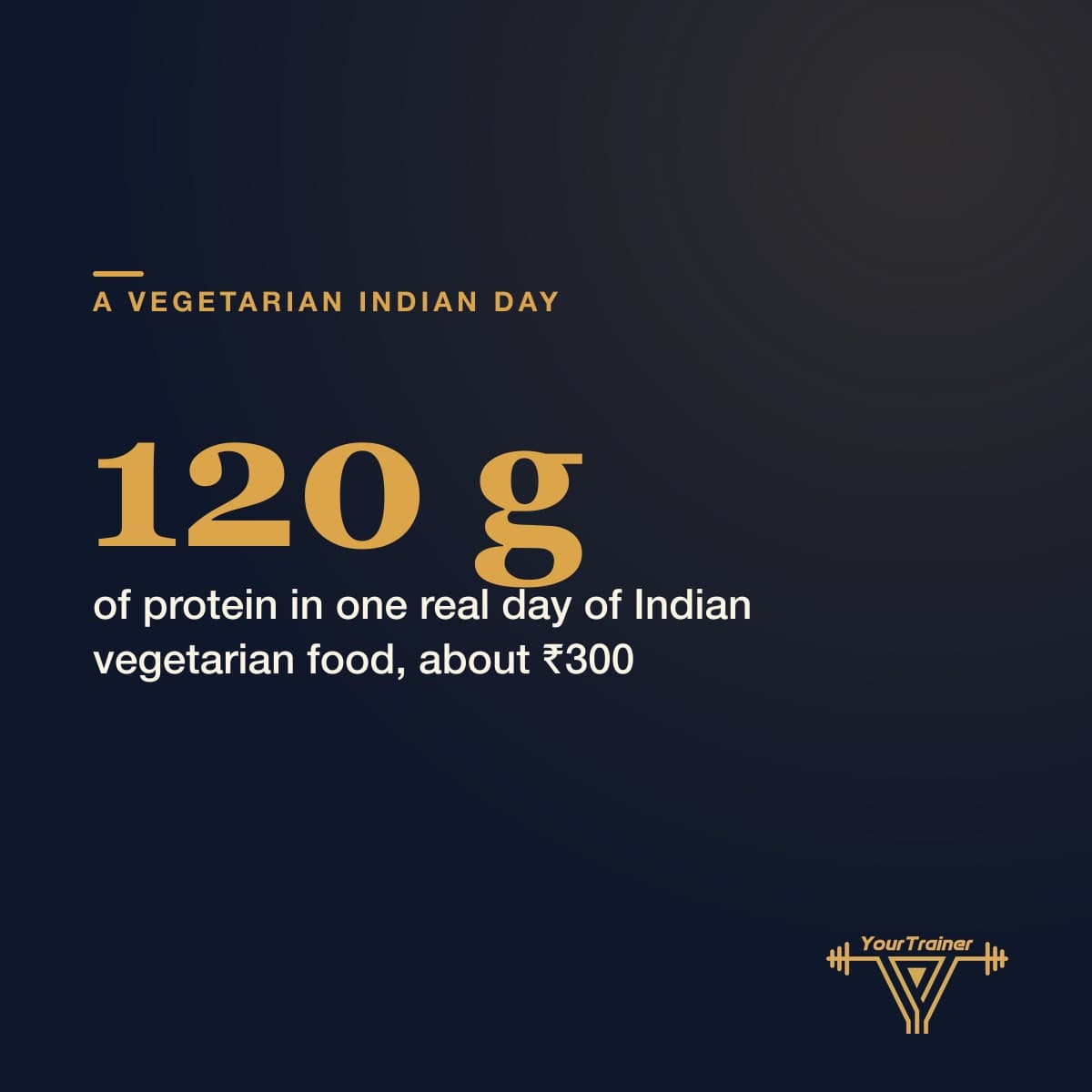
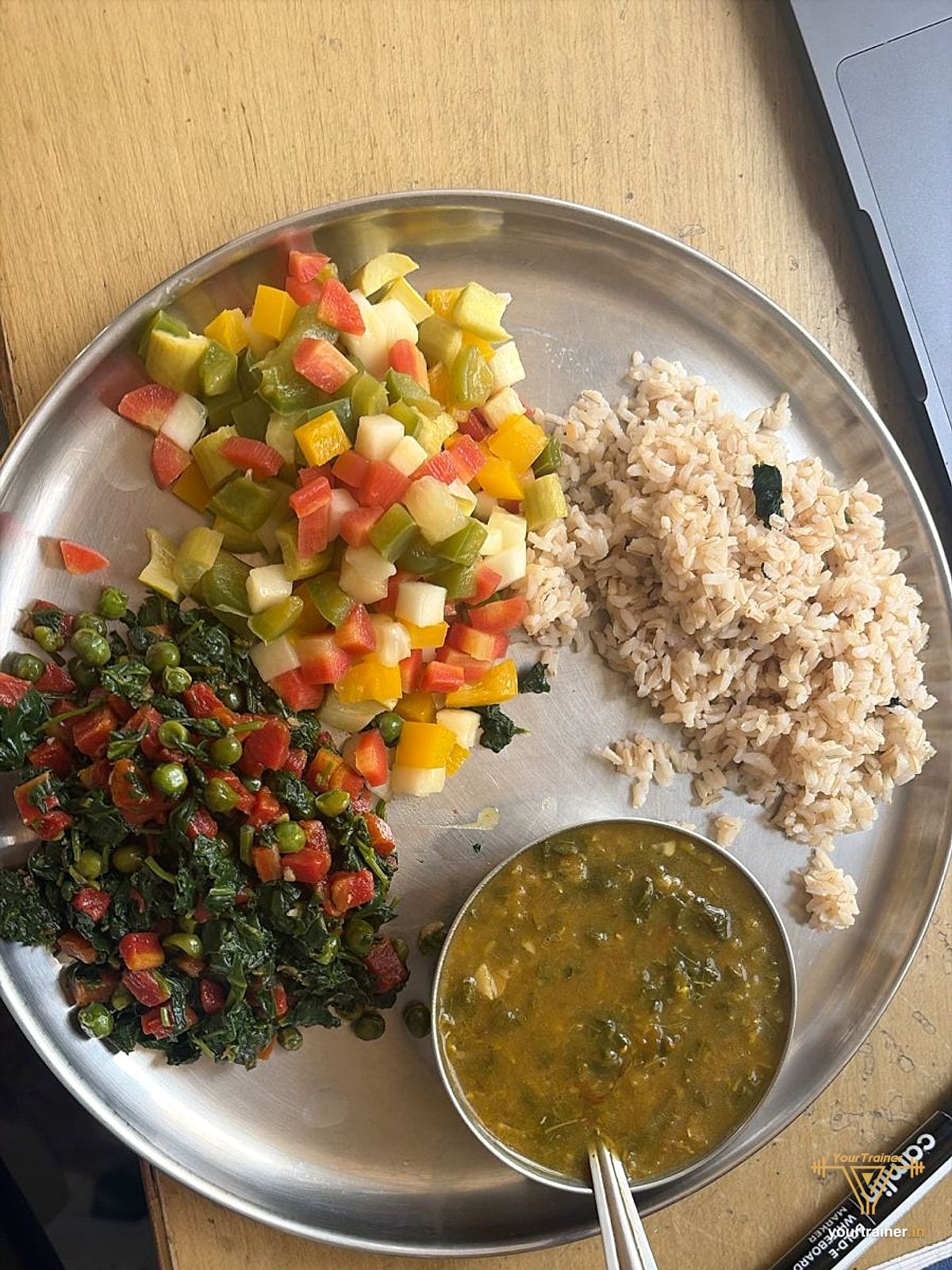
Most Indians under-eat protein by 50%. Fix it in one week by adding 25-30g protein at every meal using the chart above. Vegetarians can hit 130g+/day on dal + paneer + soya + curd + eggs without supplements. Non-vegetarians get there faster with 150-200g chicken / fish at lunch + dinner.
The protein target unlocks: better satiety, muscle preservation during fat loss, easier muscle gain, better blood sugar control, and the body composition change you've been chasing.
→ Book a Free Discovery Call for a custom Indian meal plan around your protein target. No sales pitch.
Or chat with us on WhatsApp: +91 98801 35754
Coach Anish, Founder & Head Coach at YourTrainer
Sources
- Indian Food Composition Tables (IFCT) 2017 · ICMR, National Institute of Nutrition
- Nutrient Requirements for Indians (RDA and EAR) · ICMR, National Institute of Nutrition
- Healthy diet · World Health Organization
- Dietary profiles and metabolic risk factors in India (ICMR-INDIAB survey) · Nature Medicine
Coaching guidance on this site is educational and is not a substitute for medical advice. See how we use sources.
Did you find this helpful?

About Anish Agarwal
Founder & Head Coach, YourTrainer · NASM & K11 Certified Personal Trainer · coaching since 2022
Featured in Dietitians.io, Fitness Interview, NRI Pulse, The MASALA Study. Press and media
Anish Agarwal is a NASM and K11 certified personal trainer coaching fat loss, body transformation, strength, and nutrition for clients across India since 2022. He founded YourTrainer to make expert, science-based coaching accessible online and in Bengaluru. Coach Anish's profile and the YourTrainer story.
Free on iPhone and Android
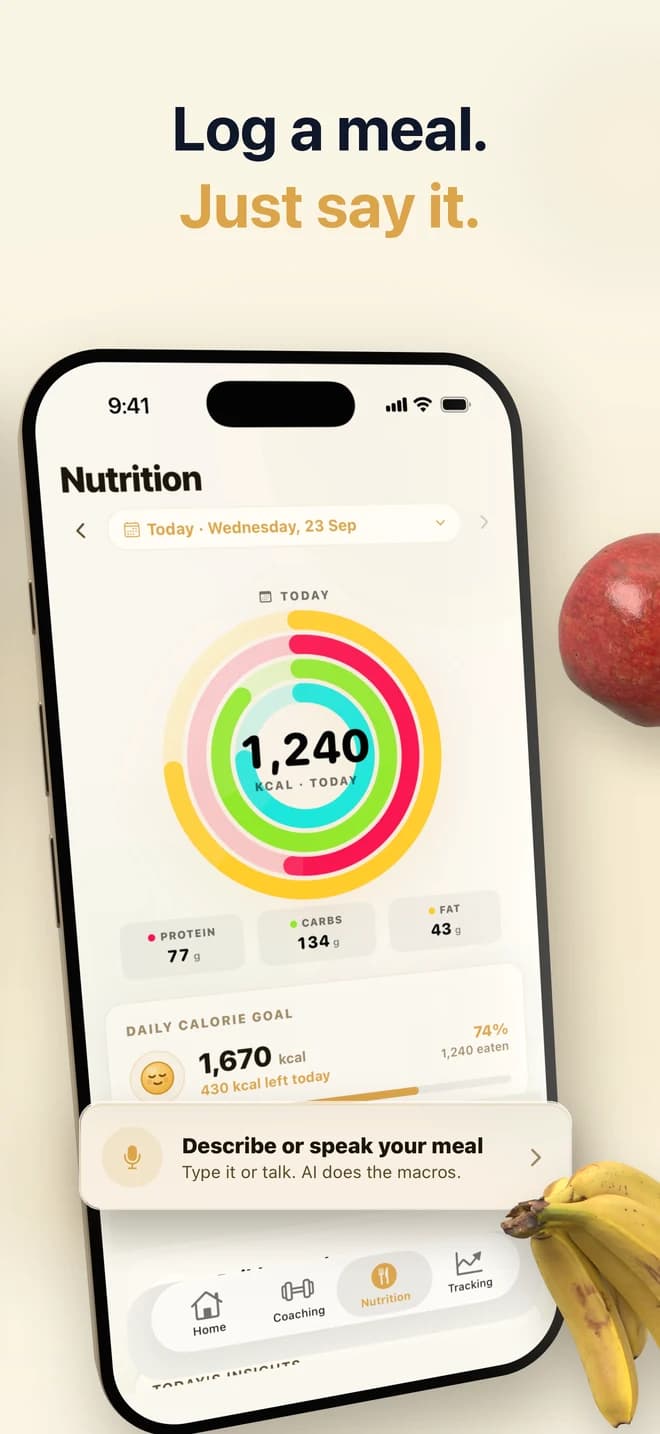
Log this in the YourTrainer app
Search or photograph an Indian dish, set your portion, and the app keeps your calories and protein for the day.
Online 1-on-1 Coaching
Start Your Journey
Get a personalised training + Indian nutrition plan built around your goal, coached online, anywhere in India or abroad.
Trusted by 1,000+ clients coached across India & abroad
Free 30-min discovery call · No obligation