Indian Food Calories & Katori Portion Chart: 60 Dishes (2026)
1 bowl sabzi 80 to 130 kcal by the oil: lauki 80, bhindi 120. Rice 175 kcal a katori, toor dal 160, roti 80, palak paneer 280. 60 dishes in katoris.
Free interactive tool
Rather than reading a chart, add your actual rotis, dal and sabzi and get the totals plus your macro split.
Build your plate in the calculator →Quick answer: One medium katori of sabzi is about 80 to 130 kcal depending on the vegetable and the oil (lauki 80, bhindi 120, mixed veg 130). In the same katori, steamed white rice is about 175 kcal, toor dal about 160 kcal with 9 g protein, and palak paneer about 280 kcal with 13 g protein. One medium chapati without ghee is about 80 kcal, and 2 idlis with a katori of sambar come to about 165 kcal. The full chart below covers 60 dishes with protein, carbs and fat.
If you've ever logged "1 cup palak paneer" in MyFitnessPal and seen 4 wildly different calorie counts, from 90 to 320, you've experienced the core problem with Indian calorie tracking. The Western apps don't know what an Indian katori is. They don't know that your aunty's palak paneer has 3 tbsp cream and 2 tbsp ghee. And they definitely don't know the difference between a Hyderabadi dum biryani and a Lucknowi pulao.
I've coached over 1,000 Indians on fat loss, muscle gain, diabetes, and PCOS, and the single biggest reason "I'm eating clean but not losing weight" happens is bad calorie estimates on home-cooked food. People underestimate by 30-50% routinely. That gap quietly kills any fat loss attempt.
This chart fixes that. 60 of the most-eaten Indian dishes, measured in realistic Indian portion sizes (the medium katori, not the American "1 cup"), with calorie + protein + carb + fat breakdowns. Use this in tandem with our calorie calculator, macro calculator and TDEE calculator to actually nail your numbers.
For meals that hit the protein column without a second pan, see one-pot high-protein khichdi and pulao recipes.
How our members' days add up
1,532 kcal
median on a fully logged day
91 g
median protein on a fully logged day
50 g
typical paneer serving: 133 kcal, 9 g protein
13 g
median protein in a snack, the weakest meal
Source: A sample of member food logs from the YourTrainer app, 19 April to 17 September 2026. Members only, aggregated, each food logged by at least three members in the sample, using the app's food-database values for the portion logged
This chart gives the standard values. Here is what members in our sample actually ate. Read the full food-log study.
How Many Calories in 1 Bowl of Sabzi?
One medium bowl (katori, about 150 ml) of home-cooked sabzi is about 80 to 130 kcal, depending on the vegetable and the oil. Lauki is about 80 kcal, bhindi about 120 and mixed veg about 130. Paneer and cream gravies are much higher, palak paneer is about 280 kcal a bowl.
| 1 bowl (medium katori) | Kcal | Protein |
|---|---|---|
| Lauki sabzi | ~80 | ~2 g |
| Bhindi sabzi | ~120 | ~3 g |
| Mixed veg sabzi | ~130 | ~4 g |
| Palak paneer | ~280 | ~13 g |
The Portion Size Problem (Why This Chart Differs From Apps)
What is "1 katori"? In our coaching practice, we use these standardized sizes, they match the medium steel katoris you'd find in most Indian kitchens:
- 1 small katori = ~100 ml volume (~80g rice, ~120g dal)
- 1 medium katori = ~150 ml (~120g rice, ~180g dal) ← default in this chart
- 1 large katori = ~200 ml (~160g rice, ~240g dal)
- 1 chamcha (serving spoon) = ~15g for thick sabzi, ~20g for gravy
- 1 medium roti = ~35g (using 1 small fistful of dough)
- 1 medium dosa = ~120g (one ladle of batter on a tava)
Verify YOUR portions by weighing once with a kitchen scale (₹400 on Amazon). After that, you can eyeball confidently. This single step, weighing your "katori", fixes 80% of the underestimation problem.
Indian Breakfasts (Per Standard Serving)
- 2 medium idli + 1 katori sambar: 165 kcal · 7g protein · 31g carbs · 1g fat
- 1 medium dosa + chutney + sambar: 220 kcal · 6g protein · 35g carbs · 7g fat
- 1 masala dosa + chutney + sambar: 350 kcal · 8g protein · 50g carbs · 13g fat
- 2 medium uttapam + chutney: 280 kcal · 8g protein · 42g carbs · 8g fat
- 1 katori upma (rava): 220 kcal · 6g protein · 35g carbs · 6g fat
- 1 katori vegetable poha: 250 kcal · 7g protein · 40g carbs · 7g fat
- 2 besan chilla: 240 kcal · 14g protein · 22g carbs · 10g fat
- 2 moong dal cheela: 180 kcal · 14g protein · 18g carbs · 4g fat
- 2 medium aloo paratha + curd: 460 kcal · 14g protein · 60g carbs · 18g fat
- 2 medium plain paratha + curd: 380 kcal · 10g protein · 50g carbs · 15g fat
- 1 katori oats porridge (in milk): 200 kcal · 9g protein · 30g carbs · 5g fat
- 2 boiled eggs + 1 toast: 230 kcal · 16g protein · 16g carbs · 12g fat
Rice Dishes (1 Medium Katori, Cooked)
- White rice (steamed): 175 kcal · 4g protein · 38g carbs · 0g fat
- Brown rice (steamed): 180 kcal · 5g protein · 36g carbs · 2g fat
- Red rice (steamed): 185 kcal · 5g protein · 38g carbs · 1g fat
- Jeera rice: 220 kcal · 4g protein · 35g carbs · 8g fat
- Vegetable pulao: 240 kcal · 6g protein · 40g carbs · 7g fat
- Vegetable biryani: 320 kcal · 8g protein · 45g carbs · 12g fat
- Chicken biryani (1 plate, ~250g): 480 kcal · 22g protein · 55g carbs · 18g fat
- Curd rice: 200 kcal · 7g protein · 30g carbs · 5g fat
- Lemon rice: 200 kcal · 5g protein · 35g carbs · 4g fat
- Khichdi (moong + rice): 210 kcal · 9g protein · 35g carbs · 4g fat
- Foxtail millet (cooked, 1 katori): 170 kcal · 5g protein · 32g carbs · 2g fat
Rotis, Parathas, Breads (Per Piece)
- 1 medium chapati (atta, no ghee): 80 kcal · 3g protein · 16g carbs · 1g fat
- 1 medium chapati with 1 tsp ghee: 115 kcal · 3g protein · 16g carbs · 5g fat
- 1 medium jowar roti: 100 kcal · 3g protein · 20g carbs · 1g fat
- 1 medium bajra roti: 110 kcal · 3g protein · 22g carbs · 1g fat
- 1 medium ragi roti: 95 kcal · 3g protein · 19g carbs · 1g fat
- 1 medium plain paratha: 170 kcal · 4g protein · 22g carbs · 7g fat
- 1 medium aloo paratha: 220 kcal · 6g protein · 30g carbs · 9g fat
- 1 medium butter naan: 280 kcal · 7g protein · 38g carbs · 11g fat
- 1 medium tandoori roti: 130 kcal · 4g protein · 24g carbs · 2g fat
- 2 medium puris (deep-fried): 200 kcal · 4g protein · 24g carbs · 10g fat
Dals (1 Medium Katori)
- Moong dal tadka: 145 kcal · 9g protein · 18g carbs · 3g fat
- Chana dal: 180 kcal · 11g protein · 22g carbs · 4g fat
- Masoor dal (red lentil): 150 kcal · 10g protein · 19g carbs · 3g fat
- Toor / arhar dal: 160 kcal · 9g protein · 20g carbs · 3g fat
- Dal makhani (with cream + butter): 280 kcal · 11g protein · 22g carbs · 14g fat
- Rajma curry: 200 kcal · 11g protein · 28g carbs · 4g fat
- Chole / chana masala: 220 kcal · 11g protein · 30g carbs · 5g fat
- Sambar (with vegetables): 100 kcal · 5g protein · 16g carbs · 2g fat
Sabzis & Curries (1 Medium Katori or 1 Chamcha for Heavy Gravy)
- Aloo gobi: 160 kcal · 4g protein · 18g carbs · 8g fat
- Bhindi sabzi: 120 kcal · 3g protein · 12g carbs · 7g fat
- Palak paneer: 280 kcal · 13g protein · 9g carbs · 21g fat
- Paneer butter masala: 380 kcal · 14g protein · 14g carbs · 30g fat
- Mixed vegetable sabzi: 130 kcal · 4g protein · 14g carbs · 7g fat
- Baingan bharta: 150 kcal · 3g protein · 12g carbs · 10g fat
- Methi aloo: 180 kcal · 4g protein · 22g carbs · 8g fat
- Bhindi do pyaza: 140 kcal · 3g protein · 14g carbs · 8g fat
- Lauki sabzi: 80 kcal · 2g protein · 10g carbs · 4g fat
- Karela sabzi: 110 kcal · 3g protein · 12g carbs · 6g fat
- Butter chicken (per 100g chicken + gravy): 260 kcal · 18g protein · 6g carbs · 18g fat
- Tandoori chicken (per 100g): 175 kcal · 26g protein · 3g carbs · 7g fat
- Egg curry (2 eggs in gravy): 280 kcal · 14g protein · 10g carbs · 21g fat
Turn the numbers into meals
Knowing the calories is the easy part. Eating to them through a normal Indian week is where most people slip.
A YourTrainer coach plans your week around the dal, roti, rice and sabzi you already eat, reviews your plate photos and adjusts every week. It runs fully online, so it works the same in Bengaluru or Boston.
Start Your Journey →Coached online, wherever you live:Online personal trainer in India·Coaching for Indians in the USA·Online coaching for NRIs
Snacks & Street Food
- 1 samosa (medium): 220 kcal · 4g protein · 25g carbs · 12g fat
- 1 kachori (medium): 250 kcal · 5g protein · 28g carbs · 13g fat
- 1 plate pani puri (6 pieces): 280 kcal · 5g protein · 40g carbs · 11g fat
- 1 plate bhel puri: 220 kcal · 6g protein · 32g carbs · 8g fat
- 1 vada pav: 290 kcal · 6g protein · 38g carbs · 13g fat
- 1 plate pav bhaji: 420 kcal · 9g protein · 50g carbs · 20g fat
- 1 cup masala chai (with sugar + milk): 80 kcal · 3g protein · 10g carbs · 3g fat
- 1 fistful (~30g) namkeen/bhujia: 160 kcal · 4g protein · 14g carbs · 10g fat
- 1 medium gulab jamun: 180 kcal · 2g protein · 25g carbs · 8g fat
- 1 katori kheer: 280 kcal · 7g protein · 36g carbs · 11g fat
- 1 piece (50g) burfi/peda: 200 kcal · 5g protein · 22g carbs · 11g fat
The 3 Counting Mistakes That Sabotage Most Indians
1. Not counting the cooking oil
The biggest hidden source of calories in Indian food. A "small" amount of oil to make sabzi for a family of 4 is often 3-4 tbsp = 360-480 kcal. Your share = 90-120 kcal per katori, before counting anything else. Track the oil bottle: 1 L of oil for ~30 days for a family of 4 = ~30g/person/day. Adjust portions accordingly.
2. Ghee, butter, cream: "just a little" adds up fast
1 tsp ghee = 45 kcal. 2 rotis with ghee + 1 katori dal makhani + 1 chai with whole milk = ~150 hidden calories from added fats alone. Not bad, but if you don't track it, you can't manage it. Our coaches use a simple rule: track every "added" fat as a separate line item.
3. Restaurant portions ≠ home portions
A Bangalore restaurant plate of butter chicken with naan + rice is easily 1,400-1,700 kcal. The same dish home-cooked in measured portions is 700-800 kcal. If you're tracking restaurant meals like home meals, your numbers will be off by 50-100% per meal.
How to Actually Use This Chart
- Get your daily target from our Indian calorie calculator. For fat loss, eat about 500 kcal below maintenance. For muscle gain, 250-300 kcal above.
- Set protein target with the macro calculator, generally 1.4-2.0g per kg body weight.
- Plan meals using the chart above. Aim to hit 25-30g protein per main meal, this is the single biggest lever, especially for vegetarians.
- Weigh portions for 7 days. After that, eyeball confidently for life.
- Recalibrate every 4 weeks based on the scale + waist measurement. If progress stalls, drop 100-200 kcal.
For vegetarian-specific protein strategies, see our complete guide on how much protein Indians actually need. For a deeper fat loss framework using these numbers, see our pillar guide on Indian fat loss.
Frequently Asked Questions
Why are these calorie counts different from what I see in apps like HealthifyMe or MyFitnessPal?
Three reasons: (1) Apps use generic portion sizes (1 cup = 240ml, but Indian katoris are typically 150ml); (2) Apps don't account for actual cooking oil used in home/restaurant preparation; (3) Many app entries are user-submitted and wildly inaccurate. Our numbers are based on ICMR's Dietary Guidelines for Indians with realistic added-oil estimates.
Should I weigh food forever?
No. Weigh for 7-14 days to recalibrate your eye, then eyeball forever with occasional spot-checks. Most people are 80% accurate after the first 2 weeks.
How do I count restaurant Indian food?
Add ~30-40% to home equivalents. Restaurants use more oil, more cream, larger portions, and richer gravies. A restaurant palak paneer is ~380 kcal vs home's ~280 per katori. Order grilled/tandoori options where possible.
What's the easiest way to cut 300 kcal a day without feeling deprived?
One of these: (1) swap white rice for ½ portion brown rice + extra sabzi, (2) use 1 tsp oil instead of 2 tbsp for sabzi, (3) drop 1 chai with sugar/milk per day, (4) replace evening biscuits with roasted chana. Pick one, run it for 30 days.
Are millets really lower-calorie than rice?
Marginally, millets and rice are roughly equivalent per 100g cooked. The benefit of millets is the lower glycemic load (slower glucose release) and higher fibre, not lower calories. Don't switch expecting magic fat loss.
Can I lose weight eating Indian food without going low-carb?
Yes. Many people lose weight on 50-55% carbs from rice, roti, oats, millets, they just hit protein targets, control oil, and stay in calorie deficit. Low-carb is one approach, not the only one.
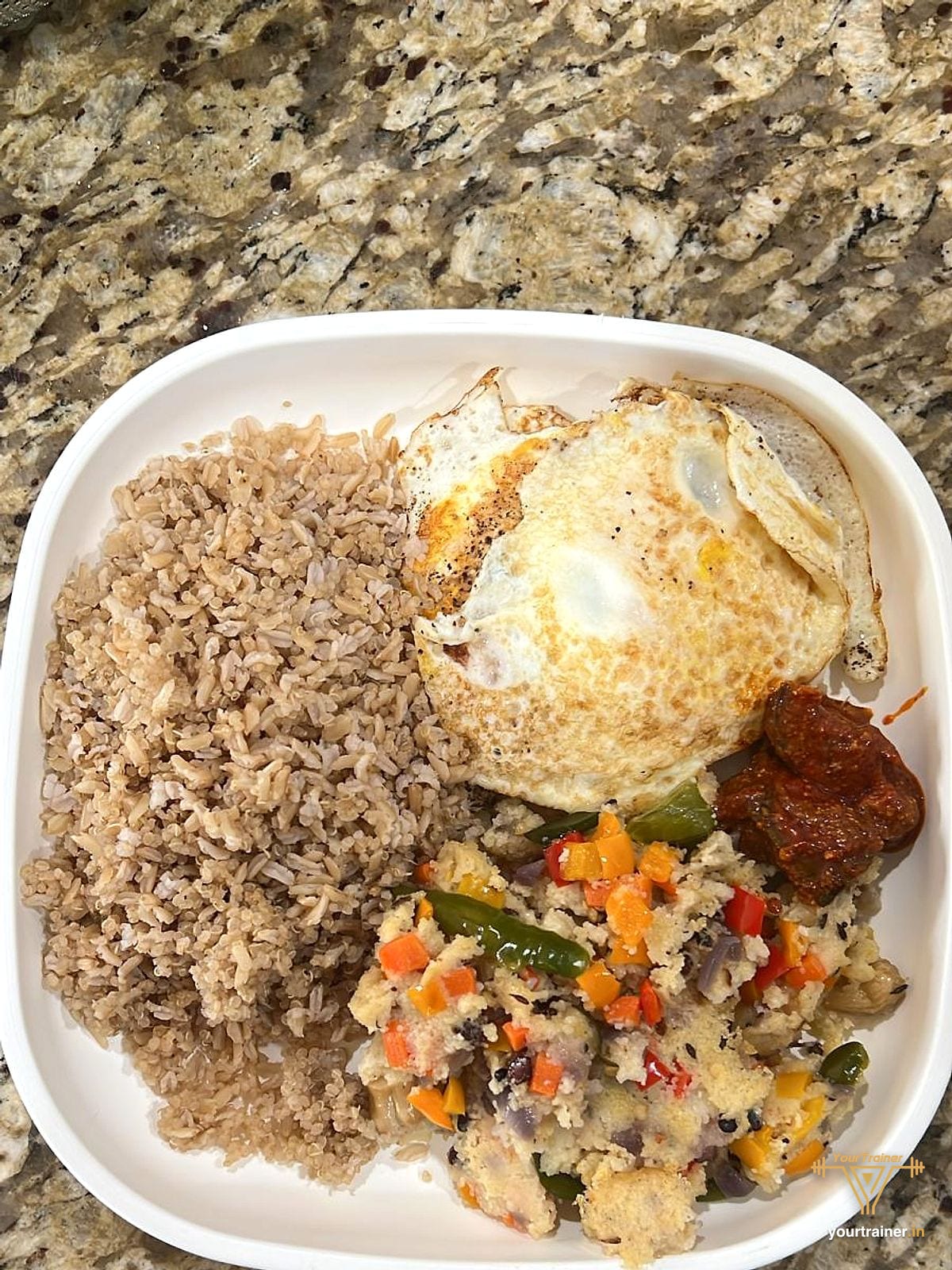
How these dishes show up on real plates
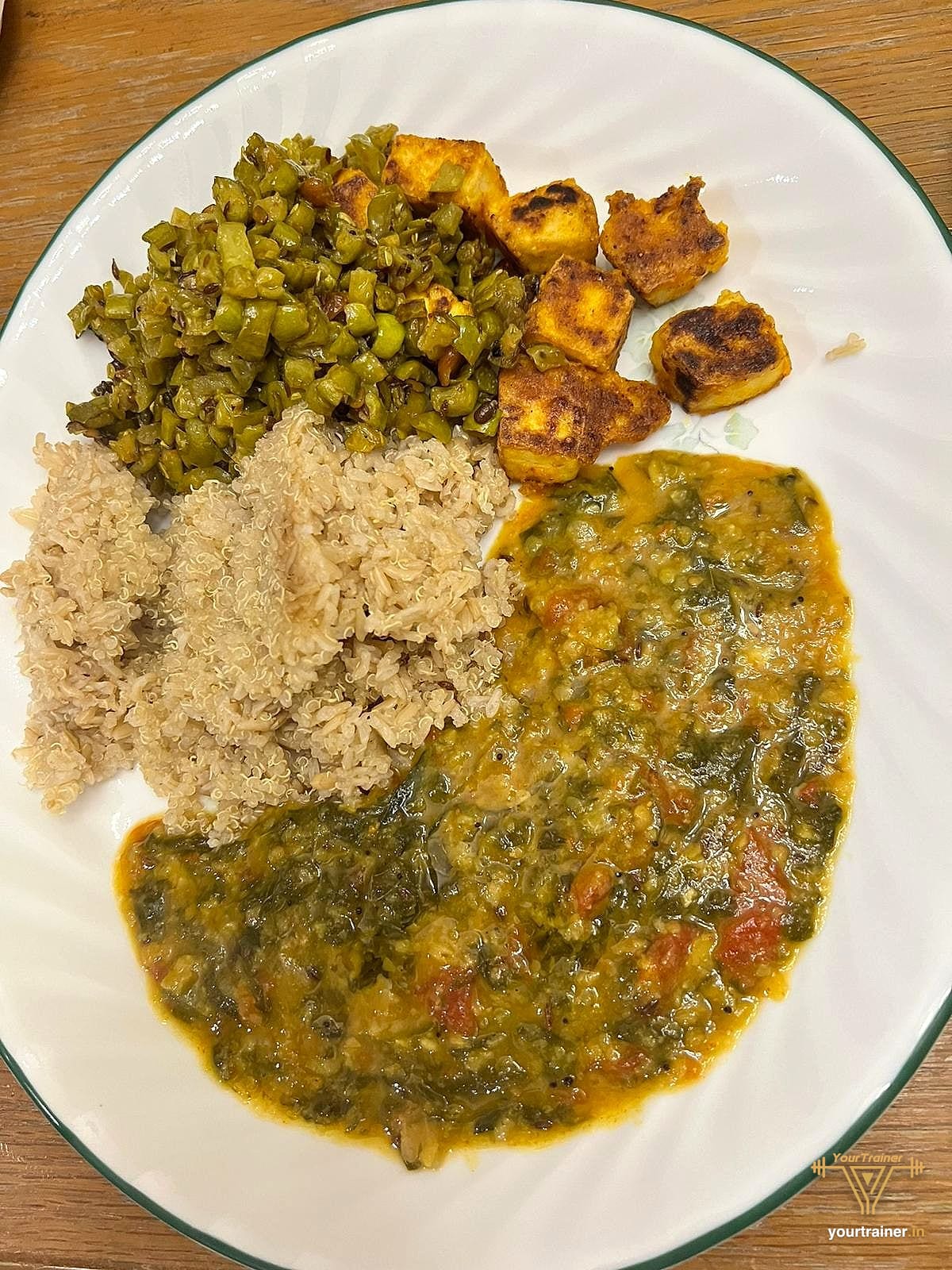
| Food | Typical portion | Calories, protein |
|---|---|---|
| Rice, cooked | 1 cup | 206 kcal, 4 g |
| Roti / chapati | 1.5 rotis | 156 kcal, 4.5 g |
| Roti, small | 2 small rotis | 160 kcal, 5 g |
| Dal | 1 bowl | 150 kcal, 9 g |
| Idli | 2 to 3 idlis | 158 kcal, 4.5 g |
| Poha | 1 plate | 250 kcal, 5 g |
| Paneer | 50 g | 133 kcal, 9 g |
| Soya chunks | 75 g dry | 248 kcal, 39 g |
| Dahi (curd) | 100 g | 61 kcal, 4 g |
| Boiled eggs | 2 eggs | 156 kcal, 13 g |
| Chicken breast | 150 g | 248 kcal, 46.5 g |
| Whey protein | 1 scoop | 120 kcal, 24 g |
Source: A sample of member food logs from the YourTrainer app, 19 April to 17 September 2026. Members only, aggregated, each food logged by at least three members in the sample, using the app's food-database values for the portion logged
Want a Personalized Macro Plan Built On These Numbers?
If you want a coach to build your specific calorie target, protein goal, and meal-by-meal plan using these accurate Indian food numbers, that's our Nutrition Coaching programme. We've used this exact data with 1,000+ clients across India.
Or start with a ₹499 trial session, we'll review your current eating, set your numbers using this chart, and give you a 4-week starter plan you can run yourself.
If you want to do this independently first: run our calorie calculator and macro calculator, bookmark this page, and check in here whenever you're tracking a meal.
Calorie tracking isn't permanent. It's a 60-90 day awareness tool that teaches your eye to portion correctly for life. After that, you can stop and the lesson stays.
- Coach Anish, Founder & Head Coach at YourTrainer
Certified Personal Trainer · Nutrition Specialist · Serving Bengaluru since 2022
Sources
- Indian Food Composition Tables (IFCT) 2017 · ICMR, National Institute of Nutrition
- Nutrient Requirements for Indians (RDA and EAR) · ICMR, National Institute of Nutrition
- Healthy diet · World Health Organization
- Dietary profiles and metabolic risk factors in India (ICMR-INDIAB survey) · Nature Medicine
Coaching guidance on this site is educational and is not a substitute for medical advice. See how we use sources.
Did you find this helpful?

About Anish Agarwal
Founder & Head Coach, YourTrainer · NASM & K11 Certified Personal Trainer · coaching since 2022
Featured in Dietitians.io, Fitness Interview, NRI Pulse. Press and media
Anish Agarwal is a NASM and K11 certified personal trainer coaching fat loss, body transformation, strength, and nutrition for clients across India since 2022. He founded YourTrainer to make expert, science-based coaching accessible online and in Bengaluru. Coach Anish's profile and the YourTrainer story.
Free on iPhone and Android
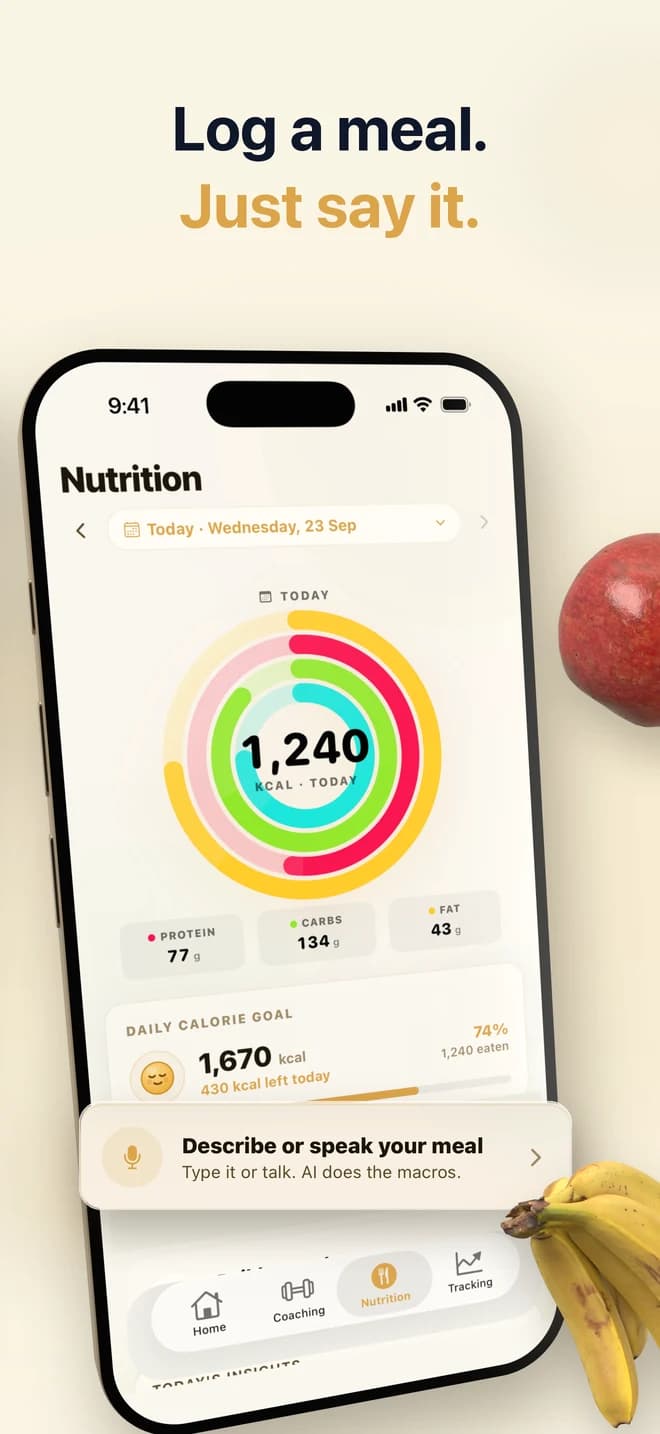
Log this in the YourTrainer app
Search or photograph an Indian dish, set your portion, and the app keeps your calories and protein for the day.
Online 1-on-1 Coaching
Start Your Journey
Get a personalised training + Indian nutrition plan built around your goal, coached online, anywhere in India or abroad.
Trusted by 1,000+ clients coached across India & abroad
Free 30-min discovery call · No obligation