How to Choose a Female Personal Trainer in India: The Complete Checklist
Trainer gender does not change the science, but comfort, communication and experience with PCOS, postpartum or thyroid do. Checklist, questions, red flags.
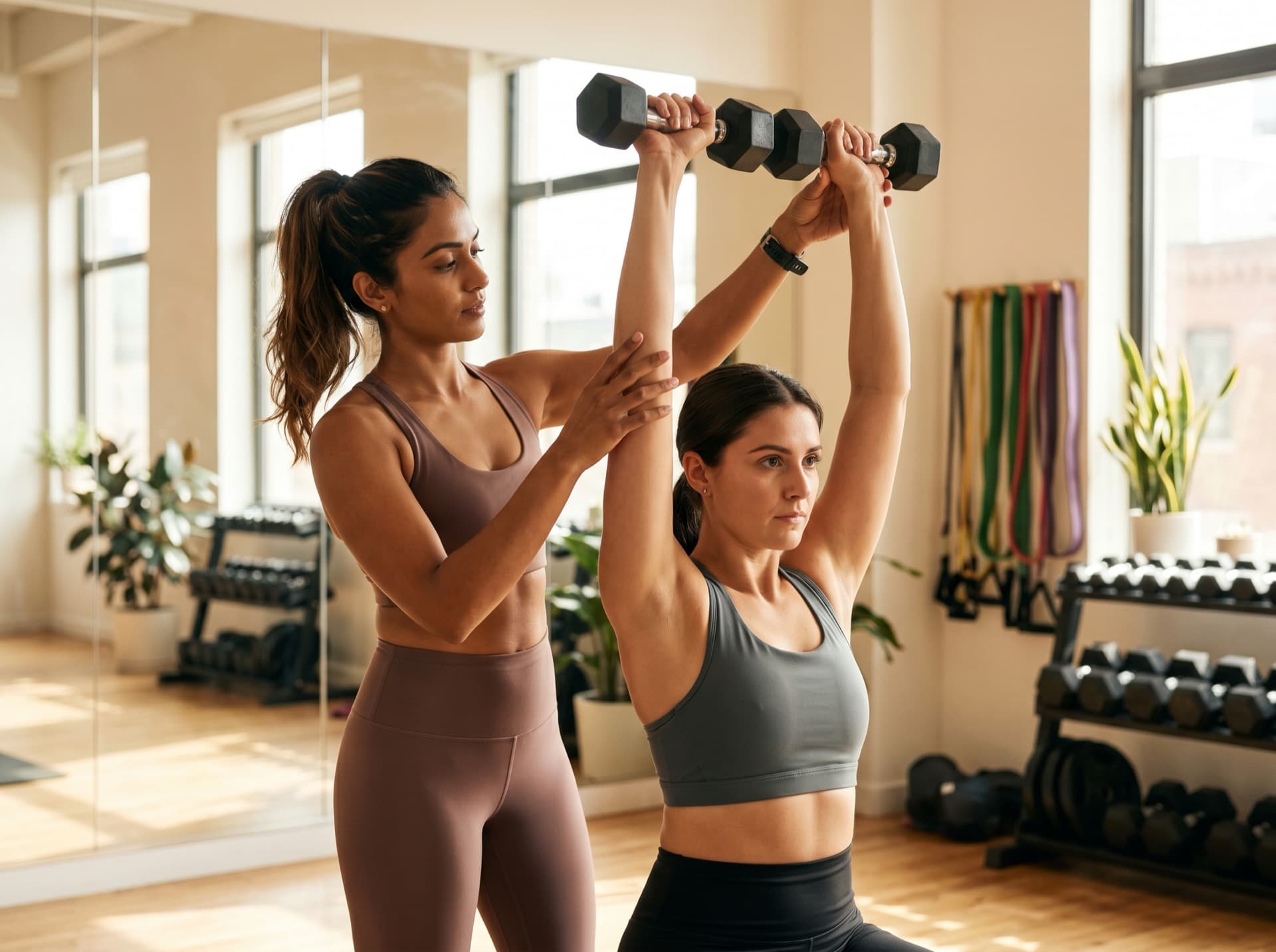
Trainer gender does not change training science, progressive overload, calorie balance, and recovery work identically regardless of who is coaching you. What it changes is whether you actually say out loud that an exercise hurts, that your cycle is affecting your energy, or that a plan someone printed once has nothing to do with your life. That comfort gap is real, and it is the actual reason to think carefully about who you hire, not because male trainers are less competent, but because the wrong fit quietly costs you honesty, and honesty is what makes a program work.
At a Glance
- Certification and real client-outcome evidence matter more than gender alone
- If you have PCOS, thyroid, or a postpartum body, verify specific experience, not just willingness
- Pricing should not carry a premium for gender with nothing else backing it up
- Online works for programming; early in-person sessions help with technical lifts
- Female coaches are available at YourTrainer across our PCOS, thyroid, and general coaching programs
Does a Trainer’s Gender Actually Affect Your Results?
Physiologically, no. A calorie deficit is a calorie deficit. A progressively overloaded set of squats builds the same strength adaptation whether the person counting your reps is male or female. There is no training-science mechanism by which a coach’s gender changes how your body responds to stimulus.
What changes is everything upstream of the programming: whether you mention that a certain stretch feels wrong, whether you bring up that you are three days into your period and everything feels heavier, whether you admit you skipped the plan because it did not fit a wedding week. Trainers cannot fix what they never hear about. For a meaningful share of women in India, a female trainer makes that first conversation easier, and an easier first conversation is the actual mechanism behind better outcomes, not some difference in coaching competence.
Why Some Women in India Specifically Look for a Female Trainer
The reasons are practical, not symbolic:
- Hormonal-health conversations. Discussing PCOS symptoms, irregular cycles, or menopause-related weight changes is simply easier for many women with another woman, especially early in a coaching relationship before trust is built.
- Home-based training comfort. A lot of personal training in India happens in the client’s home or society gym. Family comfort with a trainer being in the house, particularly for sessions that happen while a spouse is at work, is a real and reasonable consideration.
- Postpartum and body-image sensitivity. Returning to training after childbirth involves a body that has changed in ways that are hard to discuss with someone who has not coached that transition before, regardless of gender, but many women find it easier to start that conversation with a woman.
- Past bad experiences. Several clients we have onboarded came in after a previous male trainer pushed a generic aggressive program that ignored a request to slow down, or made comments about their body that had nothing to do with the training. That experience alone is reason enough to prefer a different dynamic going forward.
- Trust in an unregulated home-visit industry. India has no licensing body for personal trainers, anyone can call themselves one and show up at your door. A same-gender trainer is, for many women, one layer of comfort in an otherwise unverified arrangement.
None of this means every woman needs a female trainer, or that a male trainer cannot build genuine trust and individualize a program well, many do. It means the preference, where it exists, is grounded in something real, not a stereotype to wave away.
The Real Checklist: What to Actually Verify
| Check | Why it matters |
|---|---|
| Certification is internationally recognized | India has no legal licensing for personal trainers, anyone can print a card. See our certifications guide for which ones actually mean something. |
| Experience with your specific situation | PCOS, thyroid, postpartum, and menopause all change how a body responds to training. General fat-loss experience is not the same qualification. |
| Individualized programming, not a shared template | Ask directly: does every client get roughly the same 4-week block, or is yours actually built around your numbers? |
| Real client outcomes, not just testimonial screenshots | Ask for a specific example of a client with a situation like yours, and what actually changed for them. |
| Clear pricing with no vague add-ons | Compare against our gym PT pricing comparison so you know what a fair number looks like. |
| Identity verification for home visits | Anyone coming to your home should be independently verifiable, a certification body listing, a real business presence, contactable references. |
Coaching that does this for you
Reading is step one. A coach turns it into a plan built around your body, food & schedule.
100% online · Indian meal plans · weekly progress reviews · daily WhatsApp support.
Start Your Journey →The Interview: Exact Questions to Ask Before You Commit
A short trial call or first session should answer all of these. If a trainer becomes vague or defensive on more than one, treat that as information.
- “What certification do you hold, and where can I verify it?” A legitimate certification has a public registry or verification page. “I did a course” with no further detail is not an answer.
- “Have you trained someone with PCOS, thyroid, or postpartum recovery before?” Ask for a real example, not a general “yes, of course.”
- “What does my first four weeks actually look like?” A trainer who has thought about your program can describe it in specifics, exercises, frequency, how nutrition is handled. Vague answers suggest improvisation.
- “How do you track progress, and how often?” Look for measurable check-ins (strength numbers, body measurements, photos, energy/sleep notes), not just “we’ll see how you feel.”
- “What’s your cancellation and refund policy?” Get this in writing before paying for a multi-month package.
- “Can I do a single trial session before committing to a package?” Anyone unwilling to let you try before a long-term commitment is optimizing for the sale, not the fit.
- “How do you handle a session where I mention pain or a symptom?” The answer should involve modifying the session and asking follow-up questions, not pushing through regardless.
Red Flags to Watch For
- “Female-friendly” as the entire pitch. If gender is the only differentiator mentioned, with no certification, no client examples, and no explanation of how programming actually works, that is a marketing angle, not a qualification.
- Refusal to explain the program in advance. A trainer who cannot describe, in plain terms, how your first four weeks will look is not planning individually, she is improvising or reusing a template.
- No response to a direct question about a medical condition. If you mention PCOS or thyroid and get a generic “don’t worry, we’ll figure it out,” that is not confidence, it is a lack of relevant experience.
- Pressure to commit before a trial session. A legitimate trainer, of any gender, is comfortable with you trying one session before a long-term package.
- Full upfront cash payment demanded before session one. A reasonable trainer can wait for payment until after a trial session or take it through a traceable method.
The Strength Training Myth That Still Stops Women From Lifting
One reason the trainer relationship matters so much: a lot of women arrive already hesitant to lift heavy because of the fear of getting “bulky.” A good trainer, of any gender, addresses this directly instead of quietly programming around it with light weights and high reps that under-deliver. Building visible muscle mass at scale requires testosterone levels women do not have naturally, plus a sustained calorie surplus and years of dedicated training, not three sets of squats a week. What strength training actually produces for most women is the toned, defined look they are usually asking for. We go deeper on the physiology in lean muscle for women: toned without bulky. If a trainer keeps you exclusively on light cardio-style circuits without ever discussing progressive strength work, that is worth questioning.
Online vs In-Person: Does It Matter for a Female Trainer Specifically?
For programming and nutrition guidance, the format does not matter much, a well-structured plan and a genuine check-in process work over video or chat as well as in person. Where format matters is real-time form correction on technical lifts (deadlifts, overhead presses) if you are a complete beginner; a handful of in-person or live-video sessions early on are worth it before moving fully remote. See our breakdown of live coaching vs. app-based plans and how many sessions per week actually make sense for your budget and goal.
Safety and Trust: What to Verify Before Someone Trains You at Home
Home-visit personal training is common in India and largely unregulated. A few concrete steps protect you regardless of who you hire: verify identity and certification independently rather than trusting what is printed on a card, schedule the first session with a family member present if that makes you more comfortable, avoid anyone who insists on full package payment in cash before a single session, and get cancellation terms in writing. None of this is specific to female trainers, it is basic diligence for anyone entering your home on a recurring basis.
If You’re Managing PCOS, Thyroid, or a Postpartum Body
This is the situation where verifying real experience matters most, because a generic fat-loss template genuinely does not work the same way and can leave you blaming yourself for a body that is responding to a hormonal condition, not a lack of effort. Our PCOS coaching program builds training around your actual cycle phases rather than ignoring them, and our thyroid support program accounts for hypo- vs. hyperthyroid differences rather than treating them as one condition. Female coaches are available across both programs for clients who prefer one, just ask at your consultation.
What It Actually Costs
Gender is not a real pricing variable, experience level, session format, and city are. Do not accept a premium justified purely by “female trainer” with nothing else behind it. Use our cost calculator to get a realistic number for your city and goal, compare it against our gym PT cost comparison, and figure out the right session frequency for your goal before you commit to a package.
Not sure where to start? See female personal trainer options in India or Start Your Journey with a free consultation, tell us your goal and situation, and we will match you with the right coach, female or otherwise.
Did you find this helpful?

About Anish Agarwal
Founder & Head Coach, YourTrainer · NASM & K11 Certified Personal Trainer · coaching since 2022
Featured in Dietitians.io, Fitness Interview, NRI Pulse. Press and media
Anish Agarwal is a NASM and K11 certified personal trainer coaching fat loss, body transformation, strength, and nutrition for clients across India since 2022. He founded YourTrainer to make expert, science-based coaching accessible online and in Bengaluru. Coach Anish's profile and the YourTrainer story.
Online 1-on-1 Coaching
Start Your Journey
Get a personalised training + Indian nutrition plan built around your goal, coached online, anywhere in India or abroad.
Trusted by 1,000+ clients coached across India & abroad
Free 30-min discovery call · No obligation