Post-Meal Walking for Blood Sugar: What Our 66-Year-Old Member Does
Learn how a 66-year-old member manages diabetes with 10-15 minute post-meal walks and strength training. Real member data from our live PT sessions.
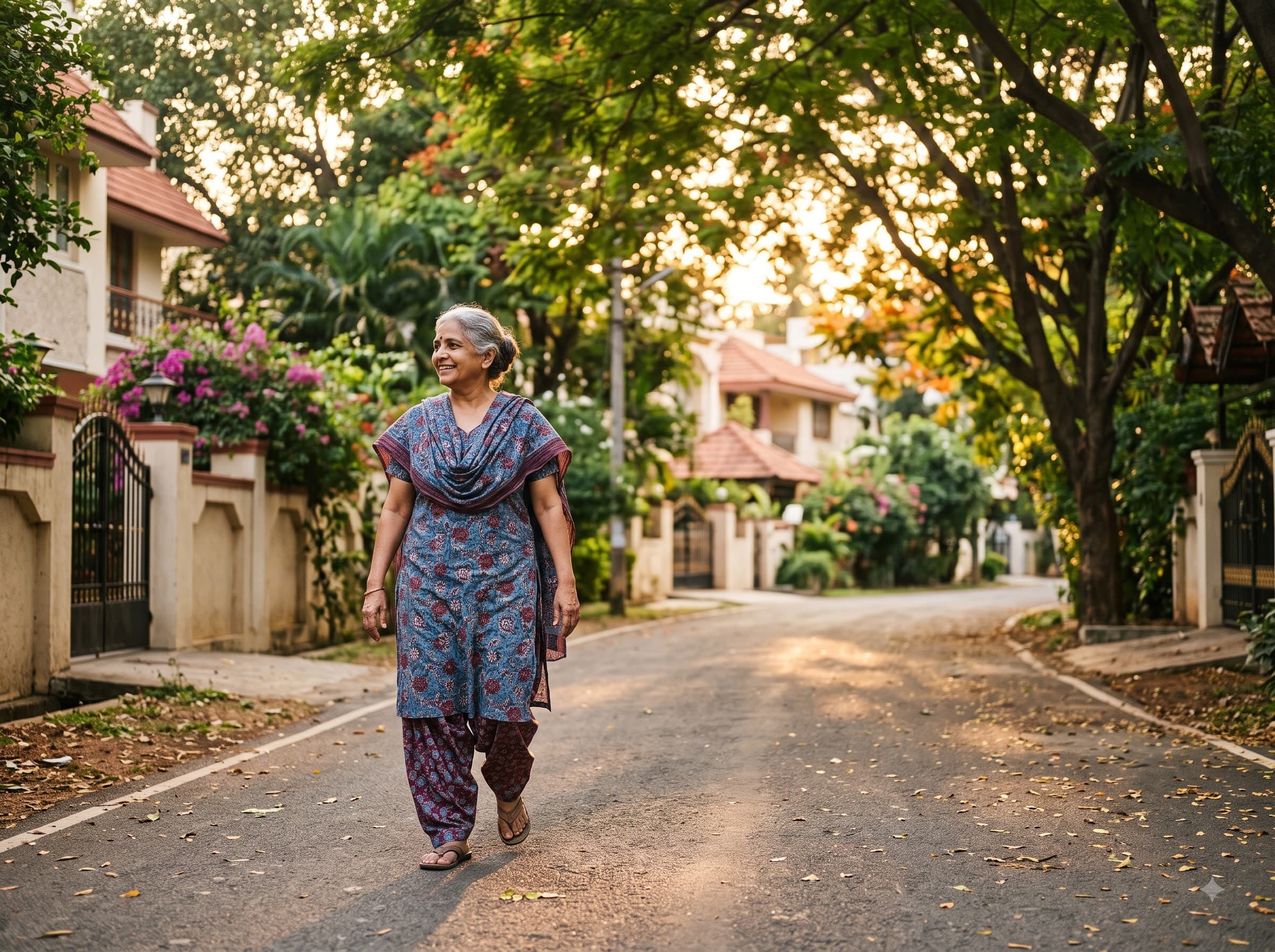
A 10 to 15 minute walk after every meal is the habit our coaches prescribe first for diabetes-conscious members, and our 66-year-old member C., who came from a yoga background into structured strength training, shows exactly how it compounds. Paired with gentle strength work, C. now holds a 50-second elbow plank, a milestone that matters more than the seconds suggest, because it came from simple, repeatable habits.
Method Note
This case study draws on a sample of YourTrainer coaching sessions held between 17 August and 7 September 2026, reviewed in detail as case studies. Post-meal walking emerged as a core prescription for members managing diabetes and metabolic health. Member names are changed.
Post-Meal Habit Snapshot
Why Walk After Meals?
Post-meal movement, especially walking, is one of the best-studied habits for managing blood glucose. When you eat, your body raises blood sugar. Movement helps muscles absorb glucose without spiking insulin. A 10 to 15 minute walk after eating doesn't require special equipment, high intensity, or sweat; it works because the muscles take up glucose while you move.
In our coaching case studies, coaches prescribing this habit were clear: it's not about calorie burning. It's about giving the muscles a reason to use the glucose from the meal. For members managing diabetes, especially older adults like C., this small habit often becomes the foundation for everything else they build: confidence, consistency, and measurable shifts in how they feel post-meal.
Meet Member C.: From Yoga to Strength
C. is 66 years old, came to YourTrainer from a long yoga practice, and carries the flexibility that comes with that background. When C. began, the goal was not transformation; it was stability. Managing diabetes while maintaining energy and mobility meant building a routine that felt sustainable, not punishing.
C.'s coach started with two simple prescriptions:
- A 10 to 15 minute walk after breakfast, lunch, and dinner. No intensity goal, just movement.
- Structured strength sessions, built around body-weight foundations: planks, step-ups, controlled squats.
Today, C. holds a 50-second elbow plank. That would barely register in a 25-year-old training log, but it is everything for a 66-year-old novice to strength training who came from a non-resistance discipline. That 50-second hold proves that neuromuscular adaptation happens fast when you're consistent, and consistency is easiest when your habit fits your life (a walk after eating is invisible; a one-hour gym session is not).
Blood sugar, coached
Knowing what spikes your sugar is step one. A week of meals, walks and strength sessions that keep it steady is the hard part.
A YourTrainer coach and nutritionist plan your Indian meals, add strength training three days a week and check your logs every week, alongside your doctor, who stays in charge of medication.
Start Your JourneyStart from here:Diabetes and pre-diabetes coaching·For Indians in the USA
The Safety Side: How Coaches Load Medically-Cautious Members
When coaching someone managing diabetes, or any chronic condition, intensity must be earned, not assumed. Our classes show coaches using a simple, repeatable system: after each set or exercise, the member rates the difficulty on a scale of 1 to 10, where 10 means "I could not do another rep." Coaches target the 7 to 9 zone. This keeps effort high enough to signal adaptation, but low enough that the body (and especially the heart and joints) isn't shocked.
For C., the plank was built up gradually, session by session, with the coach adding time only when the previous hold looked solid. The result so far: a 50-second elbow plank that is repeatable and does not hurt anything.
This matters because it shows older adults (and anyone with medical complexity) that strength training is not off-limits, it just requires a coach who respects the individual nervous system and progresses in visible, incremental steps.
Sleep, Stress, and Blood Sugar: The Overlooked Loop
Our sampled case studies found that nearly half of all coaching conversations touched on sleep (49% of classes). Coaches connected it directly to metabolic health: poor sleep elevates cortisol, cortisol raises resting blood glucose, and suddenly the post-meal walk isn't enough to manage the day's baseline glucose drift.
For C. and other diabetes-aware members, the full prescription is:
- Post-meal walks (10 to 15 minutes after meals)
- Regular gentle strength work (building confidence and nervous-system resilience)
- 7 to 8 hours of sleep, consistent bedtime
- Stress check-ins (the walk itself often becomes a de-stressing anchor)
None of this is complicated. All of it is sustainable if you stop trying to do it perfectly and start doing it reliably.
Coordinate with your doctor: This coaching guidance is educational and is not medical treatment. Diabetes management, especially medication timing and meal composition, must be coordinated with your physician or endocrinologist. Use these habits as lifestyle support alongside professional medical care.
"80% for a year beats 100% for a month." (Vivek)
This coaching principle, from one of our coaching sessions, cuts to the heart of why C.'s post-meal walk works: it's not a crash intervention. It's a habit so small and embedded in daily life (you eat anyway; you might as well walk) that C. can keep it up for years.
Related Articles
- Diabetes Management Program
- How Long Does It Take to See Results From a Personal Trainer?
- Knee Pain During Squats: 3 Fixes Our Coaches Used in Real Sessions
Ready to build your own sustainable habit? YourTrainer coaches Indians, worldwide, with live 1-on-1 video sessions, Indian-food meal plans and WhatsApp accountability. Start Your Journey.
Coaching guidance on this site is educational and is not a substitute for medical advice. See how we use sources.
Did you find this helpful?

About Anish Agarwal
Founder & Head Coach, YourTrainer · NASM & K11 Certified Personal Trainer · 5+ years coaching
Featured in NRI Pulse, Dietitians.io, Fitness Interview, The MASALA Study. Press and media
Anish Agarwal is a NASM and K11 certified personal trainer coaching fat loss, body transformation, strength, and nutrition for clients across India, with 5+ years coaching. He founded YourTrainer to make expert, science-based coaching accessible online and in Bengaluru. Coach Anish's profile and the YourTrainer story.
Online 1-on-1 Coaching
Start Your Journey
Get a personalised training + Indian nutrition plan built around your goal, coached online, anywhere in India or abroad.
Trusted by 1,000+ clients coached across India & abroad
Free 30-min discovery call · No obligation