Night Shift Training: A Fitness Plan for Indian IT and BPO Workers
Training around a 9 pm to 6 am shift. When to work out, how to eat when your day is inverted, and what the research says about shift work, cortisol and fat gain.
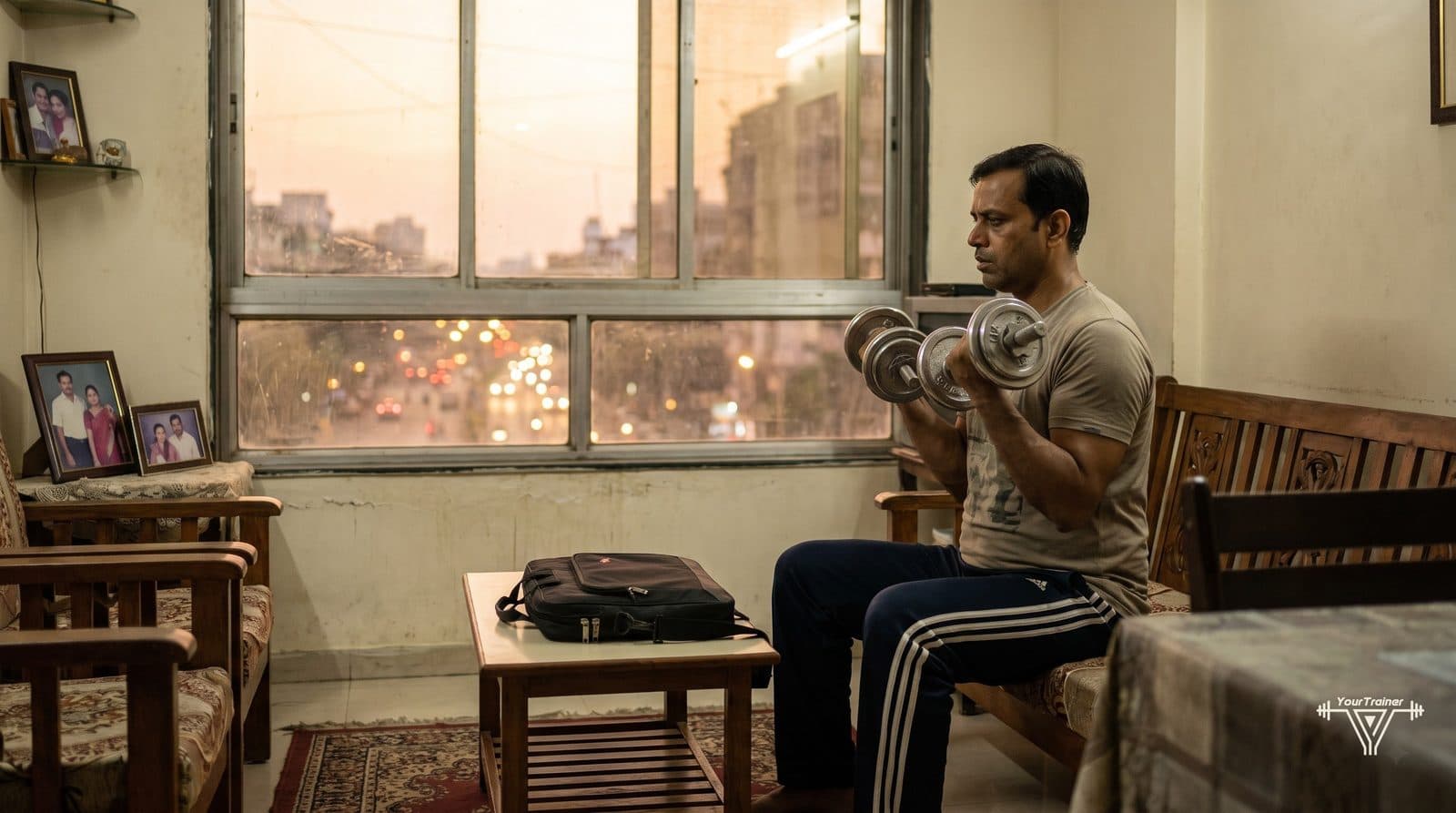
Quick answer: Train just after waking and before your shift, when strength is highest. Eat a real meal before the shift and one protein-led meal partway through rather than grazing for eight hours. Prioritise sleep environment over training volume. Three sessions a week is the realistic target on nights.
Key Numbers
Why This Deserves Its Own Plan
India runs a very large share of the world's night-shift knowledge work. Bengaluru, Hyderabad, Pune, Gurugram and Noida together employ millions of people whose working day starts when the rest of the city goes to sleep.
Standard fitness advice assumes a daytime schedule and is close to useless here. Train in the morning is meaningless when your morning is 6 pm. Do not eat late is meaningless when your lunch break falls at 1 am.
Shift work also carries genuine metabolic consequences. The research consistently links it to higher rates of obesity, insulin resistance and metabolic syndrome, through disrupted circadian regulation of appetite hormones and measurably worse overnight glucose tolerance. This is a real headwind, not an excuse, and it means the structure matters more, not less.

The Two Training Windows
Option A: After waking, before the shift. For a 9 pm start, that means training around 6 to 7 pm. This is the better default for most people. You have slept, eaten, and body temperature is near its practical peak, which correlates with better strength output.
Option B: Straight after the shift, before sleeping. For a 6 am finish, that means training at 6:30 or 7 am. This works for people who find it easier to attach the gym to leaving work. The tradeoff is training on accumulated fatigue after eight hours of work.
What does not work reliably is waking up early in the middle of your sleep window to train. That trades sleep for training, and on night shifts sleep is already the scarcer resource.
The Three Day Plan
Three sessions a week, full body, 40 to 45 minutes. On a disrupted schedule, frequency and consistency beat volume.
Session structure (all three days, rotating emphasis)
- Squat or leg press: 3 x 8 to 12
- Bench press or dumbbell press: 3 x 8 to 12
- Row (barbell, dumbbell or cable): 3 x 10 to 12
- Romanian deadlift: 3 x 10
- Shoulder press: 2 x 12
- Plank and carries: 2 sets each
Rotate which lift you push hardest each session rather than trying to progress everything simultaneously. On weeks where sleep has been poor, reduce to two sessions rather than skipping the week.
Coaching that does this for you
Reading is step one. A coach turns it into a plan built around your body, food & schedule.
100% online · Indian meal plans · weekly progress reviews · daily WhatsApp support.
Start Your Journey →Eating on an Inverted Clock
The most common night shift eating pattern is continuous grazing across the shift: chai, biscuits, canteen snacks, a heavy meal at 3 am. It is the pattern most likely to produce fat gain, for two reasons. Total intake is untracked, and glucose tolerance is genuinely impaired overnight.
A workable structure:
| Time | Meal | Focus |
|---|---|---|
| Before shift (7 to 8 pm) | Main meal | Protein plus carbohydrate, largest meal |
| Mid shift (1 to 2 am) | Moderate meal | Protein led, lighter on carbohydrate |
| End of shift (6 am) | Light or nothing | Curd, fruit, or skip |
| On waking (5 to 6 pm) | Breakfast | Protein led |
Two eating occasions during the shift, not eight. The 3 am biryani is the specific habit worth replacing, since a large carbohydrate load at the point of worst glucose tolerance is the least favourable combination available.
Sleep Is the Actual Priority
On night shifts, sleep quality limits everything else: training recovery, appetite regulation, and adherence. It is worth more attention than the training programme itself.
- Blackout curtains. The single highest-return purchase. Daylight suppresses melatonin regardless of how tired you are.
- Consistent sleep window, including days off. Flipping back to a day schedule on weekends recreates jet lag every week.
- Cool, quiet room. Daytime sleep is lighter and more easily disturbed.
- Sunglasses on the commute home. Reduces the morning light signal telling your body to wake up.
Realistic Expectations
Progress on a night shift is slower than on a day schedule, and that is a physiological reality rather than a motivation problem. Adjust the target: three sessions a week held for a year beats an ambitious six day plan abandoned in month two.
Set your protein target with the protein calculator and your calorie baseline with the TDEE calculator. Shift workers frequently underestimate intake because grazing does not feel like eating.
Related reading: cortisol, stress and belly fat, the best time to work out in Bengaluru, and fitness coaching for tech professionals.
Sources
- Guidelines on physical activity and sedentary behaviour (2020) · World Health Organization
- ISSN Position Stand: Protein and Exercise · Journal of the International Society of Sports Nutrition (2017)
Figures for Indian foods follow IFCT 2017 (ICMR-NIN). Coaching guidance on this site is educational and is not a substitute for medical advice. See how we use sources.
Did you find this helpful?

About Anish Agarwal
Founder & Head Coach, YourTrainer · NASM & K11 Certified Personal Trainer · 6+ years experience
Anish Agarwal is a NASM and K11 certified personal trainer with 6+ years of experience coaching fat loss, body transformation, strength, and nutrition for clients across India. He founded YourTrainer to make expert, science-based coaching accessible online and in Bengaluru. More about Anish.
Online 1-on-1 Coaching
Start Your Journey
Get a personalised training + Indian nutrition plan built around your goal, coached online, anywhere in India or abroad.
★★★★★ Trusted by 1,000+ transformations across India & abroad
Free 30-min discovery call · No obligation