
Free Tool · Veg, Eggetarian and Non-Veg
Protein Calculator
A gram target is useless if you cannot picture it. This one converts your number into katoris of dal, grams of paneer and actual eggs, so you can see whether your current day gets close.
Quick answer
If you train three or more days a week, target 1.6 to 1.8 g of protein per kg of bodyweight. In fat loss, push to 1.8 to 2.2 g per kg to protect muscle. A 70 kg person training regularly needs roughly 112 to 126 g a day.
For scale: that is about fourteen katoris of dal if dal were your only source, which is why it never is. Paneer, curd, soya chunks and eggs do the heavy lifting.
Your goal
Training
Diet
Your daily protein target
Aim for about 119 g a day, which is roughly 30 g across four eating occasions.
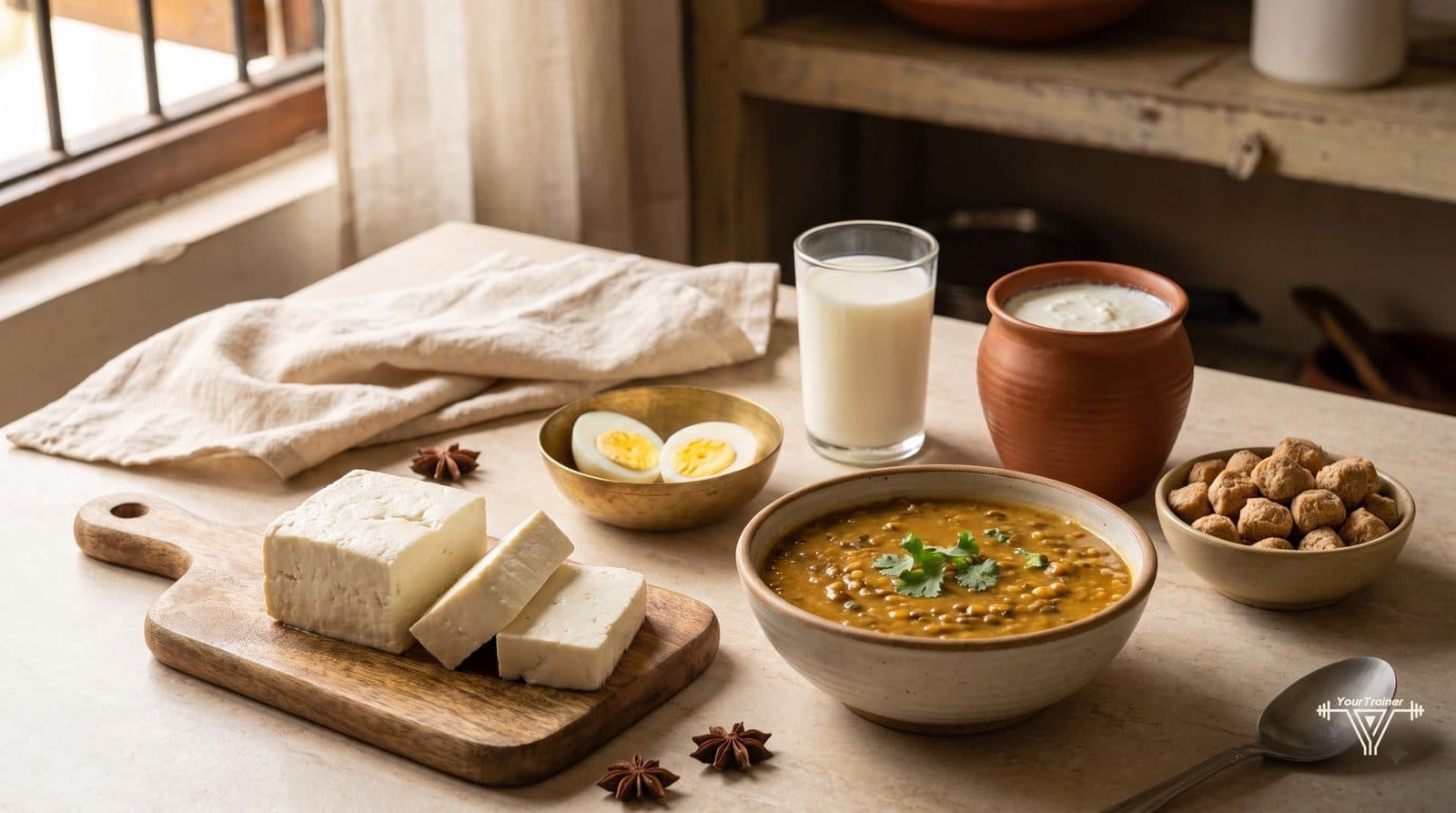
What 119 g looks like on vegetarian food
Those are alternatives, not a shopping list. Real days mix three or four of them.
Why the RDA Number Misleads Indians
The Indian RDA for protein is 0.83 g per kg. That figure is a deficiency threshold, the amount below which a sedentary adult starts losing tissue. It was never meant to be a performance target, yet it is quoted constantly as if exceeding it were unnecessary or risky.
If you train, the relevant numbers come from sports nutrition research, not deficiency prevention: 1.6 g per kg is roughly where muscle protein synthesis plateaus for most people, and fat loss raises the requirement because protein is what stops the body dismantling muscle for fuel.
This matters more in India than in most places, because the baseline diet is structurally low in protein. Population surveys have repeatedly found large shares of Indian adults falling short, and vegetarians in particular underestimate their own intake because dal feels like a protein food when it is largely a carbohydrate one.
The Breakfast Gap
Look at where your protein currently lands across the day. Almost every Indian food log we review shows the same shape: 5 to 10 g at breakfast, 25 to 30 g at lunch and dinner. Poha, upma, idli and paratha are all carbohydrate-led.
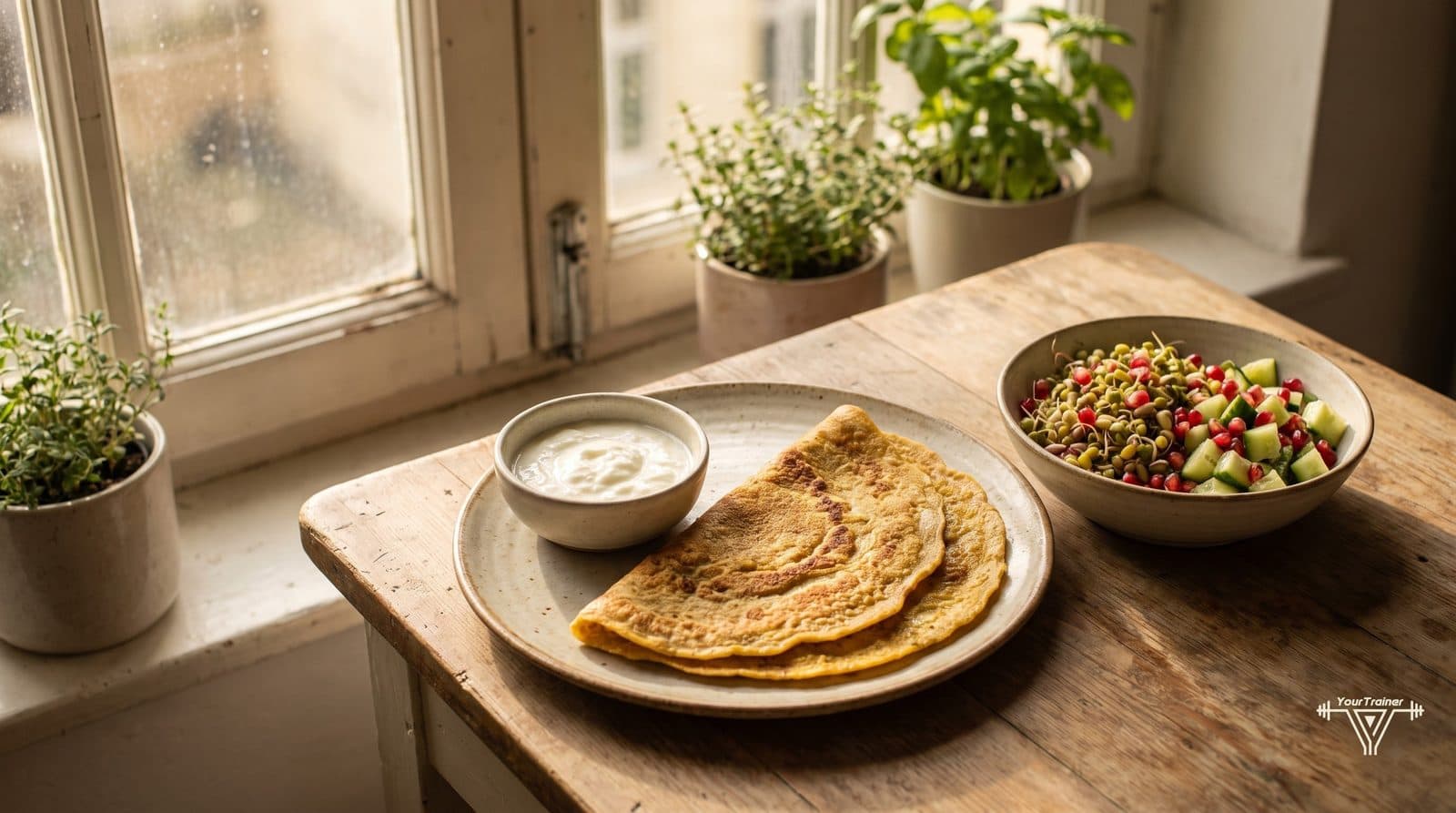
Closing that one gap is usually worth 20 to 25 g a day with no other change. Practical swaps that work in Indian kitchens:
- Moong dal chilla instead of poha: about 10 g per chilla
- Paneer bhurji instead of aloo sabzi: about 19 g per katori
- Curd or Greek yogurt alongside anything: 5 to 15 g
- Two or three eggs if you eat them: 13 to 19 g
- Sprouts added to any breakfast: about 8.5 g per katori
Next Steps
Once you have your target, check what your current meals actually deliver with the Indian food calorie calculator, and set your overall calorie budget with the TDEE calculator. For the full food-by-food breakdown read Indian protein sources ranked and hitting 100 g as a vegetarian. If kidney safety is your concern, we covered the research in the protein and kidneys myth.
Free Consultation
Knowing the number is easy. Hitting it daily is not.
We build the meal structure around your kitchen, your budget and whether you eat eggs. Start with a free call and a ₹499 trial session.