
Free Tool · Indian Household Measures
Katori Portion Calculator
One katori is not a fixed measure. Small holds about 100 ml, medium 150 ml, large 200 ml. That gap is worth roughly 100 calories of dal, which is why two people eating "one katori" can be eating very different meals.
Quick answer
A standard medium katori holds 150 g of a cooked dish. At that size: rice is about 195 kcal, toor dal about 140 kcal with 8 g protein, and mixed sabzi about 125 kcal. One wheat roti is about 40 g and 120 kcal.
The variable that actually moves these numbers is not the katori, it is the oil. A sabzi cooked with one teaspoon versus three teaspoons of oil differs by 90 calories for the identical vegetable.
Step 2 · How many?
Your portion
Dal (toor / arhar)
Base unit: 1 katori (150 g)
Standard home dal with a light tadka. Restaurant dal runs 40 to 70 kcal higher.
Start Your Journey →What one katori actually holds
Katori is not a standard unit. Three sizes are in common use, and the gap between the small and large one is roughly 100 calories of dal.
Turn the numbers into meals
Knowing the calories is the easy part. Eating to them through a normal Indian week is where most people slip.
A YourTrainer coach plans your week around the dal, roti, rice and sabzi you already eat, reviews your plate photos and adjusts every week. It runs fully online, so it works the same in Bengaluru or Boston.
Start Your Journey →Coached online, wherever you live:Online personal trainer in India·Coaching for Indians in the USA·Online coaching for NRIs
Real portions from our members
Standard katori sizes are a starting point. These are the portions YourTrainer members actually logged in the app, from a sample of food logs, with calories and protein for the same entry.
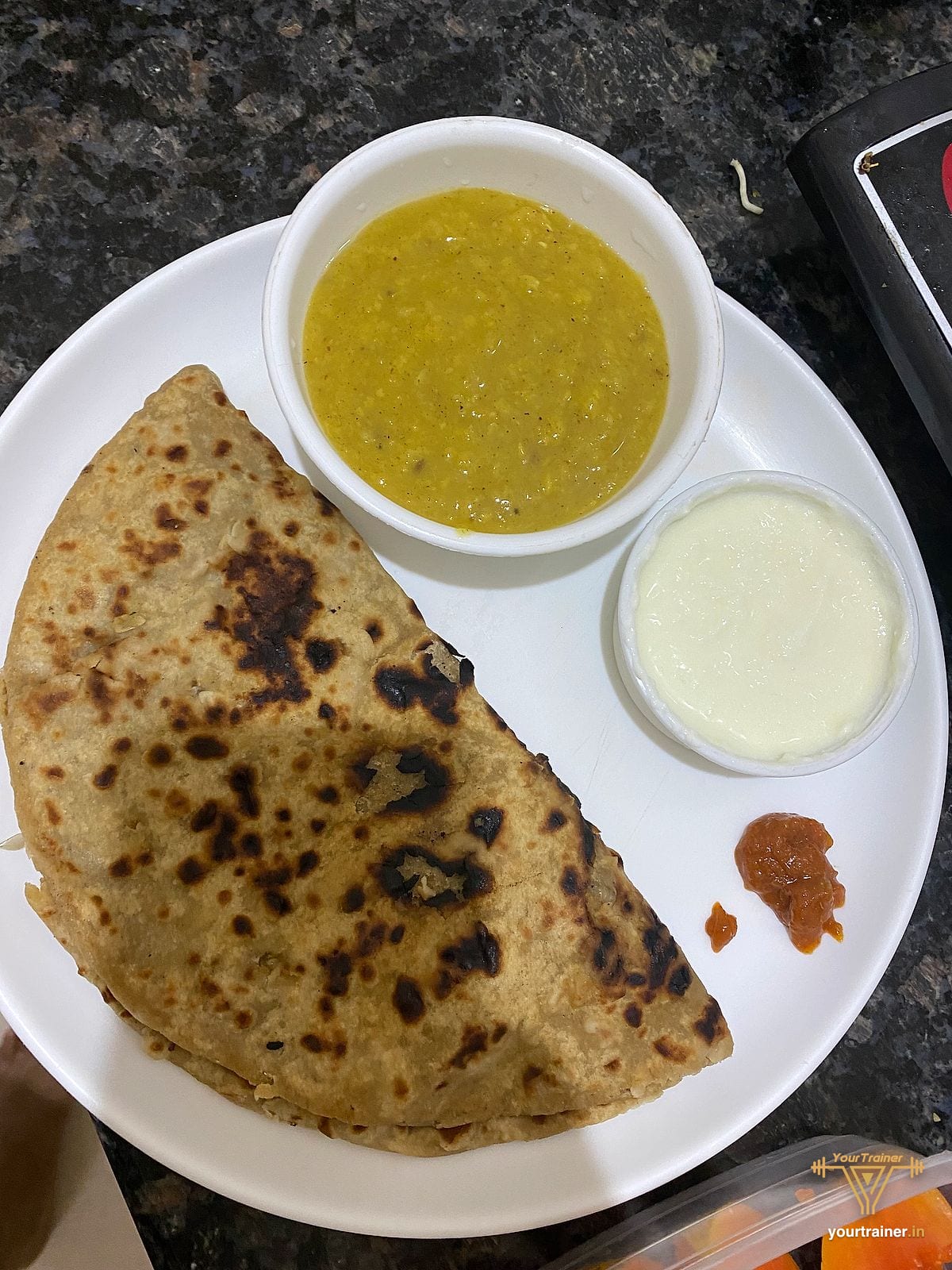
| Food | Typical portion | Calories, protein |
|---|---|---|
| Rice, cooked | 1 cup | 206 kcal, 4 g |
| Roti / chapati | 1.5 rotis | 156 kcal, 4.5 g |
| Roti, small | 2 small rotis | 160 kcal, 5 g |
| Dal | 1 bowl | 150 kcal, 9 g |
| Idli | 2 to 3 idlis | 158 kcal, 4.5 g |
| Poha | 1 plate | 250 kcal, 5 g |
| Paneer | 50 g | 133 kcal, 9 g |
| Soya chunks | 75 g dry | 248 kcal, 39 g |
| Dahi (curd) | 100 g | 61 kcal, 4 g |
| Boiled eggs | 2 eggs | 156 kcal, 13 g |
| Chicken breast | 150 g | 248 kcal, 46.5 g |
| Whey protein | 1 scoop | 120 kcal, 24 g |
Source: A sample of member food logs from the YourTrainer app, 19 April to 17 September 2026. Members only, aggregated, each food logged by at least three members in the sample, using the app's food-database values for the portion logged
A cup of cooked rice logged at 206 kcal, not the 270 kcal of a heaped 200 g cup. Read the full food-log study.
How many calories are in 1 cup of cooked rice?
YourTrainer members logged 1 cup of cooked rice at 206 kcal and 4 g of protein. A heaped 200 g cup is about 270 kcal.
How much protein is in a bowl of dal?
Members logged 1 bowl of dal at 150 kcal and 9 g of protein.
Why Indian Portion Tracking Fails
Most calorie apps were built around Western portions: cups, ounces, single plated servings. Indian meals are shared, ladled, and eaten in rounds. You do not eat "a serving of dal," you eat however many karchis land on your plate over the course of a meal.
That structural mismatch causes three specific errors that show up constantly in client food logs:
- Katori inflation. People log "one katori" while actually eating from a large 200 ml katori. Repeated across dal, sabzi and curd, that is 150 to 200 uncounted calories per meal.
- Invisible oil. The vegetable in a sabzi is 30 to 40 calories. The oil is 90 to 180. Almost nobody logs the cooking medium, which is the single biggest source of tracking error in Indian kitchens.
- Second-round rotis. The first two rotis get logged. The third and fourth, served hot off the tawa mid-meal, usually do not.
The fix is not more precision, it is calibration. Weigh your own katori once with a kitchen scale, note whether it is 100, 150 or 200 g, then use household measures forever after. One measurement session buys you accurate tracking for years.
The Conversions Worth Memorising
If you remember nothing else from this page, these five hold for almost every Indian kitchen:
- Rice triples. 50 g raw becomes about 150 g cooked, which is one medium katori and about 195 calories.
- Dal roughly doubles. 30 g raw dal becomes a 150 g katori of cooked dal at about 140 calories.
- One roti is 30 g atta. That is a 40 g finished roti and about 120 calories, before any ghee.
- One teaspoon of any oil or ghee is 45 calories. No exceptions, coconut and olive included.
- One glass is 250 ml. Toned milk in that glass is about 145 calories and 8 g protein.
Where This Tool Fits
This calculator answers "what is on my plate right now." Two other questions usually follow. If you want the full macro breakdown across a wider food list, use the Indian food calorie calculator. If you want to know how many calories you should be eating in the first place, start with the TDEE calculator and then set protein with the protein calculator.
For the reasoning behind the numbers in this database, including how cooking method changes them, read Indian portion sizes explained and the 60-dish calorie and macro chart.
Free Consultation
Know your portions. Now build the plan.
We build meal plans in katoris and rotis, not in grams you will never weigh. Start with a free call and a ₹499 trial session.