How Much Protein After 40: What Real Logged Days Actually Show
On fully logged days our members hit a median of 96.7 g of protein on about 1,580 calories. Two thirds cleared 80 g. What that means if you are over 40 and eating an Indian plate.
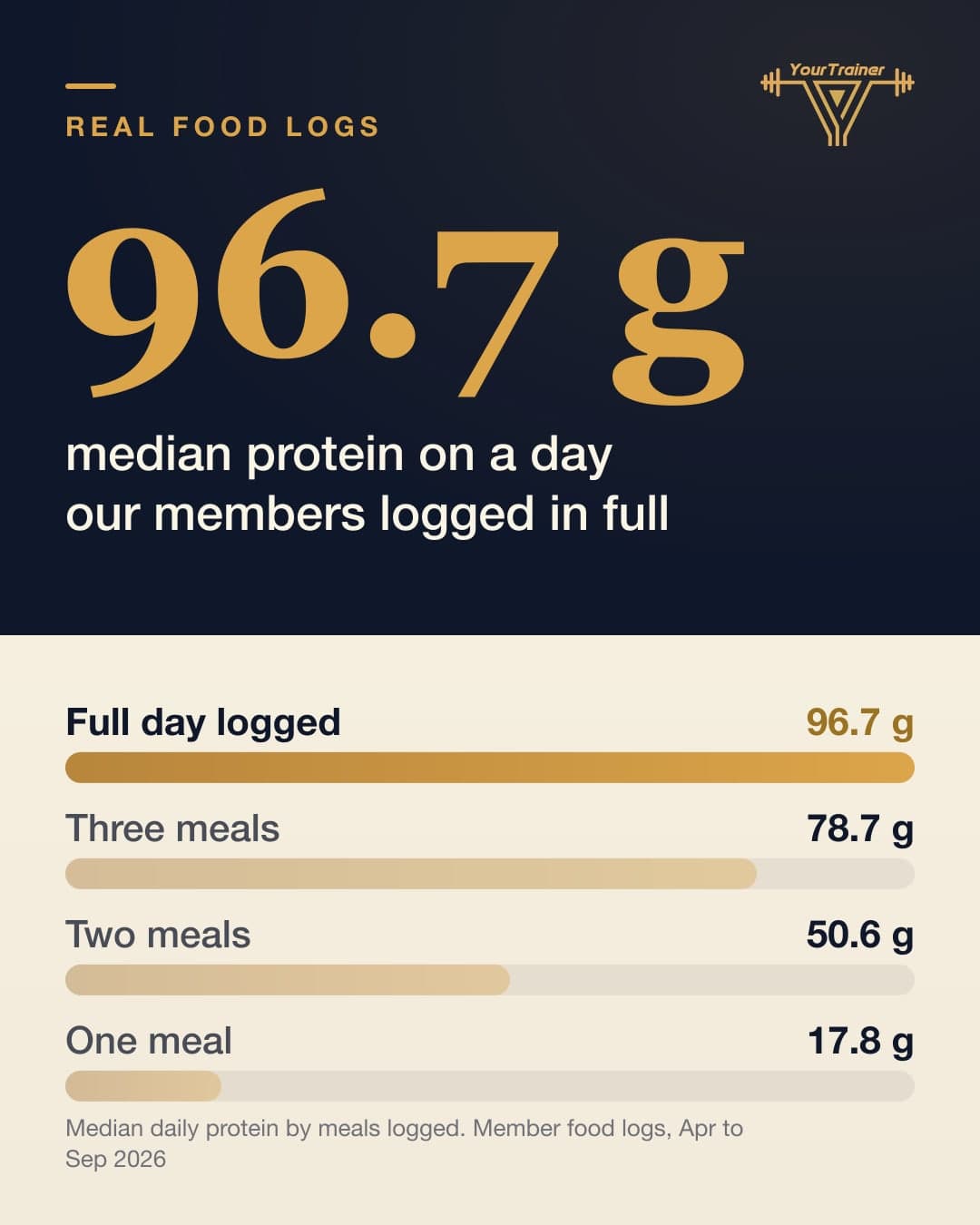
On days when our members logged their whole day, the median came to 96.7 g of protein on about 1,580 calories. Two thirds of those days cleared 80 g and just under half cleared 100 g. That is the honest picture of what a protein target looks like on a real Indian plate, and it is well above what most people over 40 are actually eating when they first come to us.
Protein on a fully logged day
96.7 g
median protein on a full-log day
67%
of full-log days cleared 80 g
46%
cleared 100 g
72 to 118 g
the middle half of full-log days
Source: A sample of member food logs in the YourTrainer app, 16 April to 21 September 2026, aggregated across members. A full-log day is one where breakfast, lunch, dinner and a snack were all recorded
Why protein matters more after 40, not less
Muscle is not lost in one dramatic year. It leaks away slowly from the late thirties onward, and the two things that slow the leak are resistance training and enough protein to support it. Eating the same way you did at 25 while training less is the combination that quietly costs you strength.
The number that matters is the daily total, not the timing. the protein-timing research is consistent on this point: total daily protein is what drives the adaptation, and the window around a workout is far wider than the supplement industry implies. We wrote that up separately in the anabolic window myth.
- Full day logged96.7 g
- Three meals78.7 g
- Two meals50.6 g
- One meal17.8 g
Source: A sample of member food logs in the YourTrainer app, 16 April to 21 September 2026, aggregated across members. A full-log day is one where breakfast, lunch, dinner and a snack were all recorded
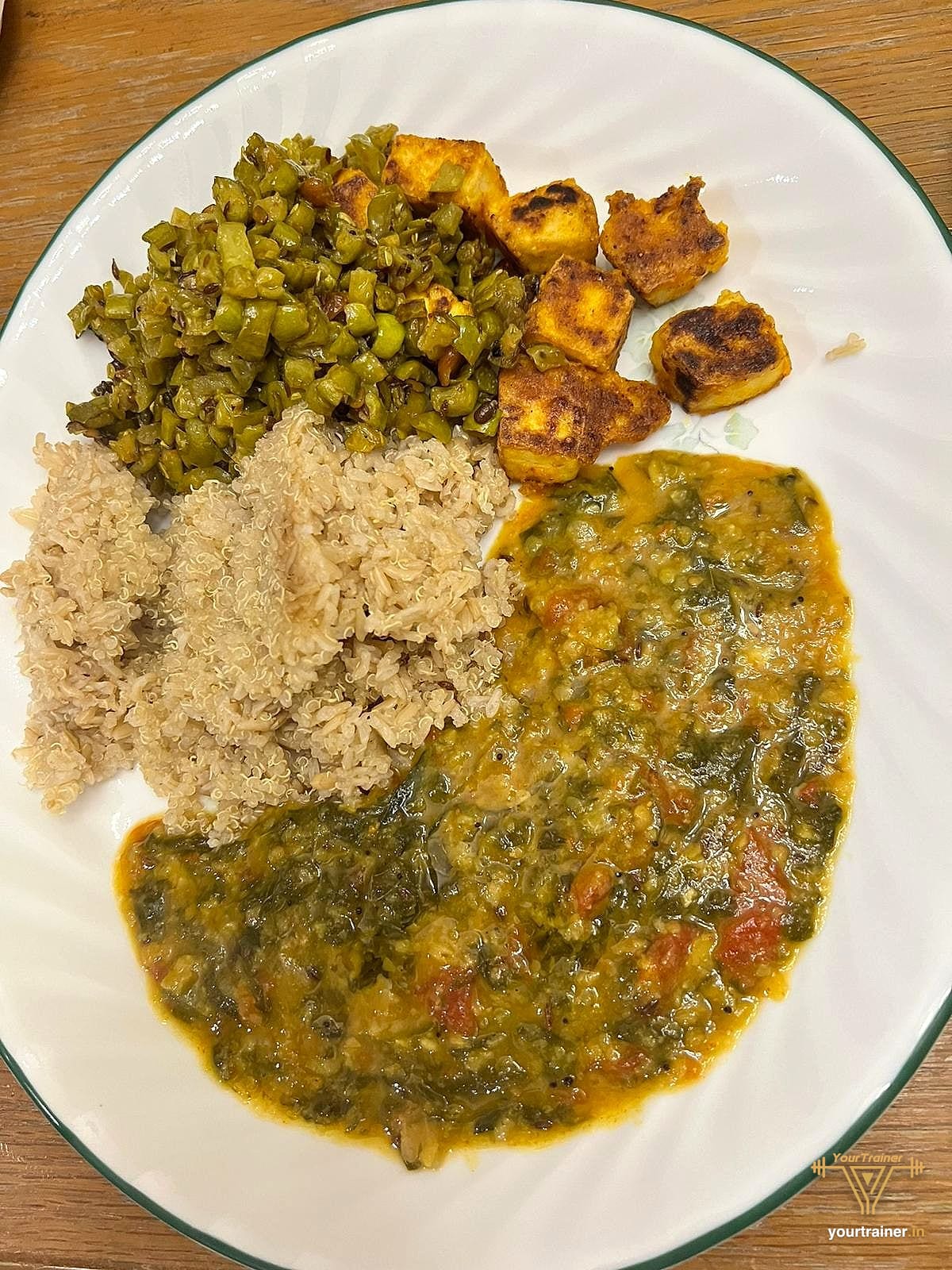
Coach's tip: If you are over 40 and vegetarian, the gap is almost never breakfast alone. It is that dal is treated as the protein when it is mostly the carbohydrate. Pair it with curd, paneer, soya or eggs and the day's total moves without the plate changing much.
Turn the numbers into meals
Knowing the calories is the easy part. Eating to them through a normal Indian week is where most people slip.
A YourTrainer coach plans your week around the dal, roti, rice and sabzi you already eat, reviews your plate photos and adjusts every week. It runs fully online, so it works the same in Bengaluru or Boston.
Start Your Journey →Coached online, wherever you live:Online personal trainer in India·Coaching for Indians in the USA·Online coaching for NRIs
Quick answers
How much protein should I eat after 40?
Most of our members over 40 are working toward 80 to 110 g a day alongside strength training. On fully logged days the median in our sample was 96.7 g, and two thirds of those days cleared 80 g.
Is it harder to hit protein on an Indian vegetarian diet?
It takes more deliberate pairing, not more food. Dal on its own is mostly carbohydrate. Adding curd, paneer, soya or sprouts to the same meal is what moves the daily total.
Does protein timing matter after 40?
Far less than the daily total. The research on protein timing finds the window around training is wide, and that total daily intake is what drives the result.
Keep reading
Start with why muscle loss after 40 matters.
The rest of this series:
How we counted
- A sample of member food logs from the YourTrainer app, 16 April to 21 September 2026. Members only, aggregated, never per person.
- A full-log day means breakfast, lunch, dinner and a snack were all recorded that day. Days with fewer entries are reported separately rather than mixed in.
- Medians, not averages, so one unusual day cannot move the number.
- Calories and protein are the app's food-database values for what members logged, not weighed plates.
For targets by body weight, use the protein calculator. If eggs do much of the work in your day, the egg protein calculator sizes them for Indian eggs rather than American ones, and for a vegetarian plan abroad see hitting 100 g as a vegetarian overseas.
Did you find this helpful?

About Anish Agarwal
Founder & Head Coach, YourTrainer · NASM & K11 Certified Personal Trainer · coaching since 2022
Featured in Dietitians.io, Fitness Interview, NRI Pulse. Press and media
Anish Agarwal is a NASM and K11 certified personal trainer coaching fat loss, body transformation, strength, and nutrition for clients across India since 2022. He founded YourTrainer to make expert, science-based coaching accessible online and in Bengaluru. Coach Anish's profile and the YourTrainer story.
Online 1-on-1 Coaching
Start Your Journey
Get a personalised training + Indian nutrition plan built around your goal, coached online, anywhere in India or abroad.
Trusted by 1,000+ clients coached across India & abroad
Free 30-min discovery call · No obligation