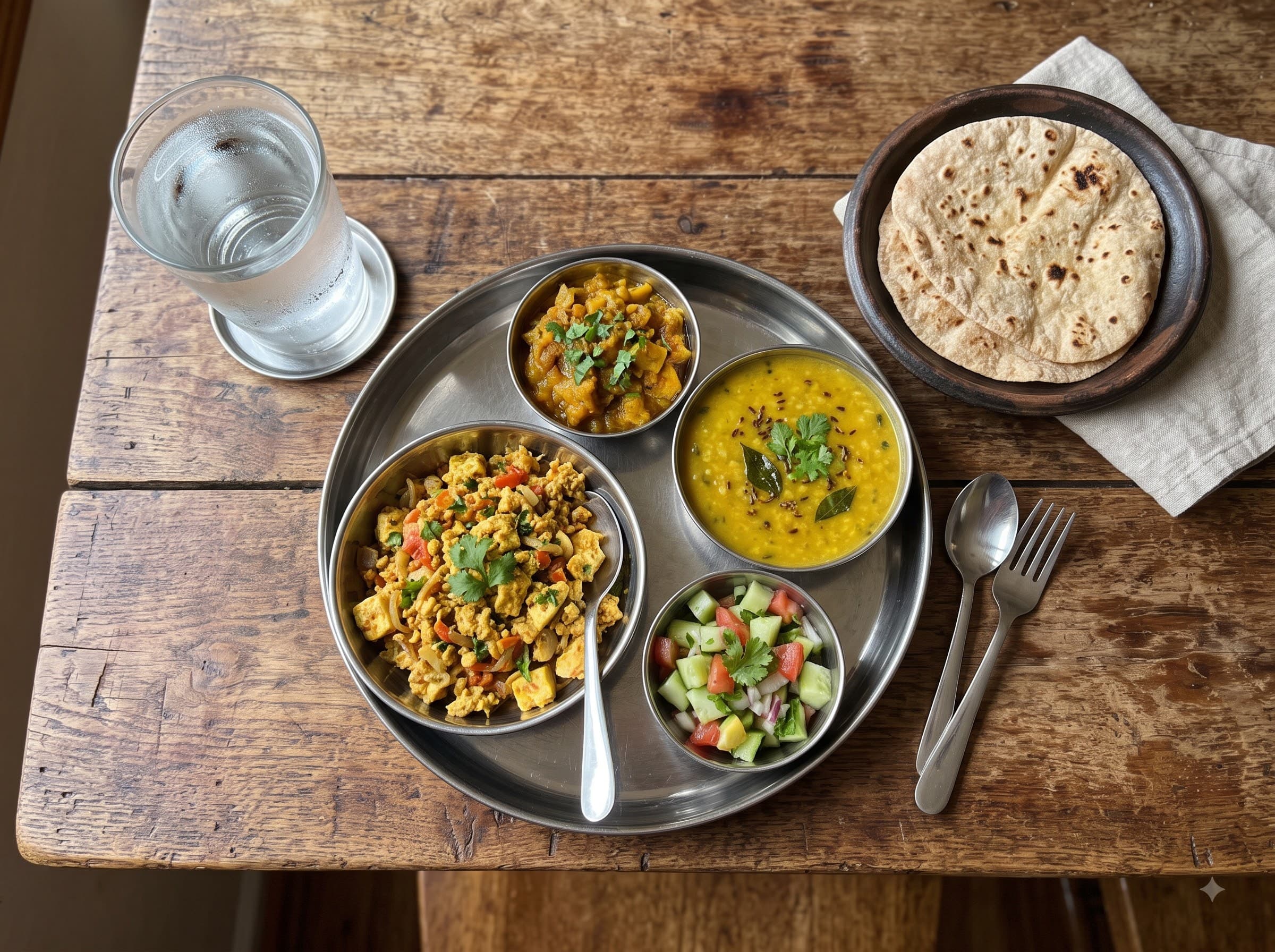
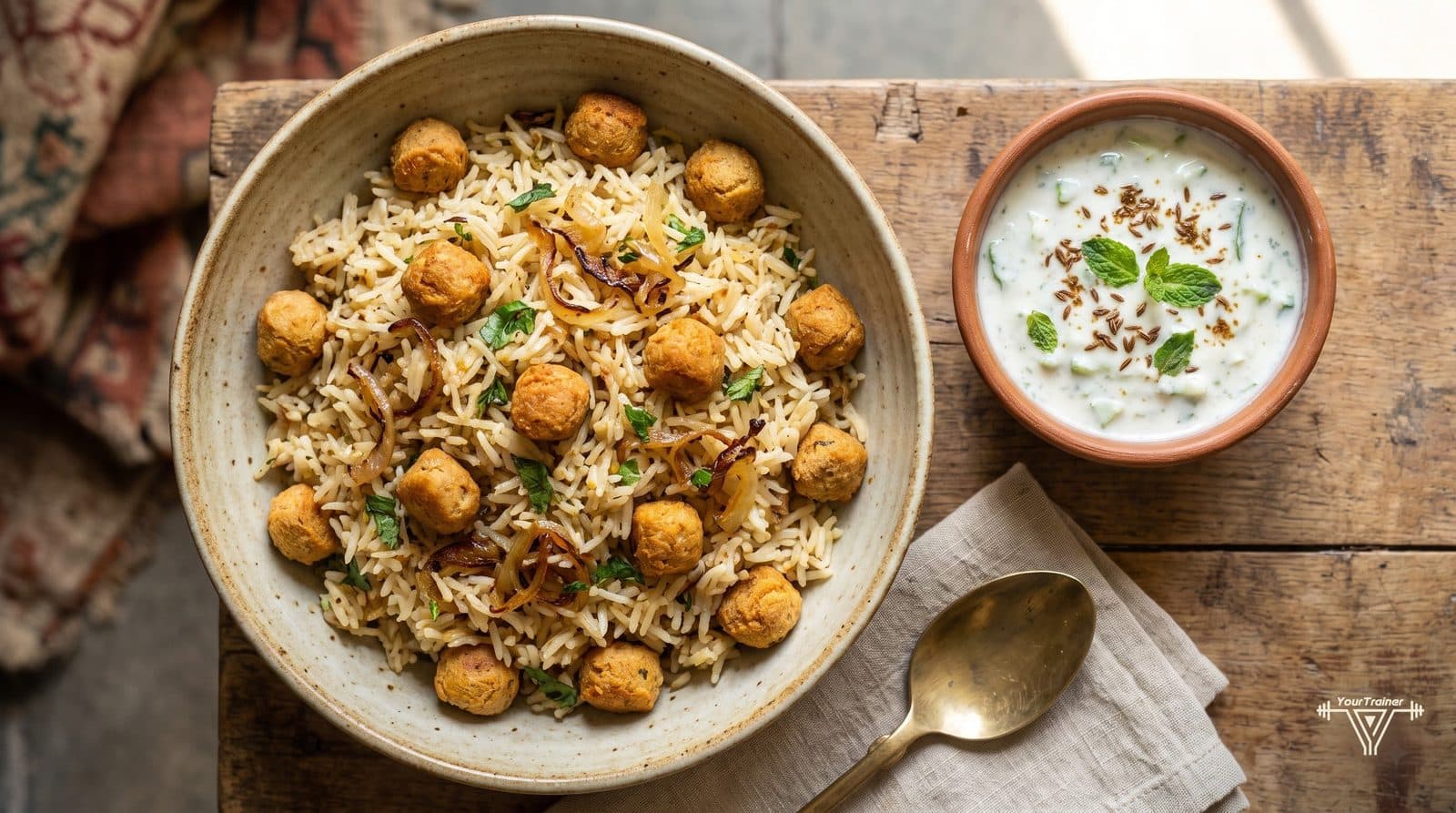
Same Dal, Rice and Roti, Twice the Protein Share: Coached Plates vs India's National Diet
India's national diet study found 62.3% of calories come from carbs and 12% from protein. Our members' food logs, built from the same foods, came to about 48% carbs and 23% protein. Here is how.
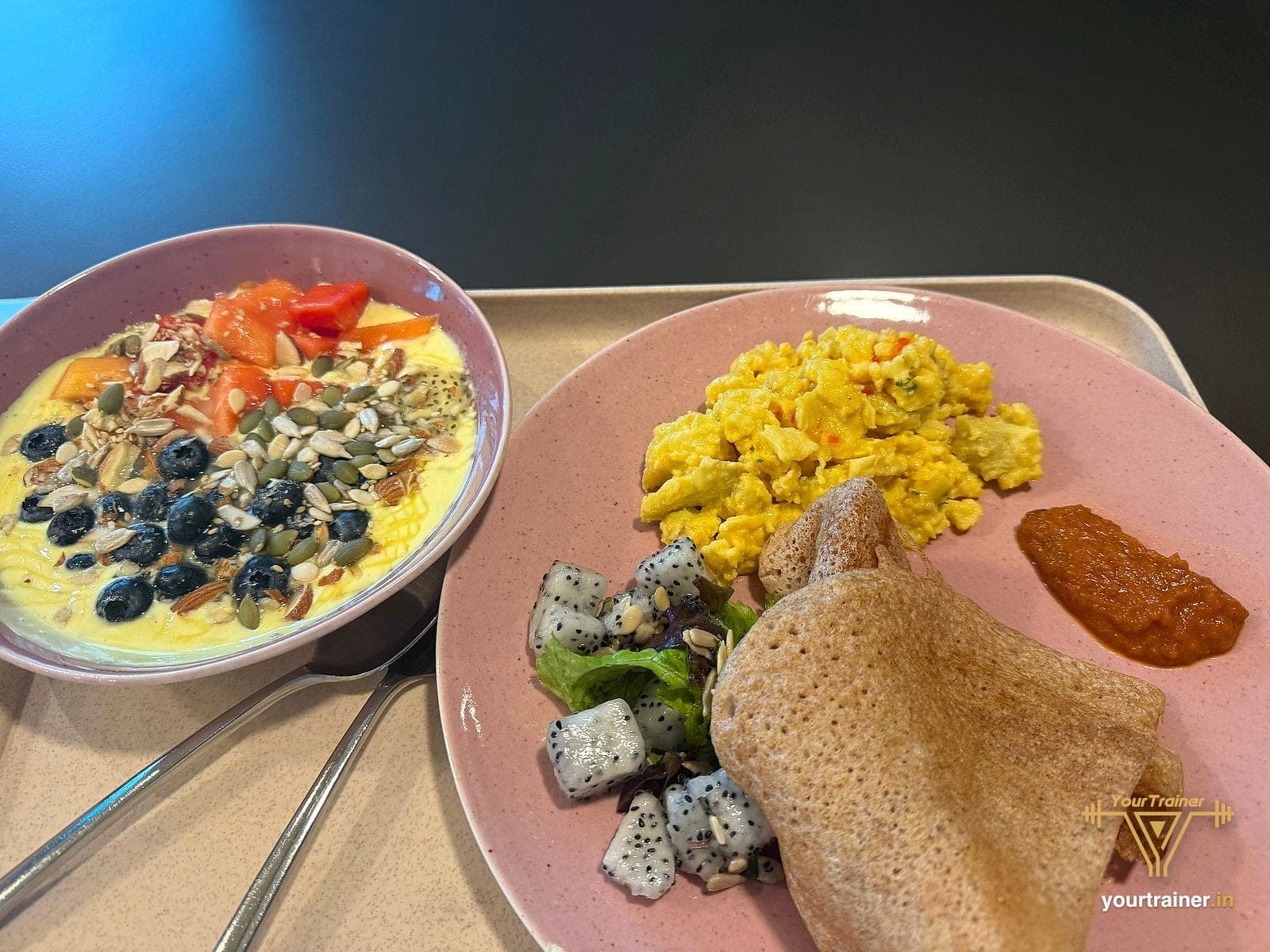
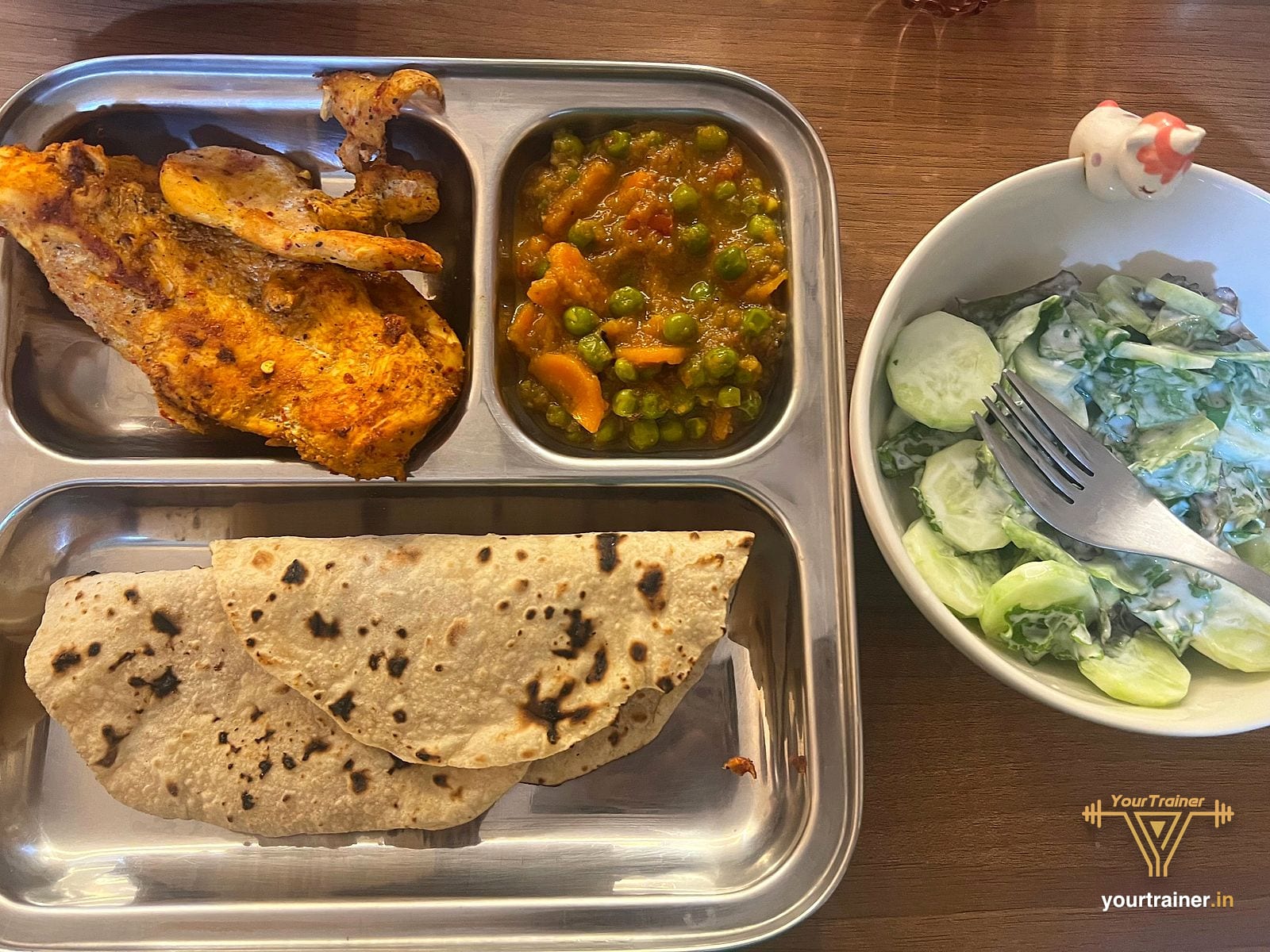
India's largest national diet study found that the average Indian gets 62.3% of daily calories from carbohydrates and only 12% from protein, below the national guideline of 15%. Our members eat the same rice, roti, dal and curd. On fully logged days, their plate came to about 48% carbohydrate and 23% protein. Nobody gave up rice. What changed was the second katori.
The plate study at a glance
48%
of calories from carbs on a coached member's day, against 62.3% nationally
23%
of calories from protein, against 12% nationally
9 in 10
members' typical day met India's 15% protein guideline
1 in 4
logged lunches got more than 65% of calories from carbs
Source: A sample of YourTrainer member food logs, 19 Apr to 4 Oct 2026. Members only, days with at least three meals logged, energy shares from logged carbohydrate, protein and fat. National figures: Anjana RM et al., ICMR-INDIAB survey-21, Nature Medicine, 2025
What India's national diet study found
The ICMR-INDIAB survey looked at the diets of 18,090 adults across India. Published in Nature Medicine in 2025, it found that carbohydrates gave 62.3% of daily calories, mostly from refined cereals such as white rice and from milled whole grains. Fat gave 25.2%. Protein gave 12%, below the 15% that India's dietary guidelines recommend.
The study also linked the highest carbohydrate intakes with higher odds of newly diagnosed type 2 diabetes, prediabetes and obesity. So we asked a simple question of our own food logs: what does the plate look like for people who eat ordinary Indian food with a coach?
| India, national average | YourTrainer members | |
|---|---|---|
| Carbohydrate | 62.3% | 48% |
| Protein | 12% | 23% |
| Fat | 25.2% | 29% |
Source: Anjana RM et al., ICMR-INDIAB survey-21, Nature Medicine, 2025; A sample of YourTrainer member food logs, 19 Apr to 4 Oct 2026. Members only, days with at least three meals logged, energy shares from logged carbohydrate, protein and fat. Medians of fully logged days
Looked at member by member, the picture holds. The typical member's day drew about 46% of calories from carbohydrates and 23% from protein, and 89% of members' typical days met the 15% protein guideline.
Same foods, a different plate
The foods behind those numbers are not special. In our food log study, the most logged foods were rice, roti, dal, curd, eggs and paneer. The difference is what sits next to the grain.
Dal is the clearest example. A typical bowl of dal as members logged it came to about 9 g of protein. Dal meals with curd, paneer, eggs, chicken or soya alongside reached 23.4 g. The details are in our dal study. One more katori of a protein food moves the whole meal, and a few of those move the whole day.
Coaching that does this for you
Reading is step one. A coach turns it into a plan built around your body, food & schedule.
100% online · Indian meal plans · weekly progress reviews · daily WhatsApp support.
Start Your Journey →Where the carbohydrates pile up: lunch
Lunch was the most carbohydrate-heavy meal in the logs. About a quarter of logged lunches drew more than 65% of their calories from carbohydrates, twice the share of dinners.
- Lunch26%
- Breakfast23%
- Snack15%
- Dinner12%
Source: A sample of YourTrainer member food logs, 19 Apr to 4 Oct 2026. Members only, days with at least three meals logged, energy shares from logged carbohydrate, protein and fat
| Meal | Carbohydrate | Protein |
|---|---|---|
| Breakfast | 48% | 23% |
| Lunch | 52% | 19% |
| Dinner | 44% | 22% |
| Snack | 44% | 15% |
Source: A sample of YourTrainer member food logs, 19 Apr to 4 Oct 2026. Members only, days with at least three meals logged, energy shares from logged carbohydrate, protein and fat. Medians
Snacks had the lowest protein share of any meal. That matches the food log study, where only 36% of snacks reached 20 g of protein, against 69% of dinners.
Millet is not a magic switch
The national study tested a popular idea. Replacing refined cereals with whole wheat or millet flour, without eating less grain overall, was not linked to lower diabetes risk. Replacing part of the carbohydrate with plant, dairy, egg or fish protein was linked to lower odds of newly diagnosed type 2 diabetes and prediabetes.
That is the same move our members make every day, without giving up their food. Millet is a fine grain. It just does not do the job on its own if the portion stays the same.
Five changes for this week
1. Add a protein katori to lunch
Curd, paneer, eggs, chicken, fish, sprouts or a thicker dal next to your usual rice or roti. Lunch is where most plates fall short.
2. Fix the afternoon snack
Swap a fruit-only snack for curd, roasted chana, boiled eggs or paneer at least once a day.
3. Do not count on a grain swap alone
Millet or brown rice is fine, but the national data says the swap only helps when some of the grain makes room for protein.
4. Measure your katori once
A small katori holds about 100 ml and a large one about 200 ml. Our katori portion calculator shows what yours holds.
5. Ask about screening
If you have a family history of diabetes, ask your doctor about an HbA1c test. South Asians can develop diabetes at a lower weight.
Check any Indian dish by katori, roti or piece in our Indian food calorie calculator, or size your bowls with the katori portion calculator.
What this comparison can and cannot tell you
- It is indicative, not like for like. The national figures come from a representative survey with its own methods. Ours come from food logged in an app.
- Our members are not typical. They are coached and track their food on purpose, so they sit closer to their targets than most people.
- No health outcomes were measured. This shows what a coached Indian plate looks like. It does not show that coaching prevents diabetes.
How we counted
- Our figures: A sample of YourTrainer member food logs, 19 Apr to 4 Oct 2026. Members only, days with at least three meals logged, energy shares from logged carbohydrate, protein and fat. A day counts as fully logged when at least three different meals were recorded. Energy shares use 4 kcal per gram of carbohydrate and protein and 9 kcal per gram of fat.
- Member-level figures take each member's median day, then the median across members.
- National figures: Anjana RM et al., ICMR-INDIAB survey-21, Nature Medicine, 2025, a survey of 18,090 adults.
This page is education, not medical advice. Your doctor manages blood sugar; a coach helps with the food and training around it.
Want a plan that keeps your family's food and fixes the plate? Start Your Journey.
Did you find this helpful?

About Anish Agarwal
Founder & Head Coach, YourTrainer · NASM & K11 Certified Personal Trainer · coaching since 2022
Featured in Dietitians.io, Fitness Interview, NRI Pulse. Press and media
Anish Agarwal is a NASM and K11 certified personal trainer coaching fat loss, body transformation, strength, and nutrition for clients across India since 2022. He founded YourTrainer to make expert, science-based coaching accessible online and in Bengaluru. Coach Anish's profile and the YourTrainer story.
Online 1-on-1 Coaching
Start Your Journey
Get a personalised training + Indian nutrition plan built around your goal, coached online, anywhere in India or abroad.
Trusted by 1,000+ clients coached across India & abroad
Free 30-min discovery call · No obligation