Pilates vs Gym: Weight Loss, Back Pain & Which Works
Mat pilates: 175–250 cal/hr; reformer 250–350; gym + EPOC wins fat loss. Back pain relief in 4–8 weeks. Goal-based framework.
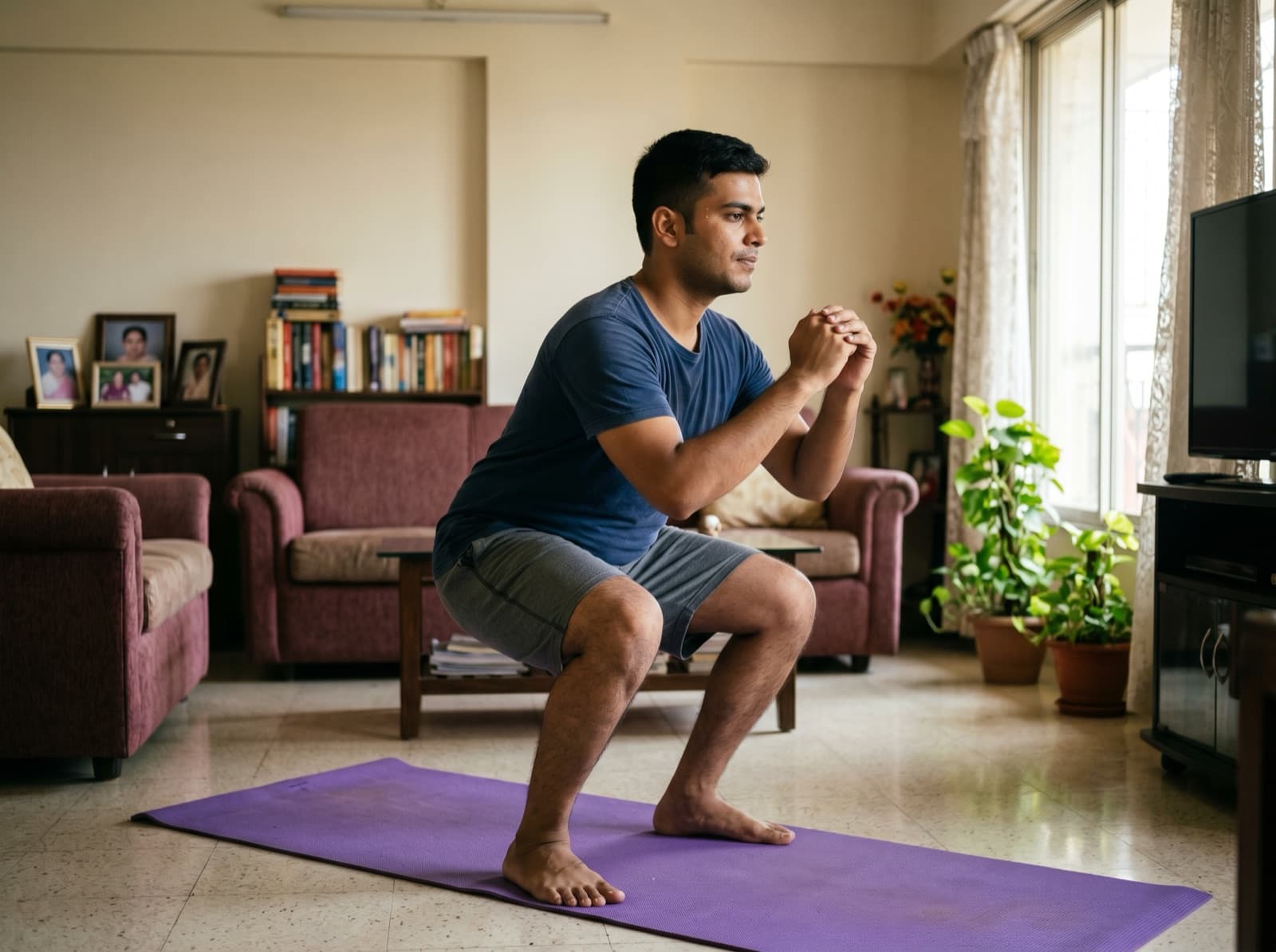
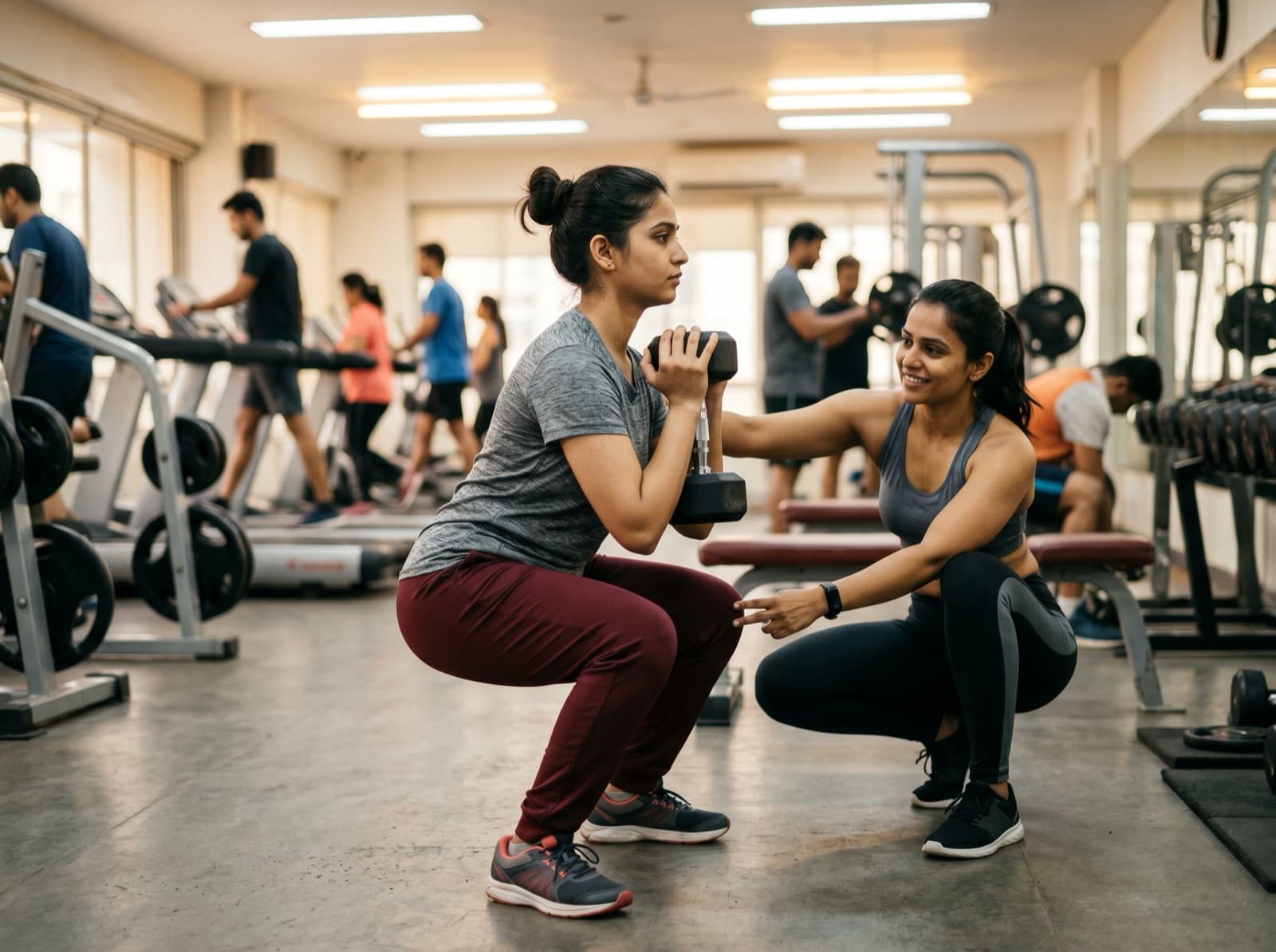
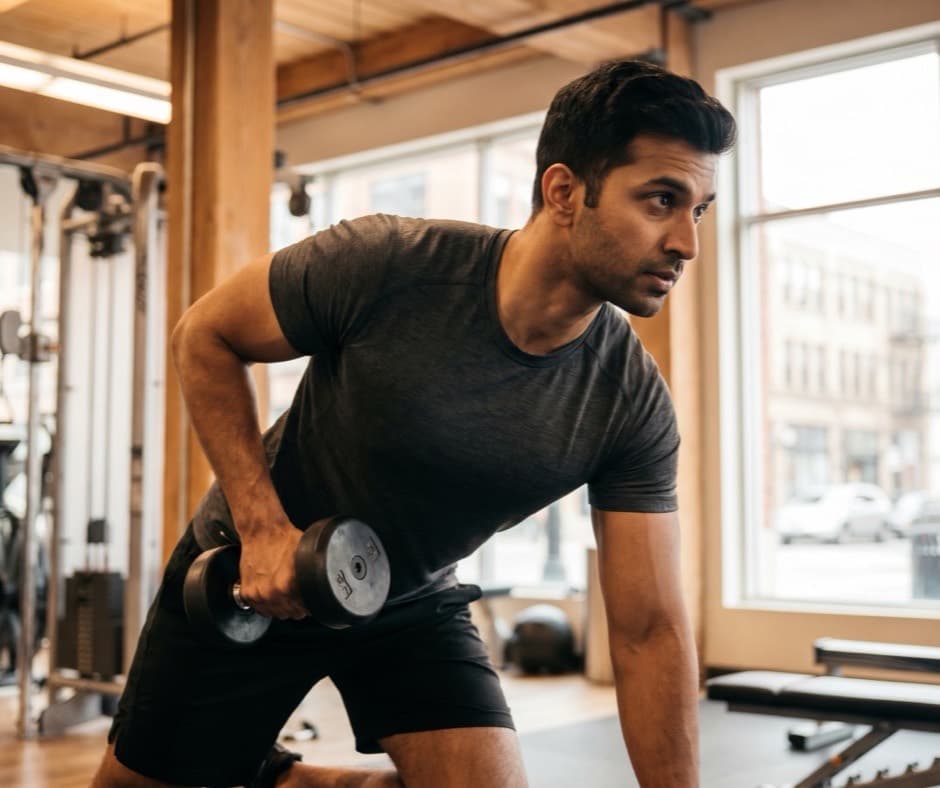
Mat pilates burns 175–250 calories per hour; reformer pilates 250–350 calories per hour; gym strength training burns 200–400 calories plus afterburn (EPOC). For weight loss, the gym typically wins, especially when you combine resistance training with progressive load. But for core strength, back pain, and joint-friendly movement, pilates excels; many people feel relief in 4–8 weeks. The real answer? Your choice depends on your primary goal: fat loss, pain management, or raw strength. Here's the honest breakdown.
Calorie Burn: Mat vs Reformer vs Gym Strength
The fitness industry loves to oversell calorie burn. Let me give you real numbers based on research and what I see coaching 1000+ Indians and NRIs since 2022.
| Activity | Calories/Hour (160 lb / 73 kg) | Afterburn (EPOC) | Muscle Built | Joint Impact |
|---|---|---|---|---|
| Mat Pilates | 175–250 | Minimal (0–10 cal) | Low–Moderate | Very Low |
| Reformer Pilates | 250–350 | Low (10–30 cal) | Moderate | Low |
| Gym: Weights (Circuit) | 200–400 | High (50–100 cal) | High | Medium (if form poor, high) |
| Gym: HIIT + Strength | 300–500 | Very High (100–150 cal) | High | Medium–High |
What this means: Mat pilates alone is a calorie-light activity, it's not a vehicle for rapid fat loss. A 60-minute mat class burns roughly the same as a 30-minute easy jog. Reformer pilates, with its spring resistance, bumps calories up significantly. But the gym, especially circuit training or strength + conditioning, wins because of afterburn. After a heavy squat or deadlift session, your body remains elevated in metabolic rate for 2–4 hours. That's called excess post-exercise oxygen consumption (EPOC). Pilates, being low-intensity resistance, generates minimal EPOC.
For Indians and NRIs specifically: If you're tracking this in India, a 60-minute circuit-gym session might burn 250–300 kcal actively, but your true daily energy expenditure rises by an extra 50–100 kcal from EPOC recovery. That adds up to 1500 extra kcal per week just from 3 sessions, a 0.2–0.3 kg fat-loss edge over pilates alone.
Back Pain & Core Strength: Timeline & Truth
This is where pilates shines, and honestly, it's one of the few areas where pilates beats the gym outright.
Pilates was designed for postural correction and deep core activation. Studies show that 4–8 weeks of 2–3x/week pilates reduces chronic lower-back pain by 30–50%. Mat pilates emphasizes:
- Transverse abdominis activation: the deepest core muscle that stabilizes the spine
- Glute engagement: pilates cues constant glute firing, which offloads the lower back
- Controlled, low-impact movement: no jarring or shear forces
- Breathing mechanics: pilates ties breath to movement, which reduces intra-abdominal pressure spikes
The gym, by contrast, can aggravate back pain if form is poor or progression is too fast. A beginner squatting with a rounded spine, or deadlifting before developing mobility, will likely see worse pain, not better. However, a well-coached strength program targeting glute activation, core stability, and posterior-chain mobility also fixes back pain, just with higher injury risk if you rush.
What I tell clients: If you have chronic back pain and zero gym experience, start with pilates. Do 3–4 weeks of mat or reformer pilates before adding barbell work. Once your core is engaged and your posture improves, layer in gym strength (squats, deadlifts, rows) with a coach watching your form. This hybrid approach gives you the best of both: pain relief + fat loss + muscle gain.
Muscle Gain & Bone Density
This is decisive: the gym wins for building muscle and bone density.
Muscle growth requires progressive overload, consistently adding weight, reps, or sets over weeks and months. Pilates, especially mat pilates, maxes out quickly because your body weight is the only resistance. Reformer springs can increase resistance, but the load is still capped.
The gym (free weights, machines, or cables) allows you to systematically increase load. A 50 kg squat becomes 55 kg next week, then 60 kg. Over 12 weeks, you're pulling 25% more. That progressive tension triggers muscle protein synthesis and fiber recruitment.
Bone density is even starker. Bone remodels in response to mechanical load. Pilates applies gentle, sustained tension, good for joint health, bad for bone adaptation. Barbell squats, deadlifts, and lunges place heavy compression and shear on bones, signaling them to reinforce and mineralize. Studies show strength training increases bone density by 1–3% per year; pilates, by 0.5–1%.
For Indian and NRI women over 35: This matters. Estrogen drops in perimenopause (ages 40–55, but can start at 35–38 in India due to stress and sun exposure). Your bone density naturally declines. Pilates alone will not offset this. A strength program (squats, lunges, farmer carries) adds years to your skeletal health.
Coaching that does this for you
Reading is step one. A coach turns it into a plan built around your body, food & schedule.
100% online · Indian meal plans · weekly progress reviews · daily WhatsApp support.
Start Your Journey →Joint Impact & Longevity
Pilates is famously "low-impact", technically true, but let's be precise.
Mat pilates: Zero impact. You're on your back or forearms. Wrists and shoulders still work, but knees, hips, and ankles are shielded. Ideal for people with knee arthritis, ankle issues, or recent surgery.
Reformer pilates: Still low-impact, but the carriage slides and springs can create transient stress if form breaks down. Rare to injure yourself, but possible.
Gym strength training: Moderate to high impact, depending on exercise choice and load. A heavy barbell squat with poor form will stress your knees. A controlled resistance-machine leg press with perfect form is safer. The difference is coaching.
Honest take: A poorly coached pilates class can hurt you (over-arching the lumbar spine in bridge, forced spinal rotation, or tight hip flexors). A well-coached gym program is safer than unguided pilates. Environment and instruction matter more than the modality.
For NRI and Indian lifestyles: Many of you spend 8+ hours sitting, desk jobs in the US, or logistics roles in India. Your hip flexors are tight, your glutes are dormant, and your thoracic spine is rounded. Mat pilates in this context is therapeutic and necessary. Gym strength training, if you then sit another 8 hours, won't fix the underlying problem. The answer: pilates in the morning or evening to unlock tight areas, then gym training 3x/week for muscle and bone.
Pilates vs Gym: Decision Framework by Goal
Stop reading generic comparisons. Here's what to choose based on your actual goal.
Goal: Lose 10–20 kg of fat
Choose: Gym (strength) + calorie deficit + home nutrition. Pilates alone will not create the calorie deficit you need. Gym training preserves muscle while you're in deficit. Combine 3–4x/week strength (45 min) + 1–2x/week pilates (30 min) for recovery and posture.
Goal: Relieve chronic back or joint pain
Choose: Pilates first, then add gym. Start 3–4 weeks of 2–3x/week pilates (mat or reformer). Once pain decreases 30–50%, add 1–2x/week strength training with a trainer. This prevents pain recurrence from muscular imbalance.
Goal: Build muscle and strength
Choose: Gym (weights/resistance). Pilates as a 1x/week recovery tool. Muscle growth requires progressive overload, pilates doesn't deliver this at scale.
Goal: Mobility, posture, core activation, no injuries
Choose: Pilates 2–3x/week as primary, gym 1x/week for general fitness. This is a maintenance and longevity approach, common among older adults, busy professionals, and people with a history of injury.
Cost & Access in India + NRI
Reality check: both options cost money, and availability differs by region.
Pilates in India: Mat classes run ₹400–800 per session in metros (Delhi, Mumbai, Bangalore); reformer classes ₹800–1,500. Monthly subscriptions: ₹3,000–8,000 for unlimited mat; ₹6,000–15,000 for reformer. Popular chains: Cult.fit (pilates on app + studio), Mish Fitness, Fitness First.
Gym in India: Regular gym membership ₹1,500–3,500/month in metros; premium gyms with trainers ₹5,000–12,000/month. Once you're a member, every class (HIIT, circuits, strength) is included.
For NRIs (US/UK/Canada/UAE): Pilates studios ₹2,500–5,500/month (~$30–65 USD); gyms ₹2,000–4,000/month (~$25–50). ClassPass and Mindbody apps often bundle both.
What I recommend: In India, if budget is tight, choose a good gym with a trainer for 3 months (build strength + learn form), then rotate 1–2x/week pilates. In NRI markets, if injury history exists, prioritize a pilates studio or hybrid studio (like Core Power). If injury-free, gym + free YouTube pilates (e.g., Pilates with Adriene, 15 min videos) is sufficient.
What I Actually Tell My Clients
Since 2022 I have coached 1000+ clients, from office workers in Bangalore to NRI women in Texas, I've learned that adherence beats perfection. If you hate the gym, pilates 3x/week will outperform a gym card you never use. If you love lifting and community, the gym will deliver more results faster.
That said, the optimal path for most people is hybrid: 2–3x/week gym strength (squats, deadlifts, rows, presses) + 1–2x/week pilates or yoga (core, mobility, recovery). This gives you the fat loss and muscle gain of strength training, the injury prevention and posture fix of pilates, and mental recovery time. For back pain specifically, I front-load pilates (4 weeks), then layer strength training (weeks 5–12). Pain usually drops 50%+ by week 6.
Budget too tight for both? Start gym, master squat and deadlift form with a trainer (4–6 weeks), then swap 1 gym day/week for home pilates videos. You'll save money and still progress.
- Coach Anish, Founder & Head Coach at YourTrainer
Certified Personal Trainer · Pilates & Strength Coaching · Bengaluru since 2022
Related reading from YourTrainer
Sources
- Guidelines on physical activity and sedentary behaviour (2020) · World Health Organization
- ISSN Position Stand: Protein and Exercise · Journal of the International Society of Sports Nutrition (2017)
Figures for Indian foods follow IFCT 2017 (ICMR-NIN). Coaching guidance on this site is educational and is not a substitute for medical advice. See how we use sources.
Did you find this helpful?

About Anish Agarwal
Founder & Head Coach, YourTrainer · NASM & K11 Certified Personal Trainer · coaching since 2022
Featured in Dietitians.io, Fitness Interview, NRI Pulse. Press and media
Anish Agarwal is a NASM and K11 certified personal trainer coaching fat loss, body transformation, strength, and nutrition for clients across India since 2022. He founded YourTrainer to make expert, science-based coaching accessible online and in Bengaluru. Coach Anish's profile and the YourTrainer story.
Online 1-on-1 Coaching
Start Your Journey
Get a personalised training + Indian nutrition plan built around your goal, coached online, anywhere in India or abroad.
Trusted by 1,000+ clients coached across India & abroad
Free 30-min discovery call · No obligation