ACL Recovery: Surgery vs Not & Real Timeline
ACL recovery roadmap: surgery vs conservative rehab, LSI milestones, phase gates, why solo training fails, coach-physio partnership model.

An ACL (anterior cruciate ligament) tear does not automatically mean surgery, surgery does not guarantee return-to-sport, and returning at 6 months is typically re-injury, not recovery. The outcome depends entirely on which phase you're in, how aggressively you build quad strength and LSI (limb symmetry), and whether you follow a coach-supervised rehab roadmap instead of self-treating. Research shows 30–50% of people with isolated ACL tears become "copers", they return to sports without surgery (Paterno et al., 2014, J Sport Rehabil), but only if they commit to 12–16 weeks of supervised physical therapy before any sport. Most injured people who skip this protocol and try to "just start playing again" re-tear within weeks. Here's the exact timeline and decision framework every athlete in India should know before choosing surgery or committing to conservative rehab.
Do You Actually Need Surgery?
One of the largest myths: all ACL tears require surgery. Copers follow a strict pre-rehabilitation protocol before clearance; non-copers have structural or functional reasons that surgery addresses. Surgery is necessary if you have:
- Multiligament injury (MCL, PCL, or meniscus torn alongside ACL)
- Grade 3 instability on physical exam (Lachman test, pivot shift test positive)
- High return-to-sport demand (competitive sport, cutting/pivoting required)
- Failed conservative rehab (ongoing "giving way" after 12 weeks of supervised PT)
- Young age + high activity (athletes under 25 aiming for competition)
Non-surgical candidates typically have: isolated ACL tear, willingness to modify activities for 3–6 months, sedentary or low-impact return-to-sport plan.
In India, cost factors in the decision, often incorrectly. Non-surgical rehab costs ~₹15,000–40,000 total (physio + coach sessions over 12 weeks); surgical ACLR runs ₹2–4 lakhs (hospital + graft + 6-month rehab). The decision should be made with an orthopedic surgeon AND a certified physiotherapist, not based on cost alone. Re-injury surgery (common when non-surgical rehab is done poorly) runs a second ₹2–4 lakhs and 6+ months lost.
The 4-Phase Rehab Timeline at a Glance
Recovery is not linear. Each phase has specific targets and gate criteria. Missing a phase or skipping benchmarks (like reaching 75% LSI before running) is why most athletes re-injure.
| Phase | Timeframe | Key Goal | LSI Target | Testing Method |
|---|---|---|---|---|
| 1. Protection | Wk 0–6 | Restore full ROM, reduce swelling, quad activation | Not assessed | ROM goniometer; quad MMT |
| 2. Strength Base | Wk 7–12 | Build quad, glute, hamstring; single-leg stability | 60–75% | Isokinetic dynamometry or leg-press test |
| 3. Running & Agility | Mo 3–6 | Plyometrics, cutting, agility drills, running | 75–85% | Single-leg hop distance; Y-Balance Test |
| 4. Return-to-Sport | Mo 6–12+ | Sport-specific drills, full intensity, confidence | ≥90% | Hop test battery; sport simulation |
LSI = Limb Symmetry Index (strength of injured leg ÷ healthy leg × 100). Example: if your healthy leg can do a 50 kg leg press, 90% LSI means 45 kg on the injured leg.
Phase 1: Protection & ROM (Weeks 0–6)
The first 6 weeks determine everything downstream. Your job: reduce swelling, restore full knee range of motion (0° extension, 120° flexion minimum), and wake up the quadriceps.
Post-surgery: Hinged brace 2–4 weeks, crutches 1–2 weeks, PT starts within 3–5 days. Non-surgical: Brace 2–3 weeks, PT starts immediately.
What actually happens in PT (2–3 sessions/week):
- Quad sets: 3 sets × 20 reps daily (lying down, tighten thigh muscle, lock knee). This is non-negotiable; 90% of rehab failures skip this.
- Straight leg raises: 3 sets × 15, once quad strength allows.
- Heel slides: 3 sets × 10 (bent-knee flexion, seated or supine).
- Swelling management: Ice, compression, elevation, cryotherapy if available. In India, many physios use pneumatic compression pumps (₹500–1000/session); home ice packs work equally well.
- Range-of-motion work: Passive (PT moves your leg), active-assisted (you + PT), active (you alone). Goal: full extension by Week 2, 110° flexion by Week 6.
What I actually tell my clients at this stage: "You will feel weak and frustrated. Your quad is not broken; it's just temporarily shut off due to neural inhibition (brain protecting the knee). Every day of quad sets rewires that signal. Skip them and you'll spend 6 extra weeks trying to wake it up later. The people who move fastest through Phase 1 are the ones who treat quad sets like brushing teeth, non-negotiable, twice daily."
Phase 2: Strength Foundation (Weeks 7–12)
By Week 7, swelling should be <10% (mild puffiness acceptable), ROM should be full, and you should tolerate single-leg stance for 10+ seconds. Now: build strength symmetry.
Target: 60–75% LSI by Week 12. This is the gate to Phase 3. Research (Kyritsis et al., 2016, Br J Sports Med) shows athletes who reach ≥80% LSI before return-to-sport have 50% lower re-injury rates than those who skip LSI testing.
LSI Testing in India: Most Tier 1 cities (Mumbai, Delhi, Bangalore, Chennai) have isokinetic dynamometers at physio clinics or hospitals (₹1000–2000 per test). Tier 2/3 cities typically use manual muscle testing (MMT, graded 0–5) or simple test sets on leg press (compare both legs, same ROM, track max weight in a spreadsheet). Either method works if you test consistently every 2 weeks.
Strength exercises (3–4 sets × 10–15 reps, 3–4x/week): These form the foundation of your strength training progression. The focus is load tolerance and symmetry, not just moving weight.
- Quadriceps: Leg press (bilateral Week 7–9, progress to single-leg Week 10+), leg extension machine, sissy squats (bodyweight). Aim: 50–80 kg single-leg press by Week 12.
- Hamstrings: Nordic hamstring curls (eccentric focus), leg curl machine, single-leg RDLs with support. Hamstring strength is critical for ACL stability.
- Glutes: Single-leg glute bridges, clamshells, side-lying leg raises. Weak glute medius = knee valgus (inward collapse) = re-injury risk.
- Calf: Single-leg calf raises (bilateral Week 7–8, single Week 9+).
- Proprioception: Double-leg balance on firm ground (Week 7), progress to unstable surface (foam pad, balance disc) by Week 9–10, single-leg balance by Week 11 (goal: 30 seconds).
Indian context: Most home gyms lack leg press machines. Alternatives: loaded pistol squats (with TRX support), Bulgarian split squats, or barbell front squats. For creative bodywork, explore progressive bodyweight options adapted for rehab. Many Indian physios use manual muscle testing (MMT 4–5/5) by Week 12 as the clearance metric. Understanding proper squat mechanics is critical; if you've had knee pain with squats before, now is the time to learn the safest form.
Coaching that does this for you
Reading is step one. A coach turns it into a plan built around your body, food & schedule.
100% online · Indian meal plans · weekly progress reviews · daily WhatsApp support.
Start Your Journey →Phase 3: Running & Agility (Months 3–6)
This phase is where most athletes fail because they rush. You cannot run until LSI ≥ 75%. You cannot cut/pivot until LSI ≥ 85%. These are not flexible.
Week 12–14 (LSI 75–80%): Introduction to impact. Start with walk-jog intervals on a treadmill or flat outdoor surface (no hills, no trails). Example: 2 min walk, 1 min jog, repeat 6–8 times. 2x/week. Pain during or swelling after = scale back. Zero pain-then-swelling = progress next session.
Week 15–18 (LSI 80–85%): Continuous running. Start 15–20 min at easy pace (conversational, no sprinting). Build volume: +5–10 min per session, no more than 2x/week. Still no cutting, no uneven surfaces.
Week 19–24 (LSI 85–90%): Sport-specific agility. Introduce lateral shuffles, figure-8 drills, box cuts (slow, controlled). Plyometrics: bounding, broad jumps, single-leg hops (all controlled, no full-speed sport yet). Test: single-leg hop distance should be ≥85% of healthy leg.
Why Phase 3 failures happen (real numbers): Beynnon et al. (2014, Am J Sports Med) tracked 122 athletes post-ACLR. Those who returned to cutting sports before reaching LSI ≥85% had a 28% re-injury rate vs. 4% for those who waited. Nearly 30% of re-injuries occurred within the first month of return.
Common mistakes:
- "I felt good, so I ran 5 km", sudden volume jump causes inflammation, delays Phase 4 by 2–4 weeks.
- "I did agility work but skipped plyometrics", you'll have endurance but no power; re-injury on first explosive cut.
- "My physio cleared me at 12 weeks, why can't I play?" Medical clearance ≠ sports clearance (LSI ≥90%, hop test ≥90%).
Phase 4: Return-to-Sport (Months 6–12+)
LSI ≥90% is the gate. You also need:
- Single-leg hop for distance ≥90% of healthy leg
- Y-Balance Test score ≥90% (proprioception under fatigue)
- Sport-specific movements at full speed, full confidence, 0 episodes of "giving way"
Full return-to-sport typically takes 9–12 months post-surgery. There is no safe 6-month return.
Month 6–9: Sport-specific training at 85–95% game speed (practice, not matches). Month 9–12: Graduated return-to-play (start as sub, limited minutes). Full participation only if LSI ≥90% sustained and you've completed 4–6 weeks of full-intensity training.
Why Solo Rehab (Without a Coach) Fails
A physiotherapist is essential but not sufficient. Here's why:
Physios optimize tissue healing: Reduce swelling, restore ROM, prescribe strength progressions (1–3x/week). Coaches teach return-to-sport mechanics: Cue knee alignment, ACL-safe movement patterns, sport-specific drills (2–4x/week).
The gap: Strength without movement patterns = re-tear on Day 1 of sport. Movement without strength = collapse under deceleration loads. Both are needed.
Real example: A 24-year-old cricketer in Mumbai had ACLR in January. Physio brought him to LSI 85% by May, but he started batting practice on his own, first aggressive cut caused a re-tear, second surgery needed. The problem: strength without proprioceptive training under fatigue. The second time, he trained with both physio and coach for 12 months, returned safely, no re-tear.
Coach + Physio: The Partnership Model
Weeks 0–12 (Physio-led): Physio is primary. Coach observes, learns restrictions, and starts basic strength work in Week 6–7 alongside PT. 3 PT sessions/week, 1–2 coach sessions/week (movement quality focus).
Weeks 13–24 (Balanced): Physio steps back to 1–2x/week (check-ins, address any swelling or movement faults). Coach leads 3–4x/week (strength progressions, running program, agility, sport prep). Weekly communication: coach and physio sync on progress and red flags.
Months 6–12 (Coach-led): Physio on standby (1x/week if available, or as-needed). Coach runs full return-to-sport program. Physio is the referee, if athlete stalls or re-injures, physio diagnoses and adjusts.
Cost in India:
- Physio: ₹500–1500/session (Tier 1: ₹1200–1500, Tier 2: ₹600–1000)
- Coach: ₹1000–3000/session (online coaching ₹500–1000, in-person ₹1500–3000)
- Non-surgical total: ₹1.5–3.5 lakhs over 12 weeks
- Surgical total: ₹3–5 lakhs over 12 months (including initial surgery + rehab)
Many athletes skip coach support, hence high re-injury rates.
Nutrition for ACL Recovery
Tissue healing demands protein. Protein synthesis peaks 24 hours post-workout, so consistency matters more than quantity. In India:
- Minimum: 1.6 g protein per kg body weight daily (e.g., 80 kg athlete = 128 g/day).
- Post-workout: 20–40 g protein within 2 hours (1 glass milk + 1 roti + 2 tbsp paneer, or 2 eggs + 1 toast, or 1 chicken breast + rice, or 1 katori dal + 2 rotis).
- Collagen/vitamin C: Helps ligament and cartilage repair. Consume citrus (oranges, guava), berries, tomato, and gelatin-rich foods (bone broth, chicken bone). No supplement is proven superior to real food.
Swelling diet: Turmeric, ginger, omega-3s (fish, ground flaxseed, chia seeds in yogurt), and adequate hydration (3–4 L water/day).
Related reading from YourTrainer
Sources
- Guidelines on physical activity and sedentary behaviour (2020) · World Health Organization
Coaching guidance on this site is educational and is not a substitute for medical advice. See how we use sources.
Did you find this helpful?
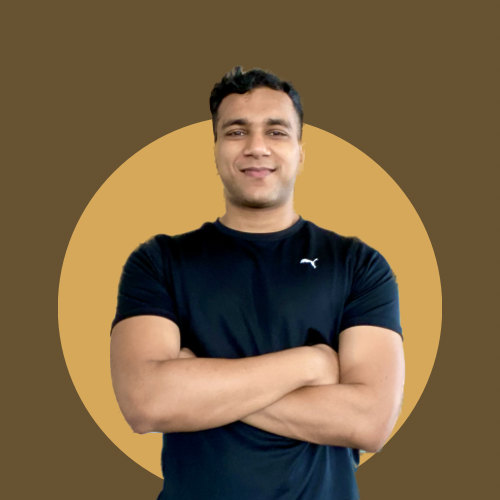
About Anish Agarwal
Founder & Head Coach, YourTrainer · NASM & K11 Certified Personal Trainer · coaching since 2022
Featured in Dietitians.io, Fitness Interview, NRI Pulse. Press and media
Anish Agarwal is a NASM and K11 certified personal trainer coaching fat loss, body transformation, strength, and nutrition for clients across India since 2022. He founded YourTrainer to make expert, science-based coaching accessible online and in Bengaluru. Coach Anish's profile and the YourTrainer story.
Online 1-on-1 Coaching
Start Your Journey
Get a personalised training + Indian nutrition plan built around your goal, coached online, anywhere in India or abroad.
Trusted by 1,000+ clients coached across India & abroad
Free 30-min discovery call · No obligation