Ashwagandha & Testosterone: Science vs. Marketing
Does ashwagandha boost testosterone? A coach's myth-bust: 11–15% T lift only in stressed men. How it works, dosage, and who actually benefits.
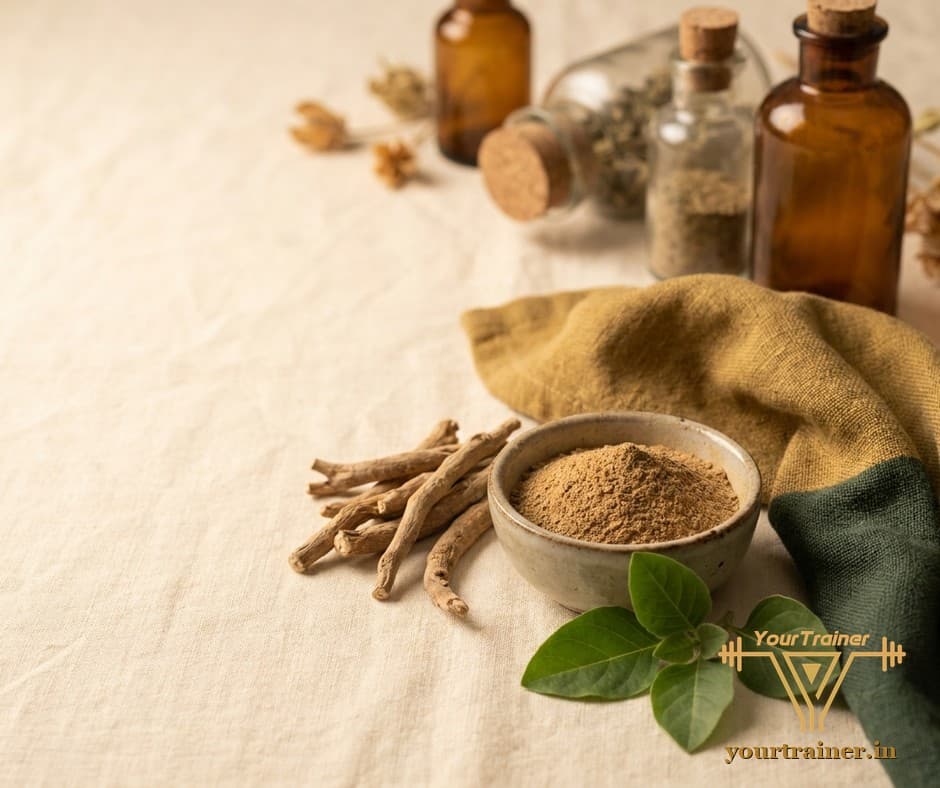
Ashwagandha doesn't directly boost testosterone in most men, it reduces cortisol (the stress hormone), which indirectly supports healthier T levels and better recovery. The science shows a modest 11–15% testosterone increase only in high-stress men; if your stress is already low, ashwagandha's testosterone benefit is negligible. What it genuinely helps: sleep quality, recovery, mental clarity, and resilience. If you're chasing a T-booster, ashwagandha isn't it. If you're managing chronic stress and poor sleep, conditions that tank testosterone, it's worth a closer look.
The Testosterone Claim: What the Meta-Analysis Actually Shows
You've probably seen ashwagandha pitched as a "natural testosterone booster." Let's cut through that.
A 2018 meta-analysis in PLOS ONE reviewed nine controlled trials. The finding: men taking ashwagandha (specifically the KSM-66 standardized extract) saw an average testosterone increase of 11–15%. That sounds solid until you look closer at one critical detail: the largest gains occurred in men with chronically elevated cortisol (stress markers, poor sleep, high anxiety). Men with baseline stress levels already in the normal range saw minimal to no T lift.
Translation: ashwagandha is not a testosterone pharmaceutical. It's a stress and recovery tool that helps testosterone normalize when stress has suppressed it. If your cortisol is already managed and sleep is solid, don't expect dramatic T gains. If you're running on 5 hours of sleep and constant work pressure, ashwagandha can help restore what stress took away.
How Ashwagandha Actually Works (The Cortisol→Recovery Pathway)
Here's the real mechanism:
Chronic stress elevates cortisol. High cortisol suppresses the hypothalamic–pituitary–gonadal (HPG) axis, the system that regulates testosterone production. It also tanks sleep quality, which further hammers T levels. Ashwagandha's active compounds (withanolides) reduce cortisol by modulating your stress response. Lower cortisol means the HPG axis can function again. Better sleep (which ashwagandha also supports) allows testosterone to normalize, especially during REM and deep sleep when T peaks.
This is indirect support, not direct stimulation. You're not forcing higher T; you're removing the stress brake that was holding it down. It's the difference between adding fuel to an engine versus fixing the fuel injector that wasn't working because it was flooded.
Studies backing this mechanism:
- 2013 Phytomedicine trial: Ashwagandha reduced cortisol by ~28% over 60 days
- 2012 Indian Journal of Psychological Medicine: KSM-66 improved sleep quality and reduced anxiety-driven cortisol spikes
- 2009 Journal of Dietary Supplements: In cyclists, ashwagandha reduced cortisol post-workout, speeding recovery
The Dose That Actually Works
Not all ashwagandha extracts are equal. Most of the research uses KSM-66, a standardized extract where the active withanolide content is verified and consistent.
| Form / Brand | Typical Dose | INR Cost/Month | USD Cost/Month | Timing & Notes |
|---|---|---|---|---|
| KSM-66 (standardized extract) | 300–600 mg/day | ₹800–1200 | $10–15 | With food, evening. Gold standard for studies. |
| Himalaya Ashwagandha (India) | 1–2 caps/day (225 mg ea) | ₹300–400 | $3.60–4.80 | Available at Apollo, Netmeds, Amazon.in |
| Organic India (India) | 1–2 caps/day (300 mg) | ₹450–550 | $5.40–6.60 | GMP certified; supermarket chains |
| iHealth or Nature's Velvet (India) | 1–2 caps/day (500 mg) | ₹600–800 | $7.20–9.60 | High potency; online + select retailers |
| Whole root powder (bulk, India) | 3–6 g/day (1–2 tsp) | ₹200–300 | $2.40–3.60 | Mixed into warm milk + ghee. Variable quality. |
| US brands (iHerb, Amazon.com) | 300–600 mg/day | N/A | $12–25 | 2–4x higher than India; NRI option |
What I actually tell my clients: Start with 300 mg KSM-66 or equivalent daily for 8–12 weeks before expecting cortisol/sleep shifts. In India: Himalaya (₹300–400) or Organic India (₹450–550) for 60 capsules are reliable, available at Apollo Pharmacy, Netmeds, and Amazon.in. For NRIs in US: You're paying 2–4x more per mg; consider ordering from Indian pharmacies online or using iHerb's India warehouse if available. If you're buying bulk powder, make sure it's from a reputable Ayurvedic supplier (check reviews, batch numbers, and GMP certification), potency varies wildly. Take it consistently; ashwagandha isn't a "take as needed" supplement. Your body's stress response takes weeks to reset. For deeper context on how cortisol affects your body and weight, read that piece; it'll help you understand why ashwagandha is just one lever in the stress-recovery toolkit.
Timeline & Realistic Expectations: What Happens Week to Week
Ashwagandha is not a quick-fix. Here's what actually happens on a typical 300–600 mg daily protocol:
- Week 1–2: Sleep may improve slightly; vivid dreams common (normal, withanolides enhance REM). No cortisol change yet. Don't judge results this early.
- Week 4: Sleep consistency improves. Morning anxiety/overthinking drops noticeably. Cortisol begins to normalize. Strength/recovery training feels slightly smoother.
- Week 8: Cortisol reduction plateaus (~15–28% if you had elevated baseline). Testosterone may begin rising if it was suppressed by stress. Sleep quality is clearly better. Mental fog lifts.
- Week 12+: Full hormonal reset visible if baseline was high-stress. Testosterone increase (if any) plateaus around 11–15%. Benefits stabilize; maintenance phase.
If you see no change by Week 8, your baseline stress/cortisol was likely already normal, ashwagandha won't create T gains where none were blocked. Stop, or use the freed budget on sleep environment upgrades or strength training instead.
Coaching that does this for you
Reading is step one. A coach turns it into a plan built around your body, food & schedule.
100% online · Indian meal plans · weekly progress reviews · daily WhatsApp support.
Start Your Journey →Who Actually Benefits? The Stress Profile That Matters
Ashwagandha shines in these scenarios:
- High-stress professionals (long hours, deadlines, poor sleep): Cortisol is chronically elevated. Ashwagandha can normalize it, improving T baseline.
- Overtrained athletes (excessive volume, insufficient recovery): Cortisol from overtraining suppresses testosterone. Ashwagandha + sleep + lower volume = T recovery.
- Poor sleepers with anxiety: Ashwagandha improves sleep latency and depth, which directly supports nocturnal testosterone release. (If you also have muscle cramps or poor sleep, address potential magnesium deficiency, it's a common co-factor.)
- Anxious individuals whose worry keeps cortisol elevated: Lower anxiety → lower cortisol → better hormonal environment.
Ashwagandha is not worth adding if:
- Your stress is already well-managed (meditation, good work–life balance, regular exercise)
- You sleep 7–9 hours consistently
- Your baseline cortisol is normal
- You're looking for a shortcut to high T without fixing lifestyle
In those cases, strength training, sleep prioritization, and nutrition will move the needle far more than ashwagandha.
Dosage Strategy & Timing for Maximum Effect
How to Take It
1. Consistency over timing. Ashwagandha works through cumulative cortisol reduction, not acute dosing. Take 300–600 mg at the same time every day. Most people take it in the evening with dinner or before bed (it supports sleep). Some coaches recommend morning if anxiety is your main issue (cortisol is naturally higher AM). If sleep is your weak point, read our full guide on how sleep directly impacts weight loss and hormone balance, ashwagandha is one tool, but sleep fundamentals (darkness, temperature, routine) matter more.
2. With food. Ashwagandha is fat-soluble; absorption improves with dietary fat. Take it with meals containing ghee, oil, or full-fat yogurt. In India, traditional practice is ashwagandha powder mixed into warm milk with a pinch of ghee and honey, effective and delicious.
3. Give it 8–12 weeks. Studies showing cortisol reduction and hormone effects typically ran 8–12 weeks. Don't judge results after 2 weeks. Your hypothalamic–pituitary axis is recalibrating; this takes time.
Typical Dosing Protocol (From Research)
- Daily dose: 300–600 mg KSM-66 extract
- Duration: 12 weeks minimum for cortisol + T effects
- Form: Capsule (cleaner dosing) or powder (traditional, cost-effective)
- With food: Yes, especially fat-containing meals
- Cycle: No need to cycle; studies show consistent daily use is safe long-term
Cautions: Thyroid, Pregnancy, and Drug Interactions
Ashwagandha is generally safe, but a few populations should be cautious:
Thyroid conditions: Ashwagandha may gently increase thyroid activity (T3/T4). If you have hypothyroidism and take levothyroxine, monitor levels after starting ashwagandha, you may need a dose adjustment. If you have Graves' disease or hyperthyroidism, ashwagandha could worsen symptoms. Check with your doctor first.
Pregnancy and breastfeeding: Ashwagandha is traditionally used in Ayurveda, but human pregnancy studies are minimal. Most doctors recommend avoiding it during pregnancy as a precaution. If nursing, same guidance applies, data is sparse.
Autoimmune conditions: Ashwagandha may stimulate immune function. If you have lupus, rheumatoid arthritis, or type 1 diabetes, consult your doctor before use.
Sedating medications: Ashwagandha can enhance the effect of sleeping pills, anxiety meds (benzodiazepines), or antidepressants. If you're on these, start ashwagandha at a low dose and monitor, you may need dose adjustments of your existing medication.
Blood pressure meds: Ashwagandha can lower blood pressure slightly. If you're on BP medication, monitor closely, your dose might need to drop.
Related reading from YourTrainer
Sources
- ISSN Position Stand: Protein and Exercise · Journal of the International Society of Sports Nutrition (2017)
- Nutrient Requirements for Indians (RDA and EAR) · ICMR, National Institute of Nutrition
Figures for Indian foods follow IFCT 2017 (ICMR-NIN). Coaching guidance on this site is educational and is not a substitute for medical advice. See how we use sources.
Did you find this helpful?

About Anish Agarwal
Founder & Head Coach, YourTrainer · NASM & K11 Certified Personal Trainer · coaching since 2022
Featured in Dietitians.io, Fitness Interview, NRI Pulse. Press and media
Anish Agarwal is a NASM and K11 certified personal trainer coaching fat loss, body transformation, strength, and nutrition for clients across India since 2022. He founded YourTrainer to make expert, science-based coaching accessible online and in Bengaluru. Coach Anish's profile and the YourTrainer story.
Online 1-on-1 Coaching
Start Your Journey
Get a personalised training + Indian nutrition plan built around your goal, coached online, anywhere in India or abroad.
Trusted by 1,000+ clients coached across India & abroad
Free 30-min discovery call · No obligation