Whey vs Plant Protein for Indians: Which Wins
Whey isolate works for most Indians despite lactose intolerance. Whey vs pea, rice and soy by cost, leucine and digestion, plus a decision table by goal.
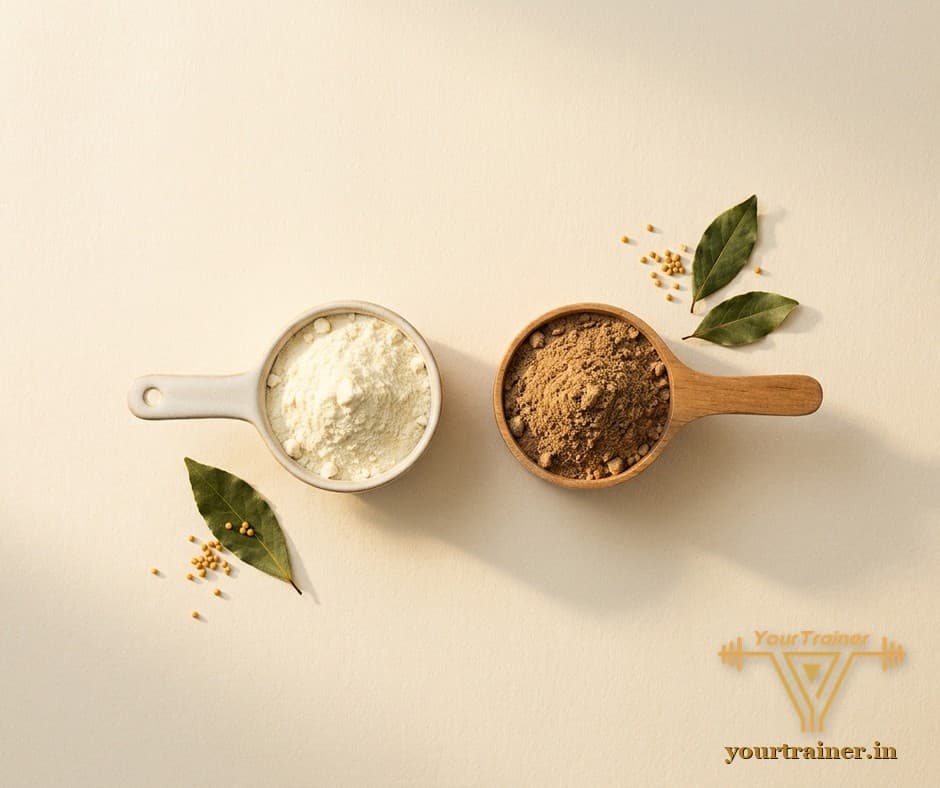
For most Indians, whey protein isolate works fine, even though 60–70% are lactose-intolerant. But if whey causes bloating, plant proteins (pea, rice) or whey isolate blends are your answer. This guide cuts through marketing and gives you a decision table by goal, gut tolerance, and budget to pick your protein source.
Whey in real use
3rd
most-logged food in our app's food logs
120 kcal
per scoop as members logged it
24 g
protein per scoop
2 clients
in our case studies got constipated taking whey with whole milk
Source: A sample of member food logs from the YourTrainer app, 19 April to 17 September 2026. Members only, aggregated, each food logged by at least three members in the sample, using the app's food-database values for the portion logged; constipation from A sample of YourTrainer coaching sessions reviewed as case studies, 17 Aug to 7 Sep 2026, client names removed
Why This Matters for Indians (And Why You've Probably Been Confused)
You've heard it: "Indians are lactose-intolerant, so whey protein is bad." That's half true and wholly misleading. Lactose intolerance prevalence in India ranges from 60–70% in adults (compared to 5–15% in Northern Europeans). But most whey protein supplements sold in India are isolate or concentrate with <1% lactose, and what lactose remains is often tolerated without symptoms. The confusion stems from confusing liquid milk (12% lactose per 240 ml) with whey powder (often <0.5% lactose per 25g serving).
So the actual question isn't "Can I have whey?" It's: "Which protein source fits my gut, my goal, and my wallet?" Let's be specific.
Whey Protein: The Fast, Leucine-Rich Option
Whey protein isolate (90%+ protein by weight) and concentrate (70–80% protein) dominate India's supplement market because they deliver. Here's why they work:
- Fast absorption: Whey reaches peak amino acids in 40–60 minutes, ideal post-workout when muscle protein synthesis peaks (mTOR activation window is 0–2 hours post-exercise).
- Leucine content (the mTOR trigger): Leucine comprises 10–12% of whey's amino acid profile and directly activates mTOR, the primary muscle-building signal. Plant proteins are lower: pea isolate hits ~8%, rice ~7%. For muscle synthesis to fire, you need 2.5+ grams leucine per meal; whey gets you there in one scoop.
- Complete amino acid profile: All nine essential amino acids in ratios humans require; plant proteins often lack methionine (pea) or lysine (rice) individually.
- Lactose reality: Whey isolate has <0.5g lactose per 25g serving. Concentrate has 1–2g. For context, 1 cup regular milk has ~12g. If you tolerate paneer (15g lactose per 100g) or Greek yogurt (5g per 100g), you'll likely tolerate whey isolate.
The catch: if you experience bloating, gas, or digestive discomfort within 30–90 minutes of a whey shake, you're reacting to either residual lactose or to the speed of absorption (whey's fast hydration can shock a sensitive gut). More on that below. For deeper science on how plant and animal proteins are actually digested, see our digestibility myth post.
Plant Proteins: When They Win (And When They Don't)
Pea, rice, hemp, and soy proteins have carved real market share in India's fitness space. Here's the honest breakdown:
Pea Protein
Extracted from yellow split peas, pea isolate delivers 25g protein per serving and is high in lysine (rare for plants) but lower in methionine. Pea protein's DIAAS (Digestible Indispensable Amino Acid Score) is 0.89, making it highly digestible. It's gentler on the gut than whey for many Indians and has zero lactose. The downside: slower absorption (3–4 hours), lower leucine (~2g per 25g), and a slightly grainy mouthfeel. Brands like MuscleBlaze, Healthify, and Oziva offer pea blends across India at ₹300–600 per kg. Best for: vegetarians with whey sensitivity; worst for: pure muscle-building on a timer (you need 1.5x the volume for same leucine).
Rice Protein
Brown rice protein is hypoallergenic and easy to digest, but it's incomplete (low lysine, only ~1.5g leucine per 25g) and requires pairing with a legume (pea or soy) to become a complete amino acid profile. Solo rice protein is rarely sold in India for this reason. Exception: MuscleBlaze Plant-Based and Oziva's blends pair rice + pea, making a complementary complete profile (pea's lysine + rice's methionine).
Soy Protein
Soy isolate has a DIAAS of 0.99 and amino acid profile nearly identical to whey (leucine ~2.3g per 25g). It's cheaper than whey in India (₹150–300 per kg for domestic brands like Oziva) and widely available. The barrier: cultural hesitation around soy for men (unfounded; soy doesn't lower testosterone), and it's off-limits for vegans who avoid legumes processed with hexane solvents. For muscle-building on a tight budget, soy isolate is underrated: it's the only plant protein that truly rivals whey's amino profile at half the price.
Amino Acid Profiles & Leucine Content (Real Data)
| Protein Source (per 25g) | Total Protein (g) | Leucine (g) | Complete Profile | Lactose (g) | DIAAS Score |
|---|---|---|---|---|---|
| Whey Isolate | 24–25 | 2.7–3.0 | Yes (1.0) | <0.5 | 1.09 |
| Whey Concentrate | 18–22 | 2.0–2.5 | Yes (1.0) | 1–2 | 1.04 |
| Pea Isolate | 24–25 | 1.8–2.0 | Incomplete (low Met) | 0 | 0.89 |
| Soy Isolate | 23–25 | 2.2–2.5 | Yes (0.99) | 0 | 0.99 |
| Rice Isolate (solo) | 20–24 | 1.5–2.0 | Incomplete (low Lys) | 0 | 0.59 |
What this means: Leucine is the mTOR trigger. For muscle gain, you want 2.5+ grams per shake. Whey and soy hit it easily; pea and rice (especially solo) fall short, so you'd need 1.5 scoops or pair them. DIAAS >0.75 = highly digestible; whey and soy excel here.
Cost Per Gram of Protein: The Budget Reality in 2026 India
| Protein Source | Typical Price (1kg, July 2026) | Protein % | Cost/25g Protein | Monthly (30g/day) |
|---|---|---|---|---|
| Whey Isolate (MuscleBlaze, ON) | ₹1,800–2,500 | 90% | ₹5–7 | ₹4,500–6,300 |
| Whey Concentrate (Healthify, MB) | ₹800–1,200 | 75% | ₹2.50–4 | ₹2,250–3,600 |
| Soy Isolate (Oziva, HealthifyMe) | ₹600–1,000 | 80% | ₹1.80–3 | ₹1,620–2,700 |
| Pea Isolate (MB Plant, Oziva) | ₹900–1,500 | 85% | ₹2.50–4.50 | ₹2,250–4,050 |
The takeaway: Soy isolate is the cheapest complete protein in India. Whey concentrate (the sweet spot for most Indian lifters) costs ₹2.50–4 per gram of protein, affordable and efficient. Isolates (whey or plant) cost more but pack fewer carbs and fat, which matters if you're counting calories or have a sensitive gut.
Coaching that does this for you
Reading is step one. A coach turns it into a plan built around your body, food & schedule.
100% online · Indian meal plans · weekly progress reviews · daily WhatsApp support.
Start Your Journey →Bloating, Digestion, and the Indian Gut
Sixty percent of Indians report post-protein-shake bloating. Here's what's actually happening:
1. Lactose (real but overblown): If you bloat 30–60 minutes after whey concentrate (not isolate), lactose is likely. Switch to isolate, or try a pea/rice blend for zero lactose.
2. Speed of absorption (the real culprit for many): Whey absorbs fast (40–60 minutes to peak). If your digestive system isn't used to rapid hydration, your gut can react with gas, cramping, or loose stool, especially on an empty stomach or first thing in the morning. Plant proteins absorb slower (~3–4 hours), which can feel gentler.
3. High protein load on sensitive guts: If you're used to 50g protein per day and jump to 150g by adding shakes, your microbiome needs 2–3 weeks to adapt. Increase gradually.
Practical fixes: Sip your shake over 30 minutes instead of gulping it. Add 5g prebiotic fiber (psyllium husk, available in India at ₹100–200 for 2 months' supply). Avoid shakes on a completely empty stomach if you have IBS or a history of sensitivity. Consider a pea/rice blend or plant-forward mix if whey isolate alone still causes issues after two weeks of gradual intake.
Your Decision Matrix: Protein by Goal, Gut, and Budget
| Your Situation | Best Pick | Why | Monthly Cost (30g/day) |
|---|---|---|---|
| Goal: Build muscle, no gut issues, flexible budget | Whey Isolate | High leucine (2.7–3g), fast mTOR activation, proven muscle gains | ₹4,500–6,000 |
| Goal: Build muscle, tight budget (<₹3,500/mo) | Soy Isolate | Complete protein, 2.2–2.5g leucine, zero lactose, cheapest complete option | ₹1,620–2,700 |
| Goal: Build muscle, bloating/gut issues with whey | Pea + Rice Blend | Slow absorption, less bloating, complete amino acids (blended), better gut tolerance | ₹2,250–4,050 |
| Goal: Fat loss / lean mass, no bloating | Whey Isolate | Lowest carb + fat, highest protein %, fastest satiety, leanest macros | ₹4,500–6,000 |
| Goal: Fat loss, bloating issues | Soy Isolate | Complete, no lactose, cheap (saves ₹2,000+/mo vs whey), zero bloating for most | ₹1,620–2,700 |
| Goal: Vegan, muscle building | Soy Isolate | Only complete plant protein; equivalent leucine to whey; cheapest muscle option | ₹1,620–2,700 |
| Goal: NRI (US/UK), building muscle, limited Indian food | Whey Isolate | Highest leucine, cold climate-friendly packaging, globally available (no import risk) | $40–60 USD/mo (~₹3,300–5,000) |
India's Protein Landscape: Brands Worth Buying
Whey Isolate (Best Science + Taste)
- MuscleBlaze Whey Isolate: ₹2,000–2,500/kg; 90% protein; widely available; good taste; no bloating reports from most users.
- Decathlon Whey Isolate: ₹1,800–2,200; minimal flavoring, clean taste; budget-friendly; good for sensitive guts.
- ON Gold Standard (imported): ₹2,800–3,500; premium; reliable 24g protein/scoop; global standard; best for NRIs returning to India.
Whey Concentrate (Budget Sweet Spot)
- Healthify Whey Concentrate: ₹800–1,000/kg; 75% protein; domestic; good value; widely available online.
- MuscleBlaze Whey Concentrate: ₹900–1,200; widely stocked in gyms; decent mixability; best if on ₹2k/mo budget.
Soy Isolate (Best Value Complete Protein)
- Oziva Plant-Based Protein (Soy): ₹600–900/kg; complete amino acids; zero bloating for most Indians; underrated muscle builder.
- HealthifyMe Soy Isolate: ₹700–1,000; similar profile; good alternative if Oziva unavailable.
Pea / Rice Blends (Gut-Friendly)
- MuscleBlaze Plant-Based Protein: ₹900–1,200; pea + rice + whey isolate hybrid; good for mixed tolerances.
- Oziva Protein & Herbs (Plant): ₹800–1,100; pea + fenugreek (targeting Indian metabolism); unique blend; no clinical studies yet on fenugreek + muscle gains.
What I Actually Tell My Clients (Coach Perspective)
Coaching 1,000+ Indians and NRIs since 2022, I've seen this pattern: most lifters who report "whey makes me bloat" are actually experiencing absorption shock (drinking too fast) or a poor quality concentrate with high lactose. Here's my client protocol:
Week 1–2: Start with a whey concentrate (not isolate). Mix it with water, not milk. Sip slowly over 20 minutes post-workout when your digestion is active.
Week 3–4: If zero issues, upgrade to whey isolate (lower lactose, leaner macros). If bloating persists, switch to soy isolate (same protein quality, zero lactose, ₹2 cheaper per serving than isolate).
If issues remain: Pea + rice blend. It's slower-absorbing, but slower is often better for Indian guts adapted to whole foods. Pair it with a banana or oats to further slow absorption and buffer the stomach.
I've never had a client who couldn't find a protein source that worked. The key is starting with whey (best cost-to-leucine ratio) and adapting based on your gut, not generic "lactose intolerance" fear. For deeper guidance on building muscle on plant and dairy in an Indian vegetarian diet, see our vegetarian muscle-building guide.
Whey or Plant: The Decision Rule
Start with whey concentrate if you have budget room. No bloating? Stick with it or upgrade to isolate for cleaner macros. Bloating? Switch to soy isolate (zero lactose, same completeness, cheaper). Only move to pea/rice if plant-based is a must or isolate causes lingering issues. Monitor for 2–3 weeks before switching. Your gut adapts.
Also, protein powder is a supplement. The main work is in your diet. If you're hitting your daily protein target through Indian staples (dal, paneer, eggs, curd, chicken), you might not need a shake. But if you're aiming for 100g+ protein daily and food alone feels like a chore, a ₹3–5 scoop of whey or soy saves you time and digestion energy. For muscle-building goals on a vegetarian diet, see our guide on building muscle on plant and dairy sources.
Whey mix-ups our coaches corrected
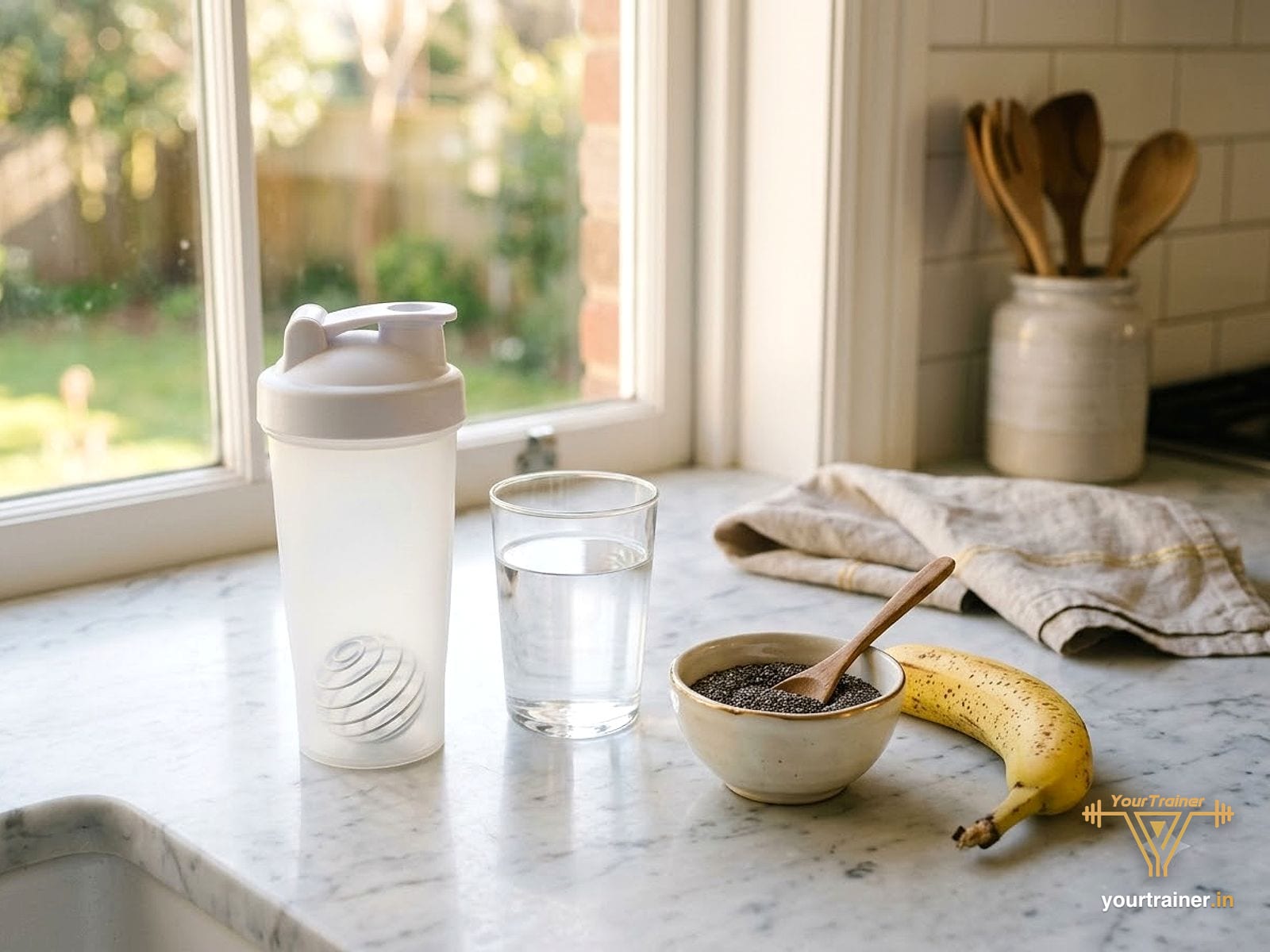
- Two clients got constipated from whey mixed with whole milk. The fix was taking it with water and adding chia seeds.
- Whey is not creatine. Creatine is a separate supplement with a different job.
- One client was mixing whey, creatine, collagen, hemp and pumpkin seeds without knowing what each one did.
From our coaching case studies.
Related reading from YourTrainer
Sources
- ISSN Position Stand: Protein and Exercise · Journal of the International Society of Sports Nutrition (2017)
- Nutrient Requirements for Indians (RDA and EAR) · ICMR, National Institute of Nutrition
Coaching guidance on this site is educational and is not a substitute for medical advice. See how we use sources.
 Member starter kitWhich protein or creatine to buySee the supplement picksNot affiliated. We earn nothing from the links.
Did you find this helpful?

About Anish Agarwal
Founder & Head Coach, YourTrainer · NASM & K11 Certified Personal Trainer · coaching since 2022
Featured in Dietitians.io, Fitness Interview, NRI Pulse. Press and media
Anish Agarwal is a NASM and K11 certified personal trainer coaching fat loss, body transformation, strength, and nutrition for clients across India since 2022. He founded YourTrainer to make expert, science-based coaching accessible online and in Bengaluru. Coach Anish's profile and the YourTrainer story.
Online 1-on-1 Coaching
Start Your Journey
Get a personalised training + Indian nutrition plan built around your goal, coached online, anywhere in India or abroad.
Trusted by 1,000+ clients coached across India & abroad
Free 30-min discovery call · No obligation