How to Build Muscle on a Vegetarian Indian Diet: Complete Science-Backed Plan
Vegetarians absolutely can build muscle. This complete guide covers protein requirements (1.6 g/kg), high-protein vegetarian Indian food sources, a realistic daily meal plan hitting 130+ g protein, progressive training, and common mistakes. For Indians and NRIs.
⚠ Educational content on nutrition, not medical or dietetic advice. Building muscle is entirely achievable on a vegetarian Indian diet—the science is clear and the food sources are abundant. However, individual protein needs, digestive capacity, and medical conditions vary. Consult a qualified nutritionist or doctor before making significant dietary changes, especially if you have underlying health conditions or are taking medications.
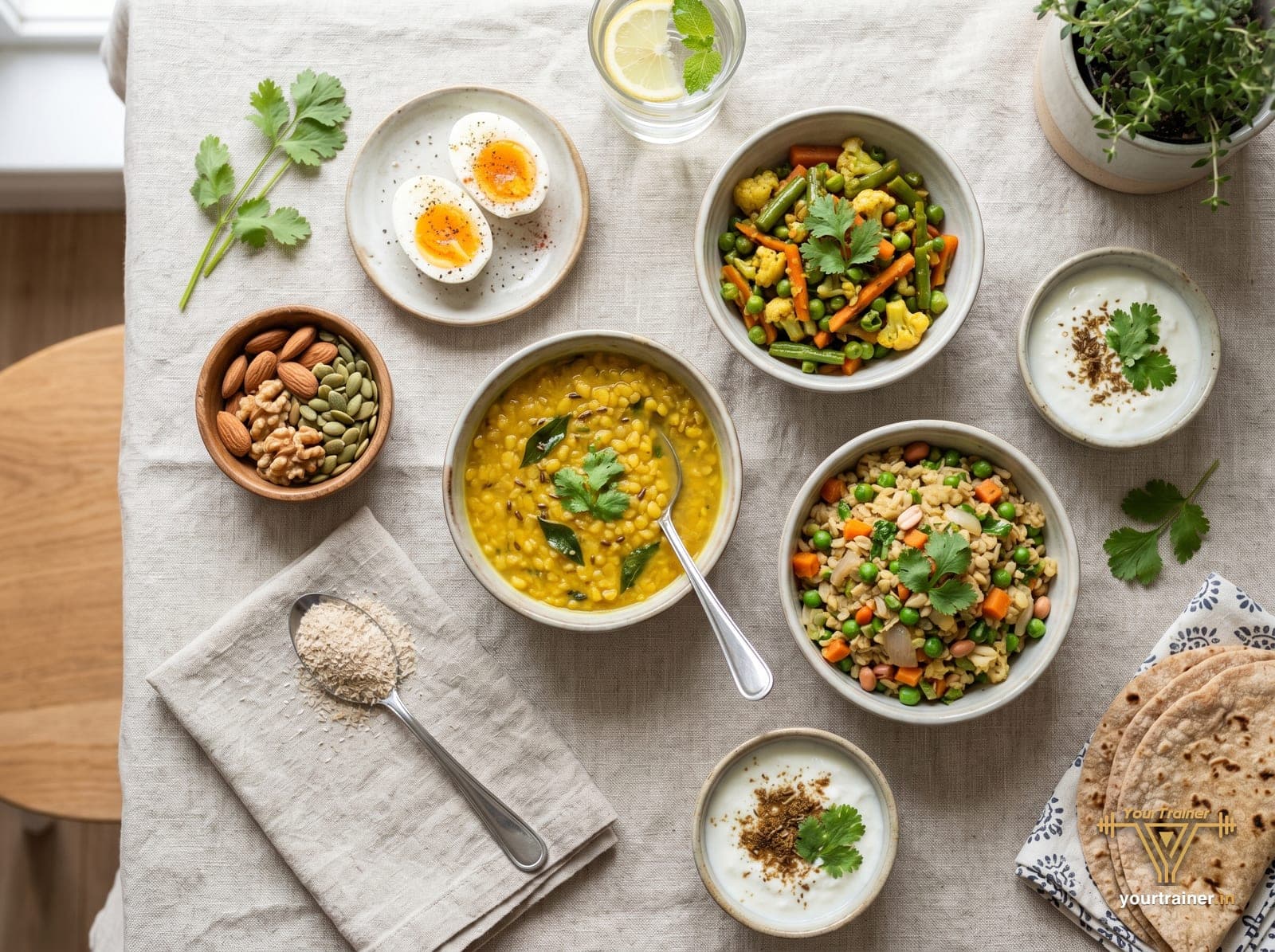
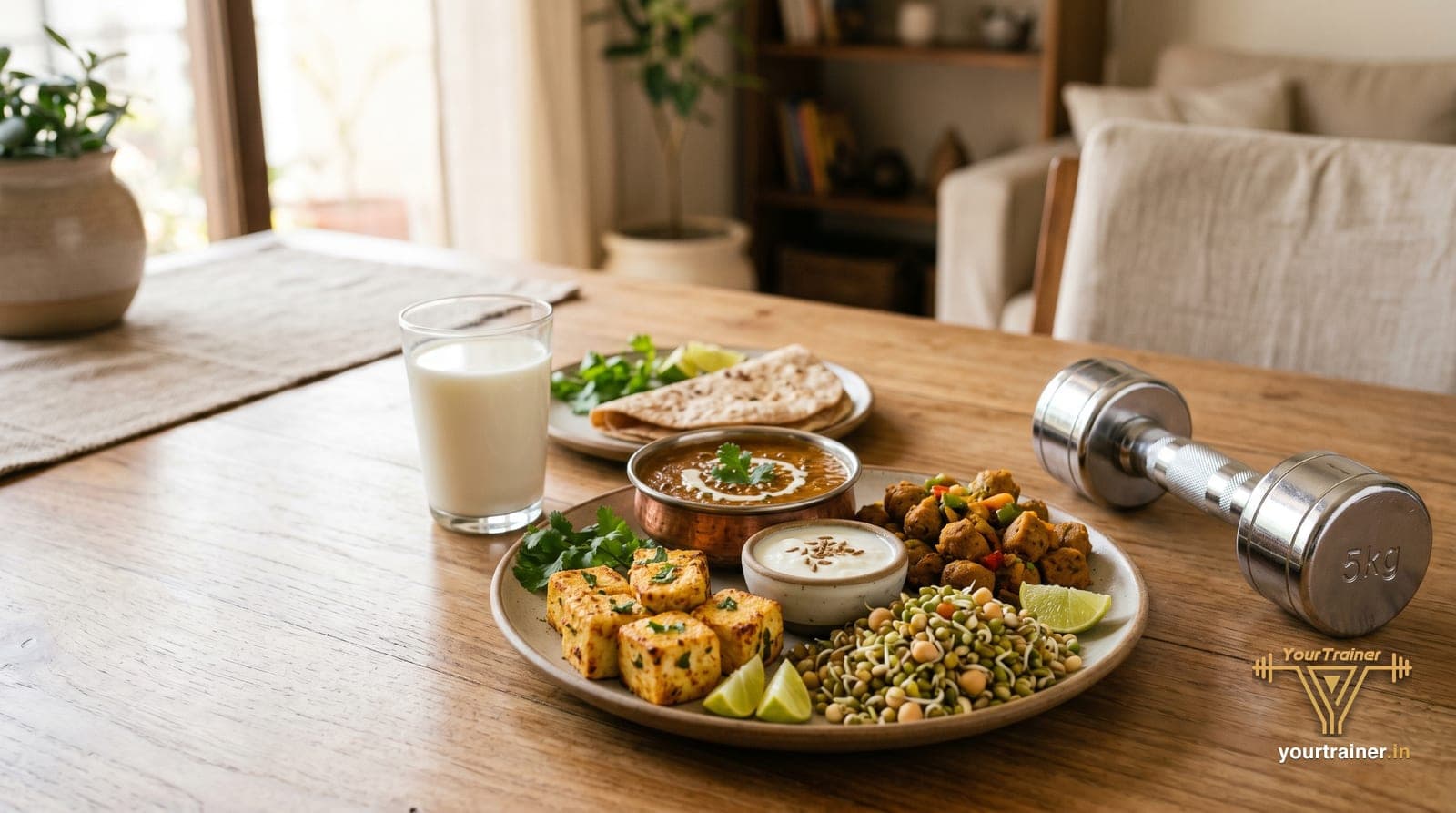
Quick answer: Vegetarians absolutely can build muscle. You need roughly 1.6 g of protein per kg of body weight per day (spread across meals), enough total calories to support training, progressive resistance work, consistent sleep, and the right food sources. India's vegetarian diet is rich in options: dal (lentils), rajma (kidney beans), chana (chickpeas), paneer, Greek yogurt, curd, soya chunks, tofu, sprouts, milk, nuts, seeds, and whey protein if desired. The real challenge isn't finding protein—it's hitting your targets consistently, training hard, and eating enough total food. Many vegetarians undershoot both protein and calories, which stalls muscle gain. This post breaks down the exact strategy.
Vegetarian Muscle Building at a Glance
The Vegetarian Muscle-Building Myth
Many Indians believe building muscle requires non-vegetarian food. This is false. Research and real outcomes show vegetarians gain muscle at nearly identical rates to non-vegetarians when protein and training are adequate. Your muscles don't care if amino acids come from paneer or chicken—they only care that amino acids (all 9 essential types) are available in sufficient quantity and frequency.
The real barriers for vegetarian Indian muscle-builders are: (1) undereating protein through the day; (2) relying on incomplete proteins like rice alone without dal; (3) insufficient total calories; (4) inconsistent training; (5) ignoring sleep; (6) not tracking progress. None of these are unique to vegetarians, but vegetarians often make these mistakes more because traditional Indian meals don't come with obvious protein targets built in the way meat-based meals do.
NRIs often have an added advantage: access to varied protein sources (Greek yogurt, whey, cottage cheese) in the US and UK, but those living in India have an even richer, more affordable vegetarian arsenal—dal, curd, paneer, milk, soya chunks, and legumes cost far less than equivalent protein in the West.
Protein Requirements: The Math You Actually Need
For muscle building, research suggests roughly 1.6 g of protein per kg of body weight per day. Some studies support going up to 2.2 g/kg, but gains plateau quickly above 1.8 g/kg for most people, so 1.6–1.8 is the sweet spot.
Example: An 80 kg male needs 128–144 g of protein per day. Spread across 4 meals (breakfast, mid-morning snack, lunch, post-workout snack, dinner), that's roughly 25–30 g per meal.
Most vegetarians fail here. A typical Indian breakfast of paratha + curd might deliver only 15 g protein. Lunch of dal-rice gives 12 g. Dinner of vegetable sabzi with roti is 8 g. Total: 35 g instead of 130 g. The gap is massive and completely invisible to the eater.
Pro tip for Indiaside: Track your protein for one week using a free app (MyFitnessPal, Cronometer). You'll be shocked at how far below 1.6 g/kg you actually are. This awareness is the first step to fixing it without calorie-counting everything—you'll just know to add a paneer dish here, a glass of milk there.
High-Protein Vegetarian Indian Foods: Your Arsenal
| Source | Serving Size | Protein (g) | Calories | Notes |
|---|---|---|---|---|
| Paneer | 100 g (fried) | 20 g | 265 | Complete protein, versatile, satiating |
| Greek yogurt | 200 g plain | 20 g | 130 | Lower fat than curd, easily absorbed |
| Curd (regular) | 200 g plain | 10 g | 100 | Affordable, universally available |
| Whole milk | 250 ml | 8 g | 160 | Add to morning, drink before bed for muscle |
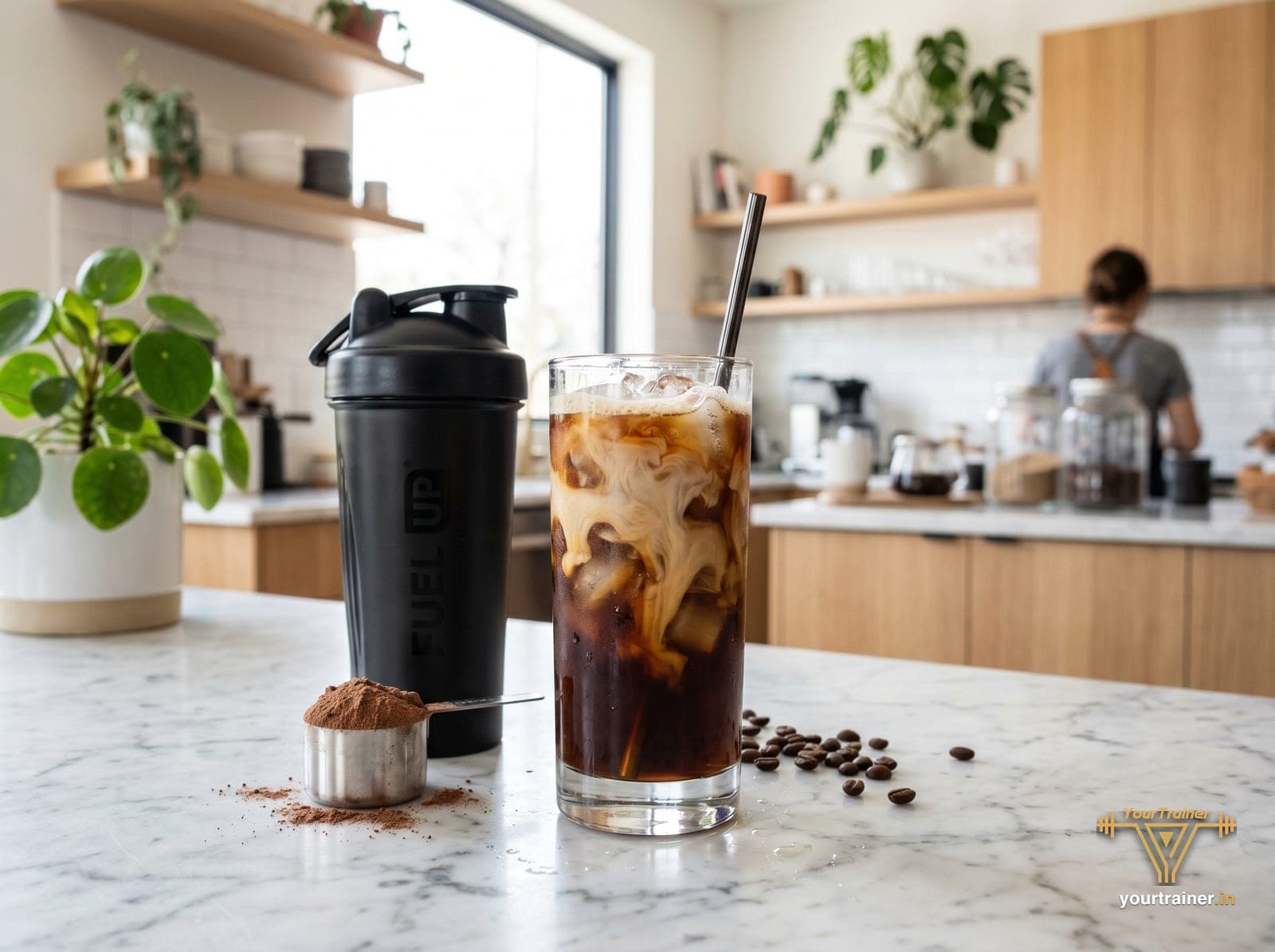
| Whey protein powder | 30 g scoop | 25 g | 120 | Optional; fast, convenient post-workout |
| Soya chunks (cooked) | 100 g | 18 g | 110 | Complete veg protein, low calorie |
| Tofu (firm) | 150 g | 17 g | 176 | Neutral taste, absorbs flavour |
| Moong dal (cooked) | 150 g | 12 g | 105 | Pair with rice for complete protein |
| Rajma (cooked) | 150 g | 15 g | 135 | Fibre-rich, satiating |
| Chana (chickpeas, cooked) | 150 g | 15 g | 268 | Higher carb, good for post-workout |
| Almonds (raw) | 30 g (handful) | 6 g | 164 | Adds up across the day |
| Sprouts (mixed) | 100 g raw | 5 g | 30 | Low calorie, micronutrient-dense |
The key insight: combine sources. Dal + rice together provide all 9 essential amino acids because rice's amino acid profile complements dal's. A paneer bhurji with roti + milk does the same. Vegetarians in India have been doing this for millennia—muscle building simply means doing it intentionally with protein targets in mind.
Daily High-Protein Vegetarian Meal Plan (80 kg Male, 130 g protein)
Here's a realistic day hitting 130 g protein for an 80 kg lifter:
Breakfast (7 AM)
Paneer bhurji + roti + milk
100 g paneer bhurji (24 g protein), 2 roti (6 g), 250 ml whole milk (8 g) = 38 g protein, 520 cal
Mid-Morning Snack (10 AM)
Greek yogurt + granola + berries
200 g Greek yogurt (20 g protein) + handful almonds (6 g) = 26 g protein, 280 cal
Lunch (1 PM)
Moong dal + rice + sauteed tofu
150 g moong dal (12 g) + 100 g basmati rice (2.5 g) + 100 g tofu (11 g) = 25.5 g protein, 450 cal
Post-Workout Snack (4 PM)
Whey shake + banana
30 g whey (25 g protein) + banana (1 g) = 26 g protein, 220 cal
Dinner (8 PM)
Rajma + roti + curd
150 g rajma (15 g protein) + 2 roti (6 g) + 150 g plain curd (7.5 g) = 28.5 g protein, 430 cal
Bedtime (10 PM)
Milk + almonds
250 ml whole milk (8 g) + 20 g almonds (4 g) = 12 g protein, 240 cal
Daily Total: 156 g protein, 2,140 calories
This is entirely vegetarian, uses foods available in any Indian grocery store, and beats the 130 g target. NRIs can adapt: swap paneer bhurji for egg whites if preferred, use cottage cheese instead of curd, or adjust portion sizes based on local food prices. The structure stays the same.
The Non-Negotiables: Training, Calories, and Sleep
Protein alone doesn't build muscle. Three other factors are equally critical:
Progressive Resistance Training (3–4 times per week)
Your muscles need stimulus to grow. Bodyweight, dumbbells, cables, or barbells all work. The key is progressive overload: gradually increasing weight, reps, or sets over weeks and months. A simple split:
- Day 1: Upper body push (chest, shoulders, triceps)
- Day 2: Lower body (quads, hamstrings, glutes)
- Day 3: Rest or light cardio
- Day 4: Upper body pull (back, biceps)
- Day 5: Lower body (glutes, hamstrings focus)
- Days 6–7: Rest
Compound movements (squats, deadlifts, bench press, rows) are non-negotiable. Aim for 3 sets of 6–12 reps per exercise, 3–4 exercises per session.
Sufficient Total Calories
Muscle building requires a slight calorie surplus (200–300 calories above maintenance). If you're eating 130 g protein but only 1,600 calories and your body needs 2,100 to maintain, you're in a deficit—your body will prioritize energy over muscle gain. Eat enough. Track for two weeks to find your baseline maintenance, then add 300 calories.
Sleep (7–9 Hours)
Muscle growth happens during sleep, not in the gym. Testosterone, growth hormone, and protein synthesis all peak during deep sleep. Shortchanging sleep stalls gains no matter how perfect your nutrition and training are.
Common Vegetarian Mistakes That Kill Muscle Gain
- Relying on dal alone: 150 g dal has only 12 g protein. Rice doesn't add much more. You need to eat dal + rice AND another protein source (paneer, yogurt, soya) at the same meal to hit targets.
- Undereating because vegetarian food is low-calorie: Vegetables have few calories. A large dal-rice meal might only be 300 calories. You need to add oils, nuts, milk, or paneer to hit calorie targets without eating unreasonable portions.
- Avoiding ghee and oils: Ghee (1 tsp = 45 cal, traces of protein) and coconut oil are calorie-dense. Use them. Fat helps hormone production and vitamin absorption.
- Skipping tracking: "I eat healthy" is not a plan. Use MyFitnessPal or a notebook for one week. You'll discover gaps instantly.
- Switching foods too often: Muscle gain is a 3–6 month process. Stay consistent. Eat the same high-protein meals repeatedly—simplicity beats perfection.
Optional: Creatine Monohydrate (If Interested)
Creatine is not a steroid; it's a natural compound made by your body and found in meat. Vegetarians have naturally lower creatine stores, so supplementing can help. Research shows creatine monohydrate (₹400–800 for 3 months supply) safely increases muscle gain by 5–10% when combined with training. Dose: 5 g per day (no loading phase needed). Drink plenty of water. It's entirely optional and safe; most gains come from food and training, not supplements.
NRI context: If you're abroad, whey protein is cheaper and more convenient than shipping paneer or soya chunks. Use it. If you're in India, whole foods are more affordable and fresher—skip the powder and rely on paneer, curd, milk, and dal. Either way works; adapt to your location's food economy.
Timeline: What to Expect
- Weeks 1–4: "Newbie gains"—visible strength increases weekly (beginner advantage). No obvious muscle size yet. Stay consistent.
- Weeks 5–12: First visible muscle changes—arms, chest, or shoulders start to look fuller. Weight on scale increases slowly (mostly water + muscle). This is real.
- Months 4–6: Clear muscle definition if you're lean. Noticeable strength jumps (e.g., you're squatting 20 kg more). Others start to notice.
- 6–12 months: Substantial transformation possible. 5–10 lbs of muscle is realistic on a vegetarian diet if you nail nutrition and training.
Start With a Free Discovery Call
Building Muscle as a Vegetarian?
Get a personalized plan
Coach Anish has guided 500+ vegetarians to visible muscle gain. A personalized meal plan + training program cuts through guesswork and gets results fast. Start with a free 30-minute discovery call to assess your baseline and build a plan.
Related Resources
- How Much Protein Should an Indian Eat? (Vegetarian Chart Included)
- Indian Protein Sources Ranked (Veg + Non-Veg): Grams & Cost
- 5 High-Protein Indian Dinners Under 30 Minutes
- Online Strength Coach for Vegetarians — Remote Coaching from India
- Coach Anish, YourTrainer · Educational content only, not medical advice. Always consult a qualified nutritionist or doctor before starting any diet or training program.
Did you find this helpful?

About Anish Agarwal
Founder & Head Coach, YourTrainer · NASM & K11 Certified Personal Trainer · 6+ years experience
Anish Agarwal is a NASM and K11 certified personal trainer with 6+ years of experience coaching fat loss, body transformation, strength, and nutrition for clients across India. He founded YourTrainer to make expert, science-based coaching accessible online and in Bengaluru. More about Anish.
Ready to Transform?
Get personalized training and nutrition guidance tailored to your goals. Free 30-minute consultation, no obligation.