How to Eat Indian Food Abroad and Stay Lean
Keep eating roti, dal and sabzi abroad without the slow weight gain. Portion rules, grocery swaps and restaurant tactics for Indians in the US, UK, Canada and Gulf.
⚠ Lifestyle coaching information only. Not medical advice. This article addresses diet, activity, and weight management for generally healthy adults. If you have metabolic conditions (thyroid disease, PCOS, insulin resistance, diabetes), cardiovascular disease, or take medications, consult your doctor before making significant diet or exercise changes. NRIs should have baseline bloodwork (fasting glucose, lipids, HbA1c) done annually given the metabolic risk profile of South-Asian diaspora.
Quick answer: The "Indian-American 30 pounds" is real - research shows South-Asian immigrants (India, Pakistan, Bangladesh) gain visceral and subcutaneous fat more rapidly after moving to the US, UK, Canada, or Australia than other ethnic groups. Drivers include much larger portion sizes (restaurant meals are 1.5–2x Indian portions), processed foods, restaurant Indian food loaded with ghee and cream, sugary drinks, sedentary desk jobs, car-dependent transportation, and celebration eating at desi parties. The fix is not giving up Indian food - it's portion control (rice and roti matter; eat dal and paneer first), cooking at home using Patel Brothers and Costco staples, getting 7,000–8,000 daily steps, and doing strength training 2–3 times weekly. South Asians gain visceral fat (the dangerous kind around organs) even at lower body weights, so this isn't about looking lean - it's about metabolic health. With these habits stacked, you can eat Indian and stay lean abroad.
NRI Weight & Metabolic Health Essentials
Why NRIs Gain Weight Faster - And Why It Matters
Moving to the USA, UK, Canada, Australia, or Gulf countries doesn't just change where you live - it changes your body. Research from the American Journal of Public Health tracking Indo-Americans, Pakistani-Americans, and Bangladeshi-Americans shows that immigrants gain weight more rapidly and store more visceral fat (the dangerous belly fat around organs) than White Americans, even at the same body weight.
This isn't genetics failing you overnight. It's environmental. Here are the real culprits:
- Portion size shock: A restaurant butter chicken in the US arrives with 2–3 cups of sauce and 400+ grams of chicken - triple what you'd order in Delhi or Bangalore. Bread baskets, appetizers, and desserts come automatically.
- Restaurant Indian food is cooked differently: Restaurants use ghee, cream, and oil far more liberally than home cooking. A serving of naan can contain 400+ calories from ghee alone.
- Processed foods are everywhere: Convenience foods, ultra-pasteurised juices, flavoured yoghurts, packaged snacks, and cereals dominate grocery aisles. In India you'd buy loose sugar; in the US, hidden sugars are in bread, pasta sauce, and salad dressing.
- Sugary drinks: Soda, energy drinks, and fancy coffees (Starbucks venti lattes are 300+ calories). In India, you'd drink chai; abroad, you're surrounded by liquid calories.
- Car-dependent lifestyle: No daily auto-rickshaw walks, no market shopping on foot, no stairs in apartment buildings. You drive to grocery stores, sit at office desks 8+ hours, and park right next to the door.
- Sedentary work culture: Tech and finance jobs in the US/UK mean sitting in office chairs, conference rooms, and cars. Lunch breaks are eaten at desks. Evening after-work social drinks (alcohol + snacks) replace walks.
- Celebration eating: Desi parties, weddings, potlucks, and holiday feasts happen year-round. A single Indian wedding weekend can add 5–10 lbs of water weight from oil, salt, and carbs.
- Stress and sleep debt: Immigration stress, visa paperwork, visa anxiety, working long hours to "prove yourself," and adjusting to new time zones disrupts sleep. Poor sleep raises cortisol and ghrelin (hunger hormone).
The net effect: a 65 kg (143 lb) Indian woman becomes 80+ kg (176 lb) within 5–7 years of moving abroad. For men, 75 kg becomes 95+ kg. But here's the kicker - that weight is not evenly distributed. South Asians gain visceral fat preferentially, meaning even if you only gain 10 kg, your metabolic risk markers (fasting glucose, triglycerides, blood pressure) spike as if you gained 15 kg.
The South Asian Metabolic Risk: Why Weight Matters More for You
Research consistently shows that South Asians develop insulin resistance, type 2 diabetes, and cardiovascular disease at lower body weights and BMIs than Europeans or African Americans. This is sometimes called the "South Asian phenotype."
What this means practically:
- A 73 kg (161 lb) NRI woman with a BMI of 27 may already have pre-diabetic blood sugar and elevated triglycerides.
- The same weight on a European woman (same height) might show normal metabolic markers.
- Visceral fat (belly fat) accumulates faster and causes metabolic dysfunction even if you "don't look overweight."
- Genetic factors + environmental shift = perfect storm.
This is why you can't rely on appearance or standard BMI charts. Annual bloodwork (fasting glucose, HbA1c, triglycerides, HDL, blood pressure) becomes essential. Many NRIs feel fine at a weight that's already metabolically risky.
The Simple Fix: Eat Indian, Stay Lean (Framework)
The answer is not to "eat like Americans" or abandon Indian food. It's to eat Indian food the way you would at home - portions, preparation, and frequency.
The core principle: Protein and vegetables first (dal, paneer, eggs, chicken, sabzi), then rice or roti in measured portions (1 cup cooked rice, 2–3 roti per meal). Ghee and oil go on the plate - you control it, not the cook. Cook 80% of meals at home using Patel Brothers and Costco staples.
Protein-First Eating: The Metabolic Shift
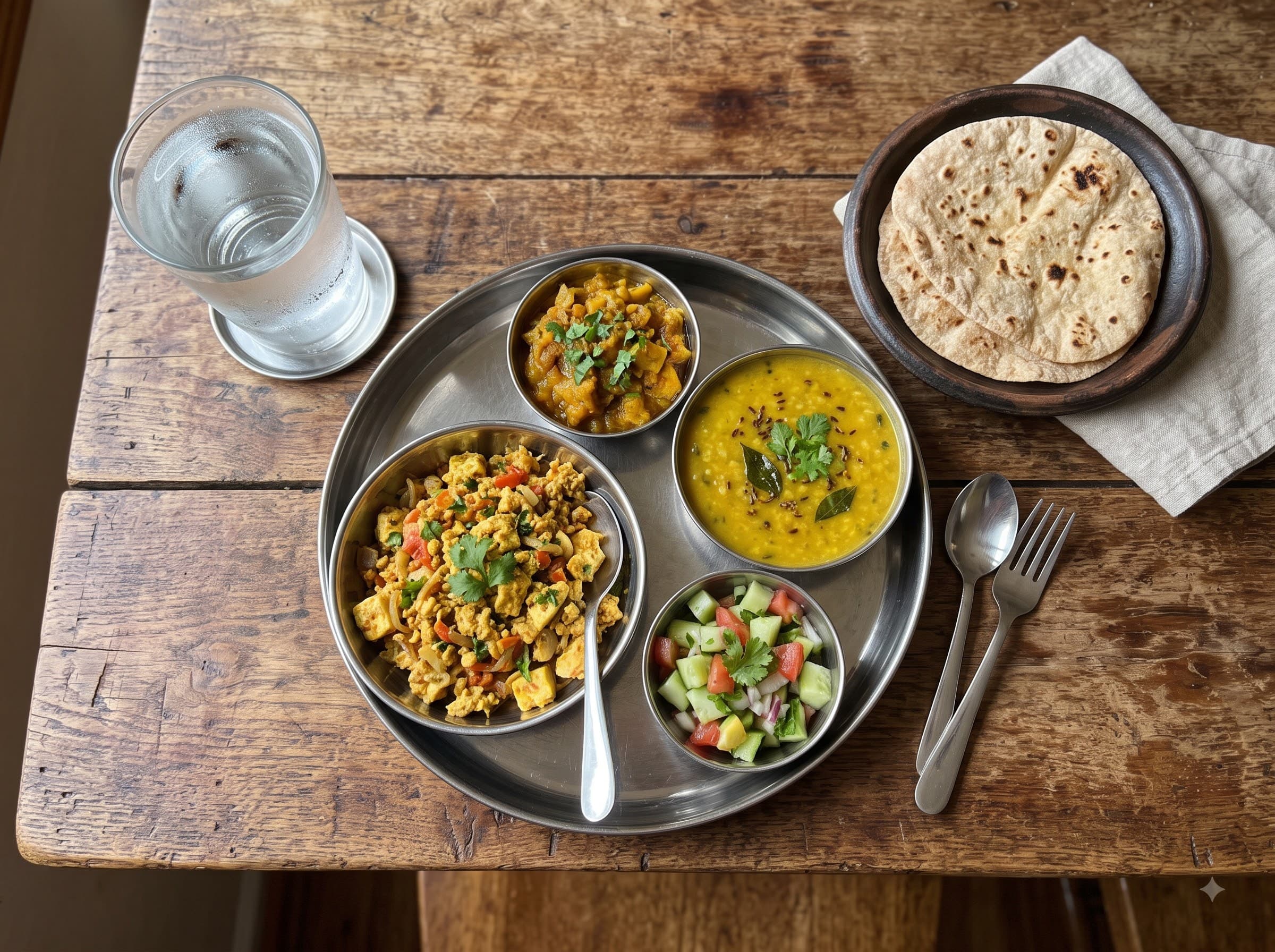
The single biggest difference between home-cooked Indian food and restaurant Indian food is protein. At home, dal (lentil curry) is the centerpiece - it's slow-digesting, fiber-rich, and filling. Paneer or eggs are your protein anchor. Rice or roti accompanies, not leads.
Abroad, many NRIs flip this: rice becomes half the plate, paneer is scarce, and dal is a side dish. This drives overeating and blood sugar spikes.
Fix: restructure your plate -
- 1/3 plate: protein (dal, paneer, chickpeas, chicken, tofu, eggs)
- 1/3 plate: vegetables (sabzi, salad, cooked greens)
- 1/3 plate: carbs (rice, roti, sweet potato)
Eat in this order: protein and veg first, rice/roti second. You'll feel full on less food, blood sugar stays stable, and you naturally eat fewer calories.
Home Cooking: The Game Changer for NRIs
Restaurant eating - even "Indian restaurants" in the US - is a calorie trap. A typical butter chicken with rice and naan from an Indian restaurant in NYC, SF, or London runs 1,200–1,500 calories. Made at home with the same ingredients, it's 600–800 calories because you control oil, ghee, and cream.
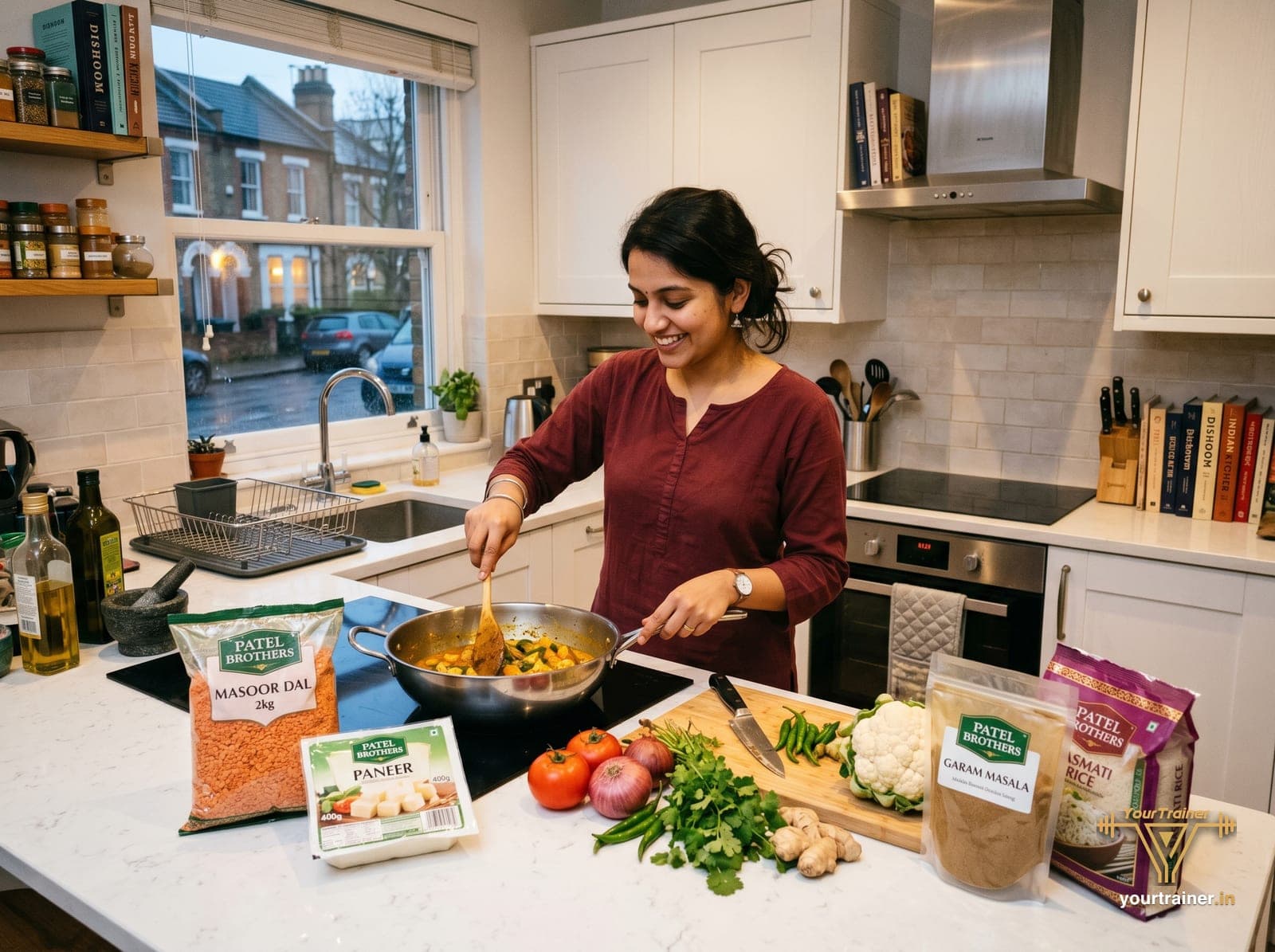
The challenge: finding Indian ingredients abroad. The solution: Patel Brothers (33 locations US-wide, online shipping), Indian stores in your city, Costco, and Amazon Fresh.
| What to Buy | Where (USA) | Why It Matters |
|---|---|---|
| Dried lentils (moong, masoor, chana) | Patel Brothers, Costco, Amazon | Bulk lentils cost 50 cents/lb; rich in protein + fiber. Dal is your calorie-controlled protein. |
| Frozen paneer | Patel Brothers, Whole Foods, Trader Joe's | 40g protein per 100g. Pre-portioned, no waste. Paneer bhurji takes 10 min to make. |
| Spices (turmeric, cumin, coriander) | Patel Brothers (cheap), or bulk spice shops | Zero calories, enormous flavor. Home curries taste better and are healthy. |
| Frozen vegetables (peas, green beans, spinach) | Costco, Walmart, any supermarket | Frozen is as nutritious as fresh, cheaper, no waste. Bulk at Costco = huge savings. |
| Brown rice, whole wheat flour | Costco, Whole Foods, Trader Joe's | Buy in bulk. Brown rice is lower glycemic than white; atta (flour) is ₹200–300 from Patel Bros. |
| Canned chickpeas, beans | Costco (huge bulk packs), Trader Joe's | Shelf-stable, ready to cook. Chana masala at home vs restaurant = 400 cal difference. |
| Ghee (small jar) | Trader Joe's, Whole Foods, Patel Brothers | 1 tbsp ghee = 120 cal. You measure it; restaurants pour. Keep to 1–2 tbsp per meal. |
| Greek yogurt (plain, unflavoured) | Costco, any supermarket | Double the protein of regular yogurt. Costco sells 4 lbs for cheap; use for raita, dips, snacks. |
Portion Control in a Restaurant Culture
You can't cook every meal. When you eat out at Indian restaurants, office lunches, or desi parties, you need a system:
- Divide the plate in half. Only eat half the naan and rice. Take the rest home. Restaurant portions are 1.5–2x what you need.
- Order dal + vegetable curry + protein curry, no bread. Ask for brown rice instead of white if available. Skip or minimize the ghee-heavy bread.
- At desi parties: Load your plate with dal, sabzi, and salad first. Take a small portion of rich curries (paneer tikka masala, biryani, sweets). You can eat Indian and stay on track - just practice portion awareness.
- Ask about preparation. "Is this made with ghee or oil?" "How much cream is in this paneer butter masala?" Restaurants may accommodate.
A realistic goal: 80% home-cooked meals, 20% restaurant/social eating. This margin lets you enjoy food culture without derailing.
Coaching that does this for you
Reading is step one. A coach turns it into a plan built around your body, food & schedule.
100% online · Indian meal plans · weekly progress reviews · daily WhatsApp support.
Start Your Journey →Daily Activity: Steps and Strength Training
Diet is 70% of weight loss, but activity is non-negotiable for keeping weight off and protecting metabolic health. NRIs typically sit far more than in India.
Steps: The Underrated Lever
Aim for 7,000–8,000 steps daily. This is not the "10,000 steps myth" - that came from a 1960s pedometer marketing campaign. Research shows 7,000–8,000 steps is the metabolic floor for weight maintenance in sedentary jobs.
How to build this when you're car-dependent:
- Park 5–10 minutes away from your office or store entrance.
- Take a 20–30 minute walk during lunch or after dinner. This is non-negotiable - it also blunts blood sugar spikes from carb-heavy meals.
- Use the stairs at work if your office isn't on the 20th floor; do a few flights.
- Walk to a nearby cafe, grocery store, or friend's house if possible.
- Weekend mornings: a 45-minute neighborhood walk or hike. This alone gets you 6,000+ steps and is low-stress activity.
Goal: 7,000 steps feels easy by month 2. It's not exercise - it's just moving your body daily like you did in India walking to markets, up apartment stairs, and between places.
Strength Training: The Metabolic Foundation
You cannot out-walk a bad diet, but you can out-maintain metabolic health with strength training. Muscle tissue is metabolically active - it burns calories at rest. After age 30, you lose 3–8% of muscle per decade; this is called sarcopenia. Weight loss without strength training accelerates this loss.
Build this in:
- 2–3 times per week, 30–45 minutes: Resistance training (weights, resistance bands, or bodyweight). Compound lifts: squats, push-ups, rows, deadlifts.
- At home: Dumbbells + a pull-up bar. Total cost: $100–150 (minimal). YouTube has thousands of free home workout videos. No gym required.
- In a gym: Join a local gym ($30–60/month in US cities). Find a friend or hire a coach to stay accountable.
- Why it matters: Strength training preserves muscle during weight loss, keeps you looking fit (not just thin), and raises metabolic rate 5–10%.
Combined, 7,000–8,000 steps + 2–3 strength sessions per week + home cooking + portions = sustainable weight maintenance while eating Indian food.
Sample Day: Eating Indian Abroad, Staying Lean
Breakfast (7 AM)
Paneer bhurji (150g paneer, onion, tomato, spinach) + 2 slices whole wheat toast + 1 tsp ghee
~520 kcal, 28g protein. Cooked at home in 10 minutes using frozen paneer from Patel Brothers.
Mid-Morning (10 AM)
Black coffee or chai (milk, no sugar) + 1 apple
~100 kcal. Prevents the 11 AM hunger dip.
Lunch (1 PM)
Option A (at home): Moong dal curry + Aloo sabzi (potato and peas) + 1 cup brown rice + Cucumber salad
~600 kcal, 18g protein. Cooked with 1 tbsp oil total. Cheap, filling, authentic.
Option B (restaurant or desi party): Half plate of butter chicken with rice + side of dal + salad. Take half the naan home.
~700–800 kcal with control. Half the restaurant portion = guilt-free eating.
Afternoon (3–4 PM)
Greek yogurt (150g, plain) + 1 tbsp granola or peanut butter
~150 kcal, 15g protein. Ready-made snack from Costco.
Evening (5 PM)
Walk or strength training session (30–45 min)
Step-building or weight session. Non-negotiable for metabolic health.
Dinner (7 PM)
Grilled chicken curry (150g chicken, onion, tomato, cumin) + Roti (2) + Spinach sabzi
~550 kcal, 35g protein. Made at home in 20 minutes. Real Indian food.
Total: ~2,520 kcal, 96g protein - solidly in fat-loss range for a 70 kg person, mostly home-cooked Indian food, and zero deprivation.
Handling Desi Parties and Social Eating
NRI life means potlucks, weddings, celebrations, and social dinners. You can't (and shouldn't) avoid them. The key is to eat mindfully without perfectionism:
- Eat protein and vegetables first. Fill up on dal, raita, salad, and grilled items before touching biryani and sweets.
- Skip or limit drinks with mixers. Alcohol (or sugary mocktails) + appetizers = 300–500 liquid calories. Soda water with lemon is free and feels social.
- One plate rule: Load your plate once, sit, and eat mindfully. Don't graze at a party. You're full after the first plate anyway.
- Next day: Return to normal eating. One party meal doesn't derail weight loss. Consistency across the week matters, not perfection at every meal.
You don't need to become someone who eats salads at Indian weddings. You need to be someone who eats 80% of meals in a measured, intentional way. The 20% fun is built in.
Tracking Progress Without Obsession
Weight loss is non-linear. Water retention, hormonal cycles, and restaurant salt can swing the scale 2–3 kg overnight. Here's how to measure real progress:
What Actually Matters
- Bloodwork (annually): Fasting glucose, HbA1c, triglycerides, HDL, blood pressure. These are the real health markers.
- How clothes fit: Weight fluctuates; how your jeans fit is stable and meaningful.
- Energy and mood: You feel lighter, less sluggish, less brain fog. This is real.
- Strength gains: You can do more push-ups, lift heavier, walk longer without fatigue. Muscle is replacing fat.
- Weekly average, not daily weight: Weigh yourself once per week, same day/time, and track the trend. Ignore daily swings.
Real Talk: Why This Works
This approach works because:
- It's not restrictive. You're eating Indian food - the food you love - just prepared and portioned the way you did in India.
- It's sustainable. You can do this for years, not just 12 weeks. You're building habits, not following a diet.
- It's culturally aligned. You're not fighting your food identity; you're reclaiming it.
- It's backed by biology. Protein first + vegetables + measured carbs + daily movement = weight loss and metabolic health. Full stop.
The hardest part is the first 2–3 weeks - your taste buds are recalibrating, your habits are shifting, and restaurant meals suddenly feel overly rich. By week 4, home-cooked food tastes better and restaurant portions look absurdly large.
Your Action Plan: Starting This Week
Week 1: Inventory and Shop
- Visit or order from Patel Brothers online. Buy: dried moong dal, masoor dal, lentils, cumin, turmeric, coriander.
- Shop Costco for frozen paneer, frozen vegetables, brown rice, Greek yoghurt, and ghee.
- Plan 3 home-cooked dinners this week. Pick simple ones: dal + sabzi + roti, paneer bhurji, chicken curry.
Week 2–3: Build Walking Habit
- Commit to one 25–30 minute walk daily. Time this right after dinner to blunt blood sugar spikes from the meal.
- Get a simple step counter app or a budget fitness band (Fitbit or Mi Band from Amazon, ~$40–60).
Week 3–4: Add Strength Training
- Buy a pair of dumbbells (10–15 lbs each) and commit to 2 sessions per week. 20 minutes, basic lifts: squats, push-ups, rows, deadlifts.
- YouTube: search "dumbbell home workout 30 minutes." Thousands of free videos exist.
Ongoing: Track and Adjust
- Weigh yourself weekly. After 4 weeks, you should see 2–3 kg drop (mostly water) and feel stronger.
- Book annual bloodwork (fasting glucose, HbA1c, lipids) to monitor metabolic health. This is your north star.
- If you're struggling, work with an online coach who understands NRI context - food access, work hours, cultural expectations.
For NRIs in the USA, UK, Canada, Australia, and Gulf: Your biggest advantage is that you know what healthy eating looks like. You grew up eating home-cooked food in reasonable portions. You're not starting from zero - you're resetting. Use that knowledge. Patel Brothers and Costco are your bridge back to that familiar way of eating. Walk like you used to. Strength train to preserve your metabolism. In 12 weeks, you'll weigh less, feel stronger, and realize you never had to give up Indian food.
Ready to Reclaim Your Health?
If you're ready to build a sustainable plan tailored to NRI life, our online nutrition coaching for NRIs pairs personalized meal plans using Patel Brothers + Costco staples with strength training and lifestyle strategies. We understand the metabolic risk profile of South Asians, the food access challenges abroad, and how to eat authentically while staying lean.
Not sure if you have a metabolic issue? Check our guide on thyroid health and Indian diets - many NRIs develop thyroid issues in their 30s–40s and don't realize it's affecting weight gain.
Ready to start? Book a free discovery call with Coach Anish - we'll review your current habits, run a metabolic health assessment, and build a step-by-step plan. No restrictive diets. No giving up Indian food. Just real results.
Sources
- Indian Food Composition Tables (IFCT) 2017 · ICMR - National Institute of Nutrition
- Nutrient Requirements for Indians (RDA and EAR) · ICMR - National Institute of Nutrition
- Healthy diet · World Health Organization
- Dietary profiles and associated metabolic risk factors in India (ICMR-INDIAB survey) · Nature Medicine
Figures for Indian foods follow IFCT 2017 (ICMR-NIN). Coaching guidance on this site is educational and is not a substitute for medical advice. See how we use sources.
Did you find this helpful?

About Anish Agarwal
Founder & Head Coach, YourTrainer · NASM & K11 Certified Personal Trainer · 6+ years experience
Anish Agarwal is a NASM and K11 certified personal trainer with 6+ years of experience coaching fat loss, body transformation, strength, and nutrition for clients across India. He founded YourTrainer to make expert, science-based coaching accessible online and in Bengaluru. More about Anish.
Coaching built for this
Want a plan like this done for you? These programs are matched to what you just read:
Online 1-on-1 Coaching
Start Your Journey
Get a personalised training + Indian nutrition plan built around your goal, coached online, anywhere in India or abroad.
★★★★★ Trusted by 1,000+ transformations across India & abroad
Free 30-min discovery call · No obligation