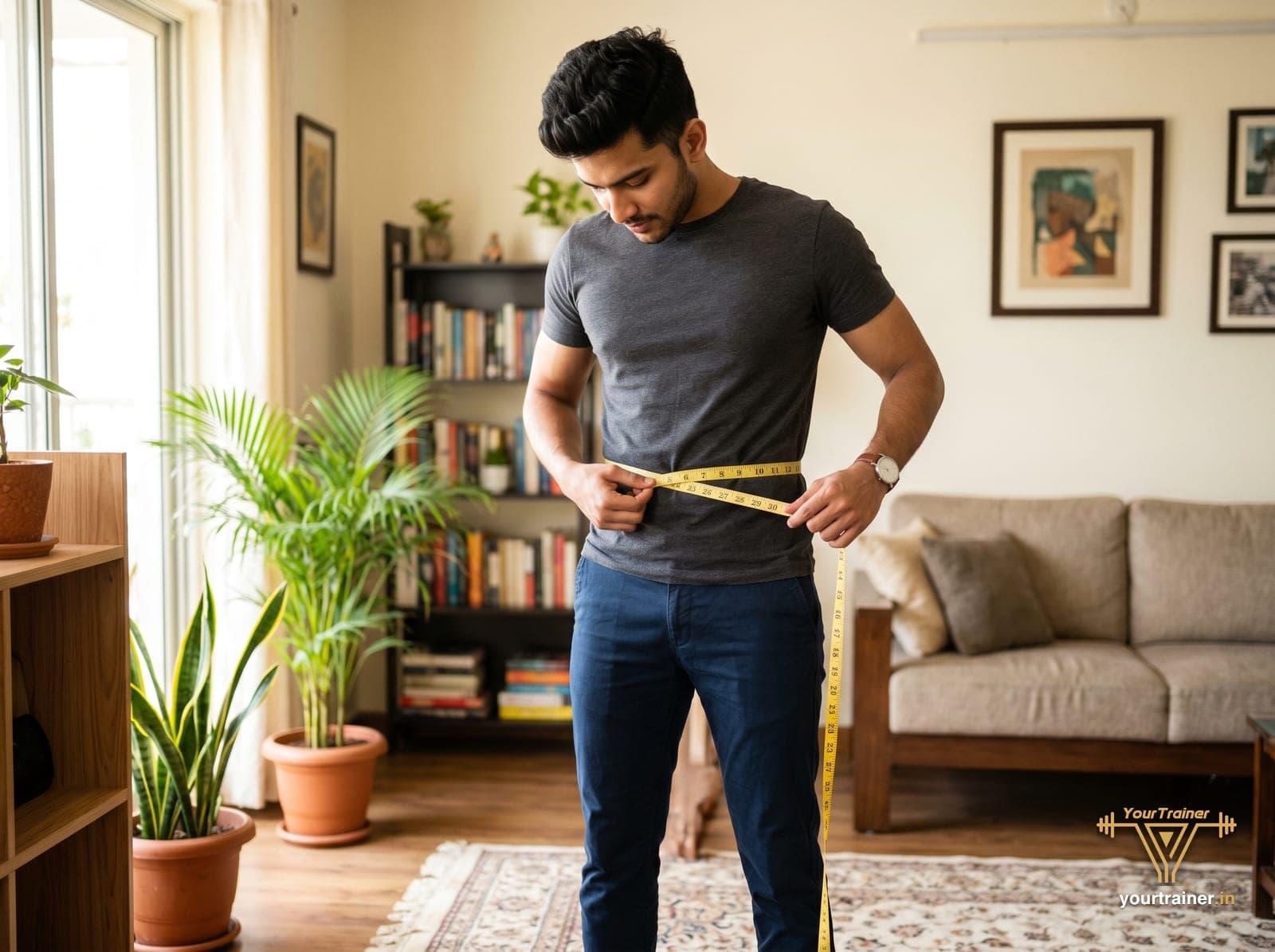
Sarcopenia: Why Indians Lose Muscle Faster (& How to Reverse It)
Why South Asians lose muscle earlier, how it drives frailty and metabolic disease, and the strength plus protein plan that prevents sarcopenia at any age.
Quick answer: Sarcopenia, age-related muscle loss, claims 3–8% of muscle mass per decade in sedentary adults, accelerating dangerously after 60. South Asians start with genetically lower muscle mass and higher body fat (sarcopenic obesity), raising risk for frailty, falls, insulin resistance, and early mortality. But resistance training + adequate protein can prevent and reverse it at any age.
Disclaimer: This article is educational only. Consult a physician or registered dietitian before starting a new exercise or nutrition plan, especially if you have existing health conditions.
For what lifting does to fat loss specifically, see resistance training for weight loss, from the research and our coached sessions.
What protein actually looks like in our members' logs
96.7 g
median protein on a fully logged day
67%
of those days cleared 80 g
28.2 g
dinner, the biggest protein meal
22.0 g
breakfast, the weakest
Source: A sample of member food logs in the YourTrainer app, 16 April to 21 September 2026, aggregated across members. A full-log day is one where breakfast, lunch, dinner and a snack were all recorded
The Quiet Epidemic: Why Your Muscle Is Disappearing
At 48, Rajesh noticed his 10-minute jog left him breathless. His knees ached climbing stairs. He'd gained 8 pounds despite eating "the same as always." His doctor said his metabolic rate had slowed. What Rajesh didn't know: he'd already lost 15% of the muscle mass he'd built in his 20s and 30s.
This story repeats in millions of Indian-American homes. We call it sarcopenia, the age-related loss of skeletal muscle mass and strength. It's not vanity. It's a direct pathway to frailty, metabolic disease, and shorter lifespan.
Here's what the research shows: adults in industrialized countries lose approximately 3–8% of lean muscle mass per decade after age 30, with the decline accelerating sharply after 60 (Studenski et al., 2003, published in Journal of Gerontology). In sedentary individuals, losses can exceed 3.6% per decade. For South Asians, particularly Indian-Americans, the picture is darker.
The South Asian Disadvantage: Genetics + Lifestyle
South Asians have a metabolic profile that makes sarcopenia particularly dangerous: lower baseline skeletal muscle mass relative to body weight, combined with a genetic tendency toward visceral (belly) fat accumulation. This creates "sarcopenic obesity", a condition where someone appears normal-weight or overweight on the scale but carries too little muscle and too much metabolic-damaging fat.
Research on ethnic body composition shows that South Asians (Indian, Pakistani, Bangladeshi populations) have 10–15% lower muscle mass at a given body weight compared to Europeans, with higher insulin resistance risk even at the same BMI (Gujral et al., 2013, Metabolism; Lear et al., 2007, International Journal of Obesity). Vegetarian and vegan diets, common in Indian households, can compound the problem if protein intake isn't carefully managed.
The result: Indian-Americans often develop the frailty and metabolic disease of sarcopenia even if they appear to have a "normal" weight.
Why Your Muscle Matters More Than You Think
Muscle isn't cosmetic. It's an organ.
Skeletal muscle is your body's largest glucose-disposal organ. Every pound of muscle you lose reduces your metabolic flexibility, insulin sensitivity, and your ability to regulate blood sugar. This is why sarcopenic individuals face 2–3× higher risk of type 2 diabetes, frailty fractures, and premature mortality (Vetrano et al., 2014, Age and Ageing).
Here's the cascade:
- Metabolic slowdown. Muscle tissue burns ~6 calories per pound per day at rest. Fat burns only 2–3. Losing muscle directly lowers your basal metabolic rate, making weight gain inevitable even if calories stay the same.
- Insulin resistance. Muscle is where your body stashes excess glucose. Lose muscle → lose glucose-disposal capacity → blood sugar climbs → insulin rises → metabolic syndrome and type 2 diabetes.
- Falls and fractures. Lower-body strength predicts fall risk. A 30-year-old can catch themselves; a 65-year-old with weak legs cannot. Hip fractures in older adults carry 20% mortality risk in the first year (Bruyère et al., 2016, Aging Clinical and Experimental Research).
- Reduced mobility and independence. Sarcopenia undermines the ability to rise from a chair, climb stairs, or carry groceries. This feeds depression, isolation, and further physical decline.
- Mortality. Multiple prospective studies show low muscle mass and strength predict all-cause mortality independently of BMI (Srikanthan & Karlamangla, 2014, American Journal of Clinical Nutrition).
Muscle is longevity insurance. South Asians with a genetic disadvantage in baseline muscle must be intentional about building and preserving it.
The Good News: Sarcopenia Is Reversible
Age is not destiny. Randomized controlled trials consistently show that resistance training + adequate protein can add muscle mass and strength at any age, even in individuals in their 80s and 90s.
A landmark meta-analysis of 49 studies found that older adults performing resistance exercise gained an average of 1.4 kg of lean muscle mass over 12 weeks, with strength gains of 25–30% (Peterson et al., 2010, Medicine & Science in Sports & Exercise). Results were similar across age groups, from 60 to 90+.
The formula is simple: progressive resistance training + adequate protein intake.
Protein: The Non-Negotiable Foundation
Protein is the raw material for muscle. Yet most Indian-Americans, especially vegetarians, fall short.
The mainstream RDA (recommended dietary allowance) is 0.8 g per kilogram of body weight. For a 70 kg (154 lb) person, that's 56 grams per day. This is minimum maintenance for sedentary people, not for building or preserving muscle.
For muscle preservation and growth, especially in older adults, research supports 1.6–2.2 g per kilogram of body weight per day, or roughly 0.7–1.0 g per pound of body weight (Wolfe et al., 2017, Journal of Nutrition, Health & Aging; Morton et al., 2018, British Journal of Sports Medicine).
For a 154-pound (70 kg) person aiming to build muscle while resistance training:
- Target: 107–154 grams of protein per day.
- Spread across 4–5 meals (20–35 g per meal, the optimal stimulus for muscle protein synthesis).
Vegetarian Protein Sources for Indian Households
| Source | Serving Size | Protein (g) | Notes |
|---|---|---|---|
| Paneer | 100 g (3.5 oz) | 20–22 | Complete protein; higher fat; use in moderation or low-fat versions |
| Dahi (yogurt) | 200 g (1 cup) | 10–12 | Greek yogurt has 15–20 g; probiotics aid digestion |
| Moong dal (split mung) | 1 cup cooked | 14–16 | Complete amino-acid profile; gentle on digestion |
| Masoor dal (red lentil) | 1 cup cooked | 18 | Iron + folate; pair with rice for complete protein |
| Chana (chickpea) | 1 cup cooked | 15 | Fiber-rich; good for satiety |
| Peanut butter | 2 tbsp | 8 | Calorie-dense; use for breakfast or post-workout |
| Tofu | 150 g (firm) | 18–20 | Complete protein; versatile; often overlooked in Indian kitchens |
| Milk | 1 cup (240 ml) | 8 | Whey protein isolate added post-workout can reach 25–30 g |
| Egg | 1 large | 6–7 | Most complete amino-acid profile; cholesterol acceptable in context |
| Rajma (kidney bean) | 1 cup cooked | 16 | Pair with rice; slower digestion than other legumes |
A practical vegetarian breakfast delivering 35+ grams of protein: 200 g Greek yogurt (15 g) + 2 tbsp peanut butter (8 g) + 1 banana + granola + 1 whole egg scrambled (7 g) + 1 cup milk (8 g) = 38 g protein in one meal.
Coaching that does this for you
Reading is step one. A coach turns it into a plan built around your body, food & schedule.
100% online · Indian meal plans · weekly progress reviews · daily WhatsApp support.
Start Your Journey →The Beginner's Resistance Plan: 12 Weeks to Muscle
You don't need a gym. You don't need supplements. You need a plan, consistency, and progressive overload (gradually increasing resistance).
Phase 1: Weeks 1–4 (Movement Mastery)
Goal: Learn movement patterns, build stability, create habit.
Frequency: 3 days per week (Monday, Wednesday, Friday). 30–40 minutes per session. 48 hours rest between sessions.
Exercises (3 sets, 12–15 reps each, bodyweight or light dumbbells):
- Goblet squats: Hold a dumbbell or water jug at chest, squat to parallel. Builds leg strength and core stability.
- Push-ups (modified on knees if needed): Chest, shoulders, triceps.
- Inverted rows (pull-up bar or TRX) or dumbbell rows: Builds back and bicep strength critical for posture.
- Glute bridges: Lie on back, feet flat, drive hips up. Awakens dormant glutes.
- Plank hold: 20–40 seconds, 3 sets. Core endurance.
- Walking lunges: 10 per leg, 3 sets. Single-leg balance and glute activation.
Progression: Increase reps or add 1–2 kg dumbbell weight each week.
Phase 2: Weeks 5–8 (Building Strength)
Goal: Increase load and intensity. Push toward muscle-building rep ranges.
Frequency: 4 days per week. Upper/Lower split (2 upper, 2 lower days). 45–50 minutes per session.
Upper Day (Monday, Thursday):
- Dumbbell bench press or push-up variations, 4 sets, 8–10 reps
- Bent-over dumbbell rows, 4 sets, 8–10 reps
- Dumbbell shoulder press, 3 sets, 10–12 reps
- Dumbbell bicep curls, 3 sets, 10–12 reps
- Tricep dips or overhead dumbbell extension, 3 sets, 10–12 reps
Lower Day (Tuesday, Friday):
- Dumbbell goblet squats or dumbbell back squats, 4 sets, 8–10 reps
- Romanian deadlifts (RDL) with dumbbells, 4 sets, 8–10 reps
- Dumbbell Bulgarian split squats (rear foot elevated), 3 sets, 10–12 reps per leg
- Glute bridges with dumbbell, 3 sets, 12–15 reps
- Walking lunges with dumbbells, 3 sets, 10 per leg
Nutrition Focus: Hit 0.7–1.0 g protein per pound bodyweight daily. Eat within 30–60 minutes post-workout.
Phase 3: Weeks 9–12 (Consolidation & Progression)
Goal: Solidify strength gains, introduce periodization.
Frequency: 4 days per week, same split, but rotate rep ranges each week:
- Week 9: 6–8 reps (heavy, 3 sets, 2 min rest)
- Week 10: 10–12 reps (moderate, 4 sets, 90 sec rest)
- Week 11: 12–15 reps (lighter, 4 sets, 60 sec rest)
- Week 12: 8–10 reps (moderate-heavy, assess 1-rep maxes for key lifts)
Cardio: Add 2 x 20–30 minute low-intensity steady-state (walk, bike, swim) on non-lifting days. Cardio alone doesn't build muscle; resistance training is non-negotiable.
Progressive Overload: The Engine of Muscle Growth
Muscle grows only when you demand more from it. Progressive overload means increasing the challenge week-to-week:
- Add weight: Increase dumbbell load by 1–2 kg (2–5 lbs).
- Increase reps: Hit 12 reps? Next week, aim for 13 or 14.
- Reduce rest: 120 sec rest → 90 sec rest between sets (metabolic stress).
- Increase volume: Add a set or extra exercise.
- Range of motion: Lower deeper, pause longer at bottom of squat.
Track every session in a notebook or phone app. If you can't track it, you can't manage it.
Why Cardio Alone Won't Save You
Many Indians lean on cardiovascular fitness (cycling, running, cricket), believing it's enough. It's not.
Pure endurance training is catabolic (muscle-breaking) if not paired with resistance and adequate protein. A 50-year-old runner with low muscle mass faces the same sarcopenia-related mortality risk as a sedentary person. Strength training over 40 is non-negotiable, especially for women, where post-menopausal hormone shifts accelerate muscle loss.
The sweet spot: 3–4 days resistance training + 2 days moderate cardio + 1 rest day. Prioritize the weights.
Real-World Obstacles & Solutions
"I don't have time." A focused 40-minute resistance session 3× per week is vastly more effective than an hour of cardio 5× per week. Start with 20 minutes if needed. Consistency > duration.
"Resistance training will make me bulky." This fear, especially common in women, is unfounded. Building muscle requires caloric surplus + aggressive training + (for significant muscle) genetics favoring hypertrophy. Resistance training with adequate protein makes you stronger, leaner, and more metabolically resilient. You'll lose fat even if weight stays the same (muscle is denser than fat).
"I can't afford a gym." Dumbbells (buy a 10–15 kg adjustable pair for ₹3,000–5,000 or $40–60 USD) and bodyweight resistance (push-ups, pull-up bar for ~$20) are sufficient for years of progress. Or join a local gymnasium for ₹1,500–2,500/month ($18–30 USD).
"Vegetarian protein is bland / insufficient." It's neither. See our complete vegetarian protein chart and recipes. Paneer curries, dal khichdi with ghee, Greek yogurt with nuts, tofu stir-fries, and egg dishes are protein-rich AND delicious. The key: intentional combination and tracking.
Muscle Loss by Decade: What to Expect (and Prevent)
| Age Range | Avg. Annual Muscle Loss (Sedentary) | Cumulative Loss (30 to Age) | With Resistance Training |
|---|---|---|---|
| 30–40 | ~0.5% | 5% | Stable or +1–2% (building phase) |
| 40–50 | ~1% | 15% (cumulative from 30) | Stable; occasional gains with new stimulus |
| 50–60 | ~1–1.5% | 25% (cumulative from 30) | Stable; slight declines but functionally maintained |
| 60–70 | ~2–3% | 35–40% (cumulative from 30) | 5–10% loss (even with training, aging slows growth) |
| 70+ | ~3–4% | 50%+ loss without training; 25–30% with training | Maintained function, modest strength, preserved independence |
The data is clear: resistance training cuts sarcopenia progression by 50–70%. A 65-year-old training since age 35 has 2–3× more muscle and strength than a sedentary peer.
The Vegetarian Advantage (If Done Right)
India's vegetarian tradition (legumes, whole grains, dairy) provides excellent amino-acid building blocks. The challenge is quantity and meal timing, not quality.
A vegetarian Indian-American hitting 1.6 g protein per kg bodyweight is entirely feasible:
- Breakfast: Masala oats with milk + paneer (30 g protein)
- Mid-morning snack: Greek yogurt with almonds (15 g)
- Lunch: Dal + rice + egg (28 g)
- Post-workout shake: Milk + whey isolate (25 g)
- Dinner: Paneer tikka + quinoa (32 g)
- Evening: Peanut butter on toast (10 g)
Total: ~140 g for a 70 kg person. Achievable. Delicious. Indian.
See our 12-week vegetarian muscle-building meal plan with recipes.
Why This Matters More as You Age
At 25, you can party, skip the gym for weeks, eat irregularly, and bounce back. At 50, you cannot.
The anabolic window (your body's sensitivity to protein and training stimulus) narrows with age. You need more protein, more intentionality, and more consistency to maintain muscle. This isn't a limitation, it's just the reality of human physiology.
The silver lining: if you build and maintain muscle in your 40s and 50s, you enter your 60s, 70s, and beyond with a massive reserve. You remain independent, mobile, healthy, and alive. That's not vanity. That's the definition of longevity.
Your Action Plan, Starting This Week
- Assess your protein intake. Track 3 days in MyFitnessPal or similar. Are you hitting 0.7–1.0 g per pound bodyweight? If not, add paneer, dal, yogurt, or a whey shake to close the gap.
- Get dumbbells (or gym access). Adjust your budget. This is health infrastructure.
- Start Week 1 of the beginner plan. 3 days, 30–40 minutes. Do not skip form. Slow, controlled reps beat heavy, sloppy ones.
- Track progress. Note weights, reps, how you feel. Consistency over intensity in Month 1.
- Eat post-workout. Within 60 minutes of training, eat 25–35 g protein + carbs (banana, rice, bread). This triggers muscle protein synthesis.
- Sleep 7–9 hours. Muscle grows at night. Non-negotiable.
Start Your Journey with a free consultation to assess your current fitness level, protein intake, and sarcopenia risk. Our coaches will build a personalized plan.
Muscle Loss Is Not a Normal Part of Ageing
Sarcopenia is not a normal part of aging. It's the result of sedentary living, poor nutrition, and inaction. South Asians, with a genetic predisposition toward lower muscle mass and sarcopenic obesity, must be intentional. But intention + a simple plan yields remarkable results: stronger bones, faster metabolism, resilient blood sugar, fewer falls, and 5–15 additional healthy years of independence.
Your muscle is your retirement plan. Invest in it now.
Going deeper on protein after 40
- How much protein after 40
- Why your food log and your plan disagree
- Protein per meal on an Indian plate
Related reading from YourTrainer
- The Indian-American Health Checkup: 6 Essential Tests in Your 30s
- Grip Strength: The Longevity Marker Your Doctor Should Check
- Vitamin D Deficiency in Indians & NRIs: Why, Symptoms & How to Fix
Sources
- High prevalence of metabolic obesity in India: the ICMR-INDIAB national study · Indian Journal of Medical Research
- Appropriate body-mass index for Asian populations · WHO Expert Consultation, The Lancet (2004)
- Healthy diet · World Health Organization
Coaching guidance on this site is educational and is not a substitute for medical advice. See how we use sources.
Did you find this helpful?

About Anish Agarwal
Founder & Head Coach, YourTrainer · NASM & K11 Certified Personal Trainer · coaching since 2022
Featured in Dietitians.io, Fitness Interview, NRI Pulse. Press and media
Anish Agarwal is a NASM and K11 certified personal trainer coaching fat loss, body transformation, strength, and nutrition for clients across India since 2022. He founded YourTrainer to make expert, science-based coaching accessible online and in Bengaluru. Coach Anish's profile and the YourTrainer story.
Online 1-on-1 Coaching
Start Your Journey
Get a personalised training + Indian nutrition plan built around your goal, coached online, anywhere in India or abroad.
Trusted by 1,000+ clients coached across India & abroad
Free 30-min discovery call · No obligation