Managing Type 2 Diabetes with Rice & Roti: Meal Plan
Manage type 2 diabetes on Indian grains: GI values, protein-pairing formula, a 3-meal day, post-meal walking, and tracking without a CGM. Portions in katoris.
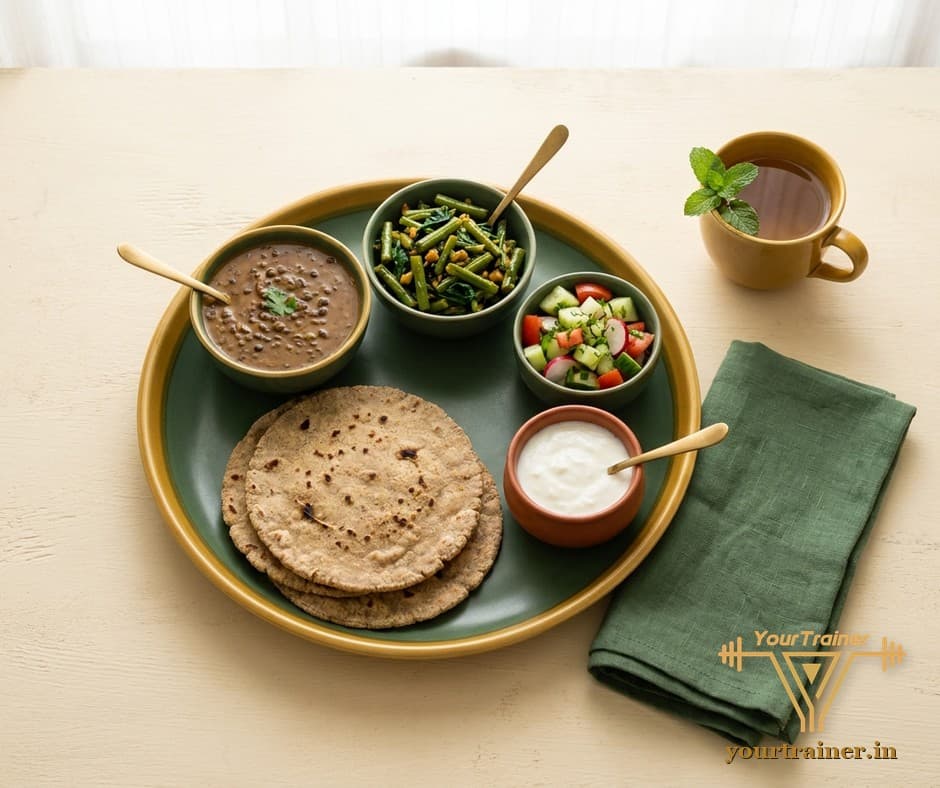
Rice and roti can have a place in a type 2 diabetes plan, but only if you pair them with protein, fibre and healthy fat, and eat in the right order. Check with your doctor first, especially if you take diabetes medication. Most Indians are told to "avoid carbs entirely," a myth that overlooks the real lever: blood-sugar control through meal composition, portion size, and post-meal movement. Meal composition, portion size and post-meal movement all change how your blood sugar responds. This guide shows you how to apply them in India, using the foods you already cook. For the single habit that moved one member's readings most, see post-meal walking for blood sugar.
Understanding Glycemic Index: Which Indian Grains Actually Matter
Your blood-sugar response to rice isn't binary, it depends on the grain, cooking method, and what you eat alongside it. The Glycemic Index (GI) measures how quickly a food raises blood glucose compared to pure glucose (GI 100). For managing diabetes, GI is not the only factor (portion and pairing dominate), but it's a useful map:
| Grain | GI Value | Fibre per 100g | Typical INR Price/kg (India) | Best Use |
|---|---|---|---|---|
| White Rice (Basmati) | 73 | 0.4g | ₹40–60 | Occasional, paired meals only |
| Brown Rice | 68 | 1.8g | ₹60–80 | Marginal improvement, still needs pairing |
| Bajra (Pearl Millet) | 55 | 2.3g | ₹50–70 | Primary grain, diabetes-friendly |
| Jowar (Sorghum) | 62 | 3.2g | ₹45–65 | Primary grain, highest fibre |
| Whole Wheat Roti | 62 | 2.4g | ₹35–50 (flour) | Safe, supports satiety |
The headline: white rice eaten alone raises blood glucose faster than the same rice eaten with dal, vegetables and paneer. Protein, fat and fibre slow digestion, so the rise is more gradual. That is the difference between a spike and steady control.
The Protein-Fat-Fibre Strategy: The Real Secret
Protein, fat, and fibre act as "glucose brakes." They slow carbohydrate digestion and blunt insulin spikes by increasing intestinal viscosity and delaying gastric emptying. Studies of meal composition and meal order find that vegetables and protein eaten before carbohydrate lower the blood sugar rise after a meal.
The formula: Every meal should include:
- Protein (25–30g): 1 katori dal (~150g cooked, 7g protein) + 50g paneer (~6g protein), or 2 eggs (~12g) + curd (150g, 3.5g), or 100g fish (~20g)
- Healthy fat (10–15g): 1 tsp oil (mustard or coconut preferred), 10 almonds (~3.3g fat), 1 tbsp peanut butter (~8g), or 2 tbsp grated coconut
- Fibre (8–10g): Leafy greens (spinach, fenugreek), okra, broccoli, beans, or 1 whole-wheat roti (2.4g fibre)
- Carbs (40–50g): 1 katori cooked rice (~100g, 30g carbs), or 2 rotis (~30g carbs), or 200g sweet potato (~32g carbs)
I tell my clients: "Your plate isn't 'rice with dal on the side', it's dal with rice mixed through it." The ratio matters more than the foods themselves. A meal with 5g protein and 40g carbs will spike blood glucose sharply; the same meal with 25g protein and the same 40g carbs will raise glucose gradually.
Order of Eating: Vegetable → Protein → Carb
The sequence you eat matters more than most people realize. Small trials of meal order, including in people with type 2 diabetes, found a lower glucose rise when vegetables and protein come before carbohydrate. The likely reason: fibre and protein slow how fast carbohydrate is absorbed.
Your eating sequence:
- First (5 min): Eat all vegetables (leafy greens, bhindi, tomato, cauliflower, cucumber). Aim for 200g cooked. This primes the gut with fibre and slows intestinal motility.
- Next (3 min): Eat protein source (dal, paneer, egg, curd). Finish this portion fully. Protein stimulates peptide YY and GLP-1 secretion (natural appetite brakes).
- Last (eat freely): Rice, roti, or grains.
This isn't about eating less; it's about eating smarter. The calories are identical, but the glucose response can differ.
A Real Indian Day: Diabetes-Friendly Meals
Here's what I recommend my type-2 diabetes clients actually eat in India, using real portion sizes and costs. Costs are approximate.
Breakfast (~7 AM)
Besan Chilla + Curd + Vegetables
- Besan chilla (40g besan + 1 egg + 1 tsp oil, salt, chilli): ~160 kcal, 8g protein, 2g fibre. Cost: ₹12 (~$0.15 USD)
- 1 katori plain curd (150g, ₹15): 80 kcal, 3.5g protein
- 1 small bowl cucumber + tomato salad: 20 kcal, 1.5g fibre. Cost: ₹5
- Total: ~260 kcal, 11.5g protein, 3.5g fibre, 0g added sugar. No rice.
Mid-Morning Snack (~10 AM)
15 almonds + 1 small guava (or ½ medium apple): 150 kcal, 5g protein, 4g fibre. Cost: ₹20. Keeps glucose stable until lunch. Whole fruit (with skin) is fine due to fibre blunting sugar absorption.
Lunch (~1 PM)
Dal + Vegetable + Rice + Papad
- 1 katori moong dal (cooked, ~150g): 95 kcal, 7g protein, 2.1g fibre. Cost: ₹15
- 1 katori mixed vegetable curry (okra + onion + tomato, cooked in 1 tsp mustard oil): 80 kcal, 2g fibre. Cost: ₹18
- ¾ katori white basmati rice (cooked, ~100g): 120 kcal, 2g protein
- 1 papad (roasted, no oil): 40 kcal. Cost: ₹5
- Total: ~335 kcal, 11g protein, 4g fibre. Eating order: vegetables (5 min) → dal (3 min) → rice (freely). Daily cost: ₹38.
Evening Snack (~4 PM)
1 glass green tea or black tea (unsweetened, ₹5) + 10 cashews or 8 peanuts: 100 kcal, 3g protein. No blood-sugar spike. Cost: ₹8.
Dinner (~8 PM)
Paneer Bhurji + Roti + Greens
- Paneer bhurji (100g paneer, 1 tsp ghee, onion, tomato, spices): 200 kcal, 12g protein, 0.5g fibre. Cost: ₹60
- 2 whole-wheat rotis (made from ₹2 flour): 160 kcal, 5.6g protein, 4.8g fibre
- 1 small bowl palak/spinach (sautéed in 0.5 tsp oil): 30 kcal, 2.5g fibre. Cost: ₹8
- Total: ~390 kcal, 17.6g protein, 7.3g fibre. Eating order: spinach (5 min) → paneer (3 min) → roti (freely). Cost: ₹70.
Daily totals: ~1,235 kcal, 48g protein, 23g fibre, 240g carbs (from rice, roti, vegetables only, zero added sugar, zero fruit juice). Cost in India: ₹171 (~$2.05 USD).
Coaching that does this for you
Reading is step one. A coach turns it into a plan built around your body, food & schedule.
100% online · Indian meal plans · weekly progress reviews · daily WhatsApp support.
Start Your Journey →Post-Meal Walking: The Movement Lever
Here's what most dietitians forget: a short walk after eating blunts the blood sugar spike. A 2022 meta-analysis in Sports Medicine found that light walking breaks lowered blood glucose more than sitting or standing. The mechanism: muscle contraction activates GLUT4 transporters, which pull glucose into muscle without needing insulin.
Your post-meal protocol:
- After every meal (especially lunch and dinner), stand up within 2–3 minutes of finishing.
- Walk slowly around your home or outside, 2–3 minutes minimum (200–300 steps). No equipment needed.
- Intensity doesn't matter, slow walking works as well as brisk walking for glucose control (both activate muscle GLUT4).
- If desk-bound, even standing, light stair-climbing, or bodyweight squats (10 reps) work.
- Track compliance: aim for a short walk after every meal.
Combined with meal pairing and portion control, this habit supports steadier blood sugar. Results vary from person to person, and your doctor tracks your HbA1c.
Portion Sizes: The Katori Math
Indian portion sizes are easier to remember than grams. Here's the diabetes-safe map:
- 1 katori rice (cooked): ~100g, ~120 kcal, ~30g carbs. GI spike managed only with dal + veg + protein present. Alone = blood-glucose rise 50–70 mg/dL.
- 1 katori dal (cooked): ~150g, ~95 kcal, 7g protein, 2.1g fibre (your diabetes workhorse). One katori covers 25–30% of daily protein need.
- 1 roti (whole wheat): ~40g, 80 kcal, 2.6g protein, 2.4g fibre (safe, use as primary grain instead of rice).
- 1 katori mixed vegetables (cooked): ~150–200g, ~50–80 kcal, 3–4g fibre (eat at least 1 full katori per meal).
- 50g paneer: ~100 kcal, 6g protein, <1g carbs (a standard serving, not the whole block).
The goal: fill ½ your plate with vegetables, ¼ with protein (dal or paneer), ¼ with rice/roti. This ratio naturally prevents overeating carbs and ensures 25–30g protein per meal.
Common Mistakes That Sabotage Your Progress
Mistake 1: "Brown Rice is Healthy, So I Eat It Freely"
Brown rice (GI 68) is only 7% better than white rice (GI 73) in glycemic response. It still requires pairing. Eating 2 katoris of brown rice with no dal or protein will still spike blood glucose. Use brown rice only if also eating dal + vegetables + protein in the same meal. Better: switch to bajra or jowar as your primary grain (GI 55–62, fibre 2.3–3.2g per 100g).
Mistake 2: Skipping Breakfast or Eating Late
Skipping breakfast leads to a ravenous lunch, where you eat 2 katoris rice instead of ¾. Eating dinner at 10 PM disrupts sleep and glucose clearance. Eat within 1 hour of waking and finish dinner by 8 PM.
Mistake 3: Eating Rice Without Dal
I've watched this a hundred times: a client eats rice with just a curry (oil + tomato, no legume protein). The blood-sugar spike is immediate and large. Rice + dal (even in small quantities) is a complete food for diabetes. Rice alone is a blood-sugar bomb. If you have rice, you must have dal or paneer or egg in the same meal, no exceptions.
Mistake 4: Drinking Fruit Juice or Eating Dessert "Because It's Natural"
Mango juice (natural, but GI 51 for a glass, ~40g sugar), jaggery (natural, but GI 84), or "date-based energy balls" are still sugar. Whole fruit (apple, guava, 1 medium banana) with skin is fine due to fibre (4g/apple blunts the 25g sugar). Juice, jaggery, honey, or desserts? Skip them until your HbA1c is below 5.7%. A glass of mango juice raises blood glucose quickly, much like rice eaten without protein.
Mistake 5: Ignoring Medication During Diet Change
If you're on metformin or insulin, don't stop abruptly when starting this meal plan. Blood glucose can drop, which raises the risk of low blood sugar on your old doses. Tell your endocrinologist before you start, and let them decide on any change to your medication.
How to Track Progress Without a Continuous Glucose Monitor
Not everyone has access to a CGM (₹5,000–12,000 in India; $300–500 in US). Use these markers instead:
- Week 2–4: Hunger and energy stabilize. You stop crashing at 3 PM (a sign of reactive hypoglycemia). Afternoon energy dip disappears.
- Week 8–12: Weight starts dropping (0.5 to 1 kg a week is a healthy pace). Bloating reduces. Clothes fit looser around the midsection first.
- Week 12+: Get a fasting blood glucose test. Share the result with your doctor, who interprets it for you.
- Month 4: HbA1c test (3-month average). Your doctor interprets it: below 5.7% is the normal range, 5.7% to 6.4% is pre-diabetes, and 6.5% or above is the diabetes range.
- Continuous marker: Fasting blood glucose first thing in the morning (wake up, don't eat, test). Share the trend with your doctor and ask for your personal target.
Medical disclaimer: Diet and movement can improve blood sugar control in type 2 diabetes, but always consult your endocrinologist before changing medication doses or starting fasting protocols. Rapid blood-glucose drops can cause hypoglycemia if medications are not adjusted. This guide is educational; it is not a substitute for professional medical advice. If you take insulin or sulfonylureas, medical supervision during diet change is essential.
Related reading from YourTrainer
Sources
- High prevalence of metabolic obesity in India: the ICMR-INDIAB national study · Indian Journal of Medical Research
- Appropriate body-mass index for Asian populations and its implications for policy and intervention strategies · WHO Expert Consultation, The Lancet (2004)
- Guidelines on physical activity and sedentary behaviour (2020) · World Health Organization
Figures for Indian foods follow IFCT 2017 (ICMR-NIN). Coaching guidance on this site is educational and is not a substitute for medical advice. See how we use sources.
Did you find this helpful?

About Anish Agarwal
Founder & Head Coach, YourTrainer · NASM & K11 Certified Personal Trainer · coaching since 2022
Featured in Dietitians.io, Fitness Interview, NRI Pulse. Press and media
Anish Agarwal is a NASM and K11 certified personal trainer coaching fat loss, body transformation, strength, and nutrition for clients across India since 2022. He founded YourTrainer to make expert, science-based coaching accessible online and in Bengaluru. Coach Anish's profile and the YourTrainer story.
Online 1-on-1 Coaching
Start Your Journey
Get a personalised training + Indian nutrition plan built around your goal, coached online, anywhere in India or abroad.
Trusted by 1,000+ clients coached across India & abroad
Free 30-min discovery call · No obligation