CGM for Non-Diabetics: See How Indian Foods Spike Your Blood Sugar
Learn how Continuous Glucose Monitors reveal blood sugar spikes from desi foods. FDA-cleared US options, glucose hacks, and why South Asians benefit.
Quick answer: A continuous glucose monitor (CGM) lets you see exactly how foods spike your blood sugar in real time. If you're South Asian, you likely carry genes for insulin resistance even at a normal weight, and a CGM reveals which of your favorite desi foods are metabolic landmines. The FDA just cleared two over-the-counter CGM options (Stelo and Lingo) in the USA, meaning you can start experimenting without a diabetes diagnosis or a doctor's order.
Disclaimer: A CGM is a learning tool, not a diagnostic device. It does not diagnose diabetes or replace medical advice. Consult your doctor before making major dietary changes, especially if you have a family history of diabetes or metabolic disease.
What Is a Continuous Glucose Monitor (CGM)?
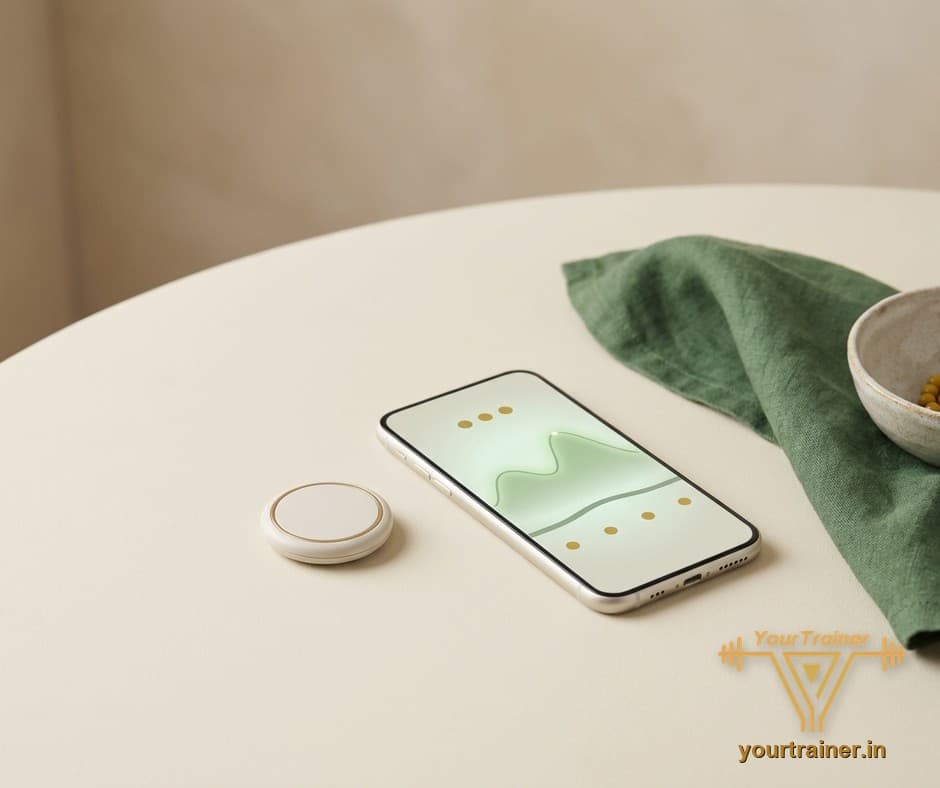
A CGM is a small sensor (about the size of a postage stamp) you stick to your arm or back of your triceps. It measures your blood glucose every 5–15 minutes using interstitial fluid (the fluid between your cells), then sends readings to your phone via Bluetooth. You get a live graph showing glucose trends, peaks, and how fast you return to baseline.
Unlike a fingerstick test, which gives you one snapshot at one moment, a CGM shows you the story of what your blood sugar is doing all day and night. You can see exactly when that midday chai with 3 teaspoons of sugar spiked you, and how long it took to come down.
For decades, only people with type 1 or type 2 diabetes used CGMs. In 2024–25, the FDA cleared the first over-the-counter CGMs for non-diabetics, opening the door to metabolic self-experimentation for millions of people.
Why South Asians (and Indian-Americans) Should Pay Attention
Here's the uncomfortable truth: if you're of South Asian descent, your body is genetically wired to store fat and resist insulin more efficiently than people of European or African descent, even if you're lean.
A landmark 2018 study published in Diabetes Care found that South Asians develop insulin resistance 3–5 years earlier than Europeans at the same body weight and waist circumference. Another 2020 analysis in Current Diabetes Reports noted that South Asians have type 2 diabetes rates 2–3× higher than the general US population, with diagnosis often coming later (because doctors don't suspect it in skinny patients).
Translation: You can be a size 8 with a BMI of 22 and still have significant glucose dysregulation. A CGM reveals this before it becomes a problem.
South Asians also metabolize refined carbohydrates differently. Traditional desi staples (white rice, white roti, fruit juice, sweet chai) are fast carbs that spike glucose sharply. A CGM quantifies just how sharp your personal response is, and whether you're in a prediabetic range.
FDA-Cleared OTC CGM Options in the USA (2024–25)
Stelo (Abbott FreeStyle)
FDA cleared November 2023. 14-day sensor, worn on the back of the arm. Phone app shows glucose levels every minute. No fingerstick calibration needed (factory calibrated). Cost: ~$89–99 for a 14-day sensor. No prescription required.
Best for: People new to CGM who want simplicity and affordability.
Lingo (Pendulum)
FDA cleared June 2024. 14-day sensor. Includes an AI coach that gives you personalized "glucose hacks" based on your eating and exercise patterns. Subscription model (~$200/month for ongoing access). Integrates with Fitbit and Apple Health.
Best for: People who want coaching and deeper metabolic analytics.
Dexcom G7 (Prescription Alternative)
FDA cleared for non-diabetics in 2024. Requires a prescription from a doctor. 10-day sensor. Many US insurance plans cover it. More frequent readings (every 5 minutes). Larger ecosystem of apps and integrations.
Best for: People with insurance coverage or those who want longer wear time.
What Do Common Indian Foods Actually Do to Your Blood Sugar?
Here's where CGM gets fun. Let's look at actual glucose responses to typical desi foods, measured in mg/dL (the US standard):
| Desi Food / Dish | Typical Portion | Peak Glucose (mg/dL) | Time to Peak | Glucose Hack Impact |
|---|---|---|---|---|
| White rice | 1 cup cooked (180g) | 160–200+ | 30–45 min | –30% if eaten with dal + veggies first |
| White roti (maida) | 2 rotis (60g) | 140–180 | 20–30 min | –25% if paired with ghee + protein |
| Dosa (refined rice flour) | 1 dosa + sambar | 150–190 | 25–40 min | –35% if whole-grain dosa or chutney first |
| Idli (steamed rice cake) | 2–3 idlis | 130–170 | 20–30 min | –20% if sambar (protein + veg) eaten first |
| Chai with 2 tsp sugar | 1 cup (240 mL) | 110–140 | 10–20 min | –40% if taken with snack protein (nuts, boiled egg) |
| Gulab jamun (2 pieces) | ~60g | 180–240+ | 15–25 min | High spike; pair with protein or skip syrup |
| Fruit juice (unsweetened) | 1 cup (240 mL) | 150–200 | 15–30 min | –50% vs. whole fruit; whole mango/orange better |
| Whole wheat roti | 2 rotis (60g) | 110–150 | 30–45 min | 30–40% lower than white roti |
| Dal (lentils) with rice | 1 cup rice + ½ cup dal | 120–160 | 40–60 min | Slower, steadier curve than rice alone |
Key insight: The spikes are real and measurable, but they're not inevitable. Small changes in eating order and meal composition can flatten them by 25–50%.
The Glucose Hacks That Actually Work (with Science)
If you see a glucose spike on your CGM, don't panic, and don't swear off roti forever. Researchers at Weill Cornell and in India have proven that simple meal-hacking strategies reduce glucose peaks without cutting carbs.
Hack 1: Eat Protein, Fat, or Fiber First (The "Veggies First" Protocol)
A 2015 study published in Diabetes Care by Shukla et al. had people eat the same meal in two orders: carbs first vs. carbs last. When carbs came last, glucose peaks dropped by 29% and insulin spikes by 37%. (You also felt fuller and had less afternoon hunger.)
Eat your dal and sabzi first, then rice. Eat the paneer or egg before the dosa. Simple and science-backed.
Hack 2: Post-Meal Movement (The 3-Minute Walk)
A 2022 study in Sports Medicine found that a 3-minute walk immediately after eating (or even during a meal) reduces glucose peaks by 20–30%. A 2-minute walk is less effective; 10 minutes is better. The mechanism: muscle contraction increases glucose uptake without needing insulin.
Action: After lunch (your biggest spike risk), take a 5-minute slow walk. Your glucose curve will thank you.
Hack 3: Add Vinegar or Lemon Juice
Acetic acid (in vinegar) and citric acid (in lemon) slow stomach emptying, blunting glucose spikes by 10–25%. A 2021 meta-analysis in Nutrients reviewed 12 studies; the effect was consistent. A tablespoon of apple cider vinegar mixed in water before a meal, or lemon juice on your rice, helps.
Hack 4: Pair Refined Carbs with Fat
Fat slows carb absorption. Adding 1–2 teaspoons of ghee, oil, or butter to white rice reduces the glucose peak by 15–25%. This is why dal (which has fat) paired with rice is gentler than plain rice.
Hack 5: Choose Whole Grains When Possible
Whole wheat roti peaks 30–40% lower than white maida roti. Brown rice or basmati (which has a lower glycemic index) beats white rice. If you can't make the full swap, even 50/50 white–whole wheat roti helps.
Blood sugar, coached
Knowing what spikes your sugar is step one. A week of meals, walks and strength sessions that keep it steady is the hard part.
A YourTrainer coach and nutritionist plan your Indian meals, add strength training three days a week and check your logs every week, alongside your doctor, who stays in charge of medication.
Start Your Journey →Start from here:Diabetes and pre-diabetes coaching·For Indians in the USA
How to Run Your Own CGM Experiment (n=1 Science)
Here's how to use a CGM like a food scientist:
- Get a baseline (Days 1–3): Eat your normal diet and watch your graph. Don't change anything. You'll see your glucose patterns, fasting levels, and biggest spike offenders.
- Pick one variable (Days 4–7): Choose one food or swap to test. E.g., "I'll eat white rice with dal instead of plain rice." Or "I'll take a 5-minute walk after lunch." One variable at a time.
- Measure the result: Compare glucose peaks and return-to-baseline time. Take a screenshot. You're looking for a 15–20 mg/dL difference as meaningful.
- Test the opposite (Days 8–10): Go back to the old way. Watch the spike come back. This proves causation, not correlation.
- Iterate: Test another swap. Most people find two or three that clearly work for them.
This is real metabolic literacy, you're learning your body's unique glucose response, not following generic rules.
The Caveats (Please Read This Part)
CGM Data Can Feel Obsessive
Watching your glucose graph every hour is tempting and addictive. "I spiked to 165 mg/dL, that's bad!" Over-focus can trigger anxiety, orthorexia (obsessive eating rules), or food guilt. Use a CGM for 2–4 weeks, then pause. You now know your body better. You don't need to wear one forever.
Normal Post-Meal Glucose Is Not Flat
A fasting glucose of 90–100 mg/dL is normal. A peak of 130–160 mg/dL after a mixed meal is normal. You don't need 120 mg/dL all day. Spikes are not evil; they're part of eating. The goal is metabolic flexibility, not perfection.
CGM Readings Can Vary
The sensor measures interstitial glucose, which lags behind blood glucose by ~5 minutes. Stress, hydration, menstrual cycle, and sleep quality affect glucose control. A bad reading on one day doesn't predict tomorrow.
Not a Replacement for a Doctor
If you have a family history of diabetes, are overweight, or have a fasting glucose consistently >110 mg/dL, see a doctor for an A1C test (a 3-month glucose average). A CGM is a learning tool; a doctor is essential if you suspect metabolic disease.
Next Steps: From Data to Action
Once you've run your 2–4-week CGM experiment, here's what you do with the knowledge:
- Build your personal "glucose toolkit." You know which hacks work for your body. Use them regularly, not obsessively, but intentionally.
- Integrate fiber and protein. Most people who reduce glucose spikes simply add more vegetables, legumes, and whole grains. No food is off-limits; portions and combinations matter.
- Prioritize movement. That 5-minute walk after lunch is more powerful than most supplements. Aim for 30 minutes of walking daily (low intensity counts).
- Sleep and stress. Cortisol and poor sleep destroy glucose control. CGM will show you spikes even on days you eat the same food, that's stress and lack of sleep talking.
- Retest every 6–12 months. Your glucose response may improve as you build metabolic fitness. Nice to measure progress.
If you're ready to take control of your metabolic health and learn which desi foods work for your body, Start Your Journey, our coaches work with you to integrate glucose data into a sustainable nutrition plan.
What a CGM Can and Cannot Tell You
A continuous glucose monitor is a powerful tool for metabolic self-discovery. It doesn't label foods as "good" or "bad." Instead, it says: "Here's how your body responds." For South Asians and Indian-Americans, this information is especially valuable, because we're at higher genetic risk for insulin resistance, and our traditional foods often carry more refined carbs than we realize.
The FDA-cleared OTC options (Stelo and Lingo) are affordable, accessible, and require no prescription. Use one for a month, learn your patterns, and then integrate those insights into lifelong eating and movement habits. That's how data becomes wisdom.
Related Reading
- Managing Type 2 Diabetes with Rice and Roti: Meal Plan
- Indian Food Calorie & Macro Chart: 60 Dishes
- 7-Day Indian Vegetarian Diabetes Management Diet Plan
- How Many Steps Per Day for Weight Loss (India Context)
Related reading from YourTrainer
- The Indian-American Health Checkup: 6 Essential Tests in Your 30s
- Fasting Insulin & HOMA-IR: Catch Insulin Resistance Early
- Beyond BMI: The Right Body Metrics for Indian Bodies
Sources
- High prevalence of metabolic obesity in India: the ICMR-INDIAB national study · Indian Journal of Medical Research
- Appropriate body-mass index for Asian populations and its implications for policy and intervention strategies · WHO Expert Consultation, The Lancet (2004)
- Healthy diet · World Health Organization
Figures for Indian foods follow IFCT 2017 (ICMR-NIN). Coaching guidance on this site is educational and is not a substitute for medical advice. See how we use sources.
Did you find this helpful?

About Anish Agarwal
Founder & Head Coach, YourTrainer · NASM & K11 Certified Personal Trainer · coaching since 2022
Featured in Dietitians.io, Fitness Interview, NRI Pulse. Press and media
Anish Agarwal is a NASM and K11 certified personal trainer coaching fat loss, body transformation, strength, and nutrition for clients across India since 2022. He founded YourTrainer to make expert, science-based coaching accessible online and in Bengaluru. Coach Anish's profile and the YourTrainer story.
Online 1-on-1 Coaching
Start Your Journey
Get a personalised training + Indian nutrition plan built around your goal, coached online, anywhere in India or abroad.
Trusted by 1,000+ clients coached across India & abroad
Free 30-min discovery call · No obligation