The Indian-American Health Checkup: 6 Essential Tests in Your 30s
A screening guide for South Asians in the USA: cardiometabolic risk ranges, vitamin deficiencies, insulin resistance. What to test, why, and how to act.

Medical Disclaimer: This article is educational and not a substitute for medical advice. Always consult your primary care physician before starting new supplements or medications, and discuss screening decisions based on your personal and family health history.
South Asians living in the United States face a hidden health crisis: type 2 diabetes and cardiovascular disease strike 5–10 years earlier and at lower body weights than European Americans. The standard BMI cutoffs and standard lipid panels miss this risk. This guide outlines the 6 essential tests every Indian-American should get in their 30s, and how to interpret them. Testing is step 1; action (training, nutrition, sleep) is step 2.
Why South Asians Need Earlier Screening
Genetic ancestry shapes cardiometabolic risk. South Asians, whether born in the US or immigrated, carry higher heritable risk for insulin resistance, dyslipidemia, and early coronary artery disease. Add sedentary urban lifestyles, processed food intake, and chronic stress, and the risk compounds by 30.
The problem: traditional preventive screening (standard lipid panels, BMI) is calibrated for European populations and misses South Asian risk signals. A lean Indian-American woman at BMI 23 with elevated insulin and Lp(a) appears "healthy" by standard metrics but may be developing metabolic syndrome. These 6 tests reveal what's actually happening inside.
The 6 Essential Tests
1. Lipoprotein(a) – Lp(a)
What it is: An inherited cholesterol particle that increases heart attack and stroke risk. You get your Lp(a) level from your parents and it doesn't change much over your lifetime.
Why it matters for South Asians: South Asian populations have higher average Lp(a) levels than European Americans. A single test in your 30s reveals your genetic risk, crucial for preventive action and family screening.
Target range: <50 mg/dL is considered low-risk; 50–99 mg/dL is intermediate; >100 mg/dL significantly raises heart disease risk. Some labs use nmol/L units (<125 is low-risk).
How to act: High Lp(a) is not diet-responsive like LDL cholesterol, but intensified aerobic training and aggressive management of other risk factors (blood pressure, smoking, diabetes) help. Some high-risk patients benefit from medication like PCSK9 inhibitors. See our deep Lp(a) guide for more.
2. Advanced Lipid Panel – ApoB & Standard Lipids
What it is: Instead of just total cholesterol and LDL, request ApoB (apolipoprotein B), which counts the actual number of particle carrying cholesterol. Also get triglycerides and HDL.
Why it matters: Standard LDL cholesterol can be normal while ApoB is high, meaning you have many small, dense cholesterol particles, a potent South Asian risk profile. Triglyceride-to-HDL ratio predicts insulin resistance.
Target ranges:
- ApoB: <80 mg/dL optimal; 80–100 borderline; >100 elevated
- LDL cholesterol: <100 mg/dL optimal; <70 if family history of early heart disease
- HDL cholesterol: >40 mg/dL for men; >50 mg/dL for women
- Triglycerides: <150 mg/dL fasting; <100 optimal
- Triglyceride-to-HDL ratio: <2 is protective; >3 suggests insulin resistance
How to act: High ApoB responds to reduced refined carbohydrate intake, increased aerobic training, and higher protein/fiber intake. If persistently elevated, discuss statin therapy with your doctor. See our guide on lean dyslipidemia for context.
3. Fasting Insulin & HOMA-IR (Insulin Resistance Index)
What it is: Fasting insulin measures how much insulin your pancreas must produce to keep blood sugar normal. HOMA-IR is a calculated score that combines fasting glucose and insulin to assess insulin resistance. High levels mean your cells aren't responding well to insulin, the first step toward prediabetes.
Why it matters: Lean South Asians frequently have high insulin despite normal weight and normal fasting glucose. This is the hidden metabolic dysfunction that drives diabetes, hypertension, and fat accumulation inside arteries and organs. Catching it in your 30s means diet and training can still bring the numbers back into range.
Target ranges:
- Fasting insulin: <12 mIU/L is normal; 12–20 is elevated; >20 indicates strong insulin resistance
- HOMA-IR: <1.9 is normal; 1.9–3.5 is elevated; >3.5 indicates significant insulin resistance
How to act: Elevated insulin with normal glucose is a prediabetes signal. Interval resistance training (weights, sprints), reduced simple carbohydrates, and increased soluble fiber (oats, flax, legumes) are the primary levers. Detailed guidance in our fasting insulin guide.
4. HbA1c & Fasting Glucose (Diabetes Screening)
What it is: HbA1c measures average blood glucose over 3 months (more reliable than a single fasting glucose test). Fasting glucose is a snapshot of your blood sugar after an overnight fast.
Why it matters: South Asians develop type 2 diabetes 5–10 years earlier than other groups. Screening in your 30s catches prediabetes while lifestyle change still has the most effect.
Target ranges:
- Fasting glucose: <100 mg/dL normal; 100–125 mg/dL prediabetic; ≥126 diagnostic for diabetes
- HbA1c: <5.7% normal; 5.7–6.4% prediabetic; ≥6.5% diagnostic for diabetes
How to act: Prediabetes can often be brought back into the normal range. Combine strength training (3–4x/week), consistent carbohydrate intake (prioritize whole grains, legumes, vegetables), and adequate sleep. If HbA1c is ≥6.5%, discuss with your PCP about metformin or GLP-1 therapy. See our diabetes management meal plan for meal planning.
5. Vitamin D (25-OH-D) & Vitamin B12
Vitamin D: A fat-soluble hormone that regulates calcium, immune function, and blood pressure. Dark-skinned individuals need more sun exposure to synthesize vitamin D, and most South Asians in northern US climates are deficient.
Target ranges:
- <20 ng/mL: deficient
- 20–29 ng/mL: insufficient
- 30–100 ng/mL: sufficient
- >100 ng/mL: excessive (risk of toxicity)
Vitamin B12: Essential for nerve, blood, and DNA health. Vegetarian and vegan South Asians are at high risk for deficiency; even meat-eaters with low stomach acid (more common in South Asians) may absorb poorly.
B12 target ranges:
- >400 pg/mL: normal
- 200–400 pg/mL: low-normal (monitor or supplement)
- <200 pg/mL: deficient (requires treatment)
How to act: If vitamin D is <30, supplement 2,000–4,000 IU daily (retest in 8–12 weeks). If vegetarian/vegan or B12 is low, take 1,000–2,000 mcg cyanocobalamin weekly or monthly injections. Retest in 3 months. More detail in our vitamin D guide.
6. Body Composition & Waist-to-Height Ratio
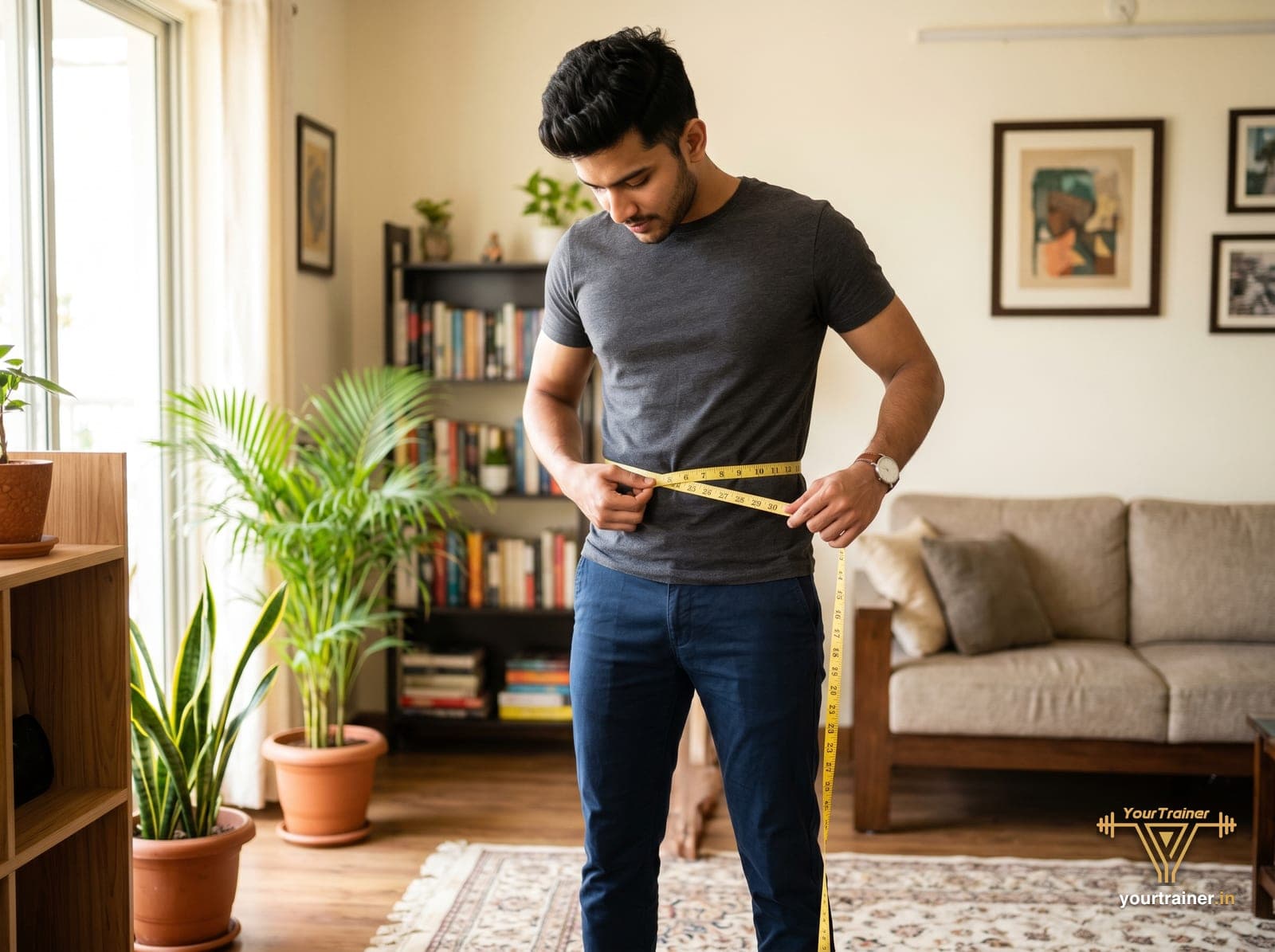
What it is: BMI is an incomplete metric for South Asians because we tend to carry more visceral fat (deep abdominal fat around organs) at lower BMI. A DEXA scan measures bone density, muscle, and fat; waist-to-height ratio (waist circumference in inches ÷ height in inches) is a simple, validated marker of metabolic health.
Why it matters: You can be a normal BMI (22–24) but carry 35% body fat with high visceral fat, a profile common in sedentary South Asians and a strong predictor of diabetes and heart disease. DEXA reveals fat distribution; waist-to-height ratio flags metabolic risk quickly.
Target ranges:
- Body fat %: 18–25% for women (30s); 15–20% for men (30s)
- Visceral fat: <100 cm² is low-risk; >140 cm² is high-risk
- Waist-to-height ratio: <0.5 is optimal; 0.5–0.6 is acceptable; >0.6 is high-risk for cardiometabolic disease
How to act: High body fat and/or visceral fat requires resistance training (3–4x/week) to build muscle, plus a protein-rich diet and consistent sleep. A DEXA baseline at 30 allows you to track changes over a decade. See our body composition guide for detailed strategies.
Coaching that does this for you
Reading is step one. A coach turns it into a plan built around your body, food & schedule.
100% online · Indian meal plans · weekly progress reviews · daily WhatsApp support.
Start Your Journey →Two Functional Markers Worth Tracking
Blood Pressure
South Asians develop hypertension earlier and often with normal BMI. Target: <120/80 mm Hg. Elevated (>130/80) at age 30 is a red flag for future risk. Check annually, or more often if trending up.
VO2max (Aerobic Fitness)
A powerful predictor of longevity and cardiometabolic health. Can be measured via treadmill test or estimated from wearable devices. Target for 30-year-olds: 40+ mL/kg/min. Low VO2max (<35) indicates cardiovascular deconditioning and higher disease risk. See our VO2max guide for how to build aerobic capacity.
Screening Schedule: At-a-Glance Table
| Test | Why | Target / Normal | Frequency |
|---|---|---|---|
| Lp(a) | Inherited heart risk | <50 mg/dL | Once in 30s |
| ApoB & lipids | Cholesterol particle count | ApoB <80 mg/dL | Annually |
| Fasting insulin / HOMA-IR | Insulin resistance (prediabetes) | Insulin <12 mIU/L; HOMA-IR <1.9 | Annually or 6-mo if elevated |
| HbA1c & fasting glucose | Diabetes screening | HbA1c <5.7%; glucose <100 mg/dL | Annually |
| Vitamin D & B12 | Common South Asian deficiencies | D ≥30 ng/mL; B12 >400 pg/mL | Annually or every 2 years |
| Body composition (DEXA) / Waist-to-height | Visceral fat, lean mass tracking | W:H <0.5; fat% 18–25% (F), 15–20% (M) | Every 1–2 years |
| Blood pressure | Hypertension risk in South Asians | <120/80 mm Hg | Annually |
Next Steps: From Results to Action
Testing reveals risk; action fixes it. Here's the sequence:
- Get tested: Book with your PCP or a direct-to-consumer lab (Quest, LabCorp). Cost is typically $200–500 for the full panel.
- Review with your doctor: Bring results to your PCP. If abnormal, ask for referrals to a cardiologist or endocrinologist.
- Prioritize three habits:
- Training: 150 min/week moderate cardio + 3–4 sessions resistance training per week builds muscle, lowers insulin, and raises VO2max.
- Nutrition: Prioritize whole grains, legumes, vegetables, and lean protein. Minimize refined carbs and added sugars. If vegetarian, add B12 and iron-rich foods or supplements.
- Sleep: Aim for 7–9 hours nightly. Poor sleep drives insulin resistance and inflammation.
- Retest in 3–6 months: Most markers improve within weeks of consistent training and nutrition changes.
"Testing without action is like a weather forecast without an umbrella. You now know the risk, your job is to change the trajectory. For South Asians, lifestyle changes in your 30s can prevent disease for decades. The tests are your compass."
Coach Anish Agarwal
Why Your 30s Are the Time to Test
Your 30s are the inflection point. South Asian genetics load the gun; lifestyle choices pull the trigger, or prevent it. These 6 tests are not alarmist. They're intelligent preventive medicine tailored to your ancestry and risk profile. Get tested, understand your numbers, and act. Training, nutrition, and sleep are your most powerful tools. Early intervention, before you feel sick, can add decades of vitality.
Ready to take control of your health? Start Your Journey with a personalized assessment and a plan designed for your cardiometabolic profile.
Related reading from YourTrainer
- Lp(a): The Genetic Heart Risk South Asians Ignore
- Fasting Insulin & HOMA-IR: Catch Insulin Resistance Early
- VO2max: The Longevity Metric Every Indian Professional Needs
Sources
- High prevalence of metabolic obesity in India: the ICMR-INDIAB national study · Indian Journal of Medical Research
- Appropriate body-mass index for Asian populations and its implications for policy and intervention strategies · WHO Expert Consultation, The Lancet (2004)
- Healthy diet · World Health Organization
Figures for Indian foods follow IFCT 2017 (ICMR-NIN). Coaching guidance on this site is educational and is not a substitute for medical advice. See how we use sources.
Did you find this helpful?

About Anish Agarwal
Founder & Head Coach, YourTrainer · NASM & K11 Certified Personal Trainer · coaching since 2022
Featured in Dietitians.io, Fitness Interview, NRI Pulse. Press and media
Anish Agarwal is a NASM and K11 certified personal trainer coaching fat loss, body transformation, strength, and nutrition for clients across India since 2022. He founded YourTrainer to make expert, science-based coaching accessible online and in Bengaluru. Coach Anish's profile and the YourTrainer story.
Online 1-on-1 Coaching
Start Your Journey
Get a personalised training + Indian nutrition plan built around your goal, coached online, anywhere in India or abroad.
Trusted by 1,000+ clients coached across India & abroad
Free 30-min discovery call · No obligation