Vitamin D Deficiency in Indians & NRIs: Why, Symptoms & How to Fix
Why 60% of Indians are vitamin D deficient, symptoms, testing, dosing, and how it's wrecking your strength and immunity.
The Hidden Epidemic: Why 60% of Indians Are Vitamin D Deficient
You wake up exhausted despite 8 hours of sleep. Your muscles ache after workouts for 5–7 days. You catch every cold going around the office. Your mood is flat, hair is thinning, and despite months of strength training, your lifts have stalled.
You're probably vitamin D deficient. Up to 60–80% of Indians and Indian-Americans are deficient in vitamin D, even those living in the US with regular sun access. The deficiency silently erodes muscle strength, immunity, mood, and recovery, yet most of us never get tested.
This isn't a niche problem. Vitamin D deficiency is the most common micronutrient gap in South Asians worldwide, and it's costing you strength gains, athletic recovery, immune resilience, and testosterone production.
Why Indians and NRIs Are at Extreme Risk
Vitamin D deficiency in South Asians isn't bad luck, it's a perfect storm of biology, geography, diet, and lifestyle:
1. Darker Skin Requires More Sun
Melanin in darker skin is a natural sunscreen. While this is protective against skin cancer, it also blocks the UVB radiation needed to synthesize vitamin D in the skin. Research from the NIH and Endocrine Society shows that people with darker skin produce vitamin D at 3–6 times slower rates than those with fair skin, even with identical sun exposure.
An Indian with medium-to-dark skin living in sunny Bangalore still needs 20–30 minutes of direct midday sun daily (arms and legs exposed) to meet baseline vitamin D needs. Most office workers get 5–10 minutes of indirect, filtered sun, far below threshold.
2. Northern US Winters & Geographic Latitude
If you're an NRI in the northern US (Boston, Chicago, New York, Seattle, Minnesota), your skin cannot synthesize vitamin D from November through March. The sun angle is too low, and UVB photons don't penetrate the atmosphere at those latitudes during winter. Even in spring and fall, synthesis is minimal.
A 2023 study published in Nutrients (NIH source) found that 71% of Indian-Americans in the Northeast are deficient during winter months, compared to 40% year-round in the South.
3. Indoor Tech/Desk Life
Vitamin D synthesis requires direct, unfiltered sunlight on exposed skin. Window glass blocks UVB radiation. Office workers, developers, and remote-work professionals (common among NRIs in tech) spend 8–10 hours indoors, with minimal skin exposure. Even lunch breaks at your desk don't count.
4. Vegetarian & Vegan Diets
Vitamin D is naturally abundant in fatty fish (salmon, mackerel, sardines), fish oils, egg yolks, and organ meats. Most Indian vegetarian diets include eggs and dairy, but in quantities insufficient to meet needs. A single large egg yolk provides ~44 IU of vitamin D. You'd need 34 eggs per day to meet the recommended 1,500 IU daily intake, clearly impractical.
Fortified plant-based milks often contain only 100 IU per serving (8 oz), requiring 15 servings daily. Mushrooms exposed to sunlight can provide vitamin D, but most store-bought varieties are grown in darkness and contain negligible amounts.
5. Sunscreen and Clothing
SPF 30+ sunscreen (recommended for skin cancer prevention) reduces vitamin D synthesis by 95–99%. While sun protection is essential, it creates a trade-off. Additionally, cultural clothing preferences (long sleeves, covered arms/legs) further reduce skin exposure.
The Real Symptoms You Shouldn't Ignore
Vitamin D deficiency doesn't announce itself with a single dramatic symptom. Instead, it creates a constellation of vague complaints that are often misattributed to stress, aging, or poor diet:
- Persistent fatigue and low energy: Despite adequate sleep, you feel drained. Vitamin D receptors are found in muscle and brain tissue; deficiency impairs ATP (energy) production at the cellular level.
- Muscle weakness and achy joints: Your muscles feel weaker than they should, especially in legs and lower back. You may have generalized body aches, particularly in the morning.
- Slow workout recovery: Soreness extends 5–7+ days after training. Strength gains plateau despite consistent effort. This is a hallmark of vitamin D deficiency combined with low magnesium.
- Frequent infections and prolonged illness: You catch colds, sinus infections, and seasonal flu more often than peers. Vitamin D is crucial for innate immune function; deficiency increases infection risk by 40–50%.
- Mood disturbances and seasonal depression: Vitamin D deficiency is linked to depression, anxiety, and seasonal affective disorder (SAD). If you feel "blah" or unmotivated, especially in winter, test your vitamin D.
- Hair loss: Vitamin D is essential for hair follicle cycling. Deficiency can trigger or worsen telogen effluvium (diffuse hair shedding).
- Bone pain and stress fractures: Chronic deficiency impairs calcium absorption, weakening bones. Athletes may experience stress fractures or slow bone healing.
- Low mood and brain fog: Vitamin D influences serotonin and dopamine. Deficiency correlates with poor focus, memory, and motivation, often mistaken for burnout.
If three or more of these resonate with you, a 25-OH-D blood test is urgent.
How Vitamin D Deficiency Wrecks Strength, Energy, and Testosterone
For athletes and strength trainers, vitamin D deficiency is a silent performance killer:
Muscle Protein Synthesis & Strength
Vitamin D regulates calcium handling in muscle cells and enhances the expression of proteins needed for contraction. A 2021 meta-analysis in Sports Medicine found that deficient individuals have 20–30% lower maximum voluntary muscle strength and slower force development. Even moderate deficiency (20–29 ng/mL) reduces strength by 10–15%.
This means your bench press, squats, and deadlifts plateau not because your program is wrong, but because your muscle cells lack the biochemical machinery to adapt.
Post-Workout Recovery
Recovery depends on reducing inflammation and rebuilding muscle. Vitamin D is a potent anti-inflammatory; deficiency causes a pro-inflammatory state. Research shows deficient athletes experience:
- Delayed muscle protein synthesis (recovery takes 1.5× longer)
- Elevated systemic inflammation markers (IL-6, TNF-α) 24–72 hours post-workout
- Impaired glycogen resynthesis (slower energy replenishment)
Testosterone & Hormonal Health
Vitamin D is technically a hormone, and it modulates testosterone production in the testes. Studies show that men with vitamin D levels below 20 ng/mL have 25–30% lower testosterone than those above 40 ng/mL. This affects:
- Muscle mass and recovery
- Libido and sexual function
- Mood and motivation
- Bone density
Immunity & Infection Risk
Vitamin D activates T-cells and macrophages, your frontline immune defenders. Deficiency increases susceptibility to respiratory infections, colds, flu, and even COVID-19 severity. Studies show deficient individuals have 40–50% higher infection risk and longer illness duration.
For anyone training hard, frequent infections undermine recovery and compound fatigue.
Testing: The 25-OH-D Blood Test and Optimal Ranges
The only way to know your vitamin D status is a blood test for 25-hydroxyvitamin D (25-OH-D), measured in nanograms per milliliter (ng/mL) in the US.
Request this test from your PCP (primary care doctor) or order directly online via Quest Diagnostics, LabCorp, or Ulta Lab Tests. Cost is typically $20–50.
| Vitamin D Status | 25-OH-D Level (ng/mL) | Clinical Significance |
|---|---|---|
| Severe Deficiency | < 12 | Risk of rickets, osteomalacia; medical intervention required |
| Deficiency | 12–19 | Impaired bone health, muscle weakness, infection risk; supplementation needed |
| Insufficient | 20–29 | Below optimal; weakness, slow recovery; supplementation recommended |
| Sufficient | 30–49 | Adequate for bone health; 40+ recommended for athletes |
| Optimal (Athletic) | 40–60 | Ideal for strength, immunity, mood, recovery |
| High/Excessive | > 100 | Rare from sun/food; typically from supplementation; risk of hypercalcemia |
Source: Endocrine Society Clinical Practice Guidelines; NIH Office of Dietary Supplements
Interpretation: Most Indians test between 12–25 ng/mL. If you're below 30 ng/mL, supplementation is warranted. For strength athletes and those in northern climates, 40–60 ng/mL is optimal.
How to Fix Vitamin D Deficiency: The Three-Pronged Approach
1. Sunlight: Dose and Safety
Sunlight is the most efficient vitamin D source. Here's the practical approach:
- Timing: 10:00 AM – 3:00 PM (peak UVB angle)
- Duration: 20–30 minutes per day, 3–5 days per week (arms and legs exposed)
- Latitude consideration: In the northern US (Boston, Chicago, Seattle), winter sun (November–March) is insufficient; supplementation is mandatory
- Skin tone adjustment: Darker skin requires 2–3× longer exposure. Aim for 30–45 minutes in summer, 60+ minutes (impossible) in winter
- Practical reality: Most office workers get 5–10 minutes incidental sun. Intentional time outdoors (lunch break walk, morning commute) is essential
Note: Sunscreen blocks vitamin D synthesis. If you use SPF 30+, you'll synthesize minimal vitamin D. Aim for unprotected sun early/late in the day when UV intensity is lower, or use sunscreen and rely on supplementation.
2. Vitamin D3 Supplementation: Dosing Guidelines
Medical Disclaimer: The following are general guidelines from the Endocrine Society and NIH. Consult your doctor for personalized dosing based on your current 25-OH-D level, age, weight, and health conditions.
Maintenance (if 25-OH-D is ≥ 30 ng/mL):
- 1,500–2,000 IU daily for adults
- Higher latitude (northern US): 2,000–3,000 IU daily
- Darker skin tone: 2,000–4,000 IU daily
Deficiency Correction (if 25-OH-D is < 30 ng/mL):
- 6,000–10,000 IU daily for 8–12 weeks, followed by maintenance dosing
- Some physicians use 50,000 IU weekly for 6–8 weeks (prescription high-dose D2 or D3)
- Retest at 8–12 weeks to confirm response and adjust maintenance dose
Supplement Selection:
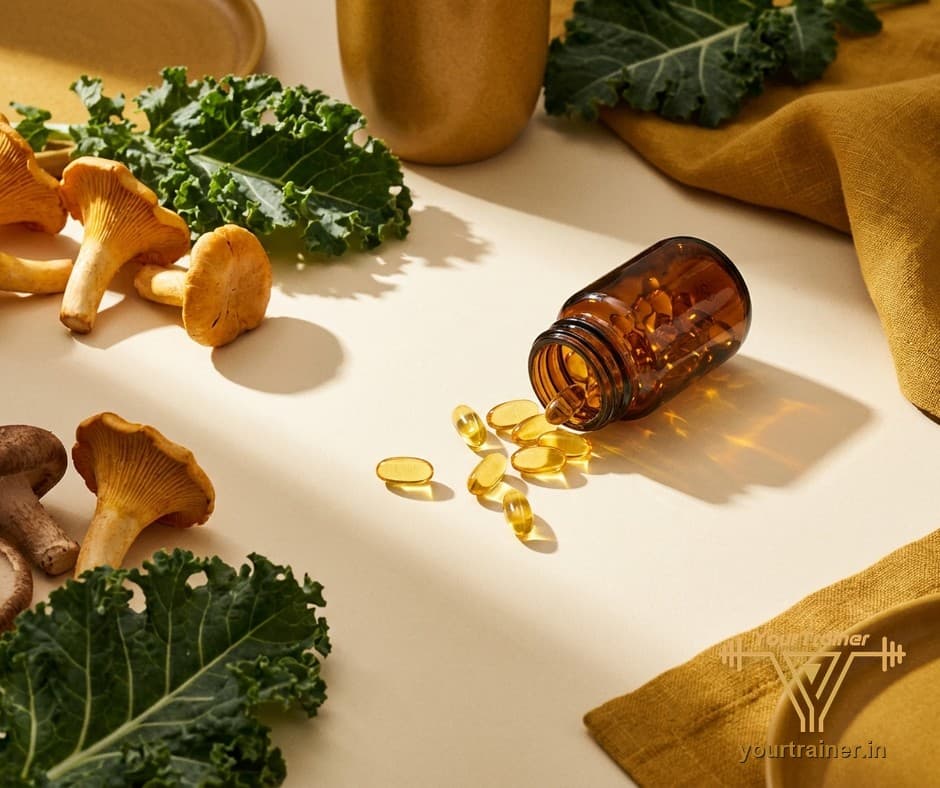
- D3 (cholecalciferol) > D2 (ergocalciferol). D3 is more bioavailable and raises blood levels faster
- Form: Soft gels, tablets, liquids are equivalent; liquids absorb slightly faster
- Vegan sources: Lichen-derived D3 (Vegetarian/vegan); animal sources use lanolin (sheep wool)
- Recommended brands: Thorne, Pure Encapsulations, Nature Made (verified third-party tested)
3. Vitamin D Cofactors: K2, Magnesium, and Calcium
Vitamin D alone is insufficient. It requires synergistic nutrients:
Vitamin K2 (Menaquinone)
Vitamin D increases calcium absorption, but K2 directs it to bones and teeth (not arteries or soft tissue). K2 is essential for cardiovascular and bone health.
- Dose: 90–180 mcg daily (MK-7 form is superior to MK-4)
- Food sources: Fermented foods (sauerkraut, tempeh), natto, hard cheeses, grass-fed butter
Magnesium
Magnesium is required for vitamin D metabolism and muscle recovery. Deficiency (common in Indians) compounds vitamin D's benefits.
- Dose: 300–400 mg daily (glycinate or malate form for absorption; citrate for digestion)
- Food sources: Spinach, pumpkin seeds, almonds, dark chocolate, chickpeas
Calcium
Vitamin D enhances calcium absorption. If deficient in both, bone health suffers.
- Dose: 1,000–1,200 mg daily (split into 500 mg doses for absorption)
- Food sources: Dairy, fortified plant milks, leafy greens, tahini, tofu
For athletes: A combined D3 + K2 + magnesium supplement taken with a meal (fat aids absorption) is ideal for muscle recovery, bone density, and training performance. Timing: Take with breakfast or post-workout meal.
Vitamin D Food Sources: Emphasis on Vegetarian Options
While supplementation is usually necessary, these foods contribute meaningfully:
| Food Source | Serving Size | Vitamin D Content | Notes |
|---|---|---|---|
| Salmon (cooked) | 3 oz (85g) | 447 IU | Non-vegetarian; highest bioavailable source |
| Mackerel (cooked) | 3 oz (85g) | 388 IU | Non-vegetarian; affordable |
| Egg yolk (large, cooked) | 1 yolk | 44 IU | Vegetarian; requires 34 eggs/day to meet 1,500 IU |
| Fortified milk (any type) | 8 oz (240 mL) | 100–144 IU | Vegetarian; requires 10–15 servings/day |
| Fortified plant-based milk | 8 oz (240 mL) | 80–100 IU | Vegan-friendly; lower than dairy; inconsistent across brands |
| Mushrooms (exposed to sunlight) | 1 cup raw | 100–600 IU* | Vegetarian/vegan; only if sun-dried; store-grown = negligible; try dried shiitake |
| Cheese (most varieties) | 1 oz (28g) | 12–31 IU | Vegetarian; minimal contribution |
| Yogurt (fortified) | 6 oz (170g) | 80–100 IU | Vegetarian; varies by brand |
*Note: Mushroom vitamin D varies dramatically by growing method. Most supermarket mushrooms contain < 10 IU. Ask producers whether mushrooms were sun-exposed or UV-treated.
Bottom line for vegetarians: Food sources alone cannot meet 1,500+ IU daily needs. Supplementation is essential.
Vitamin D and Strength Training: The Performance Link
For athletes, the vitamin D-to-performance connection is direct:
- Muscle contractility: Vitamin D regulates calcium in muscle fibers. Deficiency reduces force production by 20–30%.
- Recovery speed: Post-workout inflammation resolution is 1.5× slower in deficient individuals.
- Testosterone: Deficiency correlates with 25–30% lower testosterone, reducing muscle-building potential.
- Injury risk: Weak bones and muscles increase injury likelihood. Stress fractures and muscle strains are more common in deficient athletes.
- Mood and motivation: Low vitamin D worsens mood and motivation, reducing training consistency.
Correcting vitamin D (to 40–60 ng/mL) in previously deficient athletes results in:
- +15–20% increase in muscle strength (3–6 weeks)
- +30% faster recovery (soreness resolves 2–3 days earlier)
- +10–15% improvement in power and jump height
- Improved mood, focus, and training consistency
Related Micronutrient Gaps in Indians
Vitamin D deficiency rarely occurs in isolation. Many Indians also have low vitamin B12, magnesium, iron, and calcium. Read our detailed guide on B12 deficiency in vegetarians and magnesium deficiency for muscle recovery.
If you're deficient in vitamin D, test B12 and magnesium simultaneously. Many physicians order a comprehensive micronutrient panel covering D, B12, B6, folate, iron, magnesium, and calcium in one draw.
Seasonal Strategy for NRIs
If you live in the northern US or cold climate, adopt a seasonal approach:
Summer (May–September)
- 20–30 minutes sun daily, 3–5× per week (unprotected arms/legs)
- Maintain 1,500 IU daily supplementation (sun reduces but doesn't eliminate need)
- Target 25-OH-D of 40–60 ng/mL by fall
Winter (November–March)
- Zero vitamin D synthesis from sunlight (too-low UV angle)
- Increase supplementation to 3,000–4,000 IU daily
- Test 25-OH-D in late February (before spring), expect 10–20 ng/mL drop from summer levels
- Consider light therapy (10K lux lamp, 20–30 min AM) for mood support
Implementation: Your Vitamin D Correction Protocol
Week 1: Order a 25-OH-D test (Quest Diagnostics, LabCorp, or ask your PCP)
Week 2–3: Receive results. If < 30 ng/mL, begin correction dosing (see dosing section above)
Week 3 onward:
- Start D3 6,000–10,000 IU daily (or 50,000 IU weekly if prescribed)
- Add magnesium glycinate 300–400 mg daily (evening, aids sleep)
- Add K2 (MK-7) 90–180 mcg daily (morning, with food)
- Increase outdoor time to 30+ minutes daily (lunch break, morning walk)
- Ensure calcium intake: 1,000–1,200 mg daily (dairy, fortified plant milks, leafy greens)
Week 8–12: Retest 25-OH-D. If ≥ 30 ng/mL, transition to maintenance dosing (1,500–2,000 IU daily)
Ongoing: Retest annually (or semi-annually if northern latitude)
Related reading from YourTrainer
- The Indian-American Health Checkup: 6 Essential Tests in Your 30s
- Sarcopenia: Why Indians Lose Muscle Faster (& How to Reverse It)
- Zone 2 Cardio for NRI Professionals: The Fat-Loss Base You're Missing
- Zero Steps by Dinner: The Desk-Job Problem Nobody Warned NRIs About
Sources
- High prevalence of metabolic obesity in India: the ICMR-INDIAB national study · Indian Journal of Medical Research
- Appropriate body-mass index for Asian populations and its implications for policy and intervention strategies · WHO Expert Consultation, The Lancet (2004)
- Healthy diet · World Health Organization
Figures for Indian foods follow IFCT 2017 (ICMR-NIN). Coaching guidance on this site is educational and is not a substitute for medical advice. See how we use sources.
Did you find this helpful?

About Anish Agarwal
Founder & Head Coach, YourTrainer · NASM & K11 Certified Personal Trainer · coaching since 2022
Featured in Dietitians.io, Fitness Interview, NRI Pulse. Press and media
Anish Agarwal is a NASM and K11 certified personal trainer coaching fat loss, body transformation, strength, and nutrition for clients across India since 2022. He founded YourTrainer to make expert, science-based coaching accessible online and in Bengaluru. Coach Anish's profile and the YourTrainer story.
Online 1-on-1 Coaching
Start Your Journey
Get a personalised training + Indian nutrition plan built around your goal, coached online, anywhere in India or abroad.
Trusted by 1,000+ clients coached across India & abroad
Free 30-min discovery call · No obligation