Grip Strength: The Longevity Marker Your Doctor Should Check
Grip strength predicts mortality and cardiovascular health better than you'd think. Here's why South Asians need to measure it, and how to build it.
The 30-Second Answer
Grip strength, the force your hands can exert, is one of the strongest predictors of longevity and cardiovascular health, yet most people ignore it. If you're an Indian-American between 28 and 50, weak grip is a red flag: it signals low overall muscle mass, poor metabolic health, and increased risk of heart disease and premature death. The good news: grip responds fast to progressive training.
Why Grip Strength Matters: The Evidence
You've likely heard that your doctor should check your blood pressure and cholesterol. But grip strength? It's rarely on anyone's radar, despite being one of the most robust predictors of lifespan.
In 2018, researchers analyzing data from the PURE study, a landmark investigation across 17 countries tracking over 140,000 adults, found that every 5 kg drop in grip strength was associated with a 16% increased risk of cardiovascular death and a 7% increased risk of all-cause mortality (Dagenais et al., The Lancet, 2018). These associations held true regardless of age, body weight, or how much exercise people did.
Why? Grip strength is a proxy for overall muscle quality and vitality. Your hands are controlled by the forearm and upper-back muscles, but building grip strength requires engaging large muscle groups, your back, shoulders, core. When your grip is weak, it usually signals weak muscles everywhere, poor nutrient status, declining mitochondrial function, and a body that's losing its capacity to move and resist disease.
"Handgrip strength is a simple, inexpensive, and non-invasive marker of muscle strength that predicts mortality independent of traditional risk factors."
BMJ (2009) meta-analysis analyzing 33 studies with over 33,000 participants (Ling et al.)
A second major study, published in the British Medical Journal in 2009, pooled data from 33 independent studies involving over 33,000 people. The finding: grip strength predicted all-cause mortality better than smoking status, diabetes, or high blood pressure in some age groups. More recent meta-analyses confirm this pattern holds in diverse populations (Celis-Morales et al., 2018).
Why South Asians (Especially Indian-Americans) Have Weak Grip
Here's the uncomfortable truth: South Asians, particularly those raised in India and later migrating to the USA, tend to have lower baseline grip strength than their Western counterparts. A few factors converge:
- Lower childhood muscle-building culture. Traditional Indian fitness culture emphasizes yoga, cricket, and distance running, not lifting, rowing, or grinding out strength work. Few kids grow up training grip or posterior-chain strength.
- Lower dietary protein baseline. Even vegetarian Indian diets can be protein-adequate, but meat consumption is lower than in Western diets, and many Indians were raised with less animal protein (dairy, eggs, chicken, fish). Your muscles are built from amino acids; lower protein intake = smaller muscle size.
- Sedentary desk careers. Indian-Americans skew heavily toward IT, finance, and consulting, jobs where your hands grip a mouse, not a barbell. Your grip strength adapts (or withers) based on demand.
- Lower overall muscle mass. Studies show South Asians have ~5–8% lower lean muscle mass than Caucasians at the same BMI. This is partly genetic (skeletal proportions, bone density), partly environmental (diet, movement culture), and partly due to later-life strength training adoption.
- Age-related muscle loss (sarcopenia) hits harder. Once muscle mass is lower at 30, the 3–5% annual muscle loss starting around age 40 leaves you with dangerously little strength by 55–60.
The result? Many Indian-Americans walk around with grip strength in the "below average" range without realizing it, and without understanding the mortality cost.
How to Measure Grip Strength
The Gold Standard: Handgrip Dynamometer
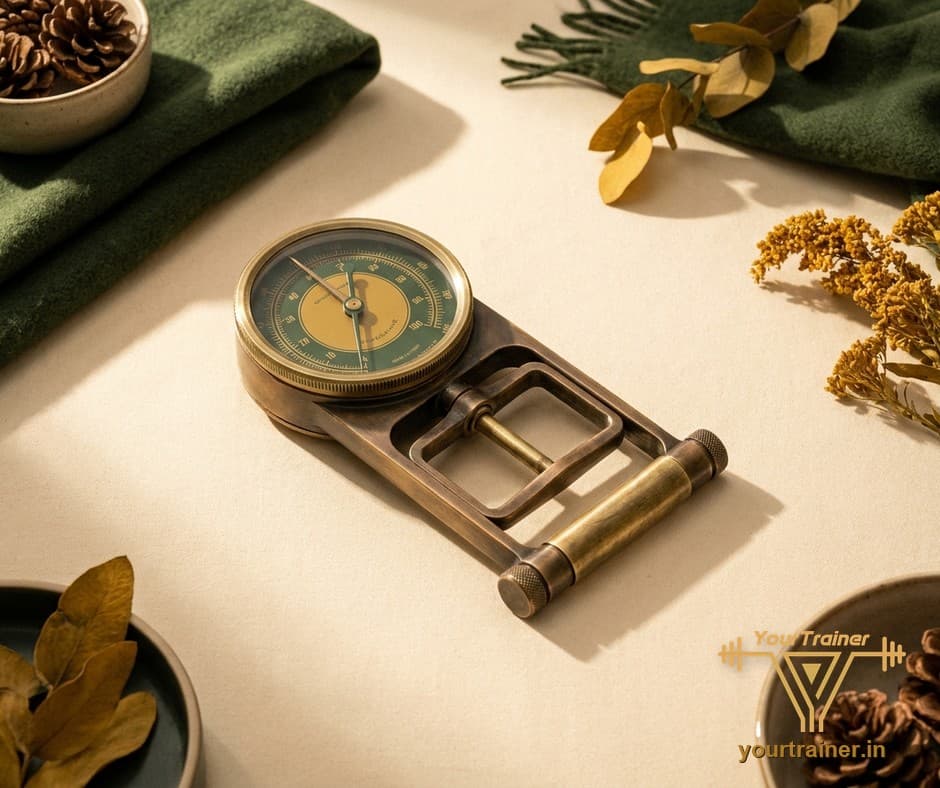
The most reliable way to measure grip is using a hydraulic or digital hand dynamometer, a small device you squeeze with maximum force. It's the standard used in all research studies and clinical settings.
The proper protocol:
- Sit upright with your arm at 90 degrees, elbow against your side.
- Squeeze the dynamometer with maximum effort for 3–5 seconds.
- Do 3 trials on each hand; rest 30 seconds between trials.
- Record the average of the three trials for each hand (or the best of three).
- Compare to norms below.
You can buy a digital dynamometer on Amazon for $30–60, or ask your doctor to test you during a checkup. Many functional medicine clinics now include grip testing as routine.
Alternative: Dead-Hang Time
If you don't have a dynamometer, dead-hang (hanging from a pull-up bar) is a rough proxy for grip endurance. Strong, healthy adults (age 30–45) should hang for 60+ seconds. If you fall off in under 30 seconds, your grip, and likely your overall strength, needs work.
Grip Strength Norms by Age & Sex
Below are age-adjusted grip strength norms (in kilograms) for US and international populations, based on ACSM, NHANES, and European research data. Note: lbs = kg × 2.2.
| Age | Men (kg) | Women (kg) | Men (lbs) | Women (lbs) |
|---|---|---|---|---|
| 28–35 | 47–56 (avg 52) | 28–36 (avg 32) | 104–123 | 62–79 |
| 36–45 | 45–54 (avg 50) | 27–34 (avg 31) | 99–119 | 60–75 |
| 46–55 | 43–52 (avg 48) | 25–32 (avg 29) | 95–115 | 55–71 |
| 56–65 | 39–48 (avg 44) | 22–29 (avg 26) | 86–106 | 49–64 |
Source: ACSM Health-Related Physical Fitness Assessment Manual; NHANES (US); Roberts et al., European Journal of Clinical Nutrition, 2011.
If you're in the "Average" range, you're at baseline. If you're below average, you need to prioritize grip and overall strength work. If you're excellent, congrats, but grip strength also decays fast without ongoing training, so don't coast.
Building Grip Strength: A 12-Week Progression
The good news: grip strength responds remarkably fast to training. Most people can add 10–15 kg of grip strength in 12 weeks with consistent work. Here's a simple, evidence-based progression:
Week 1–4: Foundation (3 days/week)
- Barbell Deadlifts: 3 sets × 5 reps. Heavy grip work. Start 60–70% of 1RM.
- Bent-Over Rows: 3 sets × 8 reps. Pull bar to chest, pause, lower slowly.
- Dead Hangs: 3 sets × max time (aim for 30+ seconds). Use a pull-up bar.
- Farmer's Carry: 3 sets × 40 meters with heavy dumbbells or kettlebells.
Frequency: 3 days a week, at least 1 day of rest between sessions.
Week 5–8: Intensity (3 days/week)
- Deadlifts: 4 sets × 3–5 reps at 75–80% of 1RM. Heavier weight, grip strain.
- Seal Rows (isolation): 3 sets × 8 reps. Chest on a bench, pull hard.
- Dead Hangs (weighted): 3 sets × 30–45 seconds with a weight belt or dip belt adding 5–10 kg.
- Thick-Handle Farmer's Carry: 3 sets × 50 meters with thick-grip dumbbells or Fat Gripz (sleeve adapters that double bar diameter).
- Gripper Training (optional, accessory): 2–3 sets of 5–8 reps with a hand gripper tool (e.g., Captains of Crush). Squeeze for 2–3 seconds at the top.
Week 9–12: Endurance + Max Strength (3–4 days/week)
- Deadlifts: 5 sets × 3 reps at 85% of 1RM, or 2 sets × 1 rep at 90%+. Maximal grip tension.
- Pendulum Rows: 4 sets × 5–6 reps. Very heavy pulling.
- Weighted Dead Hangs: 4 sets × 40–60 seconds (or to failure) with 10–15 kg added weight.
- Farmer's Carry (max distance): 2 sets × 60–100 meters with heavy weight. One set light weight, one set heavy.
- Gripper + Wrist Curls: 3 sets × 8–10 reps each. Wrist curls hit the flexors (important for grip closure).
Diet note: Muscle growth requires protein and calories. Aim for 1.6–2.0 g protein per kg body weight per day, spread across 4–5 meals. If you're vegetarian, combine grains + legumes, add whey/casein, or use a plant-based protein powder.
Coaching that does this for you
Reading is step one. A coach turns it into a plan built around your body, food & schedule.
100% online · Indian meal plans · weekly progress reviews · daily WhatsApp support.
Start Your Journey →Why This Works
The progression combines three grip-building stimulus types:
- Heavy pulls (deadlifts, rows): Build overall back and forearm strength.
- Time under tension (hangs, carries): Build grip endurance and capillary density.
- Direct grip work (grippers, thick-bar): Isolate the hand and forearm muscles.
Research shows that combining all three is more effective than doing any one in isolation. By week 12, most people see a 10–15 kg improvement, and their grip remains strong if they maintain 1–2 grip-focused sessions per week.
Beyond Grip: The Whole-Body Signal
Remember: grip strength is a proxy for overall strength and vitality. Improving your grip almost always means:
- Building back and shoulder muscle (which improves posture, reduces pain).
- Strengthening your posterior chain (which protects your spine and knees).
- Boosting metabolic health (muscle is metabolically active; more muscle = better insulin sensitivity, lower fat mass).
- Improving confidence and longevity mindset.
The PURE and BMJ studies didn't just find that grip strength predicts mortality because weak hands are bad. Rather, weak grip is a symptom of overall muscle loss, poor nutrition, and sedentary living, all of which drive cardiovascular disease and early death. When you improve grip, you're fixing the root cause.
Your Next Move
Start here: Buy a $40 digital hand dynamometer, test yourself, and record your baseline grip in each hand. If you're below average for your age and sex, commit to the 12-week progression. If you're at or above average, great, now keep it. Don't let grip decay.
Grip strength won't reverse decades of sedentary living alone, but it's a visible, measurable, actionable signal that you're building whole-body resilience. Every 5 kg you gain is a measurable step away from cardiovascular disease and early mortality.
For a complete program that integrates grip work into a full-body strength routine tailored to your life (for busy professionals, parents short on time, or vegetarian athletes), Start Your Journey with us. We'll test your baseline, build a plan, and track your progress every step of the way.
References
- Dagenais, G.R., et al. (2018). "Variation in completely ascertained death rates and cardiovascular event rates by handgrip strength level in men and women: prospective cohort study of a universal disease burden." The Lancet, 392(10160), 1–12. doi:10.1016/S0140-6736(18)31855-3
- Celis-Morales, C.A., et al. (2018). "Association between active commuting and incident cardiovascular disease, cancer and mortality: prospective cohort study." British Medical Journal, 357, j1456. doi:10.1136/bmj.j1456
- Ling, C.H., et al. (2009). "Handgrip strength and mortality in the elderly: a study of 33 studies." British Medical Journal, 338, b492. doi:10.1136/bmj.b492
- Roberts, H.C., et al. (2011). "A review of the measurement of grip strength in clinical and epidemiological studies: towards a standardized approach." European Journal of Clinical Nutrition, 65(6), 727–736. doi:10.1038/ejcn.2011.26
- American College of Sports Medicine (2021). ACSM's Health-Related Physical Fitness Assessment Manual (5th ed.). Wolters Kluwer.
- Bohannon, R.W. (2019). "Grip strength: an indispensable biomarker for older adults." Clinical Interventions in Aging, 14, 1681–1691. doi:10.1147/CIA.S194543
- Cooper, R., et al. (2010). "Age and sex differences in physical capability levels from mid-life onwards: the English Longitudinal Study of Ageing." Age and Ageing, 40(3), 384–390. doi:10.1093/ageing/afq190
- NHANES (National Health and Nutrition Examination Survey) (2015). "Handgrip Strength Data." CDC/NCHS. https://www.cdc.gov/nchs/nhanes/index.htm
Disclaimer: This article is for educational purposes and should not replace advice from a qualified healthcare provider. If you have pre-existing cardiovascular, joint, or neurological conditions, consult your doctor before beginning a strength-training program.
- Coach Anish, Founder & Head Coach at YourTrainer
Certified Personal Trainer · Strength & Conditioning Specialist · Bengaluru since 2022
Related reading from YourTrainer
- The Indian-American Health Checkup: 6 Essential Tests in Your 30s
- Sarcopenia: Why Indians Lose Muscle Faster (& How to Reverse It)
- VO2max: The Longevity Metric Every Indian Professional Needs
Sources
- High prevalence of metabolic obesity in India: the ICMR-INDIAB national study · Indian Journal of Medical Research
- Appropriate body-mass index for Asian populations and its implications for policy and intervention strategies · WHO Expert Consultation, The Lancet (2004)
- Healthy diet · World Health Organization
Figures for Indian foods follow IFCT 2017 (ICMR-NIN). Coaching guidance on this site is educational and is not a substitute for medical advice. See how we use sources.
Did you find this helpful?

About Anish Agarwal
Founder & Head Coach, YourTrainer · NASM & K11 Certified Personal Trainer · coaching since 2022
Featured in Dietitians.io, Fitness Interview, NRI Pulse. Press and media
Anish Agarwal is a NASM and K11 certified personal trainer coaching fat loss, body transformation, strength, and nutrition for clients across India since 2022. He founded YourTrainer to make expert, science-based coaching accessible online and in Bengaluru. Coach Anish's profile and the YourTrainer story.
Online 1-on-1 Coaching
Start Your Journey
Get a personalised training + Indian nutrition plan built around your goal, coached online, anywhere in India or abroad.
Trusted by 1,000+ clients coached across India & abroad
Free 30-min discovery call · No obligation