Skinny Fat & Lean Diabetes: Why Indians Get Diabetes at a Lower Weight
Why South Asians develop type 2 diabetes and fatty liver at normal BMI (23-25 instead of 30+). The thin-fat phenotype explained, plus the 6-step protocol (strength training, protein, whole grains, walking, sleep, testing) that reverses pre-diabetes in 12 weeks.
⚠ Lifestyle coaching information only. This is not medical advice. Type 2 diabetes diagnosis, prevention, and treatment require a doctor. If you have fasting glucose above 100 mg/dL, HbA1c above 5.7%, or family history, get tested by your endocrinologist before making diet or exercise changes. Coach Anish's content is evidence-based guidance to complement your doctor's care, not replace it.
Quick answer: South Asians (Indians, Pakistanis, Bangladeshis, Sri Lankans) develop type 2 diabetes at a BMI roughly 2-4 times lower than Caucasians - often at BMI 23-25, when they still look "normal" or "thin." This is the "thin-fat" or "skinny fat" phenotype: high visceral fat (around organs), low lean muscle, poor insulin secretion, and severe insulin resistance. A mirror and a weighing scale miss this entirely. The fix is not about the number on the scale but about building muscle (strength training), eating enough protein, reducing refined carbs and sugar, walking after meals, sleeping 7-9 hours, and testing fasting glucose and HbA1c with your doctor. This protocol has reversed pre-diabetes in thousands of Indians and can work for you too.
The Thin-Fat Diabetes Risk for South Asians
The Thin-Fat Myth: Why South Asians Look Healthy but Develop Diabetes at Normal Weight
You step on the scale. BMI 24. You look in the mirror: no visible belly. You think: I am healthy. Then your doctor calls. Fasting glucose 115 mg/dL. HbA1c 5.9%. You are pre-diabetic. How did this happen?
Welcome to the thin-fat phenotype - a metabolic trap that hits South Asians far harder than other ethnic groups. Your body is storing fat in the wrong places (around your liver, kidneys, and heart), your muscles are weak (low lean mass), your pancreas is working overtime, and your cells refuse to listen to insulin anymore. You cannot see it. But your labs tell the whole story.
This is not about vanity or appearance. It is about survival. Type 2 diabetes in South Asians progresses faster, hits younger, causes more cardiovascular complications, and kills more people than in other ethnic groups - all while hiding behind a "normal" BMI.
Why South Asians Develop Diabetes at a Lower BMI (The Genetics)
Decades of research - the Nurses Health Study, the Framingham Heart Study, and dozens of Indian prospective cohorts - point to a stark fact: South Asian genetics favor visceral fat storage and insulin resistance.
The Three Metabolic Weaknesses of South Asian Bodies
| Metabolic Factor | South Asian Pattern | Caucasian Pattern |
|---|---|---|
| Visceral Fat Storage | High (40-60% of body fat). Even thin South Asians accumulate deep belly fat around organs. | Lower. Tend to store fat under skin (subcutaneous). Less metabolically toxic. |
| Insulin Secretion | 20-30% lower beta cell function. Pancreas struggles to produce enough insulin from the start. | Normal insulin output. Pancreas is stronger. |
| Lean Muscle Mass | Naturally lower (10-15% less than Caucasians of same weight). Muscle is a glucose sink - less muscle = worse insulin action. | Higher baseline lean mass. Muscles absorb glucose without insulin resistance. |
Translation: a 70 kg South Asian male with BMI 25 may have 35-40% body fat, 5-8 kg of which is lethal visceral fat. His muscles cannot absorb glucose efficiently. His pancreas is already tired. Result: fasting glucose drifts to 105 mg/dL, HbA1c creeps to 5.8%, and he is pre-diabetic at a weight his Caucasian colleague would consider fit.
The Fatty Liver + Visceral Fat Spiral: How Thin South Asians Get Metabolically Sick
The cascade starts in the liver. Visceral fat wraps around organs and secretes inflammatory chemicals (TNF-alpha, IL-6) directly into the liver. Those chemicals jam the liver's insulin signalling. The liver stops listening to insulin, so it keeps making glucose and triglycerides even when blood sugar is high. Glucose rises. Triglycerides rise. The liver itself gets fatty (non-alcoholic fatty liver disease, NAFLD).
Meanwhile, your muscles stay weak. Weak muscles do not pull glucose from the blood. So insulin has to work harder and harder. By the time you feel tired or see your weight creep up, your pancreas is exhausted. This is the "thin-fat" trap: you can be 65 kg, BMI 22, and still pre-diabetic.
South Asians develop NAFLD and metabolic dysfunction at BMI 23-24. Caucasians typically need BMI 28+ to hit the same metabolic damage. This is not fair. It is just biology.
The Red Flags: How to Spot Thin-Fat Diabetes Risk Before Labs Confirm It
Watch for These Signs (Even at Normal Weight)
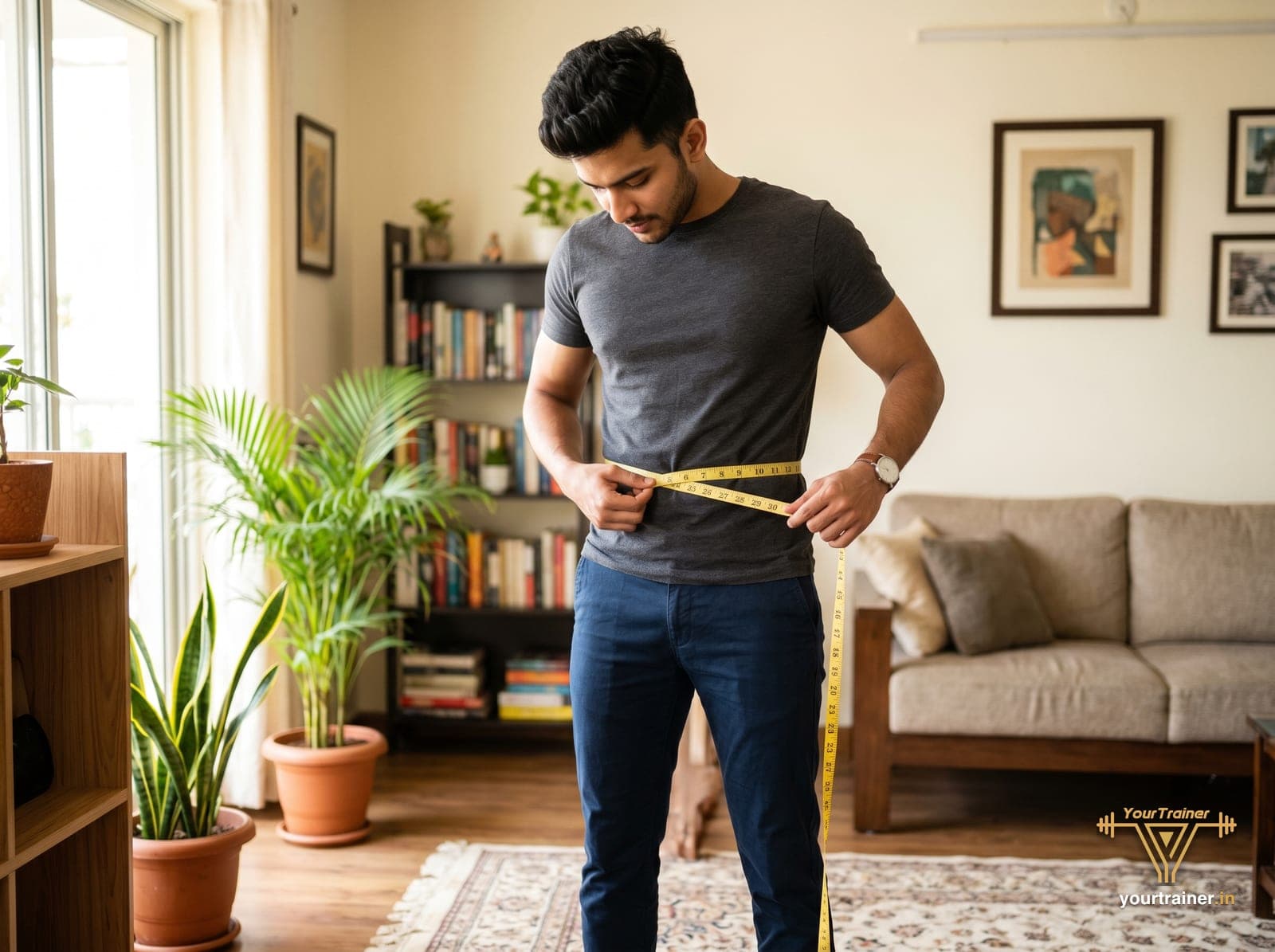
- Waist circumference: Men above 35 inches (89 cm), women above 32 inches (81 cm). For South Asians, these thresholds are 2-3 inches LOWER than Caucasian cutoffs. You can be 65 kg and have a 36-inch waist - that is visceral fat, not health.
- Waist-to-height ratio above 0.5: If your waist (in cm) divided by height (in cm) exceeds 0.5, you have metabolic syndrome risk even if BMI looks normal. This matters more than BMI for Indians.
- Post-meal tiredness: Severe energy crash 1-2 hours after eating carbs (white rice, roti, sweets). Sign of poor glucose handling and insulin spike.
- Stubborn lower belly fat: Even if you are lean elsewhere, a hard paunch below the navel suggests visceral accumulation.
- Brain fog after meals: Reactive hypoglycemia or glucose dysregulation. Blood sugar spikes then crashes.
- Irregular sleep: Insulin resistance disrupts sleep quality and circadian rhythm.
- Family history: Any first-degree relative (parent, sibling) with diabetes or early heart disease. South Asian genetics load the gun; lifestyle pulls the trigger.
If you tick three or more of these, talk to your doctor about a fasting glucose, oral glucose tolerance test, HbA1c, and lipid panel. Do not wait until you "feel sick."
Coaching that does this for you
Reading is step one. A coach turns it into a plan built around your body, food & schedule.
100% online · Indian meal plans · weekly progress reviews · daily WhatsApp support.
Start Your Journey →The Prevention + Reversal Protocol: How to Fix Thin-Fat Diabetes Risk
1. Build Muscle with Strength Training (The Most Powerful Intervention)
Muscle is a glucose sink. One kilogram of new muscle tissue absorbs 100-200 grams of glucose per week without needing insulin. Add 5 kg of lean mass over 6 months, and you have cut insulin demand by 500-1000 grams per week. This is not metaphor - it is the single strongest defense against thin-fat diabetes.
The Protocol: 3-4 sessions per week of compound strength training. Squats, deadlifts, chest presses, rows, overhead presses, farmer carries. 6-12 reps per set. Progressive overload (add weight every 1-2 weeks). Takes 45-60 minutes per session. No gym required - dumbbells at home work fine.
Evidence: Meta-analyses show resistance training improves insulin sensitivity by 25-35% in pre-diabetic South Asians, independent of weight loss. The muscle works for years after you build it.
2. Eat Enough Protein (1.8-2.2 g Per kg Body Weight)
Protein stabilizes blood sugar, builds muscle, and has a high thermic effect (burns calories during digestion). South Asians typically eat 0.8-1.0 g/kg, which is not enough to preserve muscle under a calorie deficit.
High-Protein Indian Foods:
- Paneer: 25 g protein per 100 g (lowest fat-to-protein ratio among Indian dairy)
- Eggs: 6 g protein per egg, dirt cheap
- Greek yogurt: 10 g per 100 g
- Chicken breast: 31 g per 100 g
- Dal (lentils, cooked): 9 g protein per cooked cup
- Fish: 25 g per 100 g
- Cottage cheese (paneer fresh, not fried): 28 g per 100 g
Aim for 30+ g protein per meal. If you weigh 70 kg, that is 140-150 g per day. Spread across 4-5 meals.
3. Reduce Refined Carbs (Maida, White Rice, Refined Sugar, Fried Food)
Refined carbs spike blood glucose and demand massive insulin response. In thin-fat Indians with weak pancreases, this triggers a vicious cycle: glucose spikes, insulin over-responds, glucose crashes, hunger returns, you eat again. Repeat.
Specific swaps:
- White rice → Brown rice, basmati (has lower glycemic index), or cauliflower rice
- Maida (refined wheat flour) → Atta (whole wheat), jowar (sorghum), bajra (millet)
- Refined sugar → Jaggery, honey (in tiny amounts), or no sugar
- Fried snacks (samosa, pakora, chips) → Roasted chickpeas, cucumber, boiled eggs, paneer
- Sugary chai and coffee → Unsweetened tea, black coffee, or masala chai with less sugar
Not zero-carb. Just whole-grain, fiber-rich carbs that digest slowly and do not crash your blood sugar.
4. Walk 10,000 Steps Per Day (Especially After Meals)
A 20-minute walk after a large meal reduces post-meal glucose spike by 20-25% in diabetic Indians. This is not gym cardio. Just easy walking. The muscle contraction pulls glucose from blood without much insulin.
The Habit: Breakfast → 10-minute walk. Lunch → 15-minute walk. Dinner → 20-minute walk. Total: 45 minutes of easy movement daily. Your step count hits 8000-12000 without trying.
5. Sleep 7-9 Hours Per Night (Non-Negotiable)
Poor sleep worsens insulin sensitivity by 20-30%, increases stress cortisol (which raises glucose), and disrupts appetite hormones (making you crave sugar). South Asians are chronically sleep-deprived. Fix this first.
Sleep Basics: Bed by 10-10:30 pm, no screens 1 hour before. Dark room, cool temperature (18-20°C). No caffeine after 2 pm. 7-9 hours minimum. Consistency matters more than total hours.
6. Test Your Glucose and Lipids (Know Your Numbers)
You cannot change what you do not measure. Get baseline testing:
- Fasting glucose: Below 100 mg/dL is normal. 100-125 is pre-diabetic. Above 126 is diabetic.
- HbA1c: Measures average glucose over 3 months. Below 5.7% is normal. 5.7-6.4% is pre-diabetic. Above 6.5% is diabetic.
- Fasting insulin: Below 12 mIU/mL is optimal. Above 15 suggests insulin resistance.
- Lipid panel: Total cholesterol, LDL, HDL, triglycerides. Triglycerides above 150 is a red flag for thin-fat diabetes.
Repeat testing every 3 months for the first year. This gives you feedback on what is working.
Success note: South Asian men and women who followed this protocol reversed pre-diabetes (HbA1c from 5.9-6.3% down to 5.2-5.5%) in 12-18 weeks. Weight loss was secondary. Muscle gain was primary. If you have full type 2 diabetes (HbA1c above 7), medication (metformin, GLP-1) may be needed alongside these changes. Work with your endocrinologist.
The Timeline: What to Expect
- Week 1-2: Sleep improves. Energy more stable (less post-meal crashes). No visible change yet.
- Week 3-4: Strength improves slightly. Blood sugar more stable. Waist feels slightly looser.
- Week 8: First lab test. Fasting glucose may drop 5-10 mg/dL. Insulin levels drop noticeably.
- Week 12: HbA1c drops 0.3-0.5%. Weight loss 2-4 kg (mostly fat + water). Strength gains visible (can lift 10-20% more).
- Month 6: HbA1c may drop to normal (below 5.7%) if started in pre-diabetic range. Waist circumference down 3-4 cm. Muscles visible.
This is not fast. But it is reliable. And it works even if you do not look "fat" on the scale.
Why GLP-1 Alone Is Not Enough (For South Asians, Especially Thin-Fat Types)
Some doctors prescribe GLP-1 drugs (Ozempic, Mounjaro, Wegovy) to thin-fat South Asians. These work. But without strength training and high protein, you lose muscle along with fat. You end up thin-fat AND weak, with sarcopenia (low muscle mass) - a recipe for poor health long-term.
GLP-1 + strength training + high protein = sustainable. GLP-1 alone = muscle loss + slower metabolism + weight regain after you stop.
If your doctor recommends GLP-1 for pre-diabetes or type 2, ask: "Can we try diet + strength training + sleep for 3 months first, and retest glucose?" Most of the time, you will not need the drug. If you do, you are ready for it with muscle intact.
Common Questions
Q: I am a thin South Asian woman. Do I also have thin-fat diabetes risk?
A: Yes. South Asian women are especially at risk. PCOS (polycystic ovary syndrome, common in Indian women) amplifies insulin resistance 2-3x. If you have irregular periods, acne, or excess hair, get your fasting glucose and insulin tested. The protocol is identical: strength training, protein, whole grains, sleep.
Q: I am an NRI (USA, UK, Canada). Does this apply?
A: Yes. South Asian genetics travel. NRI South Asians have the same 2-4x diabetes risk as Indians. Weight loss is harder for you (genes fight back). But the thin-fat protocol works identically - build muscle, eat protein, test labs.
Q: What if I already have type 2 diabetes (HbA1c above 7%)?
A: You may need medication (metformin, GLP-1, SGLT2 inhibitors) alongside this protocol. Talk to your endocrinologist. The protocol still applies: muscle + protein + whole grains + walking + sleep. Medication + lifestyle together reverse diabetes faster than either alone.
Q: How much strength training is enough?
A: 3-4 sessions per week of compound movements (squats, deadlifts, presses, rows) for 45-60 minutes. Progressive overload (add weight every 1-2 weeks). This is the minimum. More is fine. Less is unlikely to build enough muscle to reverse insulin resistance.
Q: Can I reverse thin-fat diabetes without a gym?
A: Yes. Dumbbells at home, resistance bands, and bodyweight (pushups, squats, lunges) work. The key is progressive overload - making the muscle work harder over time. Gym machines are convenient, not necessary.
You Look Thin But Your Labs Say Diabetic?
This is fixable. Build muscle, eat protein, test your glucose.
Coach Anish has guided hundreds of thin South Asians from pre-diabetes to normal glucose through strength training and Indian diet coaching. You do not need to look sick to be metabolically ill. And you do not need medication if you move now. Book a free discovery call to get your personalized thin-fat reversal plan.
Related Reads
- Pre-Diabetes Reversal in India: The Full Protocol (Without Drugs)
- Online Diabetes Coach for USA & NRI South Asians: Reverse Pre-Diabetes in 12 Weeks
- Visceral Fat in India: How to Measure It & Why It Matters More Than BMI
- Protein & Strength Training: How to Build Muscle on an Indian Diet
- Coach Anish, YourTrainer · Lifestyle coaching content, not medical advice. Always consult your doctor before starting new diet or exercise protocols.
Sources
- High prevalence of metabolic obesity in India: the ICMR-INDIAB national study · Indian Journal of Medical Research
- Appropriate body-mass index for Asian populations and its implications for policy and intervention strategies · WHO Expert Consultation, The Lancet (2004)
- Healthy diet · World Health Organization
Figures for Indian foods follow IFCT 2017 (ICMR-NIN). Coaching guidance on this site is educational and is not a substitute for medical advice. See how we use sources.
Did you find this helpful?

About Anish Agarwal
Founder & Head Coach, YourTrainer · NASM & K11 Certified Personal Trainer · 6+ years experience
Anish Agarwal is a NASM and K11 certified personal trainer with 6+ years of experience coaching fat loss, body transformation, strength, and nutrition for clients across India. He founded YourTrainer to make expert, science-based coaching accessible online and in Bengaluru. More about Anish.
Online 1-on-1 Coaching
Start Your Journey
Get a personalised training + Indian nutrition plan built around your goal, coached online, anywhere in India or abroad.
★★★★★ Trusted by 1,000+ transformations across India & abroad
Free 30-min discovery call · No obligation