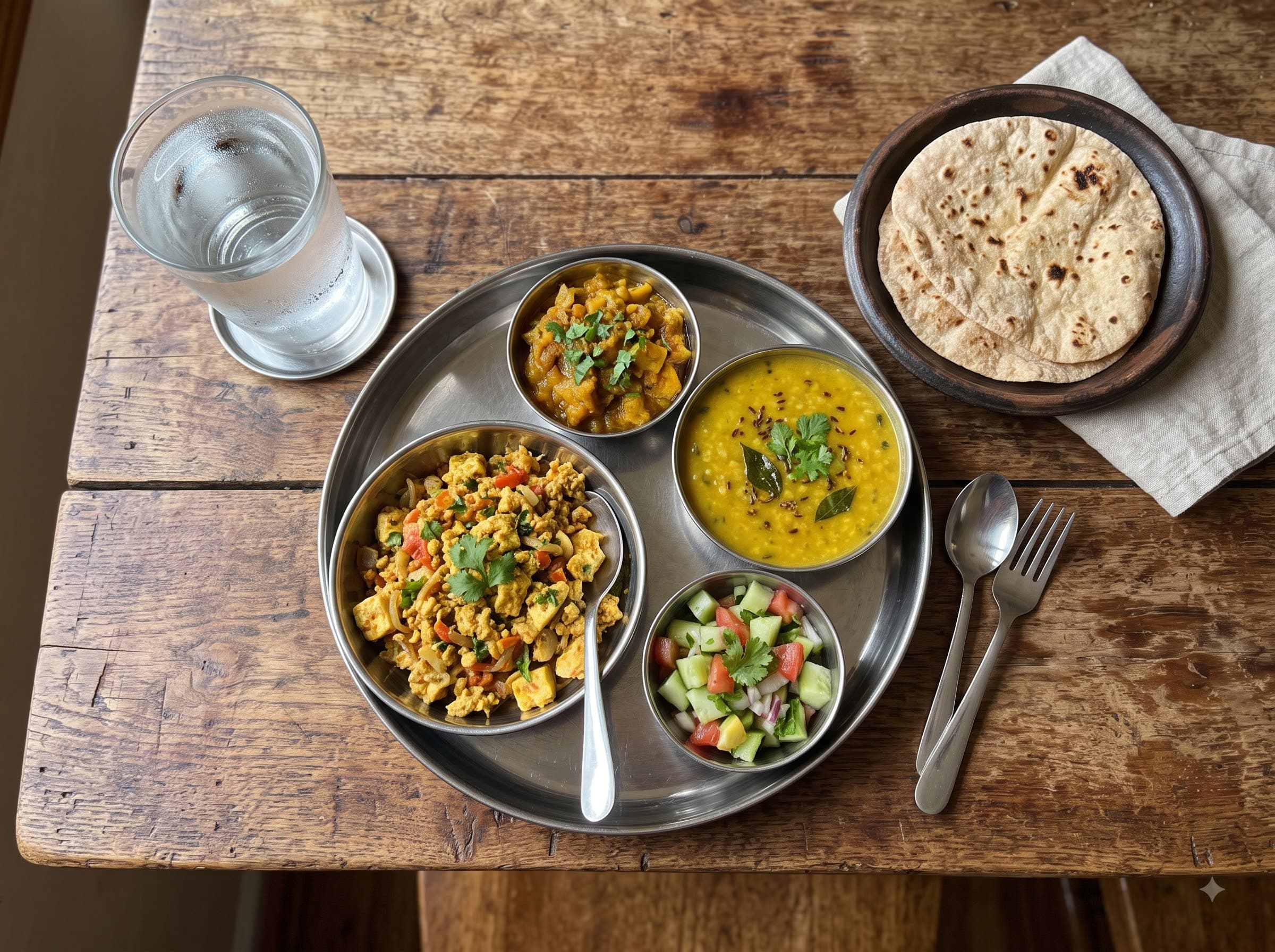
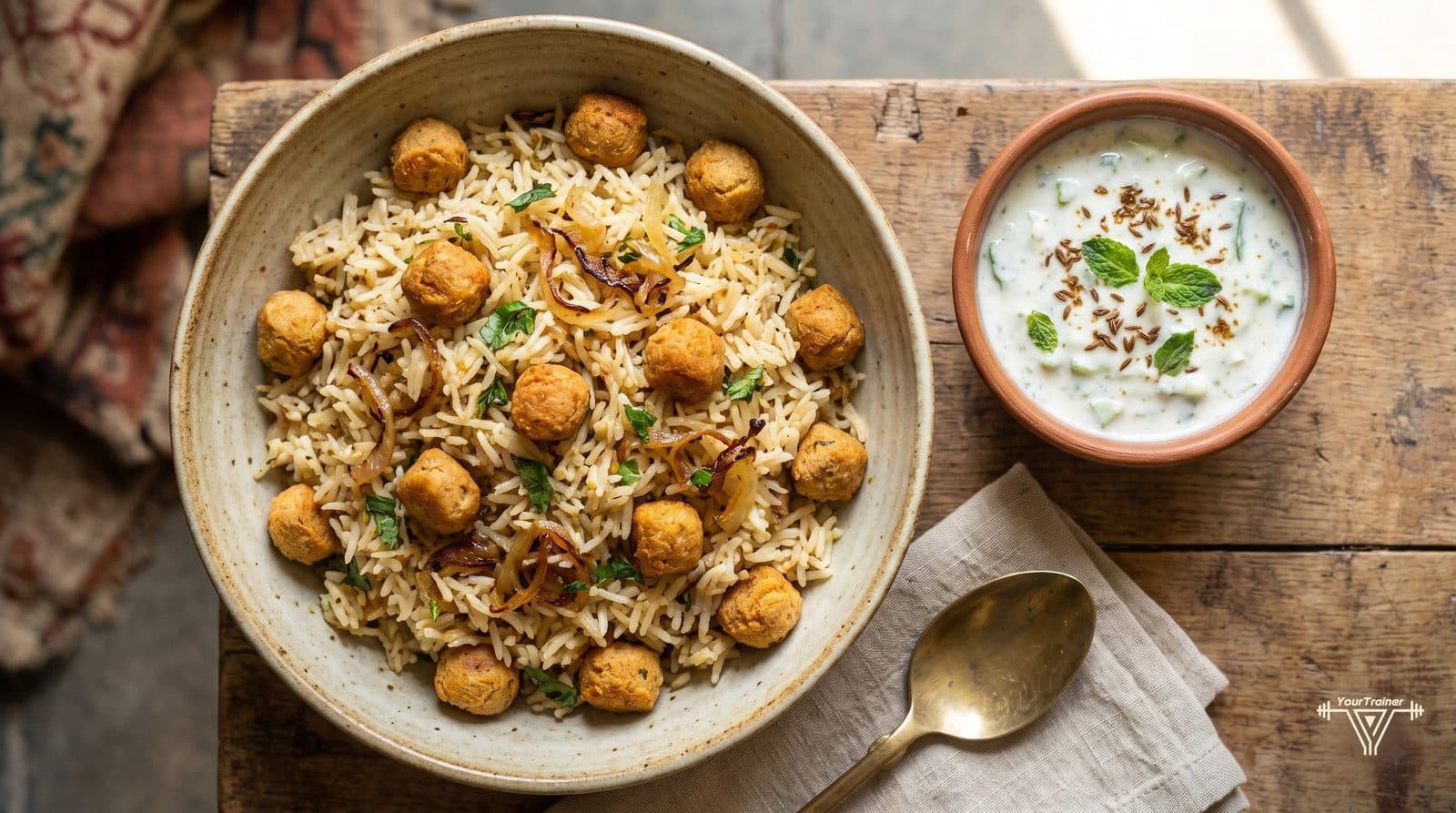
What Coached Indians Actually Eat: A Sample of Real Food Logs, Analysed
We analysed a sample of YourTrainer member food logs: 1,532 kcal and 91 g protein on a typical day, real portions of rice, roti, dal and paneer, and the meal where protein goes missing.
On a fully logged day, members in our sample ate a median of 1,532 kcal and 91 g of protein, mostly from ordinary Indian food: rice, roti, dal, curd, eggs and paneer. We looked at a sample of member food logs from the YourTrainer app, 19 April to 17 September 2026, to see what a coached Indian diet actually looks like on a plate, not on a diet chart.
The data at a glance
1,532 kcal
median on a fully logged day
91 g
median protein on a fully logged day
77%
of fully logged days reached 60 g protein
13 g
median protein in a snack, the weakest meal
Source: A sample of member food logs from the YourTrainer app, 19 April to 17 September 2026. Members only, aggregated, each food logged by at least three members in the sample, using the app's food-database values for the portion logged
What a coached Indian day adds up to
We counted a day as fully logged when a member recorded at least three different meals. On those fully logged days in the sample, the median day came to 1,532 kcal and 91 g of protein, and the middle half of days ranged from 63 g to 118 g of protein.
- At least 60 g protein77% of days
- At least 80 g protein60% of days
Source: A sample of member food logs from the YourTrainer app, 19 April to 17 September 2026. Members only, aggregated, each food logged by at least three members in the sample, using the app's food-database values for the portion logged
These are coached members who track protein on purpose, so their numbers sit well above a typical Indian diet. The useful part is how they got there: not with special foods, but with bigger portions of protein at the meals they already eat. If you want your own number, the protein calculator gives it in Indian foods.
Where protein goes missing: snacks
- Dinner29 g
- Breakfast24.6 g
- Lunch23 g
- Snack13 g
Source: A sample of member food logs from the YourTrainer app, 19 April to 17 September 2026. Members only, aggregated, each food logged by at least three members in the sample, using the app's food-database values for the portion logged
| Meal | Protein | Calories | 20 g+ protein |
|---|---|---|---|
| Breakfast | 24.6 g | 375 kcal | 58% |
| Lunch | 23 g | 467 kcal | 62% |
| Dinner | 29 g | 463 kcal | 69% |
| Snack | 13 g | 234 kcal | 36% |
Source: A sample of member food logs from the YourTrainer app, 19 April to 17 September 2026. Members only, aggregated, each food logged by at least three members in the sample, using the app's food-database values for the portion logged
Main meals reached 20 g of protein most of the time. Snacks did not: only 36% of logged snacks got there. The snacks members logged most were banana, whey, almonds, walnuts and fruit, which explains it. A banana is 90 kcal and 1 g of protein. Swapping one snack a day for curd, boiled eggs or a scoop of whey closes most of the gap. Protein per rupee ranks the cheapest ways to do it.
Real portions: rice, roti, dal, idli and paneer
Every row below pairs the portion with its own calories and protein, using the unit most members logged that food in. Per piece, a regular roti logged at 104 kcal, a small roti at 80 kcal and an idli at 70 kcal.
| Food | Typical portion | Calories, protein |
|---|---|---|
| Rice, cooked | 1 cup | 206 kcal, 4 g |
| Roti / chapati | 1.5 rotis | 156 kcal, 4.5 g |
| Roti, small | 2 small rotis | 160 kcal, 5 g |
| Dal | 1 bowl | 150 kcal, 9 g |
| Idli | 2 to 3 idlis | 158 kcal, 4.5 g |
| Poha | 1 plate | 250 kcal, 5 g |
| Paneer | 50 g | 133 kcal, 9 g |
| Soya chunks | 75 g dry | 248 kcal, 39 g |
| Dahi (curd) | 100 g | 61 kcal, 4 g |
| Boiled eggs | 2 eggs | 156 kcal, 13 g |
| Chicken breast | 150 g | 248 kcal, 46.5 g |
| Whey protein | 1 scoop | 120 kcal, 24 g |
Source: A sample of member food logs from the YourTrainer app, 19 April to 17 September 2026. Members only, aggregated, each food logged by at least three members in the sample, using the app's food-database values for the portion logged
One number surprises people. A cup of cooked rice logged at 206 kcal here, while our portion size guide uses a heaped 200 g cup at about 270 kcal. Both are right: cups and katoris vary that much between kitchens. Weigh yours once with the katori portion calculator and you will know which one you eat.
Coaching that does this for you
Reading is step one - a coach turns it into a plan built around your body, food & schedule.
100% online · Indian meal plans · weekly progress reviews · daily WhatsApp support.
Start Your Journey →The paneer surprise
The typical paneer entry was 50 g: about a quarter of a 200 g pack, 133 kcal and 9 g of protein. Many diet articles count "a serving of paneer" as 100 g or more, which doubles the protein on paper. Soya chunks did far more work: 75 g dry gave 248 kcal and 39 g of protein. The vegetarian protein chart shows what a full day looks like with both.
How much protein is in a normal serving of paneer?
In our members' logs, a typical paneer serving was 50 g, which gave 133 kcal and 9 g of protein. A full 200 g pack has roughly 36 g.
The 10 foods members logged most
- Chia seeds2.3%
- Banana1.8%
- Whey protein1.7%
- Rice, cooked1.5%
- Roti, small1.1%
- Pumpkin seeds0.9%
- Overnight oats0.9%
- Oats0.9%
- Chicken breast0.8%
- Dahi (curd)0.8%
Source: A sample of member food logs from the YourTrainer app, 19 April to 17 September 2026. Members only, aggregated, each food logged by at least three members in the sample, using the app's food-database values for the portion logged
The list is more Indian kitchen than supplement shelf: rice, roti and curd sit next to whey and seeds. Look up any of these in the Indian food calorie calculator or the 60-dish calorie chart.
What members' plates actually look like
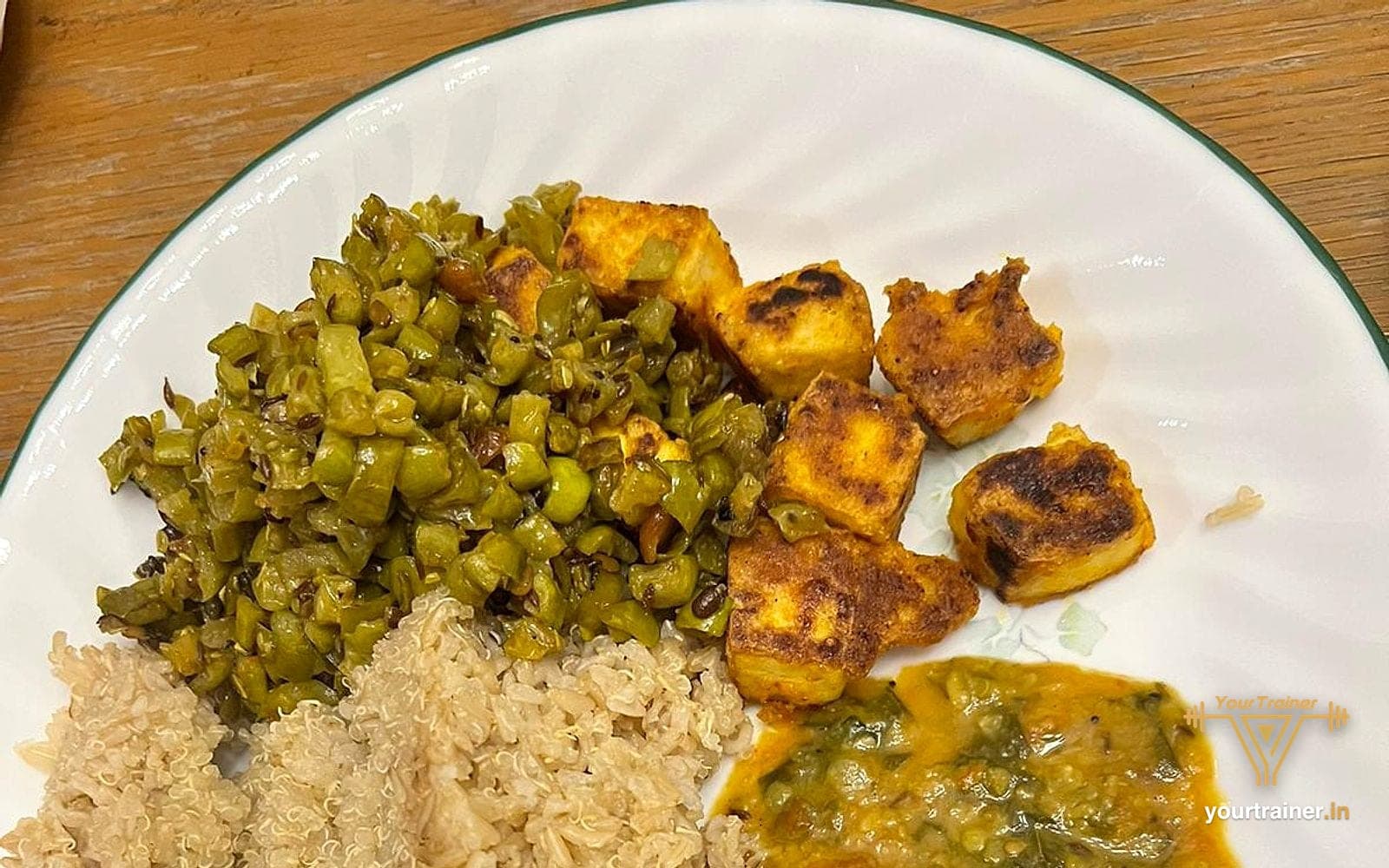
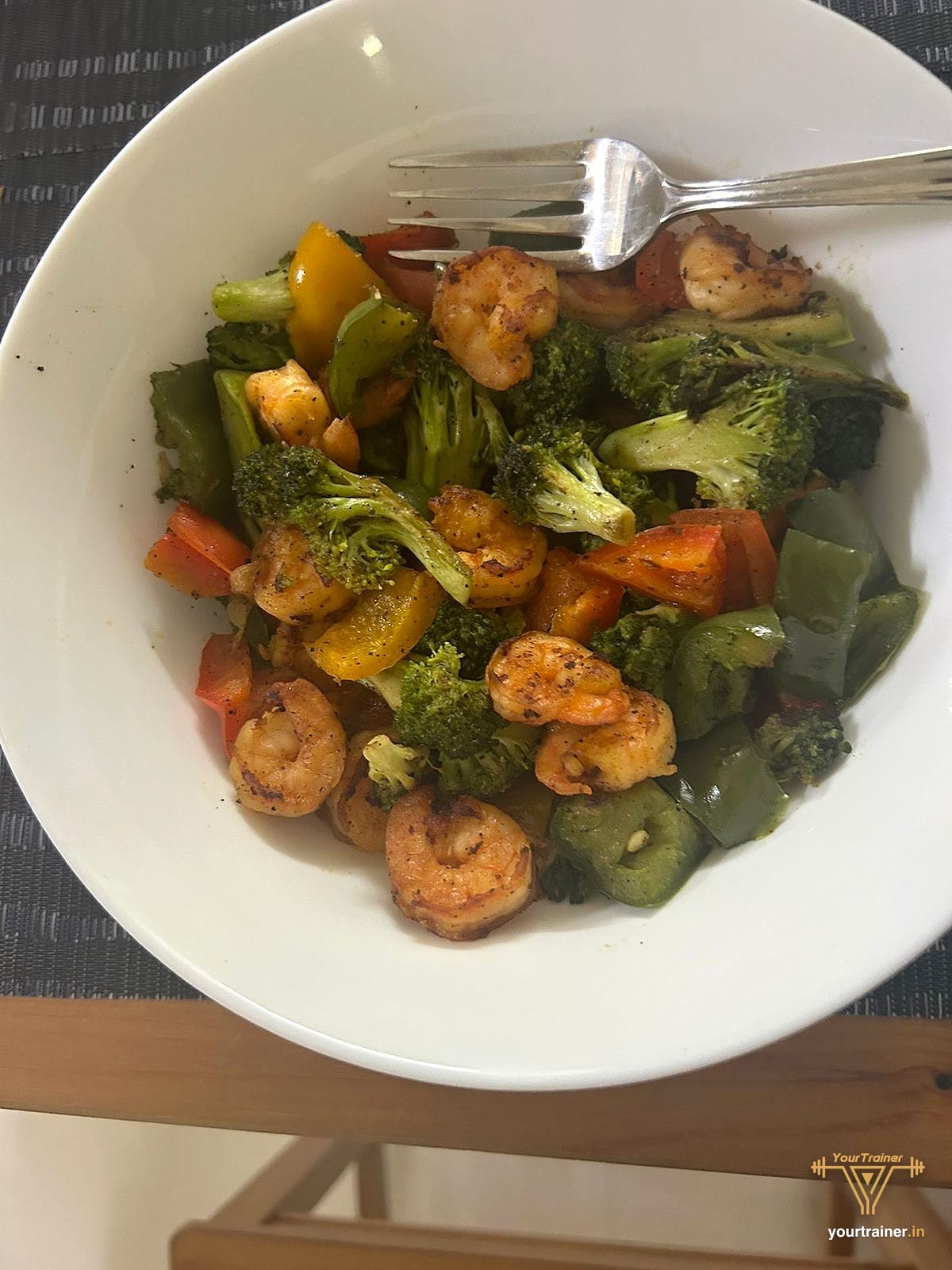
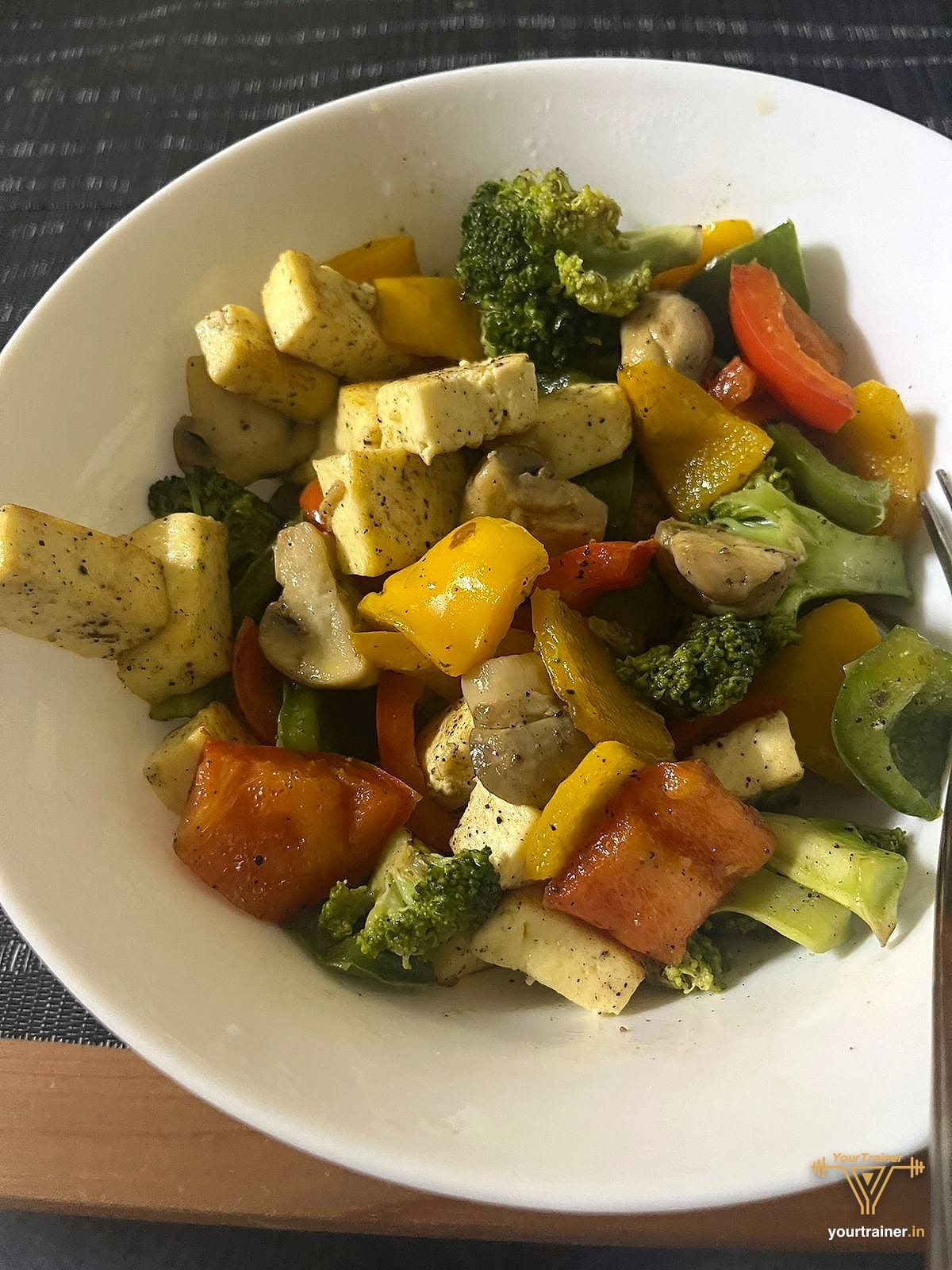
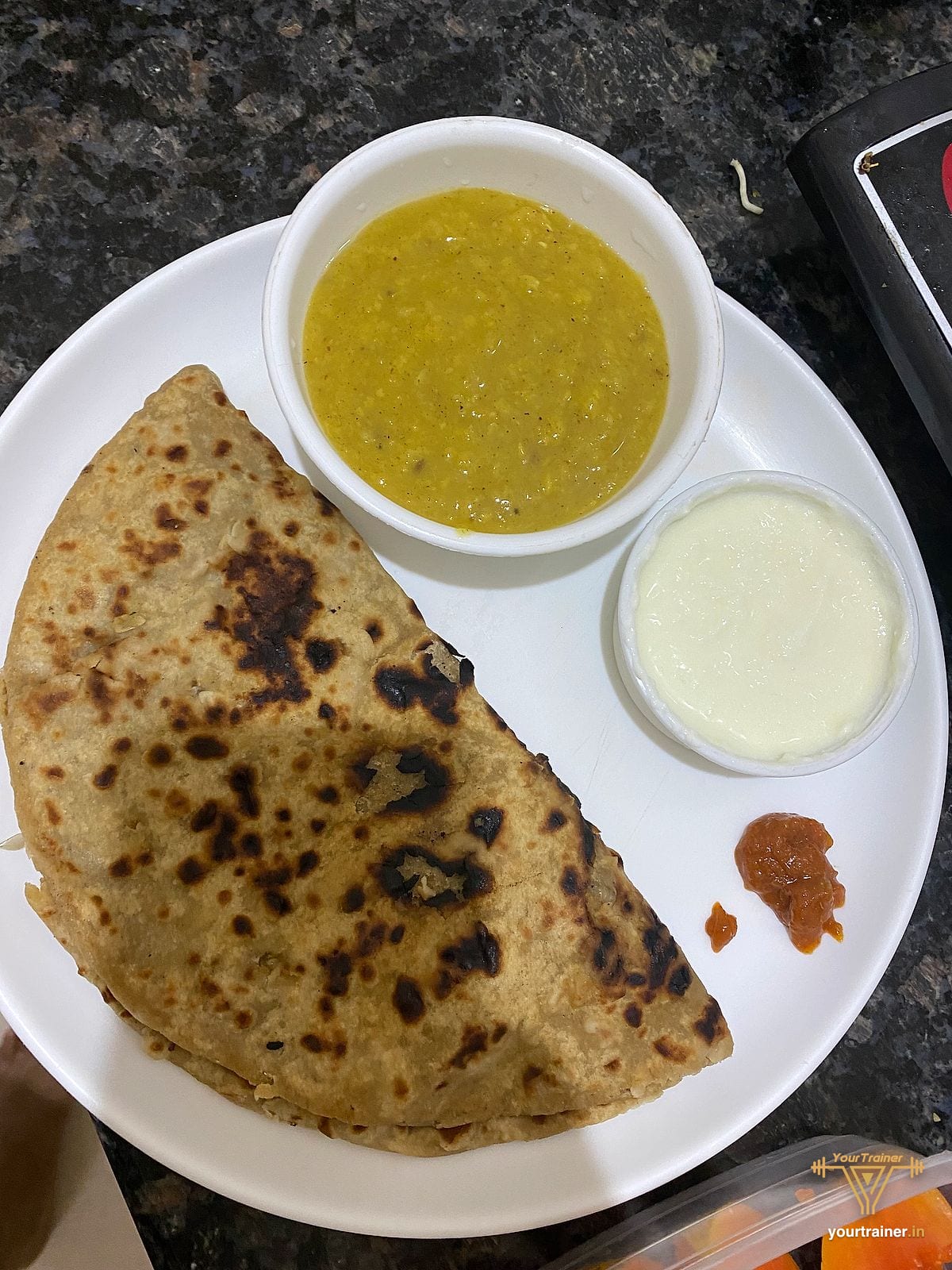
Numbers only tell half of it. These are real plates members shared in the app: mostly home food, built around a clear protein source with rice, roti or millet alongside.
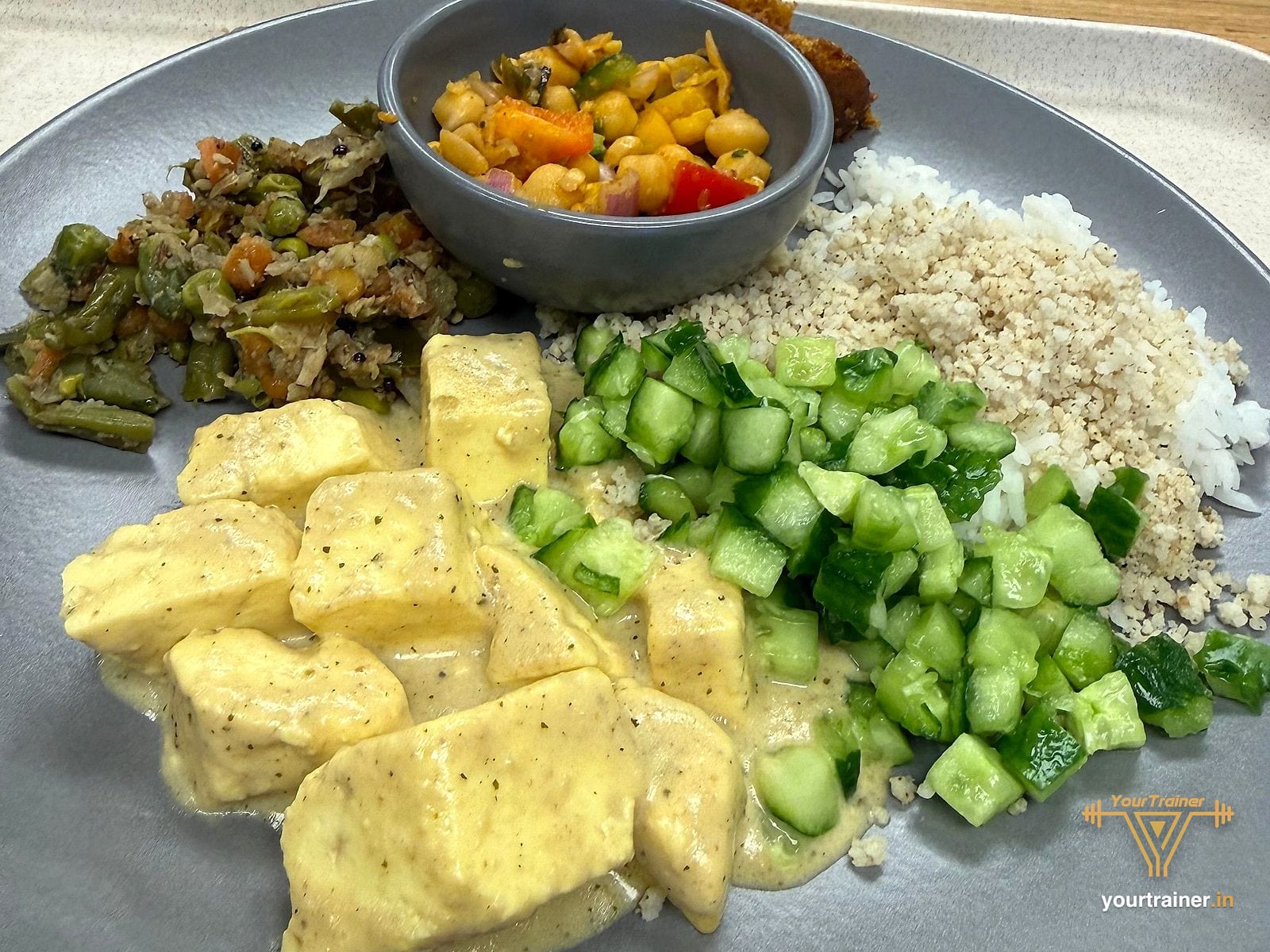
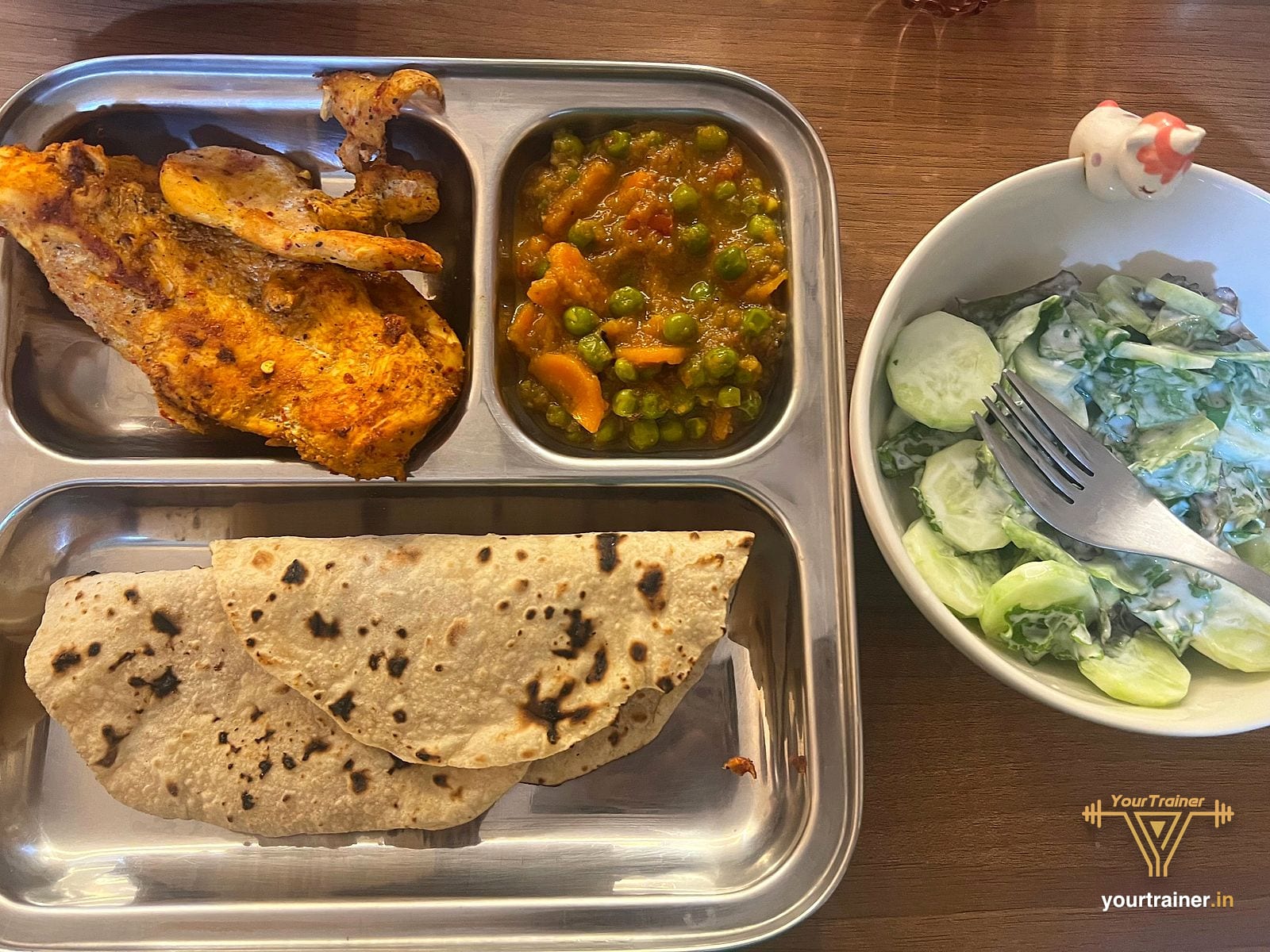
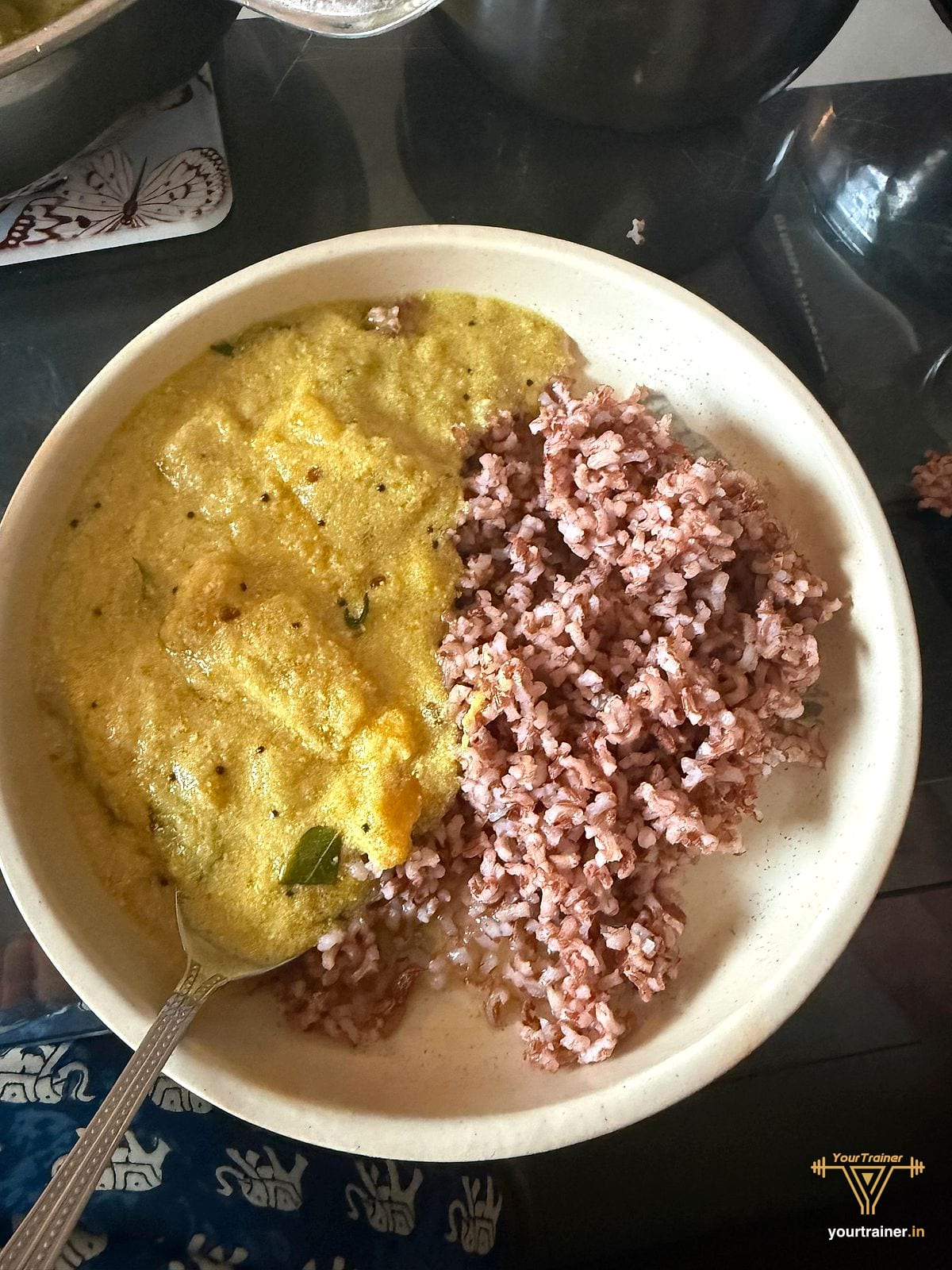
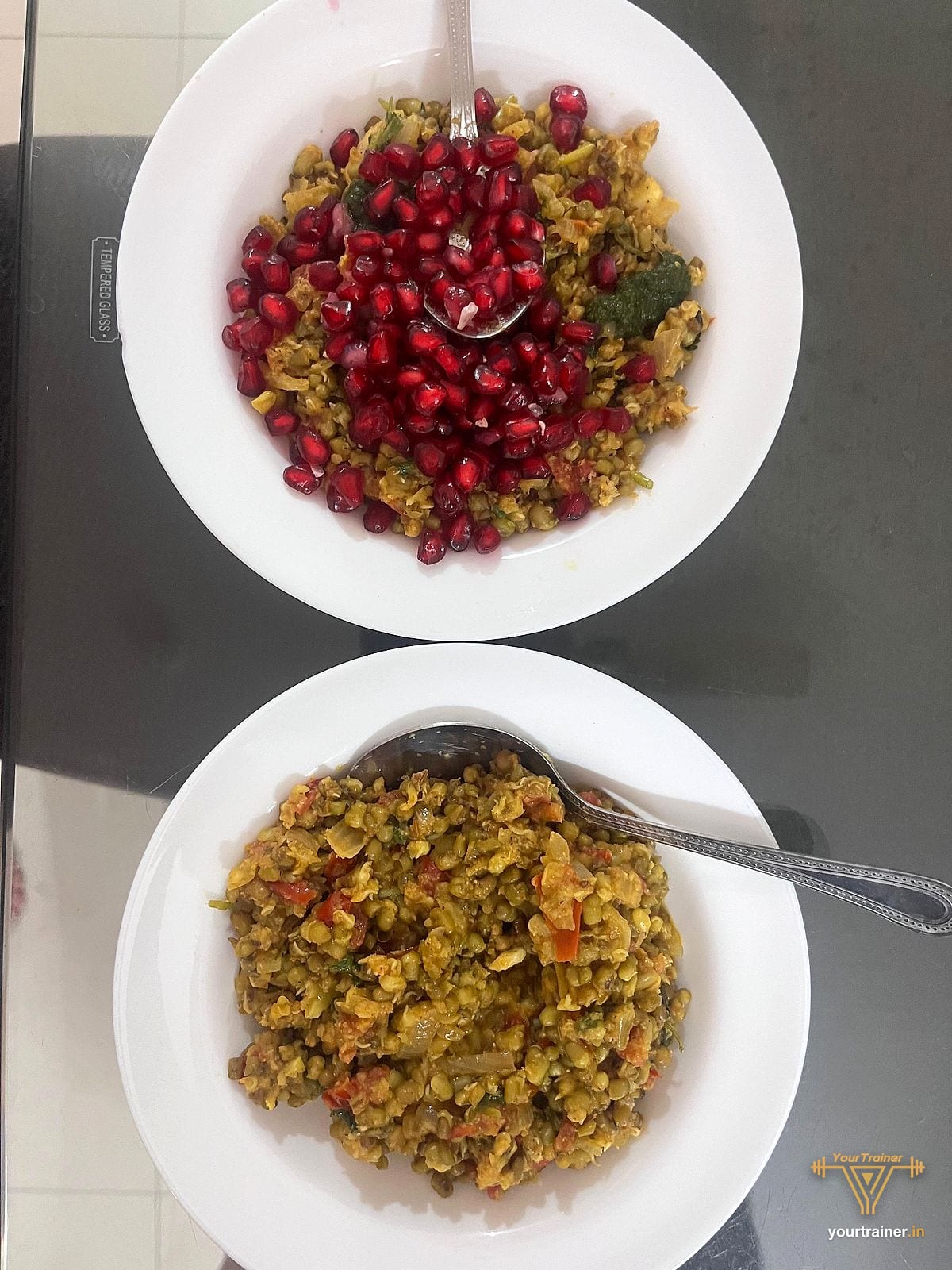
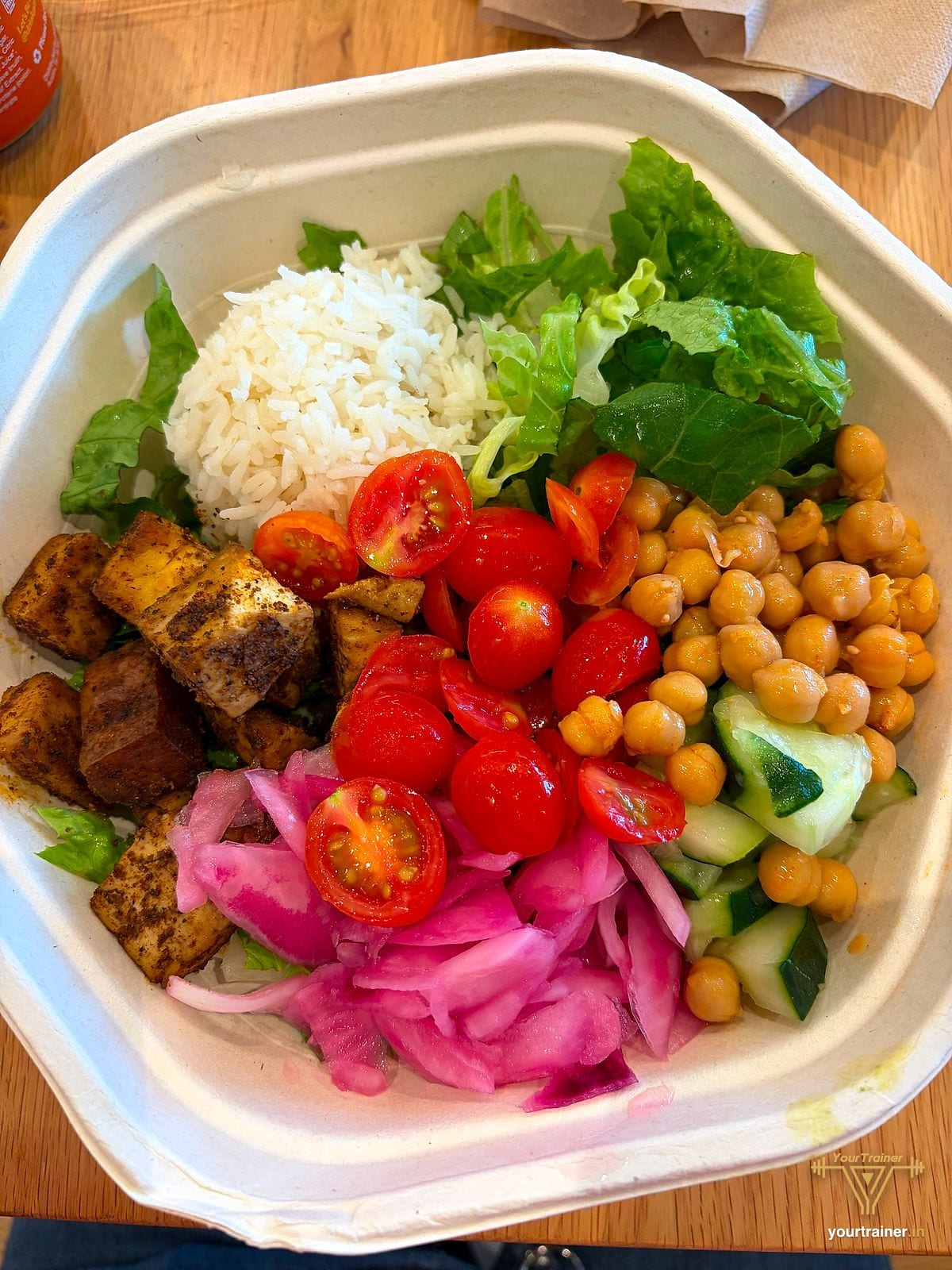
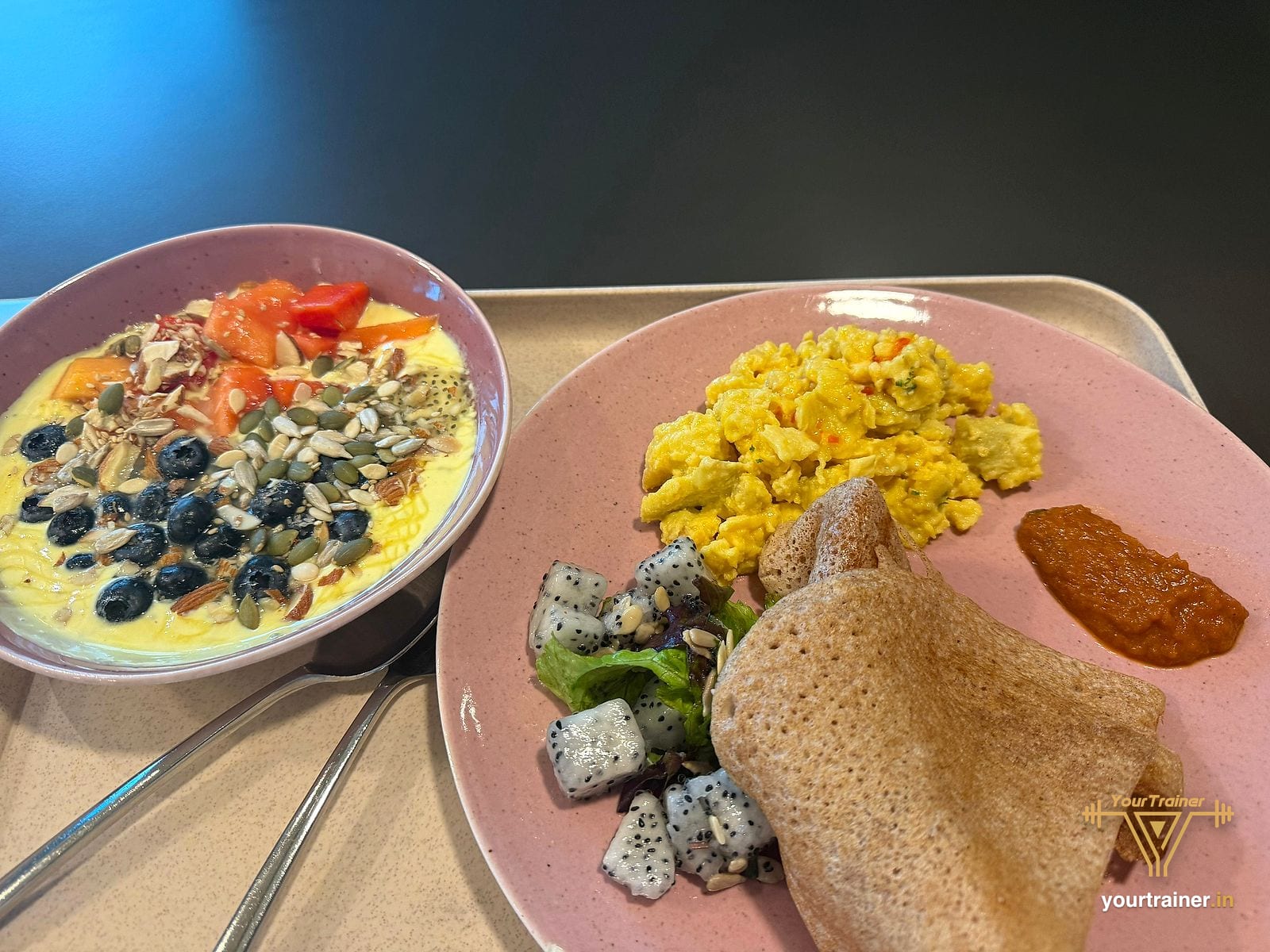
Real member plates, shared in the YourTrainer app.
The pattern repeats across plates: a protein you can point at (paneer, chicken, eggs, sprouts, chana) plus one carb portion. That is the habit behind the 91 g median, not supplements.
Quick answers
How many calories are in 1 cup of cooked rice?
Members logged 1 cup of cooked rice at 206 kcal and 4 g of protein. A heaped 200 g cup is closer to 270 kcal, so weigh your own cup once.
How many calories are in one roti?
A small roti logged at 80 kcal and a regular roti or chapati at 104 kcal. Members typically ate 1.5 regular rotis or 2 small ones per meal.
Which meal is lowest in protein?
Snacks. Only 36% of logged snacks reached 20 g of protein, against 58% of breakfasts, 62% of lunches and 69% of dinners.
Where this data is used
- Indian portion sizes: katori, roti and rice in grams
- Calories and macros for 60 Indian dishes
- Street food calories, ranked, with smarter swaps
- High-protein South Indian breakfasts
- Katori portion calculator
- Indian food calorie calculator
- Indian food calories and portions hub
How we counted
- Source: a sample of member food logs from the YourTrainer app, 19 April to 17 September 2026. Entries by our nutritionist and trainers were excluded.
- Only aggregates were used. No names or account details were read, and a food appears only if at least three members in the sample logged it.
- A fully logged day means at least three different meals recorded that day.
- Calories and protein are the app's food-database values for the portion logged, not weighed lab measurements.
- These are coached members, so protein intake is higher than a typical Indian diet.
More on this topic in the Indian food calories and portions hub.
Did you find this helpful?

About Anish Agarwal
Founder & Head Coach, YourTrainer · NASM & K11 Certified Personal Trainer · 6+ years experience
Anish Agarwal is a NASM and K11 certified personal trainer with 6+ years of experience coaching fat loss, body transformation, strength, and nutrition for clients across India. He founded YourTrainer to make expert, science-based coaching accessible online and in Bengaluru. More about Anish.
Online 1-on-1 Coaching
Start Your Journey
Get a personalised training + Indian nutrition plan built around your goal, coached online, anywhere in India or abroad.
★★★★★ Trusted by 1,000+ transformations across India & abroad
Free 30-min discovery call · No obligation