How NRIs Stay Lean at Indian Restaurants & Desi Parties
Weekend desi parties and restaurant nights undo the week. What to order (tandoori vs makhani), plate strategy, potluck tactics for NRIs in the US, UK and Gulf.
Lifestyle coaching information only. This article discusses nutrition strategies for dining at Indian restaurants and attending desi social events. It is not medical advice and not a substitute for professional nutrition consultation. Individual results vary based on genetics, overall diet, exercise habits, and underlying health conditions. Consult a dietitian or doctor before making significant dietary changes, especially if you have diabetes, heart disease, or are pregnant.
Quick answer: Weekend desi parties and restaurant nights are where NRIs lose the week's progress, butter chicken, naan, biryani, and gulab jamun add 2,000–3,000 calories in a single meal. The fix is not perfection; it is consistency. Order tandoori/tikka instead of creamy curries, choose roti over naan, fill half your plate with vegetables and protein, eat a protein snack before you arrive, limit alcohol, and enjoy the meal guilt-free. One meal will not derail you. The weekly pattern does.
The NRI Restaurant Reality
Why Indian restaurants and desi gatherings are calorie traps
Let us be honest: the food at your favorite Indian restaurant is delicious precisely because it swims in ghee, cream, and butter. A single bowl of butter chicken (paneer makhani, korma) contains 500–700 calories before bread. Add naan (300 calories), gulab jamun or kheer (200–400 calories), and a mango lassi (200 calories), and you have easily consumed 1,200–1,600 calories in one sitting, potentially your entire daily surplus or more, depending on your goals.
For NRIs, this pattern repeats 2–3 times weekly. That is 4,500–9,000 extra calories weekly, the equivalent of 1.3 to 2.6 pounds of fat gain per week if your base intake is already at maintenance. Over a year, that is 67–135 pounds gained. This is why many NRIs gain 30–50 pounds within 5 years abroad.
But here is the good news: you do not have to stop eating Indian food or avoid desi gatherings. You just need to be strategic about what and how much you order, and then return to normal eating the next meal. Perfection is not the goal. Consistency is.
Restaurant ordering strategy: Leaner vs. heavy Indian dishes
The best way to eat Indian food and stay lean is to understand which dishes are protein-forward and cooked with less oil, and which are designed to be indulgent. Use this two-column table whenever you eat out:
| Order This (Leaner) | Not That (Heavy) |
|---|---|
| Tandoori chicken / fish – grilled, minimal oil, high protein | Butter chicken (murgh makhani) – 500–700 cal, cream-based |
| Chicken / fish tikka – marinated and grilled, lean protein | Korma / malai kofta – 600–800 cal, coconut cream, fried paneer |
| Tandoori paneer tikka – high protein, grilled (vegetarian) | Shahi paneer / paneer makhani – 500+ cal, butter & cream |
| Chana masala (chickpeas) – 250 cal, fiber & protein, oil-light | Biryani (any meat/veg) – 600–900 cal, ghee-fried rice, huge portions |
| Plain dal (lentils) – 150–200 cal, high protein, filling | Dal makhani – 350–450 cal, butter & cream |
| Tandoori roti / plain roti – 70–90 cal per piece | Naan / butter naan – 250–350 cal, butter-laden |
| Paratha (1, plain) – 150 cal, if oil-light | Paratha (aloo, paneer, keema) – 300–400 cal, stuffed & ghee |
| Raita (yogurt) – 50–80 cal, cools the meal | Fried samosa / pakora – 150–250 cal per piece, oil-fried starters |
| Grilled fish tikka / tandoori fish – 200–300 cal, omega-3s | Fish curry (coconut or cream-based) – 400–600 cal |
| Salad (onion, cucumber, tomato) – side for free | Gulab jamun / kheer / halwa – 200–400 cal, pure sugar & ghee |
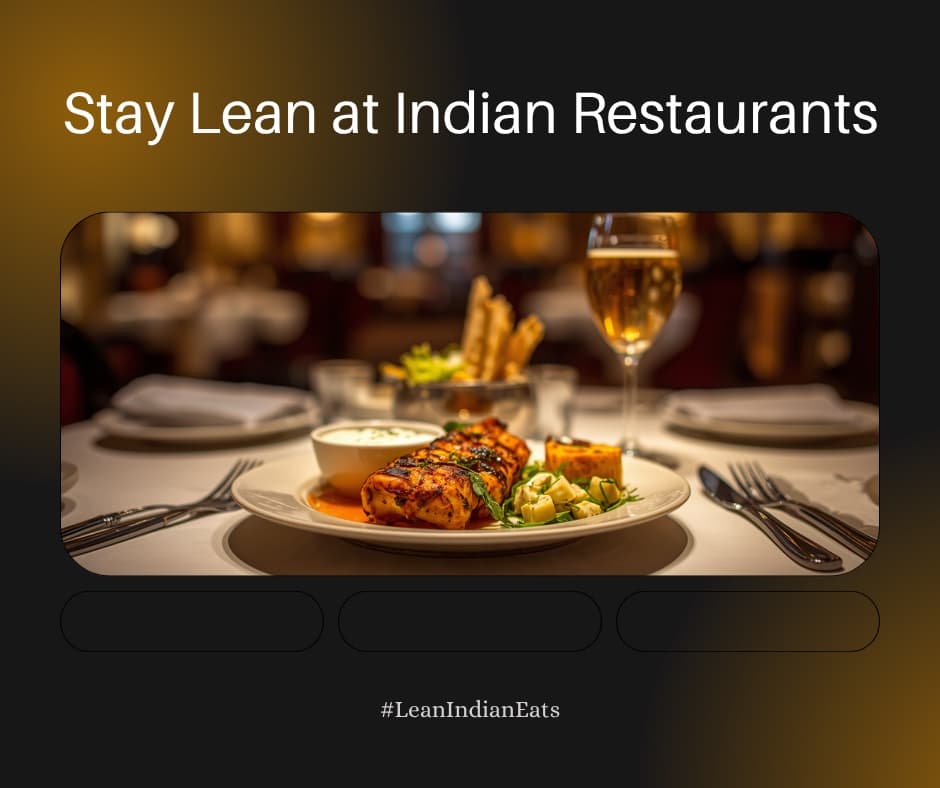
The pattern is clear: grilled (tandoori/tikka) beats butter/cream-based curries every single time. Choose grilled protein, skip the fried bread, and add extra vegetables and raita.
Plate strategy: Protein-first eating at restaurants
When your food arrives, do not start with bread. Here is the winning order:
1. Eat vegetables and protein first (30–40% of plate). Tandoori chicken, tikka, chana, or grilled fish, eat this first while you are hungry. Protein and fiber fill you fastest and keep blood sugar stable.
2. Eat your bread second (10–15% of plate). One or two rotis, not three naans. Bread is the calorie bomb and portion multiplier, the more you eat early, the more total calories you consume.
3. Finish with dal, raita, or salad (optional). These are low-calorie fillers. If you are still hungry after protein and one roti, fill the rest with these.
4. One plate, then stop. Do not go back for a second serving. The mindset is: enjoy this meal fully, then return to normal eating tomorrow. Restrict grazing, not portion, eat one plate slowly and consciously.
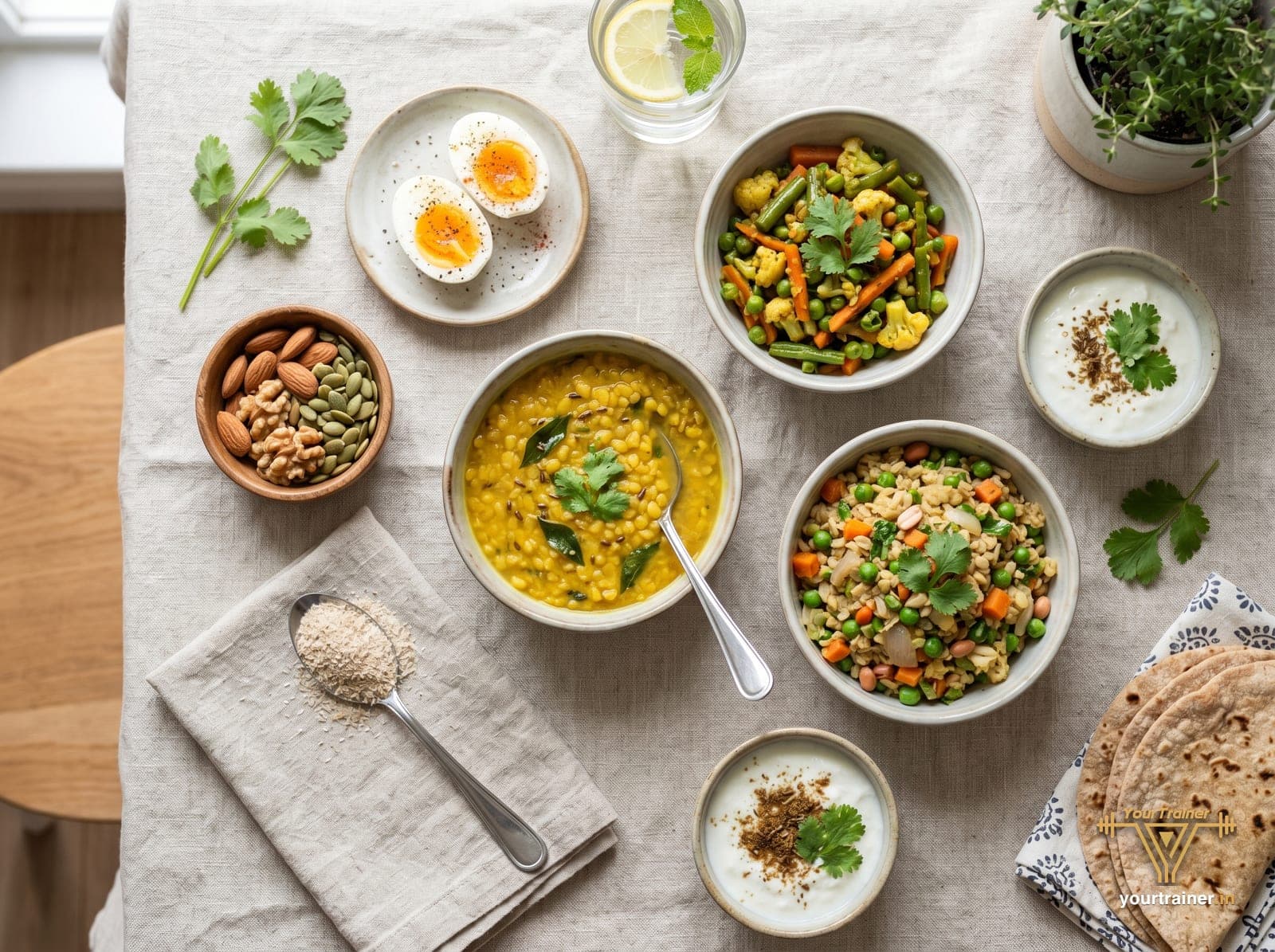
Before you leave: Eat a light protein snack (Greek yogurt, boiled eggs, protein shake) 30–45 minutes before you leave for the restaurant. This blunts your hunger, shrinks your appetite when ordering, and prevents overeating once the food arrives. You will order less and eat less, automatically.
Desi party and potluck tactics
Restaurant dinners are straightforward, you control your order. Potlucks and home parties are trickier because the food is laid out, portion sizes are unclear, and social pressure to taste everything is real. Here is how to navigate without feeling deprived:
Before you go: Eat a full protein snack. Have a boiled egg, Greek yogurt, or a protein shake 30–60 minutes before you leave. Arrive satisfied, not starving.
Survey the food first: Before loading your plate, walk around and see all the dishes. Decide which 3–4 items you actually want to eat. Skip the rest. This prevents the "try everything" trap.
Fill half your plate with vegetables, salad, and protein: Load up on samosas if they are baked or air-fried (not deep-fried), tandoori chicken, paneer tikka, and salads. Protein and vegetables are filling and lean.
Take one plate, eat it slowly, and stop: Do not graze. Sit down, eat mindfully, and put the plate away. Social chatting happens naturally after eating, you do not need to hold a plate the entire time.
Limit fried starters: Samosas, pakora, and spring rolls are deep-fried and calorie-dense. One or two, not a dozen. If there is tandoori paneer, chicken tikka, or a vegetable platter, those are far leaner bets.
Desserts and sweets: Gulab jamun, kheer, gajar halwa, and barfi are 200–400 calories per serving and pure sugar. Skip them, or try one small piece for the social experience. You do not need to taste every dessert.
Alcohol and sugary drinks: Beer is 150–200 calories per bottle. Cocktails and margaritas are 200–400 calories. Mango lassi, kheer, and sweet chai are 150–250 calories each. Limit to one alcoholic drink and fill the rest with water. Sip slowly, it lasts longer socially and keeps you feeling full.
Consider bringing a healthier dish: If it is a potluck, bring grilled tandoori chicken, a large vegetable salad, or a chickpea curry cooked with minimal oil. You ensure there is at least one lean option available, and you have full control over the recipe.
The weekly consistency mindset: One meal will not derail you
Here is the truth that most fitness advice ignores: one restaurant meal, one party, one indulgent weekend will not make or break your results. What matters is the pattern over 52 weeks.
If you eat 2,000 calories at a restaurant on Saturday, but eat at maintenance (2,000 calories) every other day, your weekly average is 14,000 calories over seven days. That is only 200 calories above maintenance per day on average, a rounding error.
But if you eat 2,000 calories three times a week at restaurants, parties, and potlucks (6,000 calories), plus your baseline 2,000 calories on other days (8,000 calories), your weekly total is 14,000 calories, right at maintenance. No gain, no loss. Neutral.
The problem arises when restaurant meals and parties stack up to 4, 5, or 6 times a week. Then the surplus compounds: 10,000+ extra calories weekly, and the weight gain becomes inevitable. For NRIs in the USA and UK especially, social eating is cultural and frequent. The fix is not avoidance, it is strategy at those meals, combined with tight eating at home.
Consistency beats perfection: Two restaurant meals a week with smart choices (tandoori, roti, vegetables, one plate) plus normal eating at home will not cause weight gain. The weekly pattern is what counts. Eat the gulab jamun at the party. Enjoy it. Then return to your usual meals. One indulgent meal every 3–5 days is completely sustainable and will not derail fat loss or muscle gain.
To see how this plays out across the week, here is a practical example:
| Scenario | Daily (outside meals) | Eating-out days | Weekly total | Result |
|---|---|---|---|---|
| SMART (1–2x/week, lean choices) | 2,000 cal × 5–6 days | 1,800 cal/meal (tandoori, roti, veg) | 14,000–15,000 | Lean (−0.5–0 lb/week) |
| MODERATE (2–3x/week, mixed) | 2,000 cal × 4–5 days | 2,200–2,400 cal/meal (some butter chicken) | 15,000–17,000 | Neutral to slow gain (+0.3–0.6 lb/week) |
| HEAVY (4–5x/week, no strategy) | 2,000 cal × 2–3 days | 2,400–2,800 cal/meal (butter chicken, naan, gulab jamun, lassi) | 18,000–21,000 | Fast gain (+1.3–2.6 lb/week) |
Coaching that does this for you
Reading is step one. A coach turns it into a plan built around your body, food & schedule.
100% online · Indian meal plans · weekly progress reviews · daily WhatsApp support.
Start Your Journey →Simple action plan: Start this week
1. Screenshot or bookmark the "Order This" table above. Reference it when you next go to an Indian restaurant. Pick tandoori, tikka, or dal instead of makhani curries.
2. Eat a protein snack before dining out or attending a party. One Greek yogurt, two boiled eggs, or a protein shake 30–60 minutes before. This shrinks appetite and prevents overeating.
3. Use the plate strategy: vegetables and protein first, one roti, then stop. No grazing, no seconds.
4. Enjoy guilt-free and return to normal eating the next meal. One meal will not derail you. The weekly pattern will.
Frequently Asked Questions
Q: Can I eat biryani and stay lean?
A: Not regularly. Biryani is 600–900 calories per serving, all from ghee-fried rice and meat/paneer. Eating it once every 4–6 weeks is fine if you eat light the rest of the week. But if it is a weekly habit, it will add 3,000+ calories monthly, about 0.9 pounds of fat gain per month. Save biryani for special occasions, not every Friday night.
Q: What if I go to multiple Indian restaurants a week?
A: Apply the "Order This" table consistently at each meal. Tandoori, tikka, dal, roti, vegetables, keep it lean at every restaurant visit. If you are eating out twice weekly, eating smart at both meals is critical. Missing once is fine; missing twice a week plus parties will stack up.
Q: Is paneer healthy?
A: Paneer is protein-rich (15–20g per 100g), but it is also calorie-dense (300 cal per 100g). Tandoori paneer tikka grilled on skewers is far leaner than shahi paneer or paneer makhani (both butter and cream-based). Paneer is fine in moderation, especially grilled; just avoid the cream-heavy curries.
Q: How much dal or chana should I eat?
A: Dal and chana (chickpeas) are lean, high-protein options. A cup of cooked dal is 150–200 calories and fills you fully. Plain or spiced lightly is best. Dal makhani (butter-added) is 350–450 calories per cup, so avoid it if you are cutting. At restaurants, order plain dal (tadka dal, dal tadka) or chana masala.
Q: Can I drink alcohol at desi parties and stay lean?
A: Yes, but in moderation. Beer is 150–200 calories per bottle, wine is 120–150 calories per glass, and spirits are 100 calories per shot. Cocktails and sugary mixers can be 300–400 calories. Limit to one alcoholic drink per outing and fill the rest with water or club soda. Your liver and waistline will thank you.
Q: Should I skip dessert entirely?
A: No. Skip most of it. Gulab jamun, barfi, and kheer are delicious and dessert is part of the experience. Eat one small piece (50–100 calories) for the pleasure of it, then stop. You do not need to taste every dessert, and most Indian sweets are 200–400 calories per serving. One small piece satisfies the craving without derailing the day.
Strategy, not restriction
The NRI weight-gain trap is real: desi restaurants, potlucks, and parties are frequent, delicious, and culturally central. But they are also calorie-dense by design. The solution is not to avoid Indian food or desi gatherings, that is neither realistic nor fun. The solution is to order strategically, eat mindfully, and return to normal eating immediately after.
Tandoori instead of makhani. Roti instead of naan. Vegetables and protein first. One plate, no grazing. One meal will not derail you. The weekly pattern will.
You can eat Indian food, attend desi parties, and stay lean. Consistency over perfection. Strategy over restriction. That is the formula.
Ready to build a sustainable approach to Indian food and fitness? Online coaching for Indians and NRIs abroad teaches you exactly how to structure meals, navigate eating out, and build strength without sacrificing culture or taste. Start your journey today.
Low calorie Indian food: the lightest dishes, in numbers
The healthiest Indian meal on a US menu is usually a tandoor dish or a plain dal with a roti, and the heaviest is a cream curry with naan. Home-style servings make the gap easy to see; restaurant portions run larger and richer, so treat these as the floor.
| Dish | Serving | Calories | Protein | Fiber |
|---|---|---|---|---|
| Tandoori chicken | 2 pieces (150 g) | 245 kcal | 32 g | 0.4 g |
| Dal (moong) | 1 katori (150 g) | 132 kcal | 8.5 g | 4.8 g |
| Chole (chana masala) | 1 katori (150 g) | 195 kcal | 9.2 g | 8 g |
| Palak paneer | 1 katori (150 g) | 240 kcal | 12 g | 3.2 g |
| Dal makhani | 1 katori (150 g) | 285 kcal | 9 g | 6 g |
| Butter chicken | 1 katori (150 g) | 340 kcal | 20 g | 1.2 g |
| Chicken biryani | 1 katori (180 g) | 375 kcal | 18 g | 2 g |
Source: YourTrainer Indian food database: cooked household servings, values reconciled from IFCT 2017 (ICMR-NIN) and USDA FoodData Central
The bread matters as much as the curry: a tandoori roti is 165 kcal and a butter naan 320 kcal. Of these dishes, tandoori chicken gives the most protein for its calories, and chole the most fiber.
Related articles
- The NRI Weight-Gain Trap: How to Eat Indian & Stay Lean Abroad
- Indian American 30: Why NRIs Gain 30 Pounds in the USA (and How to Lose It)
- Indian Food Calories & Macros: Complete Chart of 60+ Dishes
Sources
- Indian Food Composition Tables (IFCT) 2017 · ICMR, National Institute of Nutrition
- Nutrient Requirements for Indians (RDA and EAR) · ICMR, National Institute of Nutrition
- Healthy diet · World Health Organization
- Dietary profiles and associated metabolic risk factors in India (ICMR-INDIAB survey) · Nature Medicine
Figures for Indian foods follow IFCT 2017 (ICMR-NIN). Coaching guidance on this site is educational and is not a substitute for medical advice. See how we use sources.
Did you find this helpful?

About Anish Agarwal
Founder & Head Coach, YourTrainer · NASM & K11 Certified Personal Trainer · coaching since 2022
Featured in Dietitians.io, Fitness Interview, NRI Pulse. Press and media
Anish Agarwal is a NASM and K11 certified personal trainer coaching fat loss, body transformation, strength, and nutrition for clients across India since 2022. He founded YourTrainer to make expert, science-based coaching accessible online and in Bengaluru. Coach Anish's profile and the YourTrainer story.
Coaching built for this
Want a plan like this done for you? These programs are matched to what you just read:
Online 1-on-1 Coaching
Start Your Journey
Get a personalised training + Indian nutrition plan built around your goal, coached online, anywhere in India or abroad.
Trusted by 1,000+ clients coached across India & abroad
Free 30-min discovery call · No obligation