Walking After Meals: The Simple Indian Blood-Sugar Hack
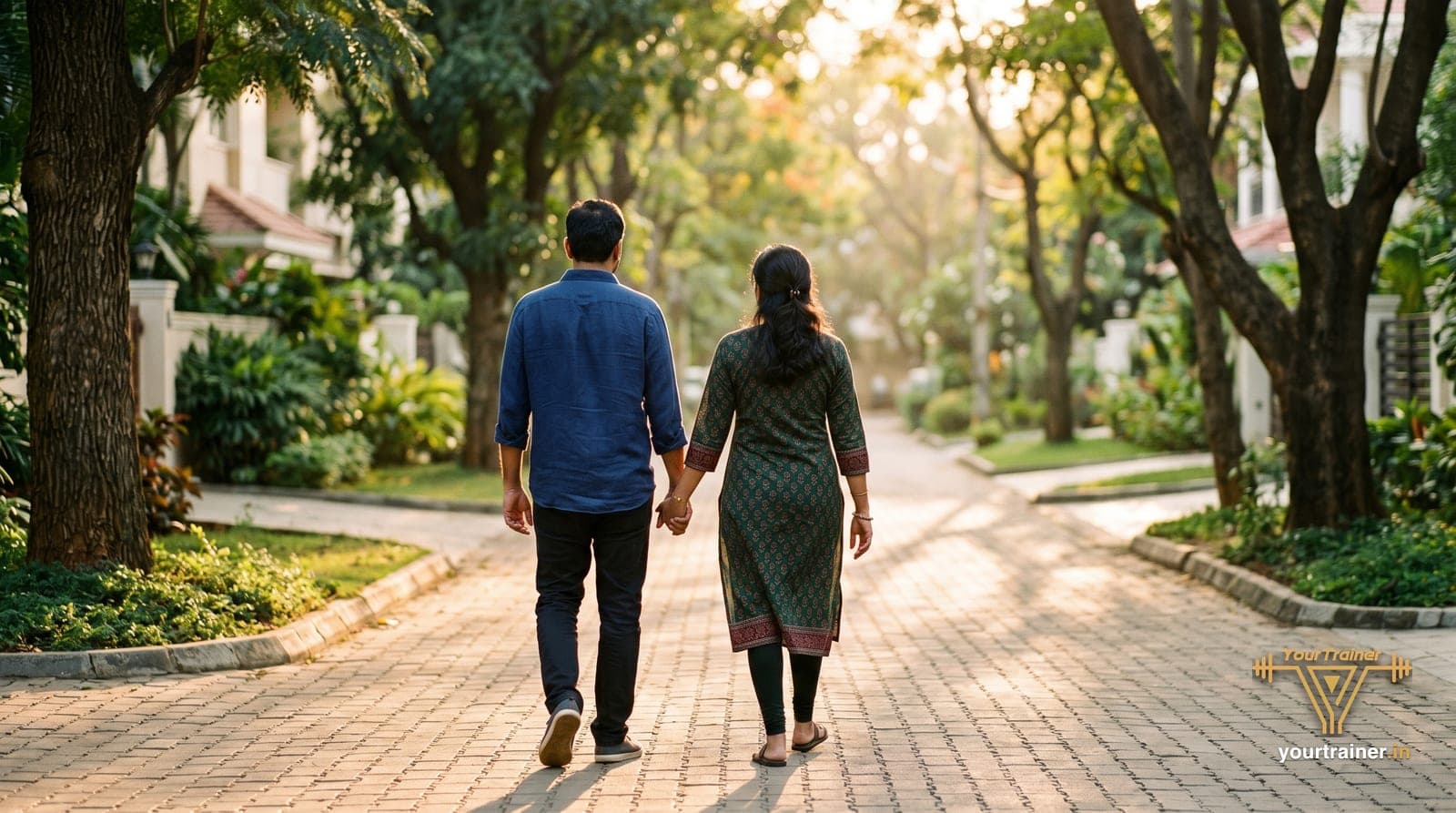
A 10–15 minute walk right after meals blunts blood-sugar spikes, especially after carb-heavy Indian meals like rice, roti, dosa, biryani. Works for pre-diabetes, type 2 diabetes, PCOS, insulin resistance, and general fat loss. Free, zero equipment, proven to reduce glucose spikes by 20–30%.
⚠ Lifestyle coaching information only. Walking after meals is a supportive habit for managing blood sugar and general health. It is not a substitute for medication, medical supervision, or a structured diet. Always consult your endocrinologist or physician before making major changes to your routine, especially if you have diabetes, pre-diabetes, or PCOS. This article is educational and not medical advice.
Quick answer: A 10–15 minute walk right after meals blunts the blood-sugar spike because working muscles pull glucose directly from your bloodstream instead of letting it flood your system. This is especially valuable after carb-heavy Indian meals - rice, roti, dosa, biryani - which cause steep glucose spikes. Even 2–5 minutes of light movement or standing helps. Start walking within 15–30 minutes of finishing eating. It is free, works for everyone (pre-diabetes, type 2 diabetes, PCOS, insulin resistance, general fat loss), and fits busy schedules. Not a replacement for medication or strength training, but one of the simplest additions you can make today.
Post-Meal Walking at a Glance
Why Your Blood Sugar Spikes After Rice and Roti
An Indian meal is carb-dense: a serving of basmati rice (1 katori), roti (2–3 pieces), dosa, or biryani releases a flood of glucose into your bloodstream within 15–30 minutes. This glucose spike triggers your pancreas to release insulin, which pushes glucose into cells for energy and storage. For people with healthy insulin sensitivity, this is fine - glucose is cleared quickly. For those with pre-diabetes, type 2 diabetes, PCOS, or insulin resistance, this spike lingers, stays high longer, and stresses the metabolic system.
Why does this matter? A persistent high glucose state (blood sugar staying elevated for hours after eating) increases inflammation, promotes fat storage, and over time, damages blood vessels and nerves. Even if you are not diabetic, frequent large spikes age your cells faster and make weight loss harder because high insulin blocks fat burning.
The good news: your muscles are glucose sinks. When you move - walk, stand, do light activity - your muscles contract and pull glucose from your blood without requiring as much insulin. This lowers the peak, brings it down faster, and keeps your metabolic stress lower.
The Science: How Walking Blunts the Spike
Research suggests that low-intensity movement after eating reduces post-meal glucose spikes by 20–30% on average. Here is what happens in your body:
- Muscles contract during the walk. Contracting muscle fibers activate glucose transporters (GLUT4) that pull glucose directly into the cell - independent of insulin signaling.
- Glucose is used immediately. Instead of flooding the bloodstream, glucose is burned for energy right away or stored as muscle glycogen.
- The peak is lower, plateau is shorter. Your blood sugar rises less steeply and falls back to baseline faster than if you sat down after eating.
- Insulin demand drops. Because glucose is lower, your pancreas releases less insulin. Over time, this reduces insulin resistance.
The timing is critical: start walking within 15–30 minutes of finishing your meal. The later you wait, the higher the peak already climbed, and the less impact the walk has. A walk begun 2–3 hours after eating helps, but the real magic is catching the glucose rise early.
Best Timing: When to Walk After Each Meal
Not all Indian meals spike equally. Here is a practical guide for lunch, dinner, and breakfast:
| Meal Type (Indian) | Typical Carbs (g) | Glucose Spike Intensity | Recommended Walk |
|---|---|---|---|
| 2 roti + dal + subzi | 40–50g | Moderate | 10 min walk, start within 20 min |
| 1 katori basmati rice + curry | 45–60g | High | 15 min walk, start within 15 min |
| 2–3 dosa + chutney | 50–70g | Very high | 15 min walk, start within 15 min |
| 1 plate biryani (meat + rice) | 60–80g | Very high | 15–20 min walk, start within 15 min |
| Breakfast: idli (2–3) + sambar | 30–40g | Moderate | 10 min walk, start within 20 min |
| Breakfast: puri-bhaji (2–3 puri) | 50–60g | High | 15 min walk, start within 15 min |
For busy professionals: If a full 15-minute walk feels impossible, even 2–5 minutes counts. Stand and pace, climb stairs, or do light movement - research shows any movement immediately after eating reduces the spike by 10–15%. The perfect is the enemy of the good. If you walk after only one meal per day, make it your highest-carb meal (usually lunch or dinner).
Who Benefits Most (and Why)
Pre-diabetes and type 2 diabetes: Walking after meals is especially powerful because your blood sugar is already prone to spikes. Over weeks and months, consistent post-meal walks improve your average glucose levels and may reduce the need for medication (under doctor supervision).
PCOS and insulin resistance: Women with PCOS often struggle with insulin resistance, making it harder to lose fat. Post-meal walking improves insulin sensitivity directly, which can ease fat loss and reduce hormonal symptoms like acne and irregular periods.
General fat loss: Even without diabetes or PCOS, keeping blood sugar stable supports steady fat loss. High glucose spikes trigger insulin spikes, which promote fat storage and suppress fat burning. Blunt the spikes, and your body more readily mobilizes fat for energy.
Older adults and sedentary people: If you sit at a desk all day, your muscles never get the signal to pull glucose. Post-meal walks are a free, low-injury way to activate large leg muscles and improve metabolic health.
Athletes and gym-goers: Walking after a large carb meal (post-workout refeed, meal prep rice) helps replenish muscle glycogen efficiently and reduces the metabolic stress of rapid glucose absorption.
Coaching that does this for you
Reading is step one. A coach turns it into a plan built around your body, food & schedule.
100% online · Indian meal plans · weekly progress reviews · daily WhatsApp support.
Start Your Journey →Practical Dos and Don'ts
Do:
- Walk at a comfortable pace. Brisk enough to feel your heart rate rise slightly; not so fast you cannot hold a conversation. Think "steady stroll," not a race.
- Start within 15–30 minutes of finishing eating. This is the golden window. After 30 minutes, the glucose is already climbing steeply.
- Walk after your largest carb meal. If you eat rice for lunch and roti for dinner, walk after lunch (higher carb spike).
- Use stairs if you cannot go outside. Climbing stairs activates even more muscle than flat walking; 5 minutes of stairs = 10 minutes of strolling in terms of glucose uptake.
- Combine walking with other habits. Pair walking with fiber, protein, and healthy fat earlier in the meal (eat greens and protein first, carbs last) - the combo is more powerful than walking alone.
- Be consistent.strong> One walk helps one meal. The real benefit is daily walking after meals over weeks and months, which improves resting blood sugar and HbA1c (3-month glucose average).
Don't:
- Don't wait hours. A walk 3 hours after eating does help, but you miss the spike-blunting window. The peak is already down.
- Don't sprint or overexert. Light-to-moderate intensity is best. Intense exercise immediately after a large meal can cause nausea or GI upset in some people.
- Don't skip protein or fat at the meal. Protein and fat slow carb digestion and lower the spike naturally. Walking + protein + fiber = the trifecta. Don't rely on walking alone to fix a pure-carb meal.
- Don't stop medication. If you are on diabetes or PCOS medication, walking improves glucose control but does not replace your meds. Work with your doctor; as your glucose improves, they may reduce your dose.
- Don't assume you don't need it. If you are not pre-diabetic or diabetic today, post-meal walks prevent metabolic decline and keep you off that path. Prevention is easier than reversal.
Real-Life Indian Examples
Scenario 1: Office worker, lunch-time spike
Priya works in Bangalore and eats lunch at her desk - 1 katori white rice + chicken curry. Her glucose spikes to 180 mg/dL within 30 minutes. She starts walking to her office lobby or around the parking lot immediately after lunch, 12–15 minutes. After 2 weeks, her post-lunch glucose peak drops to 150 mg/dL on the same meal. After 3 months of daily post-lunch walks, her fasting glucose (morning, before eating) has improved from 105 to 98 mg/dL, moving her closer to normal.
Scenario 2: Homemaker, evening dinner, pre-diabetes diagnosis
Sunita has been told she has pre-diabetes (fasting glucose 108, HbA1c 6.2). She is not ready for medication and wants to try lifestyle first. She switches her evening dinner to 2 roti + dal, adds a 10-minute walk around her apartment complex right after eating. Within 6 weeks, her fasting glucose drops to 102. After 3 months, HbA1c is 6.0, and her doctor says she can hold off medication and recheck in 6 months if she keeps walking and eating well.
Scenario 3: PCOS, fat loss stuck, insulin resistance
Meera has PCOS and has been struggling to lose weight despite cutting calories and doing cardio. Her endocrinologist suspects insulin resistance. She adds a 10-minute walk after lunch and dinner (her two large carb meals). Within 3 weeks, she notices her energy is more stable (no 3 PM crashes). After 2 months, she loses 3 kg without changing calories - the improved insulin sensitivity helps her body mobilize fat. Her doctor notes her testosterone and cortisol have normalized slightly.
Can Walking Replace Medication or Diet Changes?
No. Walking after meals is a powerful supporting habit, not a treatment. Think of it as one tool in a three-part toolkit:
The toolkit for blood sugar health:
1. Nutrition: Fiber, protein, and healthy fat at every meal blunt spikes. Whole grains (brown rice, bajra) instead of white rice; legumes instead of pure carbs; Greek yogurt or paneer with meals.
2. Post-meal movement: Walking, stairs, or standing within 15–30 minutes - the habit you can start today.
3. Strength training and sleep: Muscle mass improves insulin sensitivity long-term. Quality sleep regulates hunger hormones and glucose control.
All three together are far more effective than any one alone. If you have pre-diabetes or type 2 diabetes, add medication as directed by your endocrinologist - it works alongside these habits, not instead of them.
Getting Started Today
You do not need special shoes, a fitness tracker, or a gym membership. Here is the simplest three-step start:
- Pick your highest-carb meal today. (Usually lunch or dinner.) Commit to a walk after this meal for the next week.
- Set a phone reminder 15 minutes after you finish eating. This is your cue to stand up and walk.
- Walk for 10–15 minutes at a pace where you feel your heart rate rise slightly. Outdoors is ideal; indoors, pace your hallway or climb stairs.
After one week, add a second meal. After two weeks, all three main meals. You will feel more stable energy, fewer afternoon crashes, and - if you have pre-diabetes or diabetes - you may see improvements in your glucose readings within 4–6 weeks.
This habit costs nothing, fits any schedule, and works for everyone. It is one of the highest-return lifestyle changes you can make if you care about metabolic health, fat loss, or managing blood sugar. Start today.
Ready to take control of your health? If you are pre-diabetic, have type 2 diabetes, PCOS, or are simply struggling with weight loss despite your efforts, a personalized fitness and nutrition plan makes all the difference. Explore our diabetes coaching for NRIs, or read our guide on reversing pre-diabetes in India. Or, take the first step with a free discovery call with Coach Anish - no commitment, just an honest conversation about your goals.
Sources
- High prevalence of metabolic obesity in India: the ICMR-INDIAB national study · Indian Journal of Medical Research
- Appropriate body-mass index for Asian populations · WHO Expert Consultation, The Lancet (2004)
- Healthy diet · World Health Organization
Coaching guidance on this site is educational and is not a substitute for medical advice. See how we use sources.
Did you find this helpful?

About Anish Agarwal
Founder & Head Coach, YourTrainer · NASM & K11 Certified Personal Trainer · 6+ years experience
Anish Agarwal is a NASM and K11 certified personal trainer with 6+ years of experience coaching fat loss, body transformation, strength, and nutrition for clients across India. He founded YourTrainer to make expert, science-based coaching accessible online and in Bengaluru. More about Anish.
Online 1-on-1 Coaching
Start Your Journey
Get a personalised training + Indian nutrition plan built around your goal, coached online, anywhere in India or abroad.
★★★★★ Trusted by 1,000+ transformations across India & abroad
Free 30-min discovery call · No obligation