
Original data · CC BY 4.0
YourTrainer Health Data: diabetes, PCOS, knee pain, back pain and cholesterol
These are numbers from YourTrainer's own coaching: member food logs, the conditions members list in the app, our coaching questionnaires and recorded sessions. Every figure is aggregated and anonymised, has its source and dates beside it, and is free to quote with a link back.
By Coach Anish Agarwal, NASM and K11 certified · Updated 14 October 2026
Key findings
- About 1 in 5 fully logged member days included a deep-fried item, and those days ran a median 33% of calories from fat, against 29% without one.
- Lunch, not snacks, carried the most fried food: 36% of deep-fried items, against 20% as snacks.
- Lower back pain is the condition members list most often in the app (13.9% of profiles).
- The knee came up in 65% of sampled coaching sessions, and no session was stopped because of pain.
- PCOS was ticked by 30% of women abroad and 32% of women in India, while insulin resistance was 29% abroad against 19% in India.
- Coached members ate about 48% of calories from carbs, against 62.3% in India's national survey.
Diabetes and insulin resistance
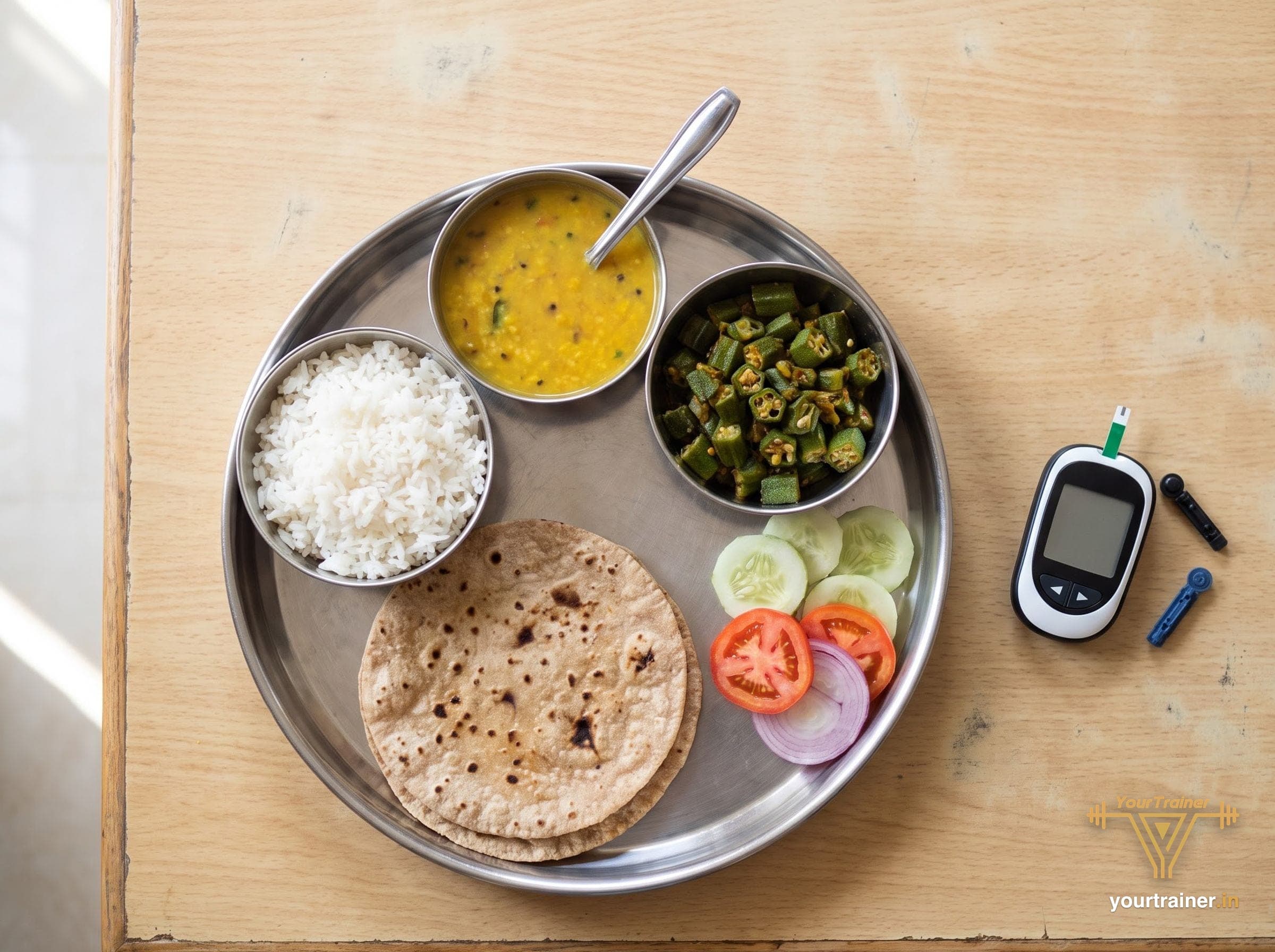
1 in 7
people filling our assessment report insulin resistance or pre-diabetes
18.5%
of people filling our website questionnaire ticked insulin resistance
48% vs 62.3%
share of calories from carbs on a coached member's day, against India's national average
91 g
median daily protein on days our members log all four meals
Source: YourTrainer assessment answers (a sample, Sep to Oct 2026) and recorded classes (Aug to Oct 2026); A sample of YourTrainer website coaching questionnaires, 2 Jun to 14 Oct 2026, counted once per person, aggregated; member food logs, Apr to Sep 2026; ICMR-INDIAB for the national figure.
How common is insulin resistance among Indians who ask a fitness coach for help?
In YourTrainer's 2026 data, about 1 in 7 people filling the coaching assessment, and 18.5% of people filling the website questionnaire, reported insulin resistance or pre-diabetes. Coached members ate about 48% of calories from carbs, against 62.3% in India's national survey.
Read more: Diabetes reversal coaching hub · Rice or chapati for diabetes: what member plates show · Carbs and protein: national survey vs coached food logs
PCOS and PCOD
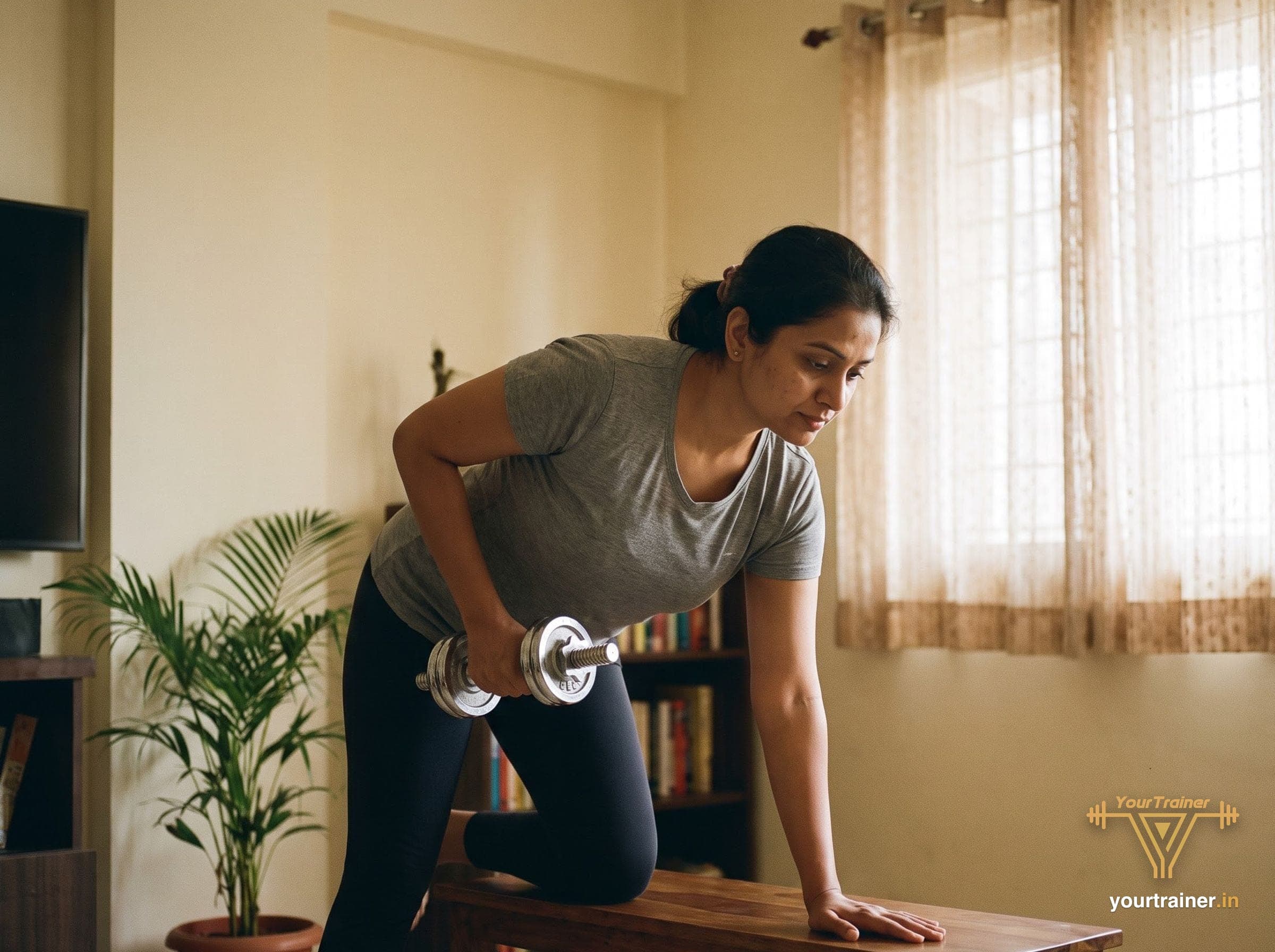
1 in 7
people filling our assessment tick PCOS or PCOD
18.3%
of people filling our website questionnaire ticked PCOS or PCOD
30% vs 32%
of women outside India vs women in India ticked PCOS or PCOD
29% vs 19%
of women outside India vs in India ticked insulin resistance
Source: YourTrainer assessment answers (a sample, Sep to Oct 2026) and recorded classes (Aug to Oct 2026); A sample of YourTrainer website coaching questionnaires, 2 Jun to 14 Oct 2026, counted once per person, aggregated; coaching questionnaires, 22 Jun to 17 Sep 2026, for the abroad split.
Is PCOS more common in Indian women abroad than in India?
Not in YourTrainer's data: 30% of women outside India and 32% of women in India ticked PCOS or PCOD. Insulin resistance differed more, at 29% of women abroad against 19% in India.
Read more: PCOS and PCOD coaching hub · PCOD vs PCOS: the difference, and what our coaches see · What people abroad want from an Indian fitness coach
Knee pain
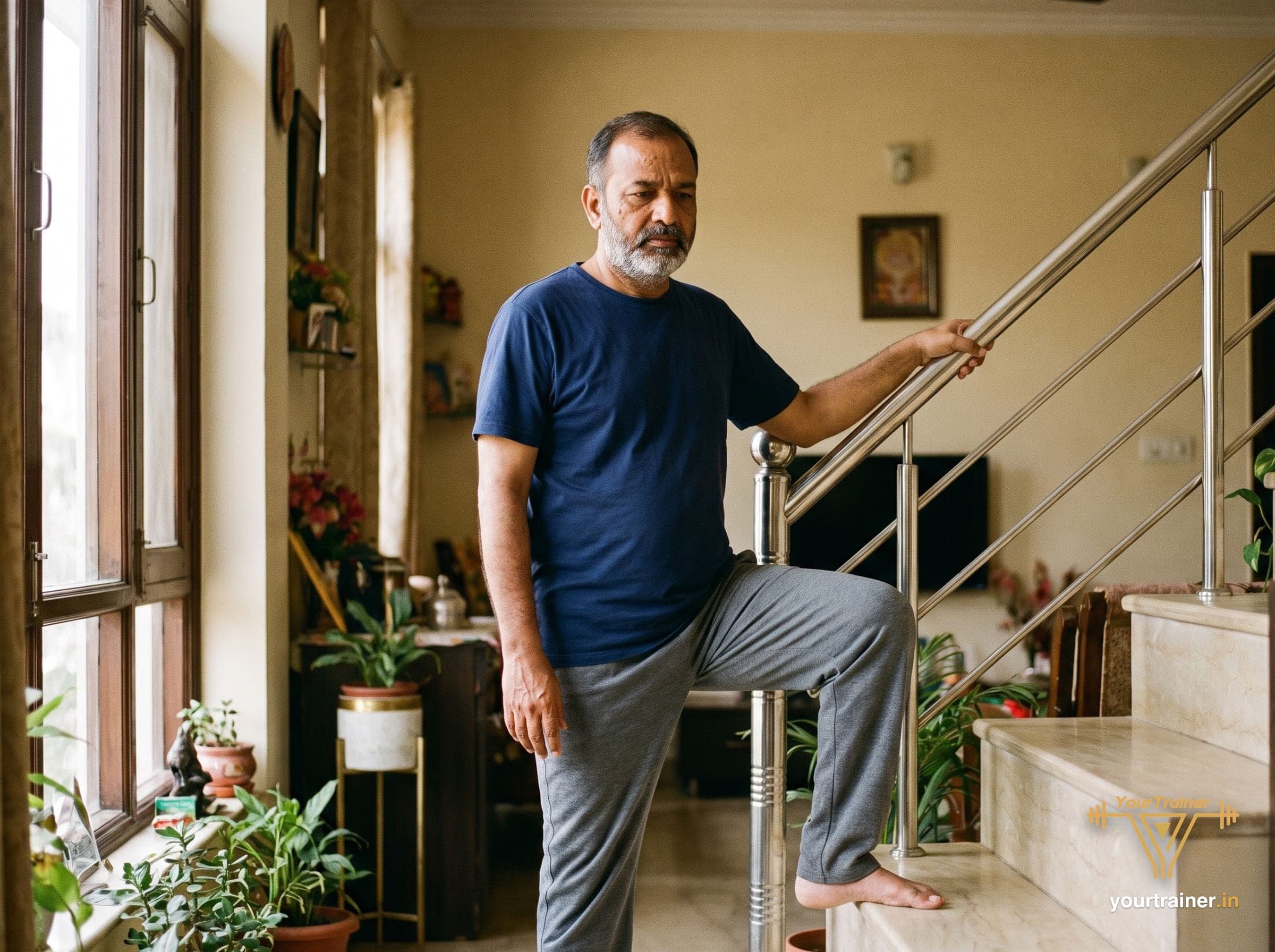
1 in 5
people filling our assessment report knee problems
65%
of sampled coaching sessions mentioned the knee, mostly as a form cue
68%
of sampled sessions included some pain or discomfort, and none was stopped because of it
2 to 3
out of 10: the pain our coaches treat as manageable in a set
Source: YourTrainer assessment answers (a sample, Sep to Oct 2026) and recorded classes (Aug to Oct 2026); coaching sessions reviewed as case studies, 17 Aug to 7 Sep 2026, client names removed.
How often does knee pain come up in personal training sessions?
In a sample of YourTrainer coaching sessions from August and September 2026, the knee was mentioned in 65% of sessions, mostly as a form cue. Some pain came up in 68%, and coaches changed the stance, swapped the exercise or lowered the load rather than ending the session.
Read more: Knee pain strength training hub · Knee pain on stairs: what our coaches do · Knee pain during squats: 3 real coaching fixes
Lower back pain
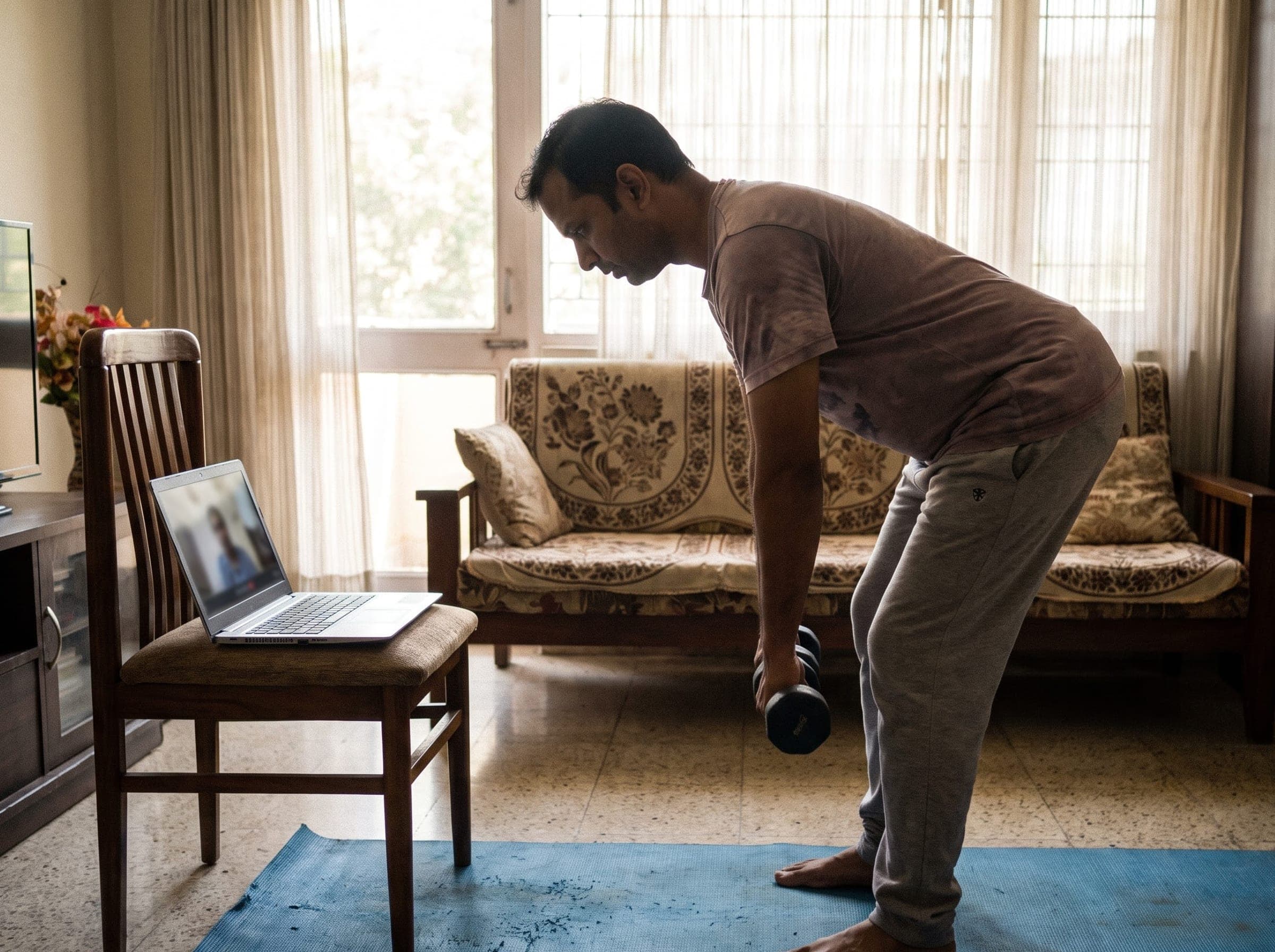
1 in 4
people filling our assessment report back pain
13.9%
of app members list lower back pain, the most common condition in their profiles
1 in 4
recorded classes include a lower back check-in or adjustment
10%
of sampled coaching sessions mentioned the lower back
Source: YourTrainer assessment answers (a sample, Sep to Oct 2026) and recorded classes (Aug to Oct 2026); Health conditions listed in a sample of YourTrainer app member profiles, October 2026, aggregated; coaching sessions reviewed as case studies, 17 Aug to 7 Sep 2026.
What is the most common health condition among people who hire an online fitness coach in India?
In YourTrainer's app, lower back pain is the condition members list most often, at 13.9% of member profiles in October 2026, and about 1 in 4 people filling the coaching assessment report back pain.
Read more: Lower back pain strength training hub · Strength training with lower back pain: what coaches change
High cholesterol and fried food
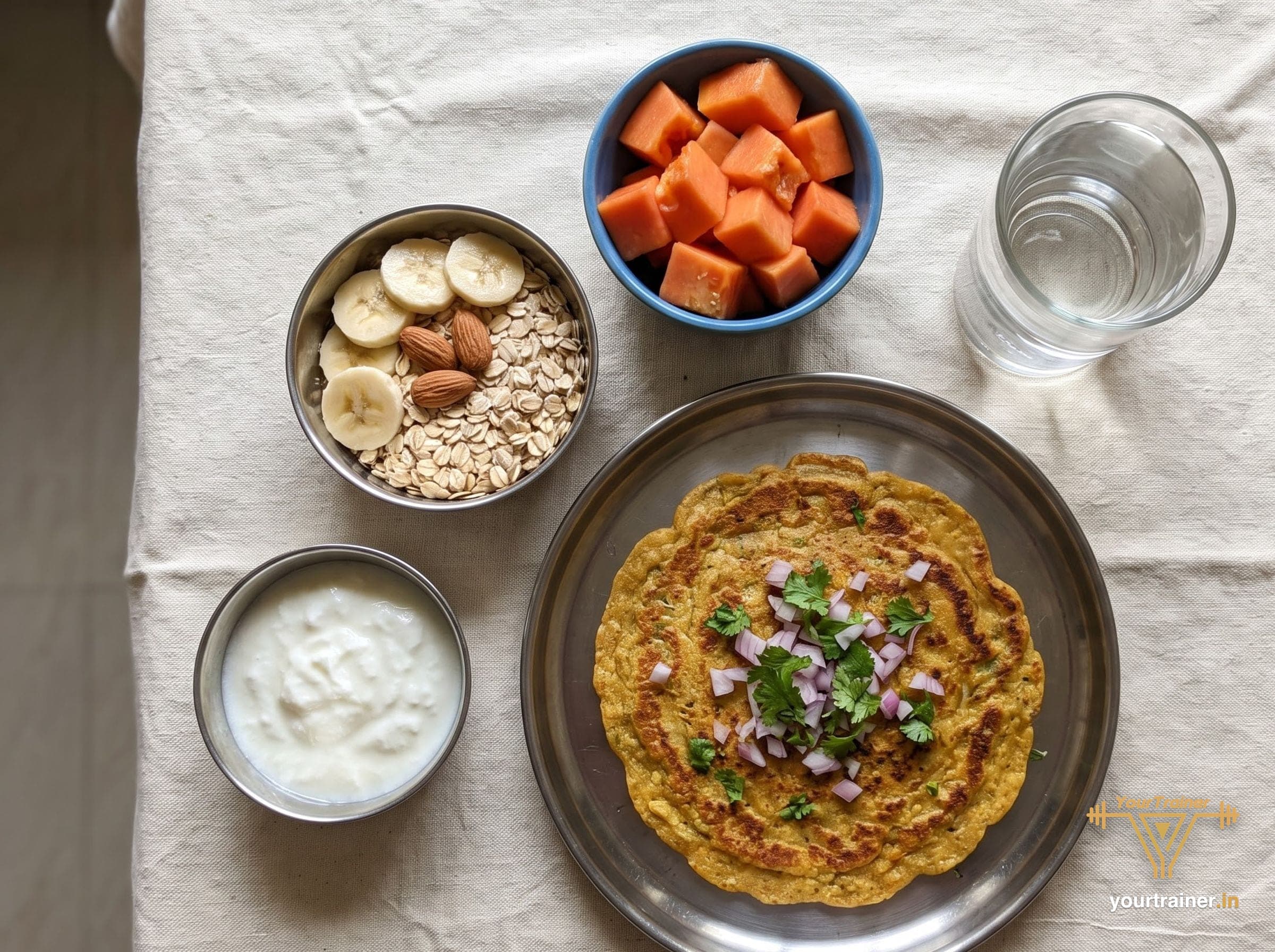
1 in 5
fully logged member days included a deep-fried item
33% vs 29%
median share of calories from fat on fully logged days with a fried item, vs days without
36%
of deep-fried items were logged at lunch, the biggest share of any meal
1 in 11
app members list high blood pressure in their profile
Source: A sample of YourTrainer member food logs, 19 Apr to 13 Oct 2026, aggregated; deep-fried items identified by dish name; Health conditions listed in a sample of YourTrainer app member profiles, October 2026, aggregated.
- Lunch36.0%
- Dinner30.3%
- Snack20.2%
- Breakfast13.5%
Source: A sample of YourTrainer member food logs, 19 Apr to 13 Oct 2026, aggregated; deep-fried items identified by dish name.
How much does fried food raise the fat in an Indian day of eating?
In YourTrainer member food logs from April to October 2026, about 1 in 5 fully logged days included a deep-fried item, and on those days a median 33% of calories came from fat, against 29% on days without one. Lunch, not snacks, carried the most fried items.
Read more: High cholesterol coaching hub · Indian breakfast for high cholesterol: what members eat
Across all conditions
Two views of the same question: what health issues do people bring to a fitness coach? The first is what people tick before their first call. The second is what members list in the app once they join.
- Stress31.4%
- Insulin resistance18.5%
- PCOS or PCOD18.3%
- Thyroid13.1%
- Injury10.5%
Source: A sample of YourTrainer website coaching questionnaires, 2 Jun to 14 Oct 2026, counted once per person, aggregated. About 4 in 10 ticked none.
- Lower back pain13.9%
- PCOS9.7%
- Thyroid9.7%
- Obesity9.7%
- Hypertension9.0%
- Knee problems7.6%
- Diabetes6.9%
Source: Health conditions listed in a sample of YourTrainer app member profiles, October 2026, aggregated.
Method and limits
- Food logs: meals members log in the YourTrainer app, 19 April to 13 October 2026. A fully logged day has at least three meal types. Deep-fried items were found by dish name (pakora, samosa, puri, bhatura, vada, fries and similar). Fat share is fat calories over total logged calories.
- App profiles: conditions members choose in their profile, October 2026. One person can list more than one.
- Questionnaires and assessment: answers on the website questionnaire (2 June to 14 October 2026, counted once per person) and the coaching assessment (September to October 2026).
- Sessions and classes: coaching sessions reviewed as case studies (17 August to 7 September 2026) and recorded live classes (August to October 2026), with names removed.
- Limits: conditions are self-reported, not diagnosed by us. People who look for a fitness coach are not a random sample of India, so these are not national prevalence figures. Our forms have no cholesterol option, so the cholesterol section uses food and blood pressure data instead.
The medical guidelines we work from are listed on Health Sources. Journalists and researchers can ask for the full method, including sample sizes, at yourtrainerbusiness@gmail.com or through our press page.
How to cite this data
YourTrainer (2026). YourTrainer Health Data: diabetes, PCOS, knee pain, back pain and cholesterol. Bengaluru: YourTrainer. https://www.yourtrainer.in/research. Licence CC BY 4.0.
Free to share and adapt under Creative Commons Attribution 4.0. Please credit YourTrainer and link to this page.
Questions about the data
Can I use these numbers in an article, report or thesis?
Yes. The data on this page is published under a Creative Commons Attribution 4.0 licence (CC BY 4.0). Quote it freely with a credit to YourTrainer and a link to this page.
How should I cite YourTrainer's health data?
YourTrainer (2026). YourTrainer Health Data: diabetes, PCOS, knee pain, back pain and cholesterol. Bengaluru: YourTrainer. https://www.yourtrainer.in/research. Licence CC BY 4.0. Add the date you accessed it.
Where does the data come from?
From YourTrainer's own records: member food logs in the app, conditions members list in their profiles, the website coaching questionnaire, the coaching assessment, and recorded coaching sessions and classes. Everything is aggregated and anonymised before it is published.
Is this clinical data?
No. Conditions are self-reported by the person, not diagnosed by us, and the people in the data chose to look for a fitness coach, so they are not a random sample of India. Use the numbers as what a coaching population reports and eats, not as national prevalence.
Why do the PCOS numbers differ between the assessment and the questionnaire?
They come from two different forms, filled by different people over different dates, so the shares differ. Each number on this page is labelled with its own source and date range.
Can journalists get the full method?
Yes. Write to yourtrainerbusiness@gmail.com with your deadline. We share the full method, including sample sizes, privately with reporters and researchers.
This page shares coaching data, not medical advice. For a medical condition, talk to your doctor.