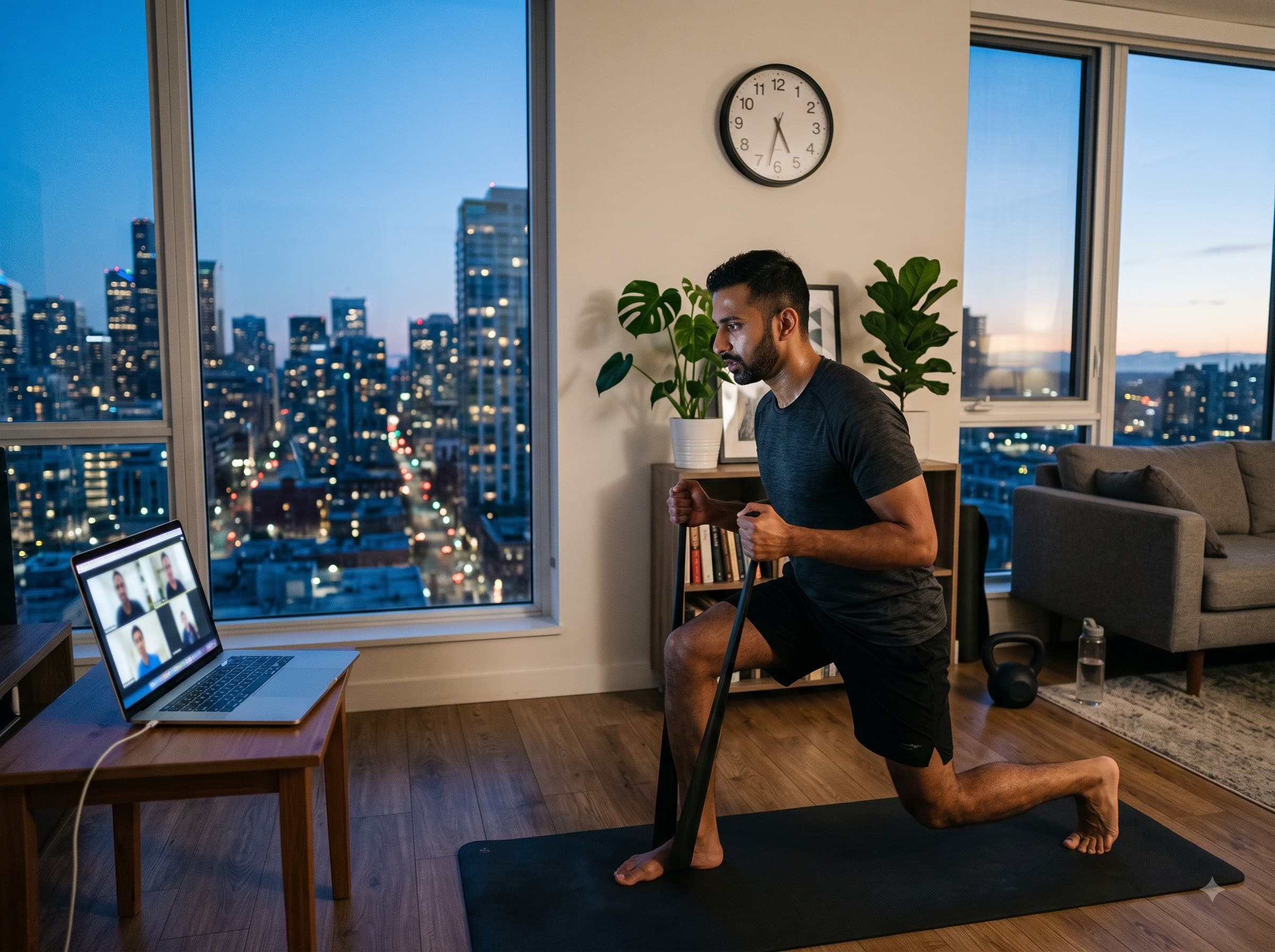
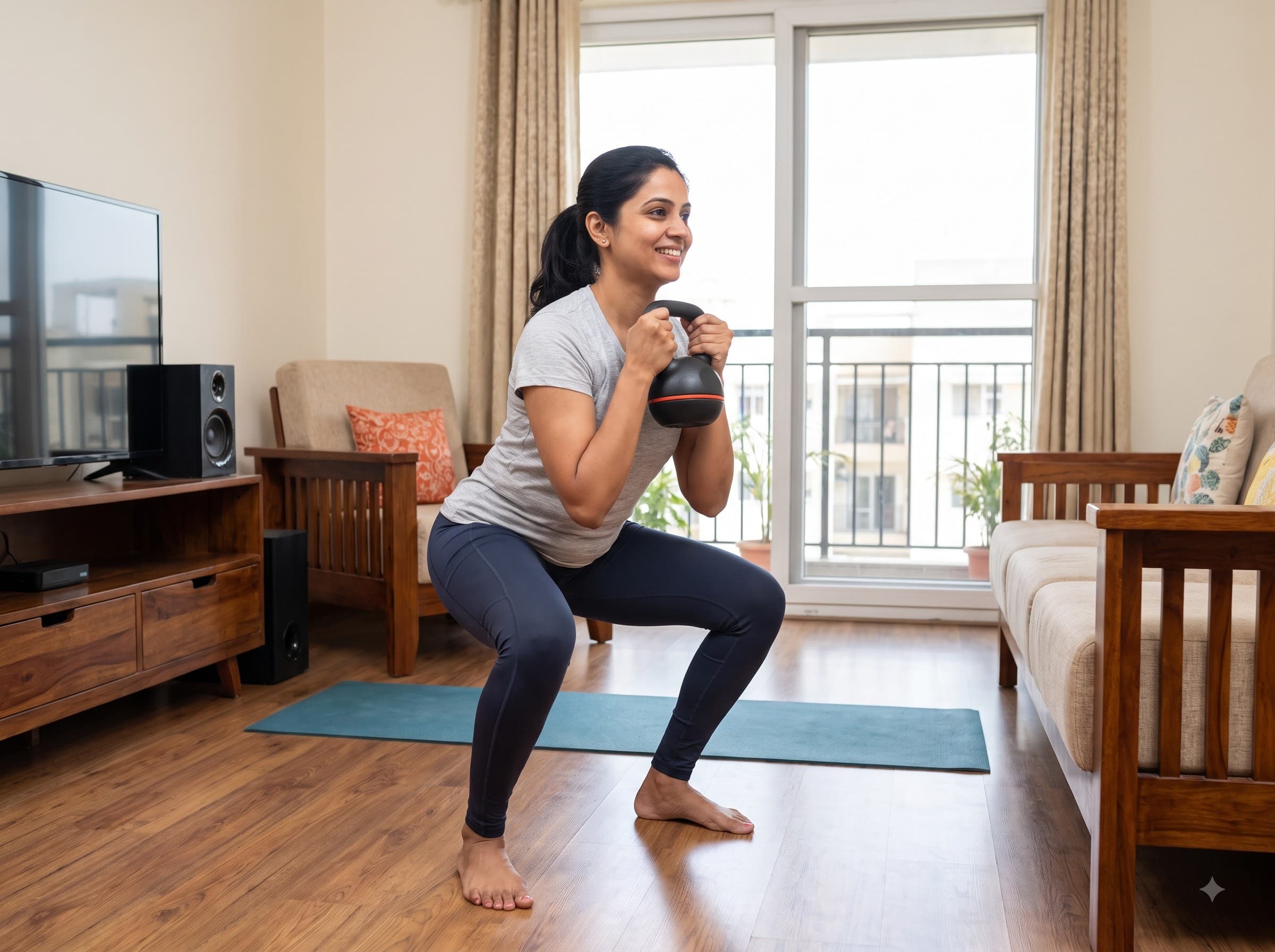
The First Month: Muscle Soreness Timeline From Real Coaching Sessions
Muscle soreness peaks in the first month, then drops 50-60%. The real timeline our coaches teach, when DOMS is normal, and when to worry.
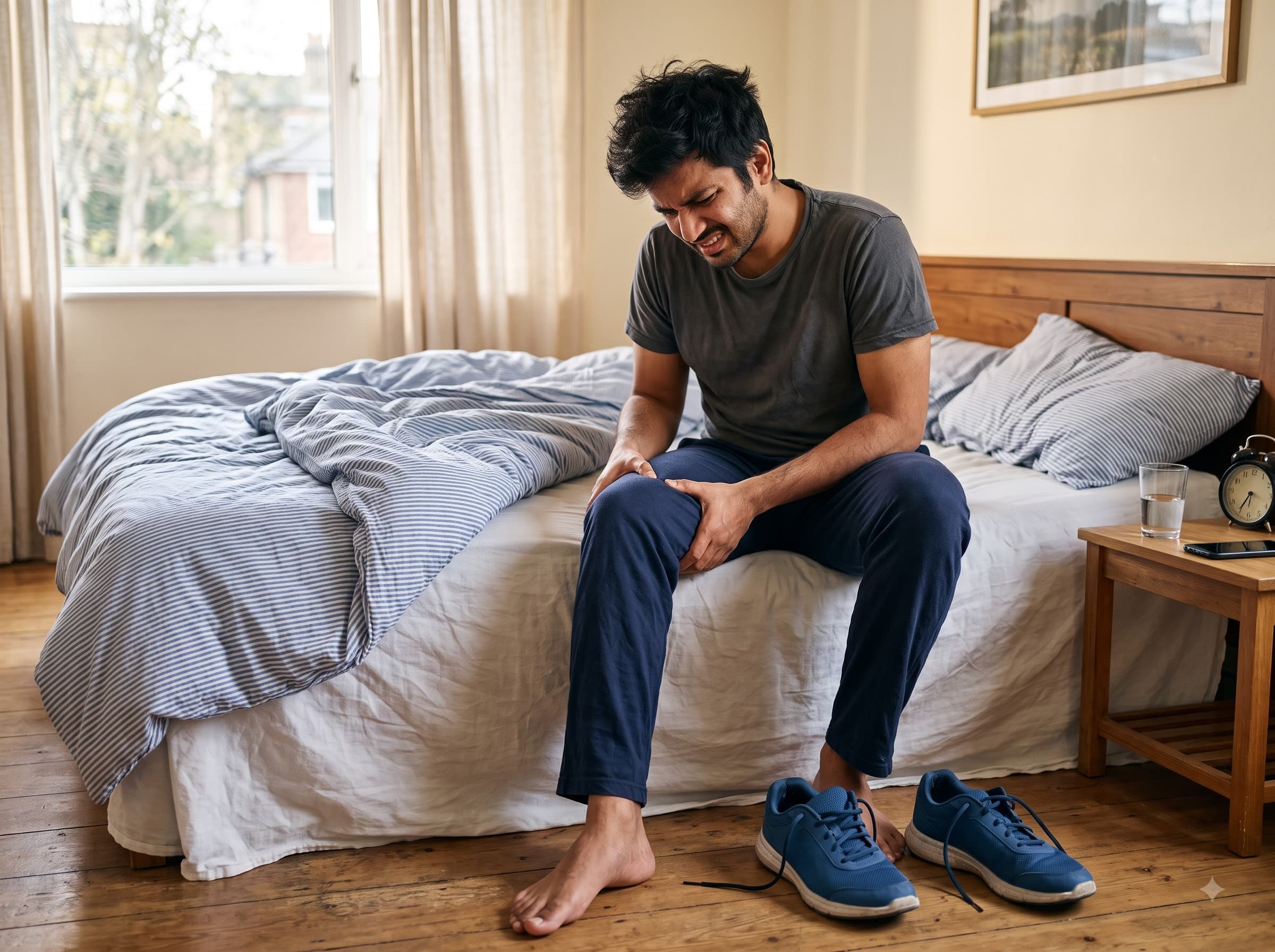
Muscle soreness peaks around the end of your first month, then drops 50 to 60% after that, even if your workouts stay the same. If you're in week 2 of training and feel like your legs have been through a blender, that's normal. But knowing when soreness crosses from expected to a sign you need help changes how you approach your first month.
Method Note
This case study draws on a sample of YourTrainer coaching sessions held between 17 August and 7 September 2026, reviewed as case studies for what coaches teach members about soreness, recovery, and discomfort. Client names are changed.
The First-Month Reality
What you're actually feeling: DOMS vs. joint pain
When you start training, your muscles don't actually get damaged. They get a stimulus they've never received before. The inflammatory response that follows creates soreness that usually peaks 24 to 48 hours after your session, not during it. This is DOMS: delayed onset muscle soreness, and it's a sign your body is adapting, not breaking down.
But not all discomfort is the same. Our coaches teach one rule that cuts through the confusion:
The sharp-vs.-dull rule: Sharp, localized, and short-lived = joint or tendon. Dull, lingering, and across the whole muscle = soreness (DOMS). Sharp pain means modify or stop. Dull soreness means you're doing the work.
In our case studies, discomfort came up in 68% of sessions. The knee came up in 65% of classes, wrist or grip in 29%, lower back in 10%, and shoulder in 6%. But the majority of those were coachable moments (a form tweak, a lighter weight, a modified range), not reasons to stop.
Coaching that does this for you
Reading is step one. A coach turns it into a plan built around your body, food & schedule.
100% online · Indian meal plans · weekly progress reviews · daily WhatsApp support.
Start Your Journey →The first month timeline: What to expect
Days 1 to 3: The acute soreness window
Your first workout won't hurt much. But 24 to 48 hours later, you'll feel it. One client in our data said it plainly: "I didn't realize this exercise could hurt so much." Stairs are miserable. Getting out of a chair is a two-handed operation. This peaks on day 2 and softens by day 4.
Your coach's advice here is simple: move anyway. Light movement (walking, stretching, your next session) actually speeds recovery by flushing metabolic waste from the muscles. Sitting still and icing makes it worse.
Week 1 to 2: Soreness stays high
If you train again before soreness fades, the soreness doesn't add on top; it compounds and plateaus. Week 2 can feel worse than week 1 because you are training again while still sore, triggering a new round of inflammation before the last one has cleared.
This is where the mantras coaches repeat matter: "80% for a year beats 100% for a month." One coach in our study, Vivek, used this exact line. Another, Tanmana, framed progression as "first day 50%, then 1% better every day." The small-steps approach. Not heroic effort. Consistency.
A real moment from our data: one member showed up for 8 classes in 3 weeks without a single miss. No heroics, just committed consistency even through the sore days. That's the prototype.
Week 3 to 4: The peak-then-drop inflection
Around week 3 or 4, something shifts. Your body has adapted. The same exercise that made you hobble in week 2 now just feels like you worked. Soreness becomes proportional to effort instead of disproportionate.
"It's tough during the session but after the session it feels good, it feels light." (a client)
This is the reward moment. You're adapting. And from week 4 onward, soreness falls by 50 to 60% even if the workout intensity stays the same. Your nervous system and muscles have learned the movement pattern. There's less inflammation because there's less novelty.
When soreness means something is wrong
Soreness is not pain. Soreness is not injury. But soreness that doesn't fade is a sign something needs to change.
The recovery rule: "If you are not recovering within 24 to 48 hours, your body is not getting proper recovery, and we change the plan." This rule, taught by coach Gokul, is how coaches know when to dial back intensity, extend rest days, or modify the exercise itself.
Persistent soreness usually means one of three things:
- You're not sleeping enough: Soreness lives in the recovery window: sleep, protein, hydration. If you're sore for 4+ days after a session, check these three things first.
- You're training through an injury: If the soreness is sharp, on one side, or worse with certain movements, tell your coach. Muscle soreness is bilateral and dull.
- The intensity was too high: Your coach should know this. "80% for a year" applies to your workouts too. A smart progression doesn't maximize pain; it maximizes adaptation with minimal soreness.
In our case studies, reasons for missed or rescheduled sessions (23% of classes) included travel and jet lag, work escalations, illness, caregiving, guests and festivals, and severe period cramps. These absences break consistency, which extends the soreness timeline. The first month is hardest when you show up to every session; skip weeks and each return restarts the soreness clock.
The mental game in month 1
The hardest part of month 1 isn't the soreness. It's showing up anyway. A coach in our data, Vivek, said it: "80% for a year beats 100% for a month." Another, Tanmana, framed it as progress: "first day 50%, then 1% better every day." Both are saying the same thing: consistency trumps intensity. Show up at 70% effort, hit your sessions, recover properly, and by week 4 you'll be sore for half as long and stronger than someone who trained hard for 3 weeks and quit.
One member in our data did 8 classes in 3 weeks without a miss. No excuses. Not because they loved the soreness, but because the soreness was temporary and the habit was permanent.
Related articles
- How Long Does It Take to See Results From a Personal Trainer?
- Knee Pain During Squats: 3 Fixes Our Coaches Used in Real Sessions
- Building Strength With 2.5 to 5kg Dumbbells: 8 Real Progressions From Our Classes
Soreness is not weakness leaving your body. It's strength arriving. YourTrainer coaches Indians, worldwide, with live 1-on-1 video sessions, Indian-food meal plans and WhatsApp accountability. Start Your Journey.
Coaching guidance on this site is educational and is not a substitute for medical advice. See how we use sources.
Did you find this helpful?

About Anish Agarwal
Founder & Head Coach, YourTrainer · NASM & K11 Certified Personal Trainer · coaching since 2022
Featured in Dietitians.io, Fitness Interview, NRI Pulse, The MASALA Study. Press and media
Anish Agarwal is a NASM and K11 certified personal trainer coaching fat loss, body transformation, strength, and nutrition for clients across India since 2022. He founded YourTrainer to make expert, science-based coaching accessible online and in Bengaluru. Coach Anish's profile and the YourTrainer story.
Online 1-on-1 Coaching
Start Your Journey
Get a personalised training + Indian nutrition plan built around your goal, coached online, anywhere in India or abroad.
Trusted by 1,000+ clients coached across India & abroad
Free 30-min discovery call · No obligation