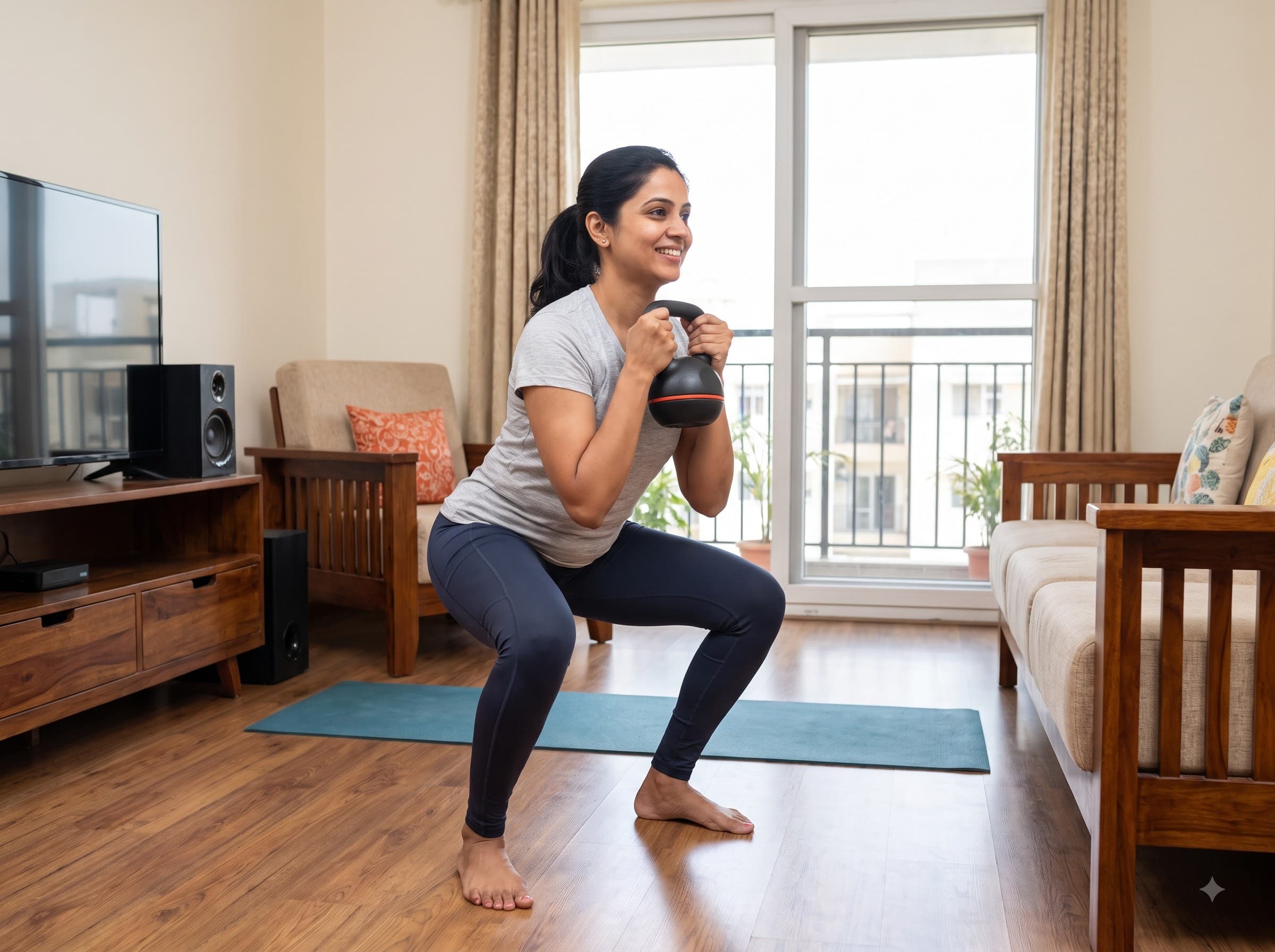
'Toned' Is Not a Fitness Word: What Our Coaches Say Instead
Learn what 'toned' really means: muscle plus fat loss. Why women don't get bulky by accident, and how to track progress beyond the scale.
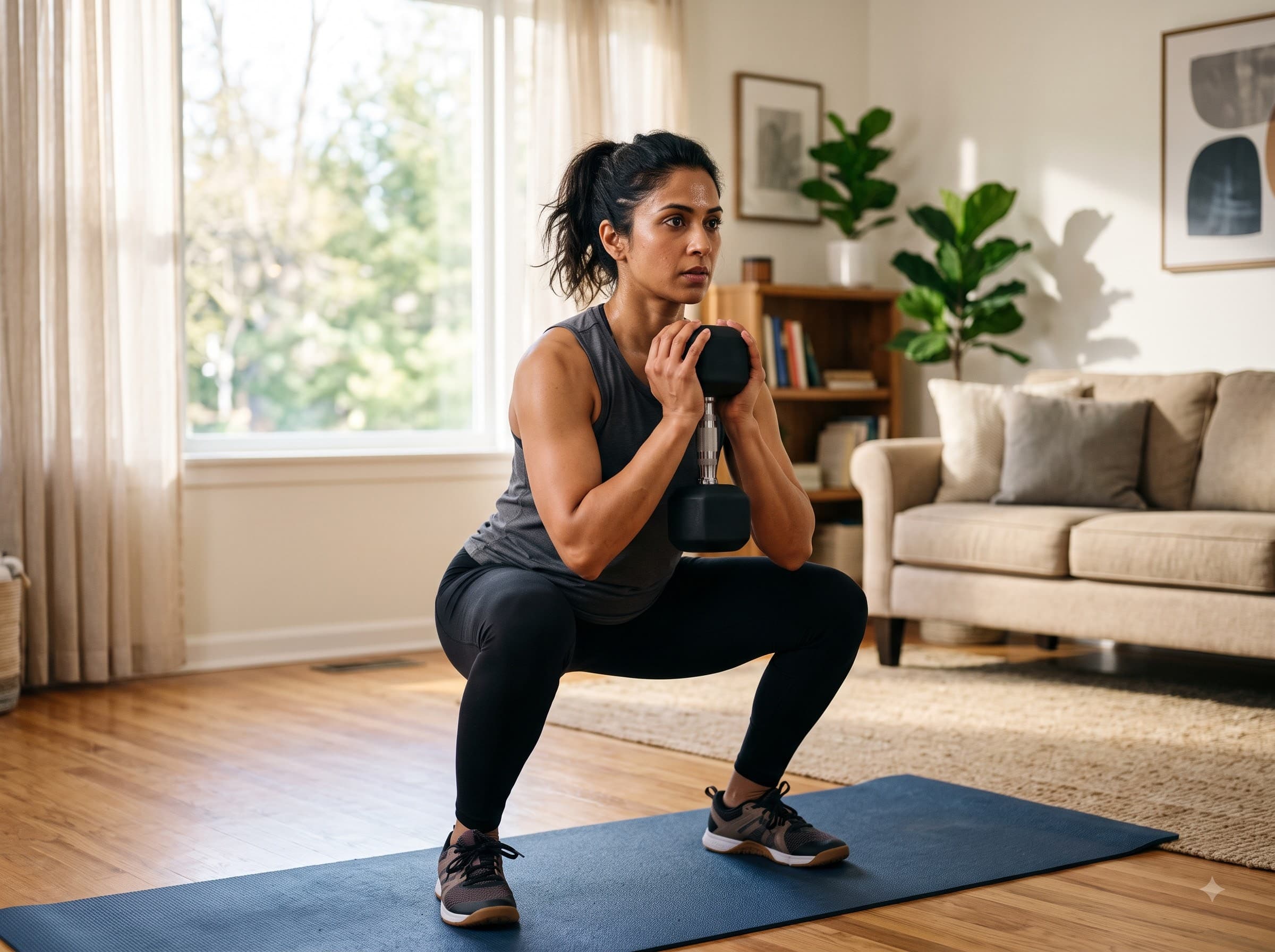
"Toned" is not a fitness word: it's a body composition goal that means building muscle while reducing fat. In our coaching sessions, clients ask how to get "toned" without gaining bulk. The answer surprises them: you can't accidentally build muscle and simultaneously reduce fat in a way that looks bulky. Strength training works the opposite way.
Method Note If you want a trainer who understands strength for women, see female personal trainers across India.
This case study draws on a sample of YourTrainer coaching sessions held between 17 August and 7 September 2026, reviewed in detail as case studies. "Toned" is one of the myths coaches corrected in those sessions; 69% of the sampled clients were women. Client names are changed.
Study snapshot
What coaches mean by "muscle" instead of "tone"
When a coach says you need to build muscle to look defined, they're talking about skeletal muscle, the tissue that contracts to move your body. Muscle is metabolically active, which means it burns calories even at rest. Fat is inert; it stores energy but doesn't work.
The visible result when you build muscle and lose fat simultaneously is what people call "tone." Your muscles become more prominent because there's less fat covering them. The definition you see, the line between your bicep and forearm, the ridge down your abs, the shape of your shoulders, is muscle underneath skin, not a special property called "tone."
"There is no word like tone. Toned means muscle." (Tanmana)
This distinction matters because once you know "tone" means muscle, the path becomes clear: lift weights, eat enough protein, and don't fear the barbell.
The bulking myth: Why women don't accidentally get huge
The single biggest barrier we see to women starting strength training is the fear of becoming bulky. It's a myth so persistent that coaches correct it constantly, because it stops women from training the way their goals actually require.
Here's why the fear doesn't match reality: building significant muscle mass requires a specific combination of heavy progressive load, adequate protein intake, and a calorie surplus or at minimum maintenance. Accidentally hitting all three? Nearly impossible.
Hormones matter: Women have roughly 10× less testosterone than men. Building muscle is hard for anyone, but the hormonal environment in women is not built for rapid muscle gain. This is why progressive strength training in women typically shows up first as better performance (more reps, heavier weight), then as visible definition as fat reduces.
What women often see instead, especially in the first 8 to 12 weeks of training, is improved clothing fit, visible muscle definition, increased strength, and sometimes a stable or slightly increased weight. The weight stability happens because muscle gained is partially offset by fat lost. This isn't failure; it's proof that recomposition is working.
Coaching that does this for you
Reading is step one. A coach turns it into a plan built around your body, food & schedule.
100% online · Indian meal plans · weekly progress reviews · daily WhatsApp support.
Start Your Journey →The scale doesn't tell the full story
One of the most common moments in our classes is when a client says something like this:
"I am feeling light. I don't know if it shows on the scale but I am feeling light." (a client)
This is the scale lie. When you start strength training, your weight might not move much because you're gaining muscle and losing fat. But your body composition is changing. Your bones are becoming denser. Your muscle tissue is expanding. Water retention can increase during the early phases of new training as your body adapts and repairs muscle damage.
"Don't fixate on that weight number, because you're building muscle and losing fat at the same time." (Vivek)
We saw this in the study: one client in her 40s tracked her weight through a training block and it barely moved, while her strength numbers and the way her clothes fit changed. Everything except the scale told the real story.
This is why coaches recommend tracking progress through:
- Performance: How much weight you lift, how many reps you complete, how your body moves
- Measurements: Waist, hips, arms, chest: tape doesn't lie the way scales do
- Photos: Progress photos taken under the same lighting weekly or every two weeks
- How you feel: Energy, strength, how your clothes fit, how your body looks in the mirror
Strength comes first; visible definition follows
A pattern emerged strongly in our data: 75% of the classes where we could track progress showed strength gains, more reps, more weight, better form, exercises that weren't possible before. These strength gains happened well before clients reported seeing visible muscle definition.
"When I started I couldn't do a single push-up. Now I can do 40 plus easily. You will get better, trust me." (Vivek)
This tells you something important: your body is changing on the inside before it changes on the outside. You're building capacity, structural strength, and metabolic resilience. The visible "tone" follows these internal changes.
If you're three weeks into training and the scale hasn't moved, you're not failing. Your nervous system is learning. Your muscles are becoming denser. Your body is rewiring itself to handle load that would have been impossible weeks earlier. That's progress.
Related articles
- Creatine for Indian Women: Bloating, the Bulking Fear, and the Real Dosage
- How Long Does It Take to See Results From a Personal Trainer?
- Building Strength With 2.5-5kg Dumbbells: 8 Real Progressions From Our Classes
The question isn't whether you can get toned: it's whether you trust the process more than the scale. YourTrainer coaches Indians, worldwide, with live 1-on-1 video sessions, Indian-food meal plans and WhatsApp accountability. Start Your Journey.
Coaching guidance on this site is educational and is not a substitute for medical advice. See how we use sources.
Did you find this helpful?

About Anish Agarwal
Founder & Head Coach, YourTrainer · NASM & K11 Certified Personal Trainer · coaching since 2022
Featured in Dietitians.io, Fitness Interview, NRI Pulse, The MASALA Study. Press and media
Anish Agarwal is a NASM and K11 certified personal trainer coaching fat loss, body transformation, strength, and nutrition for clients across India since 2022. He founded YourTrainer to make expert, science-based coaching accessible online and in Bengaluru. Coach Anish's profile and the YourTrainer story.
Online 1-on-1 Coaching
Start Your Journey
Get a personalised training + Indian nutrition plan built around your goal, coached online, anywhere in India or abroad.
Trusted by 1,000+ clients coached across India & abroad
Free 30-min discovery call · No obligation