
For people over 60 · Online
A Personal Trainer for Senior Citizens, Online at Home
YourTrainer gives people over 60 a certified 1-on-1 coach for strength, balance and walking. Sessions are live on video at home, anywhere in India or abroad, planned around knee pain, back pain and the doctor's advice. Book a free 15-minute call to start. Start Your Journey
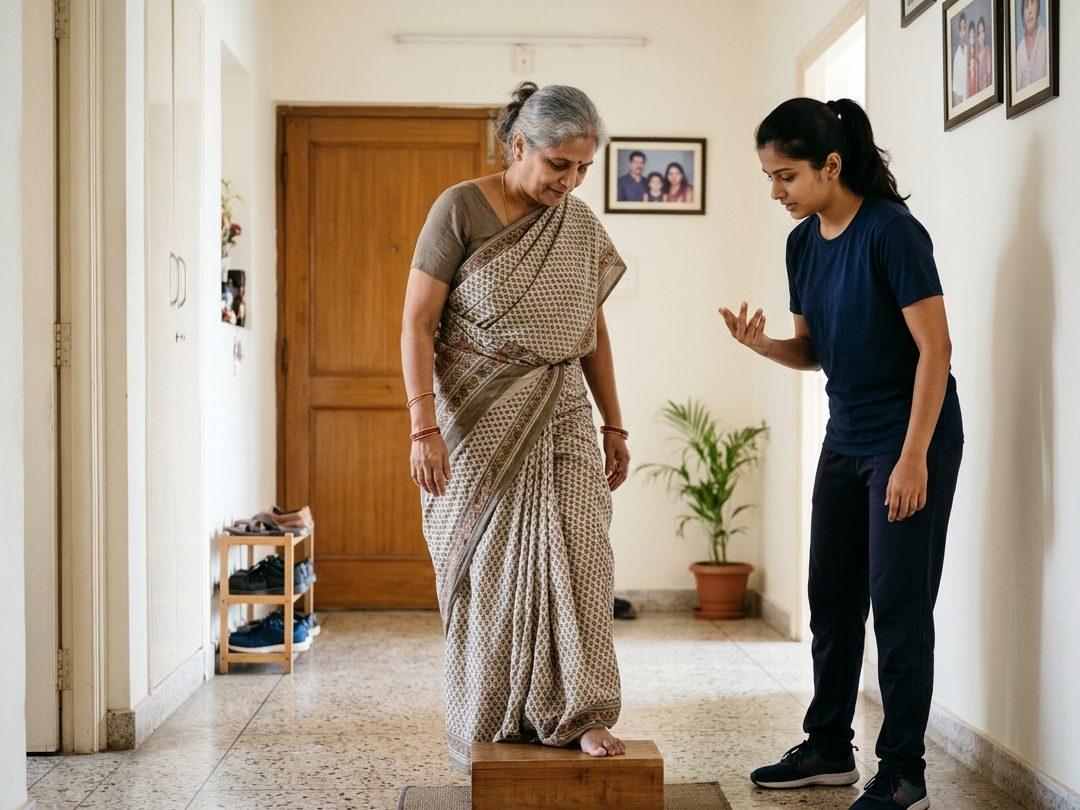
Getting up from a chair, climbing stairs, carrying shopping, staying steady on the feet. A coach makes these easier every week, at a pace that suits the person, with someone who notices when a knee or the back is not right.
- 1-on-1 sessions at home, on live video
- A plan around the doctor's advice
- Indian food advice from a clinical nutritionist
What a week looks like
A sample week for someone starting at 60 plus
- MonSession: sit to stand, wall push-ups, band rows, balance at the counter
- TueWalk, 15 to 30 minutes, at a pace where talking is still easy
- WedSession: step ups, carries with light bags, a check on knees and back
- ThuWalk and five minutes of balance practice
- FriSession: the same moves, a little harder if last week felt easy
- SatEasy walk, ideally with family or friends
- SunRest
Fit check
Who it suits, and who it does not
It suits you if
- You sit for most of the day and want to move more without getting hurt.
- You have knee pain, back pain, diabetes or blood pressure, and your doctor is happy for you to exercise.
- You have had a fall or feel unsteady and want to feel safe on your feet again.
- You want a regular coach who turns up, not a class you have to travel to.
It is not the right fit if
- You need nursing, daily personal care or help with medicines. An eldercare service fits that better.
- You have chest pain, dizziness or a recent surgery your doctor has not cleared.
- You need treatment for an injury right now. A physiotherapist comes first.
- You want a group class. Sessions are 1-on-1.
Our own data
What people over 60 tell us before they start
Self-reported on our coaching questionnaire, shares only, rounded. A person can tick more than one. These are not diagnoses [1].
The training science
What health bodies advise after 60
The WHO advises adults over 65 to build up to 150 to 300 minutes of moderate activity a week, with muscle strengthening on 2 or more days and balance work on 3 or more days for people with poor mobility [2].
In the Longitudinal Ageing Study in India, about 1 in 5 adults over 60 reported a bone or joint disease, and about 1 in 3 reported heart disease, stroke or high blood pressure [3]. That is why every plan starts with the doctor's advice.
Over 60 vs everyone
Older adults come to us for strength and health, not weight
Start Your Journey questionnaire, 22 Jun to 25 Nov 2026, self-reported. Shares only, rounded. Several goals can be ticked.
At home, on video
What a session actually looks like
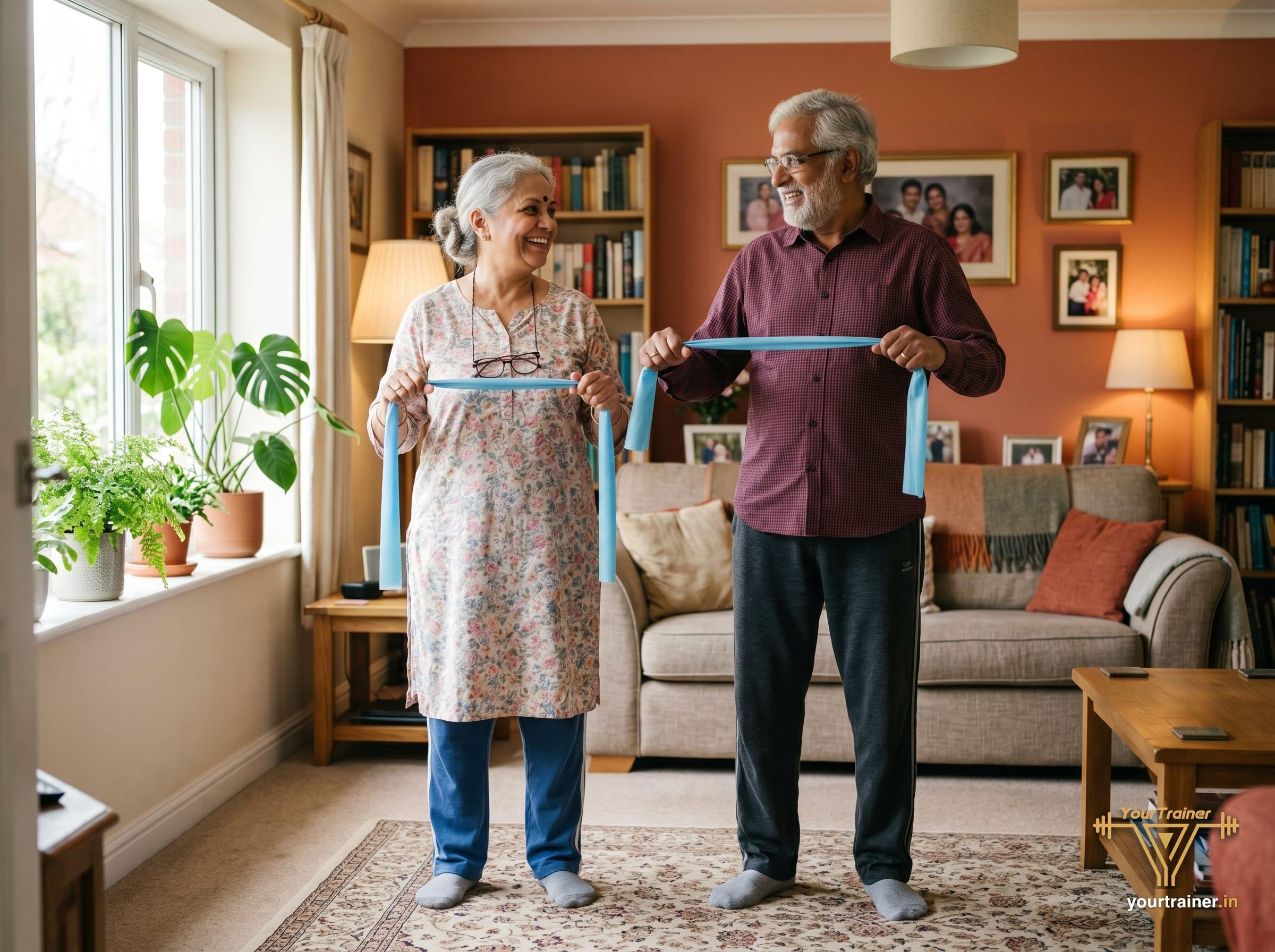
No gym and no travel. A sturdy chair, a wall, a light band and, later, light dumbbells. The coach starts with what the person already does every day and makes it stronger and steadier.
The session runs on a phone or laptop, and the coach watches every movement and corrects it as it happens. Family can help set up the phone for the first few sessions.
Grandparents, 70 and over
For grandparents: balance first, then strength
After 70 the first goal is staying steady and independent: getting up without using the hands, walking without holding the wall, managing stairs. Sessions are shorter at the start, every balance drill is done next to a chair, and the coach checks in on sleep, pain and energy each time.
Couples can train together. In our questionnaire, 37% of people over 60 asked to train as a couple.
Who coaches
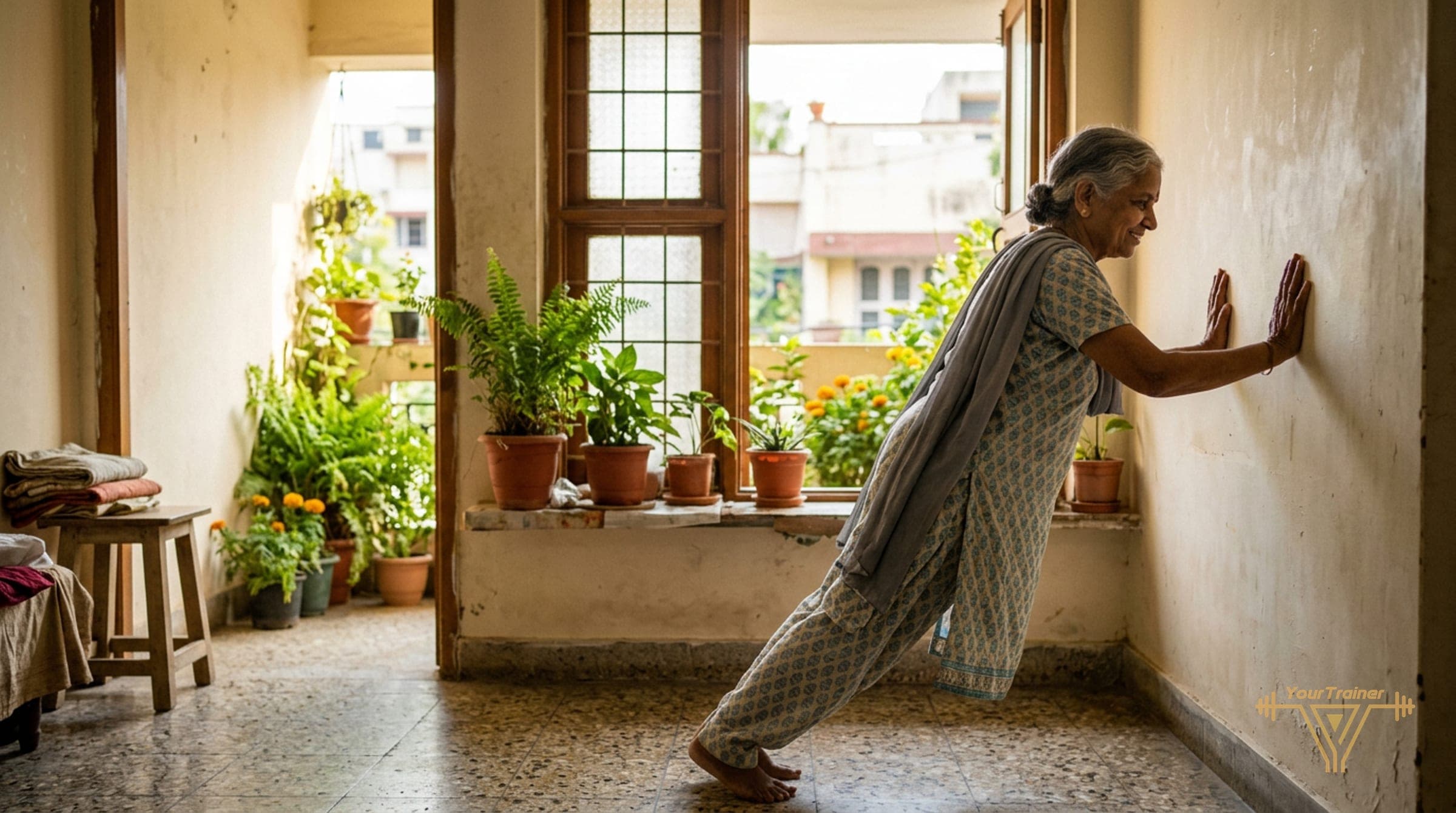
Certified coaches, and a female coach on request
Coach Tanmanna (ACE Certified Strength and Conditioning) and Coach Nancy coach women. Between them, our female coaches hold NASM, K11, ACE and EREPS certifications. Coach Vivek (ACE Certified Personal Trainer) specialises in beginner foundations and form. Food advice comes from Priyanka Dey, a clinical nutritionist (M.Sc Clinical Nutrition and Dietetics), and works with what is cooked at home: dal, roti, rice, sabzi, curd, eggs or paneer.
Safety
Doctor first, then a slow start
Before the first session we ask about heart conditions, blood pressure, sugar, joint replacements, recent surgery and falls. If the doctor has given advice on exercise, the plan follows it. In every session the coach watches for breathlessness, dizziness or pain, and stops when something is not right.
Booking for someone else
Coaching for your mother, father or both
Seniors, parents and grandparents
Related pages
Online personal training from YourTrainer
- Fitness coach for your mother
- Fitness coach for your father
- Personal trainer for your parents in India, booked by you
- Fitness coach for Indian seniors in the USA
- Online personal trainer for women over 40
- How to help your parents in India stay strong from abroad
- Fitness plan for Indian parents in the US
- Diabetes coaching in India
- Personal trainer or physiotherapist?
FAQ
Questions families ask before they book
Your coach comes to you on video. Sessions are live and 1-on-1, so the coach sees every movement and corrects it as you go, wherever you live in India or abroad. All you need is a phone, a sturdy chair and a little floor space.
For most people it is, once their doctor agrees. Before the first session we ask about heart conditions, blood pressure, sugar, joint replacements, recent surgery and falls. The plan avoids anything the doctor rules out, and the coach never changes medicines.
Sixty minutes at an easy pace: a warm up, strength from a chair or a wall, balance practice with a chair or counter in reach, and a cool down. The coach starts with movements used every day, like getting up from a chair, climbing a step and carrying a bag.
There is no fixed age. Health bodies like the WHO advise strength work on two or more days a week for adults over 65, with balance work for those who are unsteady. We start lighter and slower for people in their seventies and eighties.
Yes. Many older couples train together in one session, and each person still gets their own plan and their own exercises. Ask for a couples plan on the free call.
Yes. Ask for a female coach on the free call and we will match one. Coach Tanmanna (ACE Certified Strength and Conditioning) and Coach Nancy both coach women. Between them, our female coaches hold NASM, K11, ACE and EREPS certifications.
No. A physiotherapist treats an injury or rehabilitates after surgery. A coach builds strength, balance and fitness once the person is cleared to exercise. If a physio is treating your parent now, we follow their advice and can work alongside them.
The fee depends on how many sessions a week are needed. It is set on the free 15-minute call. Plans run for 1, 3 or 6 months, and there is no lock-in.
Yes. You book the free call, join it with or without your parent, and pay for the plan. Your parent trains at home with their coach. See our page on a personal trainer for your parents for how that works.
Tell us about the person on a free call.
Their age, their health, what worries you and what they enjoy. We will say honestly whether 1-on-1 coaching is right for them, and if it is, we will match a coach who suits them, a female coach if asked.
Sources
Where the numbers come from
- [1] A sample of YourTrainer coaching questionnaires completed between 22 Jun and 25 Nov 2026, counted once per person, aggregated. Self-reported, not diagnoses. Our own data, see the research hub. /research (checked 21 Oct 2026)
- [2] World Health Organization. WHO guidelines on physical activity and sedentary behaviour, 2020. Adults 65 and over: 150 to 300 minutes of moderate activity a week, muscle strengthening on 2 or more days, balance and strength activity on 3 or more days for those with poor mobility. www.who.int/publications/i/item/9789240015128 (checked 26 Oct 2026)
- [3] Perianayagam A, Bloom D, Lee J et al. Cohort Profile: The Longitudinal Ageing Study in India (LASI). International Journal of Epidemiology. 2022;51(4):e167. Wave 1, 2017 to 2018, self-reported diagnoses among adults aged 60 and over. pmc.ncbi.nlm.nih.gov/articles/PMC9365624/ (checked 26 Oct 2026)
- [4] NHS. Physical activity guidelines for older adults (page updated 26 Feb 2025). www.nhs.uk/live-well/exercise/physical-activity-guidelines-older-adults/ (checked 26 Oct 2026)
- [5] American College of Sports Medicine. Progression models in resistance training for healthy adults (position stand). Med Sci Sports Exerc. 2009;41(3):687-708. doi.org/10.1249/mss.0b013e3181915670 (checked 21 Oct 2026)