Poha Calories and Protein: 1, 1.5 and 2 Plates, Plus How to Reach 20 g Protein
1 plate of poha (50 g dry): about 295 kcal, 7 g protein. 1.5 plates: 440 kcal, 10 g. 2 plates: 585 kcal, 13 g. Add egg or paneer for 20 g.
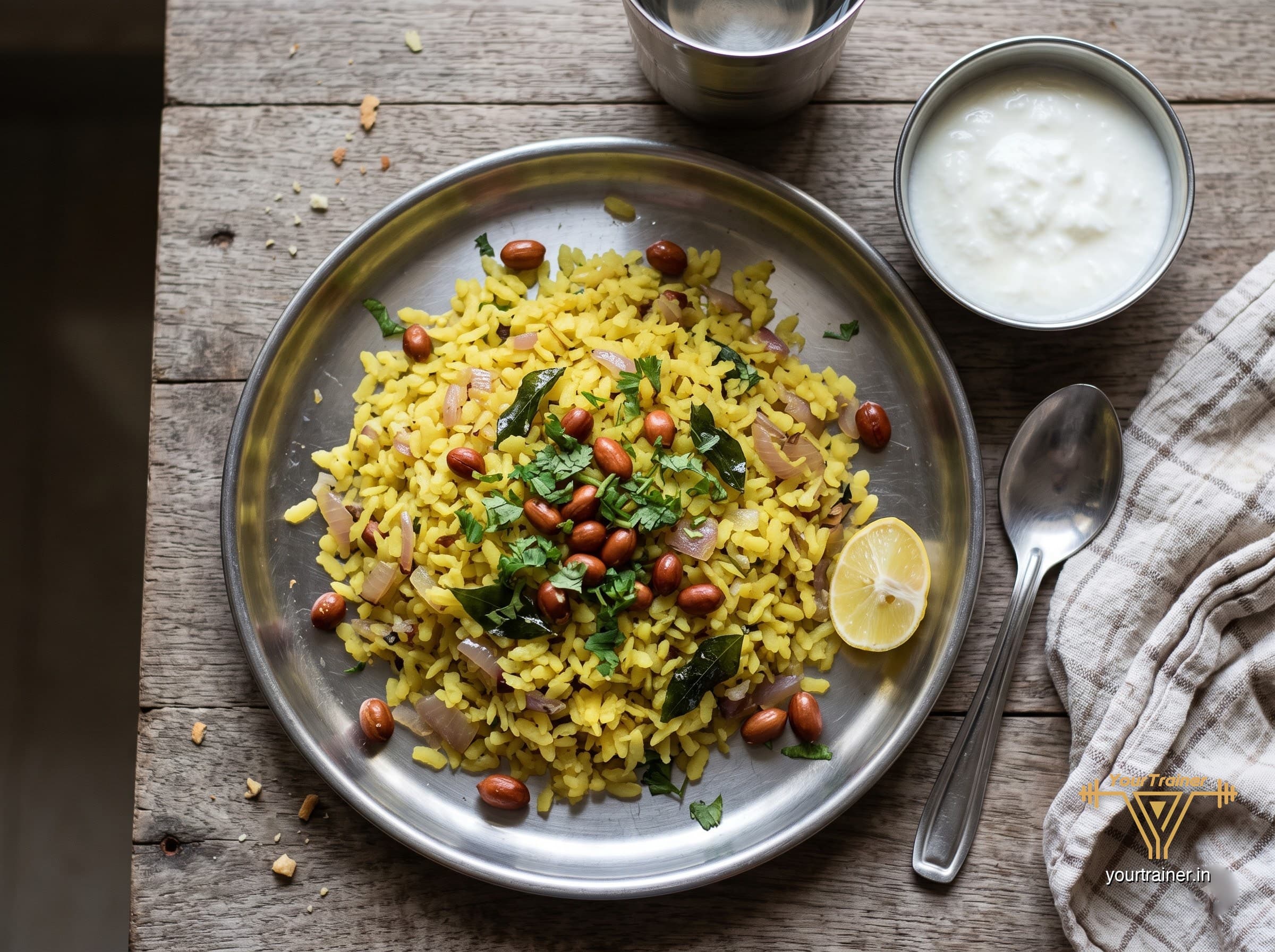
Quick answer: One plate of poha made with 50 g of dry flakes, a teaspoon of oil, onion and a spoon of peanuts is about 295 kcal and 7 g protein. A plate and a half is about 440 kcal and 10 g, and two plates are about 585 kcal and 13 g. Poha is mostly carbohydrate, so it needs a protein partner: two boiled eggs take the same plate to about 20 g.
Recipe at a Glance
Poha Calories and Protein by Plate
One plate here means 50 g of dry flakes, which soaks up to roughly a full plate once cooked. The oil, onion and peanuts scale with it. Restaurant plates vary a lot, so treat these as home numbers.
| Portion | Dry poha | Protein | Kcal | Carbs |
|---|---|---|---|---|
| Half plate | 25 g | 3 g | ~145 | 22 g |
| 1 plate | 50 g | 7 g | ~295 | 44 g |
| 1.5 plates | 75 g | 10 g | ~440 | 66 g |
| 2 plates | 100 g | 13 g | ~585 | 88 g |
What Is in One Plate
| Component | Amount | Protein | Kcal |
|---|---|---|---|
| Poha (dry rice flakes) | 50 g | 3.7 g | 177 |
| Oil | 1 tsp (5 g) | 0.0 g | 45 |
| Onion | 40 g | 0.6 g | 19 |
| Roasted peanuts | 10 g | 2.4 g | 52 |
| One plate | 7 g | ~295 |
Rice flakes have 7.4 g protein and about 354 kcal per 100 g on the Indian Food Composition Tables, which is about 2.1 g protein per 100 kcal. Gram flour, for comparison, gives about 6.5 g per 100 kcal. The oil is the biggest single add-on here, at 45 kcal for one teaspoon.
Ingredients (1 Plate)
- 50 g thick poha, washed and drained
- 1 tsp oil
- 40 g onion, finely chopped (about half a small onion)
- 10 g roasted peanuts (about 1 tablespoon)
- 1/2 tsp mustard seeds, 6 curry leaves, 1 green chilli
- 1/4 tsp turmeric, salt to taste
- Lemon wedge and 1 tablespoon coriander leaves to finish
Step by Step (15 Minutes)
Step 1 · Wash (3 min)
Rinse the poha in a sieve under running water until it softens, then let it drain for 5 minutes. Sprinkle with turmeric and salt and toss gently. Do not soak it in a bowl, it turns mushy.
Step 2 · Tadka (3 min)
Heat the oil on medium. Add the mustard seeds until they pop, then the curry leaves, green chilli and peanuts for 30 seconds.
Step 3 · Onion (3 min)
Add the onion and cook 2 minutes until soft but not brown.
Step 4 · Finish (4 min)
Add the poha, toss for 2 minutes until hot, cover for 1 minute, then finish with lemon and coriander.
Turn the numbers into meals
Knowing the calories is the easy part. Eating to them through a normal Indian week is where most people slip.
A YourTrainer coach plans your week around the dal, roti, rice and sabzi you already eat, reviews your plate photos and adjusts every week. It runs fully online, so it works the same in Bengaluru or Boston.
Start Your JourneyCoached online, wherever you live:Online personal trainer in India·Coaching for Indians in the USA·Online coaching for NRIs
Eating or training around a condition?Diabetes and pre-diabetes·PCOS·Knee pain·Lower back pain·High cholesterol
How to Reach 20 g Protein
Poha on its own is a light breakfast for protein. These additions use IFCT values for boiled egg, paneer, peanuts and potato.
| One plate plus | Protein | Kcal |
|---|---|---|
| Plain plate | 7 g | ~295 |
| + 10 g extra peanuts | 9 g | ~345 |
| + 50 g potato (batata poha) | 7 g | ~330 |
| + 1 boiled egg on the side | 13 g | ~365 |
| + 50 g paneer cubes stirred in | 16 g | ~445 |
| + 2 boiled eggs | 20 g | ~440 |
| + 100 g paneer | 26 g | ~600 |
The simplest fixes are an egg or two on the side, or paneer stirred in at the end. If you eat plant-based, a side of curd and a handful of sprouts is the usual swap, and our 6 breakfasts without whey has more. To see what your own plate adds up to, try the Indian food calorie calculator or the protein calculator.
Is Poha Good for Weight Loss?
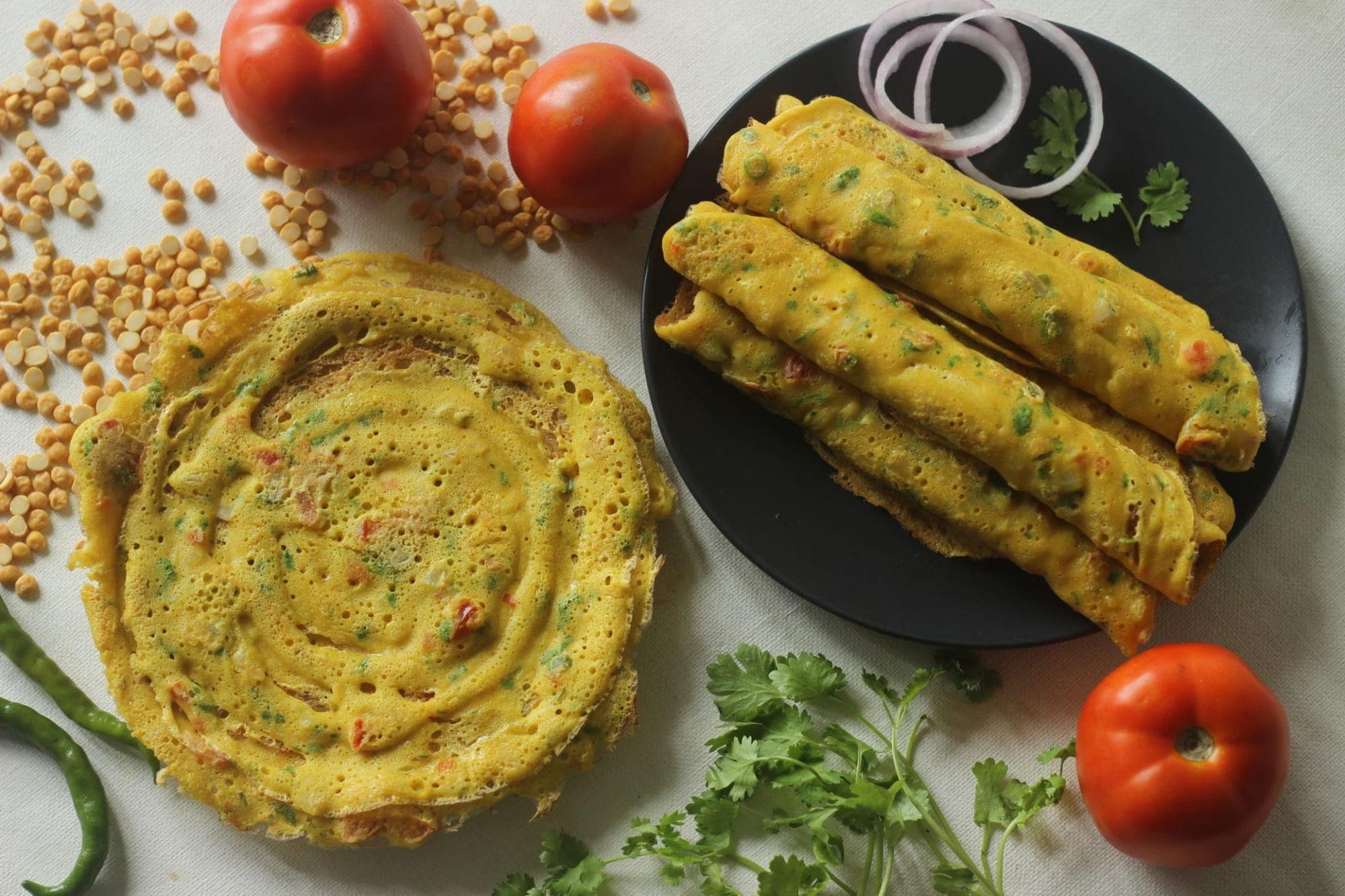
It can be part of a plan, but not as a plain plate. At about 295 kcal and 7 g protein it is easy to eat and light on protein, because most of the plate is carbohydrate and oil. Pair it with protein, watch the oil, and keep to one plate. Our besan chilla gives about 5.0 g protein per 100 kcal, against 2.3 g for plain poha.
3 Variations
- Batata poha: Add 50 g boiled or diced potato with the onion. About 7 g protein and 330 kcal a plate.
- Sprouts poha: Fold in a handful of cooked moong sprouts at the end for more fibre and protein.
- Egg-topped poha: Serve with a boiled egg. About 13 g protein and 365 kcal.
3 Common Mistakes
- Soaking the poha in water: It turns sticky. Rinse in a sieve and drain.
- Pouring oil by eye: Each extra teaspoon is about 45 kcal. Measure one teaspoon per plate.
- Eating it alone: A plain plate is about 7 g protein. Add the egg, paneer or curd side.
Coach's Tip: Peanuts are the quiet protein in poha. One tablespoon is about 2.4 g protein and 52 kcal, so they help, but they are not enough on their own. Add a real protein side rather than more peanuts.
Useful Next Reads
- Besan Chilla Calories and Protein, 1, 2 and 3 Chillas
- Egg Bhurji, 1 to 10 Eggs
- Paneer Bhurji, 12 Minutes
- High-Protein Idli, Dosa and Upma
- Katori, Roti and Rice in Grams
Custom Meal Plan
Tired of guessing your macros?
Get a 30-day Indian meal plan around your protein target + calorie goal + food preferences.
Coach Anish, YourTrainer
Sources
- Indian Food Composition Tables (IFCT) 2017 · ICMR, National Institute of Nutrition
- Food energy: methods of analysis and conversion factors (FAO Food and Nutrition Paper 77) · FAO, 2003
Figures for Indian foods follow IFCT 2017 (ICMR-NIN). The oil is counted as pure fat at 9 kcal per gram, the standard Atwater factor in the FAO paper above, with 1 teaspoon taken as 5 g. Coaching guidance on this site is educational and is not a substitute for medical advice. See how we use sources.
Did you find this helpful?

About Anish Agarwal
Founder & Head Coach, YourTrainer · NASM & K11 Certified Personal Trainer · coaching since 2022
Featured in Dietitians.io, Fitness Interview, NRI Pulse, The MASALA Study. Press and media
Anish Agarwal is a NASM and K11 certified personal trainer coaching fat loss, body transformation, strength, and nutrition for clients across India since 2022. He founded YourTrainer to make expert, science-based coaching accessible online and in Bengaluru. Coach Anish's profile and the YourTrainer story.
Online 1-on-1 Coaching
Start Your Journey
Get a personalised training + Indian nutrition plan built around your goal, coached online, anywhere in India or abroad.
Trusted by 1,000+ clients coached across India & abroad
Free 30-min discovery call · No obligation