How to Increase Protein Without Increasing Calories: 6 Swaps for an Indian Plate
Swap, do not add: six Indian plate swaps that raise protein at about the same calories, with values from our food database and what a fully logged day looks like in our members' logs.
Most protein advice adds things: add a shake, add eggs, add nuts. Then calories go up and the scale does nothing. The other way is to swap: replace a carb-only item with a protein item of about the same calories. Here is how that works on an Indian plate, with values from our food database and what a fully logged day looks like in our members' logs.
Method: member numbers are from a sample of YourTrainer member food logs, 19 April to 21 October 2026. A fully logged day has 3 or more meals and 800 to 4,500 kcal. Item values are from the YourTrainer food database (ICMR-NIN and USDA based, see /health-sources). No member is identified.
Correction, 21 October 2026: an earlier version of this post said members' protein rose and calories fell between their first and latest logged weeks. A recheck with more data and a stricter method did not support that, so those numbers have been removed.
Short answer
Swap, do not add. Replace one carb-only item in each meal with a protein item of about the same calories. On a fully logged day our members eat a median of about 1,470 kcal and 86 g of protein, and about 1 in 3 of those days reaches 100 g.
Our data
86 g
median protein on a fully logged day
1,470
median calories on a fully logged day
3 in 4
fully logged days reach 60 g protein
1 in 3
fully logged days reach 100 g
Source: a sample of YourTrainer member food logs, 19 Apr to 21 Oct 2026; fully logged means 3 or more meals and 800 to 4,500 kcal
What our members already eat
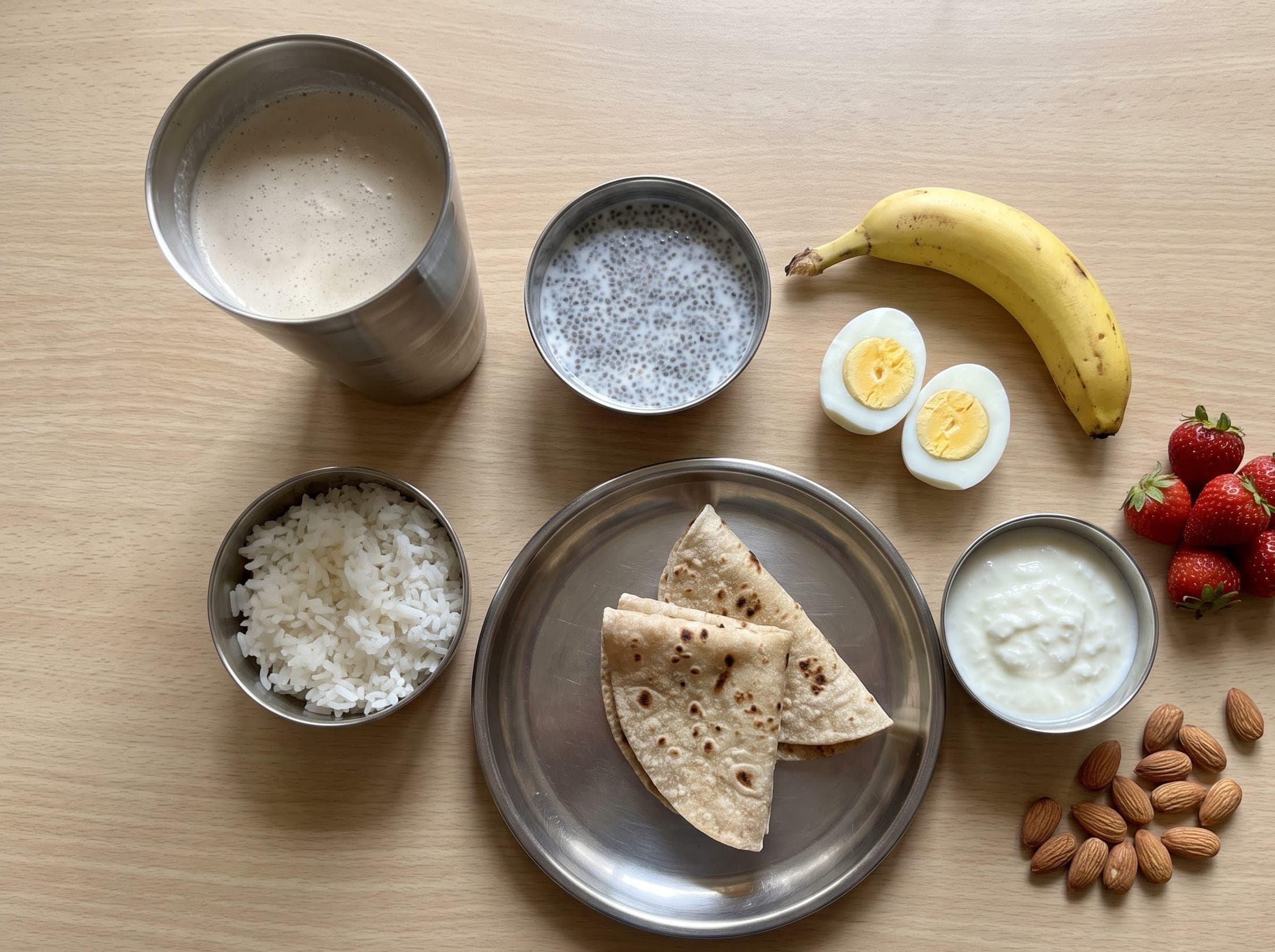
Rice is the food our members log most: about 38% of members who log food have it in their logs. Banana and oats follow at about 30%, then whey and dal at about 27% each, roti at about a quarter, and paneer and boiled eggs at about 23% each. So the swaps below start from rice, roti and dal, not from a new menu.
| Meal | What coaches push here |
|---|---|
| Breakfast | 2 to 3 eggs or paneer, whey in water, chilla instead of poha |
| Lunch | dal plus curd, or chicken or soya; rice to a level cup |
| Snack | curd, roasted chana, egg whites, makhana instead of biscuits |
| Dinner | protein first, one roti, vegetables; no second carb |
Coaching that does this for you
Reading is step one. A coach turns it into a plan built around your body, food & schedule.
100% online · Indian meal plans · weekly progress reviews · daily WhatsApp support.
Start Your Journey →Six swaps that add protein, not calories
Poha or upma for a moong dal chilla. Same 230 kcal plate, 5 g protein becomes 14 g. Add 2 egg whites and it is 21 g. (Recipe.)
Whey in water, not in full-fat milk. 120 kcal and 24 g protein instead of 270 kcal.
Second roti for a katori of dal plus 100 g curd. About the same calories, 5 g protein becomes 13 g, and the meal lasts longer.
Biscuits or namkeen at 5 PM for 150 g curd or 2 boiled eggs. Both keep you full until dinner, which is where the evening snacking usually stops.
Rice to a level cup, chicken or soya up. A 1.5 cup heap is 300 kcal; a level cup is 200. Spend the 100 kcal on 50 g more chicken or a katori of soya chunks (about 25 g protein).
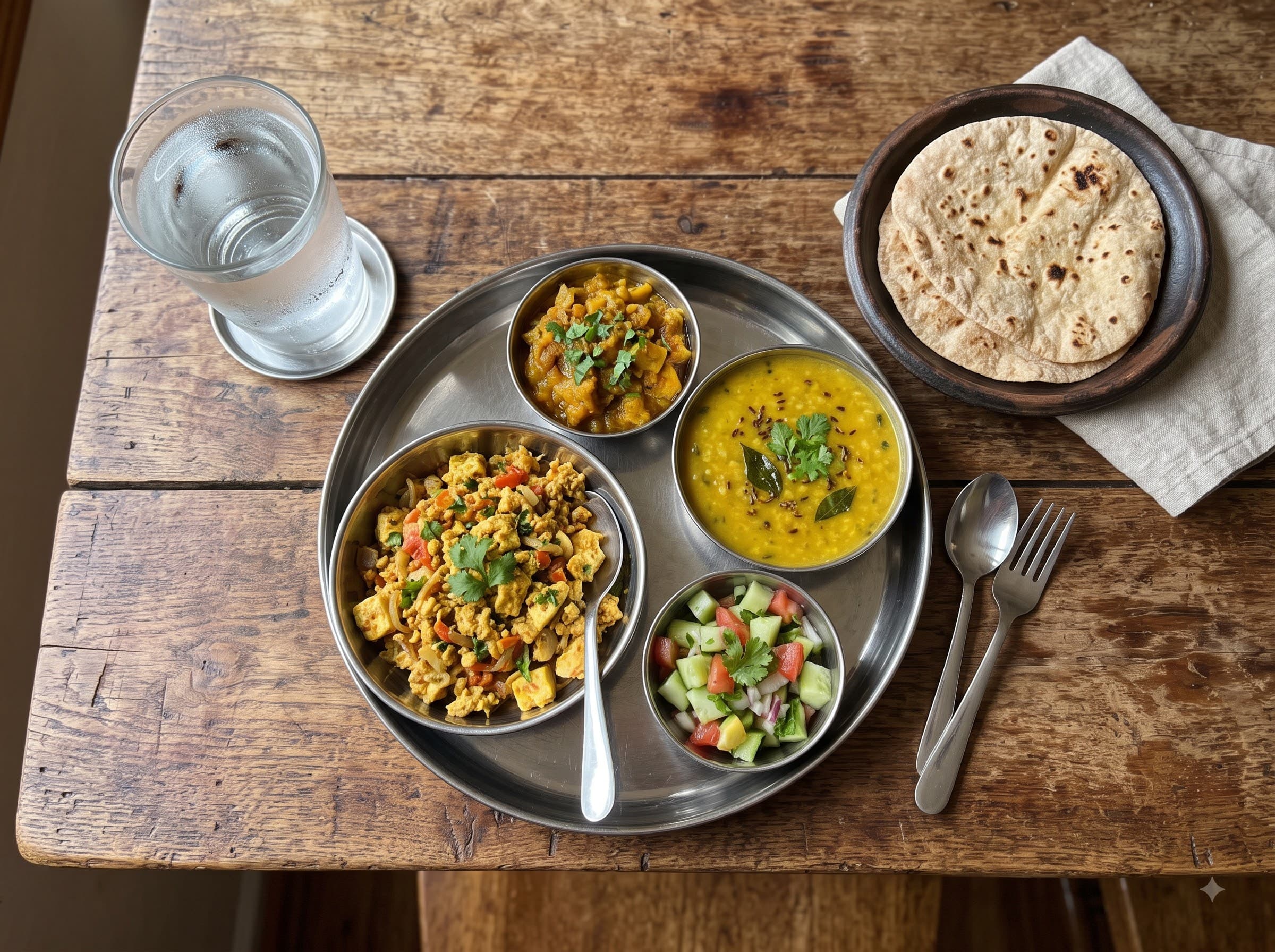
A protein dinner, not a carb dinner. Paneer bhurji with one roti, soya keema, egg curry, fish with sabzi. Haldi doodh at bedtime adds 6 g more. (10 dinners under 30 minutes.)
Coach's tip: Every meal needs one item you can point to and say "that is the protein". If you cannot point to it, the meal has 3 or 4 g, whatever the rest looks like.
Why swaps keep calories in check
Three things help.
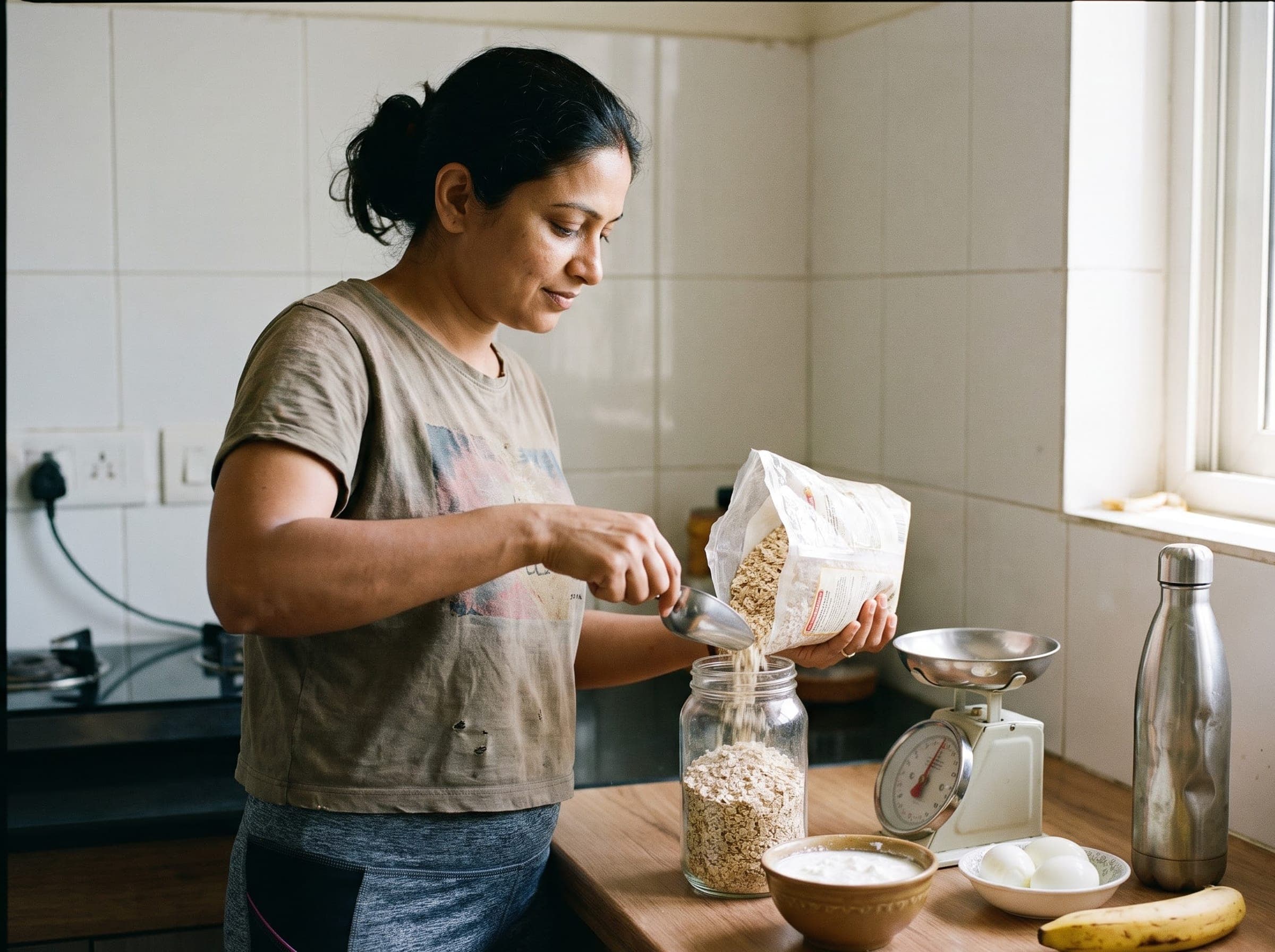
- Calibration. Week one is when people weigh rice once and discover the heap was two cups. After that, portions tend to come down.
- Protein is filling. A breakfast of eggs or chilla keeps you fuller than toast, so the snacks before lunch get easier to skip.
- Logging every meal. On fully logged days our members' median is about 1,470 kcal and 86 g protein, close to a typical plan. Missing meals hide calories: the restaurant dinner that never got recorded. We wrote about the gap.
"I've noticed that it definitely makes a difference when I include protein in my diet and reduce the amount of carbs." (member, recorded class, 28 Sep 2026)
A day that hits 100 g on about 1,500 calories
| Meal | Plate | Calories | Protein |
|---|---|---|---|
| Breakfast | Moong dal chilla x2 with 2 egg whites, filter coffee | 330 | 24 g |
| Lunch | 1 level cup rice, 1 katori dal, 100 g curd, 100 g chicken or 1 katori soya chunks, sabzi | 520 | 38 g |
| Snack | 150 g curd with chia, or 1 scoop whey in water | 130 | 12 to 24 g |
| Dinner | Paneer bhurji (100 g paneer) with 1 roti and sabzi | 420 | 26 g |
| Bedtime | Haldi doodh, 200 ml toned milk | 130 | 6 g |
| Day | about 1,530 | 106 to 118 g |
What to do this week
- Log all four meals for seven days, even the bad ones. The median only means something when the day is complete.
- Weigh your rice heap once. Write the number on the fridge.
- Pick one swap from the six above per meal. Do not add anything.
- On day eight, look at the week's protein in the app and compare it with your target. If it is short, find the meal with no item you can point to as protein.
Want a coach who reads your food log every week and changes the plan, not just the target?
Start Your JourneyRelated reading
Did you find this helpful?

About Anish Agarwal
Founder & Head Coach, YourTrainer · NASM & K11 Certified Personal Trainer · coaching since 2022
Featured in Dietitians.io, Fitness Interview, NRI Pulse, The MASALA Study. Press and media
Anish Agarwal is a NASM and K11 certified personal trainer coaching fat loss, body transformation, strength, and nutrition for clients across India since 2022. He founded YourTrainer to make expert, science-based coaching accessible online and in Bengaluru. Coach Anish's profile and the YourTrainer story.
Online 1-on-1 Coaching
Start Your Journey
Get a personalised training + Indian nutrition plan built around your goal, coached online, anywhere in India or abroad.
Trusted by 1,000+ clients coached across India & abroad
Free 30-min discovery call · No obligation