Your Food Photo Said 1,000 Calories. Is It Right? An Indian Lunch Plate, Item by Item
A member scanned grilled chicken, a bowl of rice, beans, an egg and a papad and got 1,000+ calories. We priced the plate item by item, show where photo scans over and under count Indian food, and give the fix.
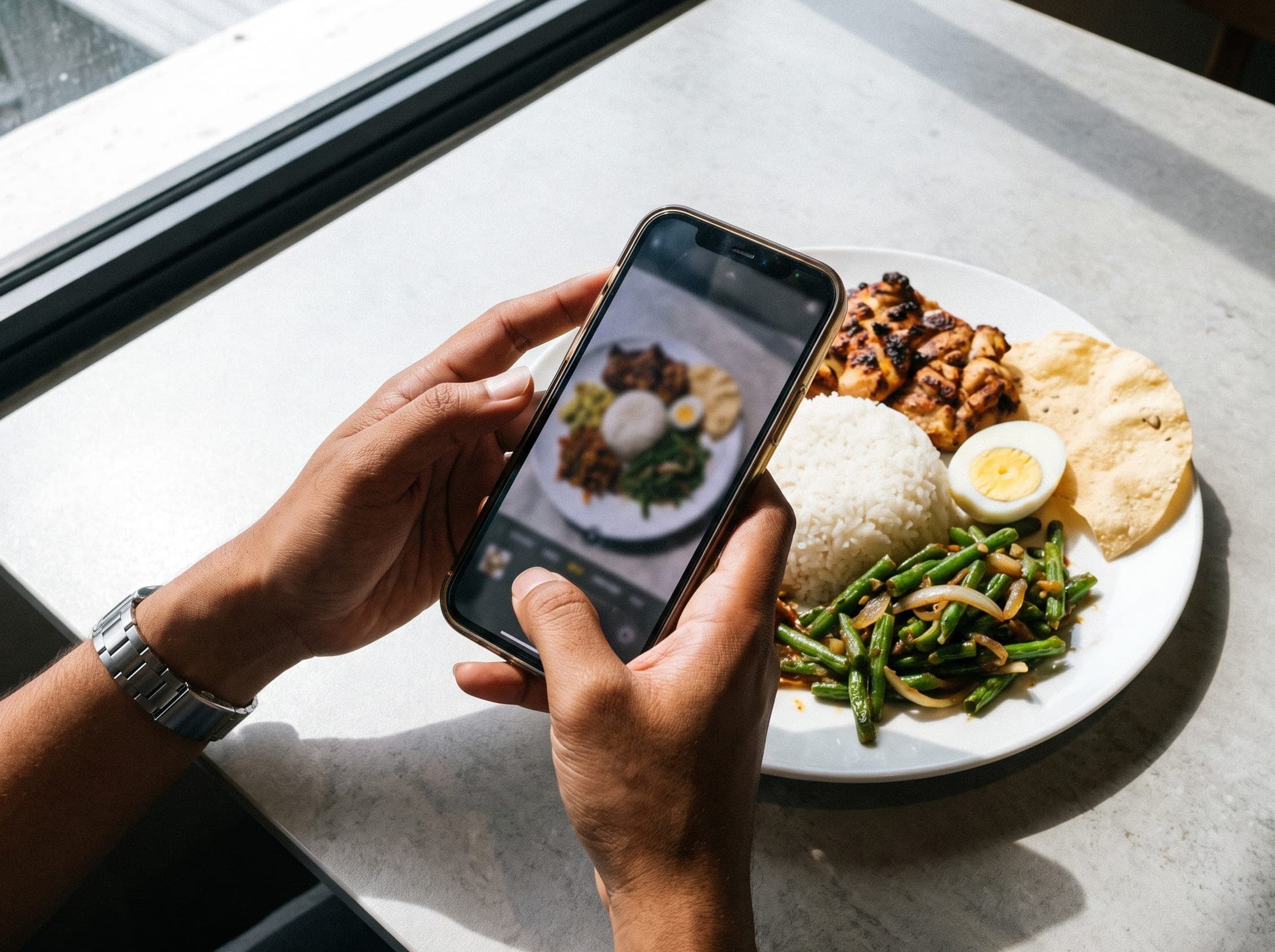
A member sent this to our nutritionist at lunch: "I had this today and clicked a picture and uploaded it in the app. It gave 1,000+ calories. Is it really 1,000+? Grilled chicken, 1 bowl of rice, beans, egg, papad." Then: "Yes it scared me. I didn't take any snacks in the evening."
That message is the whole problem with photo calorie counters in one chat. The number might be right. The reaction was wrong. So we priced the plate ourselves, item by item, and looked at where scans go wrong on Indian food.
Method: item values from the YourTrainer Indian food database (ICMR-NIN and USDA based, see /health-sources). The member's plate is from a nutritionist chat, Sep 2026; member anonymised. Food log medians are from a sample of member logs, Apr to Oct 2026.
Was the scan right?
Close enough. Grilled chicken, a bowl of rice, beans, an egg and a papad lands between 850 and 1,000 kcal depending on the rice heap and the oil. The scan was not the mistake. Skipping the evening snack in panic was.
The plate, item by item
| Item | Likely portion | Calories | Protein |
|---|---|---|---|
| Cooked white rice, 1 heaped bowl | 1.5 cups (about 240 g) | 300 to 320 | 6 g |
| Grilled chicken | 150 g | 240 to 270 | 45 g |
| Beans sabzi, 1 katori | 100 g with 1 tsp oil | 90 to 120 | 3 g |
| Boiled egg | 1 whole | 75 | 6 g |
| Papad, fried | 1 | 60 to 80 | 1 g |
| Total | 770 to 870 | 61 g |
Notice two things. The plate is high in calories because of the rice heap, not the chicken. And it carries 61 g of protein, which is more than half of a 100 g day. That is a good lunch that was eaten in a bigger portion than planned, not a bad lunch.
Our data
103 kcal
median calories per logged lunch item in our members' logs
4.0 g
median protein per logged lunch item
200 kcal
one level cup of cooked rice (about 160 g)
1.5 to 2 cups
what a heaped "bowl" of rice usually is
Source: a sample of YourTrainer member food logs, Apr to Oct 2026; rice values from the YourTrainer food database
Where photo scans go wrong on Indian plates
| Situation | What happens | Over or under? |
|---|---|---|
| Rice or poha in a bowl | Depth is hidden; the scan guesses a cup, the bowl holds two | Under |
| Gravy sabzi in a katori | Cannot see the oil; counts vegetables only | Under |
| Papad, bhujia, fried sides | Recognised as a large item | Over |
| Paneer or chicken pieces | Counts visible pieces; good if nothing is buried | Close |
| Roti or dosa | Counts well, but a 3-roti stack reads as 2 | Under |
| Restaurant plates | Butter, cream and sugar in the sauce are invisible | Under, often by 200 kcal |
| Overnight oats, smoothies, dal | Mixed foods; the scan picks one ingredient | Either way |
Coaching that does this for you
Reading is step one. A coach turns it into a plan built around your body, food & schedule.
100% online · Indian meal plans · weekly progress reviews · daily WhatsApp support.
Start Your Journey →The 60-second fix for every scan
Let the photo name the dishes. That part is usually right: rice, chicken, beans, egg, papad.
Correct the counts yourself. 1 cup rice, not 1 bowl. 2 rotis, not 1. 1 katori dal. Counts are what you can see and repeat tomorrow.
Add the invisible oil once. 1 teaspoon per katori of sabzi, 1 tablespoon for a restaurant gravy.
Weigh rice once this week. Put your usual heap on a kitchen scale. Most members find it is 1.5 to 2 cups. After that your eye is calibrated for months.
Do not punish the next meal. A high lunch is followed by a normal, protein-first dinner. The week average is the score, not the scan.
Coach's tip: If a scan ever reads more than 800 kcal for a home lunch, look at the rice first. Nine times out of ten the heap is the whole difference.
What our nutritionist actually replied
Her answer was not a number. She asked for the next two days of plates and said the diet was fine. The member's next message was "Will follow the chart from tomorrow", and the plates after that had rice measured in cups. The scan started a useful conversation once the fear went out of it.
Member story
Aditi, 30s, Bengaluru
Office job, logging in the app from week one
- Scanned her lunch, saw 1,000+, skipped the evening snack "because it scared me".
- Priced properly the plate was about 850 kcal with 61 g protein, a strong lunch in a large portion.
- Fix agreed in chat: rice in a level cup, papad only on weekends, snack kept. The week's average came in on target.
From her nutritionist chat, Sep 2026. Name changed.
When a high number is real, and fine
A 900 kcal lunch with 60 g protein can sit inside a 1,600 kcal day if breakfast and dinner are light and protein-led: eggs or paneer bhurji in the morning, a soup or a sabzi with paneer or fish at night. That is a more sustainable day than three 530 kcal meals that leave you hungry at 5 PM. Our food log study found the same pattern: dinner carries the most protein and breakfast the least, so a strong lunch is not the problem. A weak breakfast is.
How to use the YourTrainer scan well
- Photo first, then tap each item and set the count. The database does the maths from ICMR-NIN and USDA values, not from the picture.
- Save repeat meals as plates so tomorrow's lunch is one tap, which a member in week one asked for ("does it save my history?"). It does.
- Your coach and nutritionist see the log, so correct it rather than deleting it. A high honest day is useful. A missing day is not.
Want a nutritionist who reads your actual plates, not just the scan?
Start Your JourneyRelated reading
Did you find this helpful?

About Anish Agarwal
Founder & Head Coach, YourTrainer · NASM & K11 Certified Personal Trainer · coaching since 2022
Featured in Dietitians.io, Fitness Interview, NRI Pulse, The MASALA Study. Press and media
Anish Agarwal is a NASM and K11 certified personal trainer coaching fat loss, body transformation, strength, and nutrition for clients across India since 2022. He founded YourTrainer to make expert, science-based coaching accessible online and in Bengaluru. Coach Anish's profile and the YourTrainer story.
Online 1-on-1 Coaching
Start Your Journey
Get a personalised training + Indian nutrition plan built around your goal, coached online, anywhere in India or abroad.
Trusted by 1,000+ clients coached across India & abroad
Free 30-min discovery call · No obligation