Electrolytes During Workouts: How Much Sodium You Actually Need
Coconut water isn't enough for a hard session in Indian heat. The real sodium/potassium math for gym workouts, with cheap, India-available options.
Quick Answer
Most people training for under 60 minutes at moderate intensity don't need electrolyte supplements, water is enough. But if you train hard for 60+ minutes, sweat heavily, train outdoors in Indian heat/humidity, or do fasted morning sessions, you can lose 500 to 1,500mg of sodium per hour through sweat. Replacing only water without sodium in these conditions causes hyponatremia risk, cramping, and dizziness, not because you're "under-hydrated" but because your blood sodium gets diluted. The fix: 300 to 700mg sodium per hour of hard training, plus 150 to 300mg potassium, from ORS, an electrolyte powder, or a simple homemade mix.
"Thirst is a lagging indicator. By the time you feel thirsty, you're already 1 to 2% dehydrated, and in Indian summer training, sodium loss usually outpaces water loss.", Coach Anish Agarwal
Disclaimer: This article is educational and based on sports-science research (ACSM hydration guidelines, ISSN position stands). If you have kidney disease, heart failure, or are on blood-pressure medication, talk to your doctor before increasing sodium intake.
Why Coconut Water Alone Isn't Enough for Hard Sessions
Coconut water is a favourite pre/post-workout drink across Indian gyms, and it's genuinely useful, but it's not a complete electrolyte replacement for serious sweat loss. One cup (240ml) of coconut water has roughly:
- ~250mg potassium (good)
- ~10 to 30mg sodium (very low)
Sweat, by contrast, is sodium-dominant, you lose far more sodium than potassium when you sweat. A 60 to 90 minute strength or HIIT session in a warm Indian gym (or an outdoor run in Bangalore/Mumbai humidity) can cost you 700 to 1,500mg sodium. Drinking coconut water alone replaces potassium but leaves the bigger sodium deficit unaddressed, which is exactly the gap that causes late-session cramping, headaches, and the "why do I feel worse after rehydrating with just water" experience.
The Actual Numbers: How Much Sodium You Lose Sweating
Sweat sodium concentration varies person to person (200 to 2,000mg per litre of sweat, depending on genetics and heat-acclimatisation), but for practical purposes:
- Light session, air-conditioned gym, <45 min: water is fine, no electrolytes needed
- Moderate session, 45 to 75 min, some sweating: 300 to 500mg sodium during/after
- Hard session, 75+ min, heavy sweating, or outdoor heat: 500 to 1,000mg sodium during, split across the session
- Long endurance session (90+ min run/cycle) in Indian summer: up to 1,000 to 1,500mg sodium/hour, plus 150 to 300mg potassium/hour
You don't need to weigh yourself before/after to guess, a simple tell is visible salt residue on your clothes or skin after training. If your gym shirt has white salt rings, you're a "salty sweater" and likely need more sodium than average, not less.
What to Actually Drink: Options Ranked
1. ORS (Oral Rehydration Solution): cheapest, most effective
Pharmacy ORS sachets (Electral and similar, available at any Indian chemist for ~₹20) are formulated almost exactly to sports-science hydration standards, sodium, potassium, and a small amount of glucose to aid absorption. Mix half a sachet in 500ml water for training use (full-strength ORS is formulated for diarrhoea/illness rehydration and is stronger than needed for a workout).
2. DIY electrolyte mix
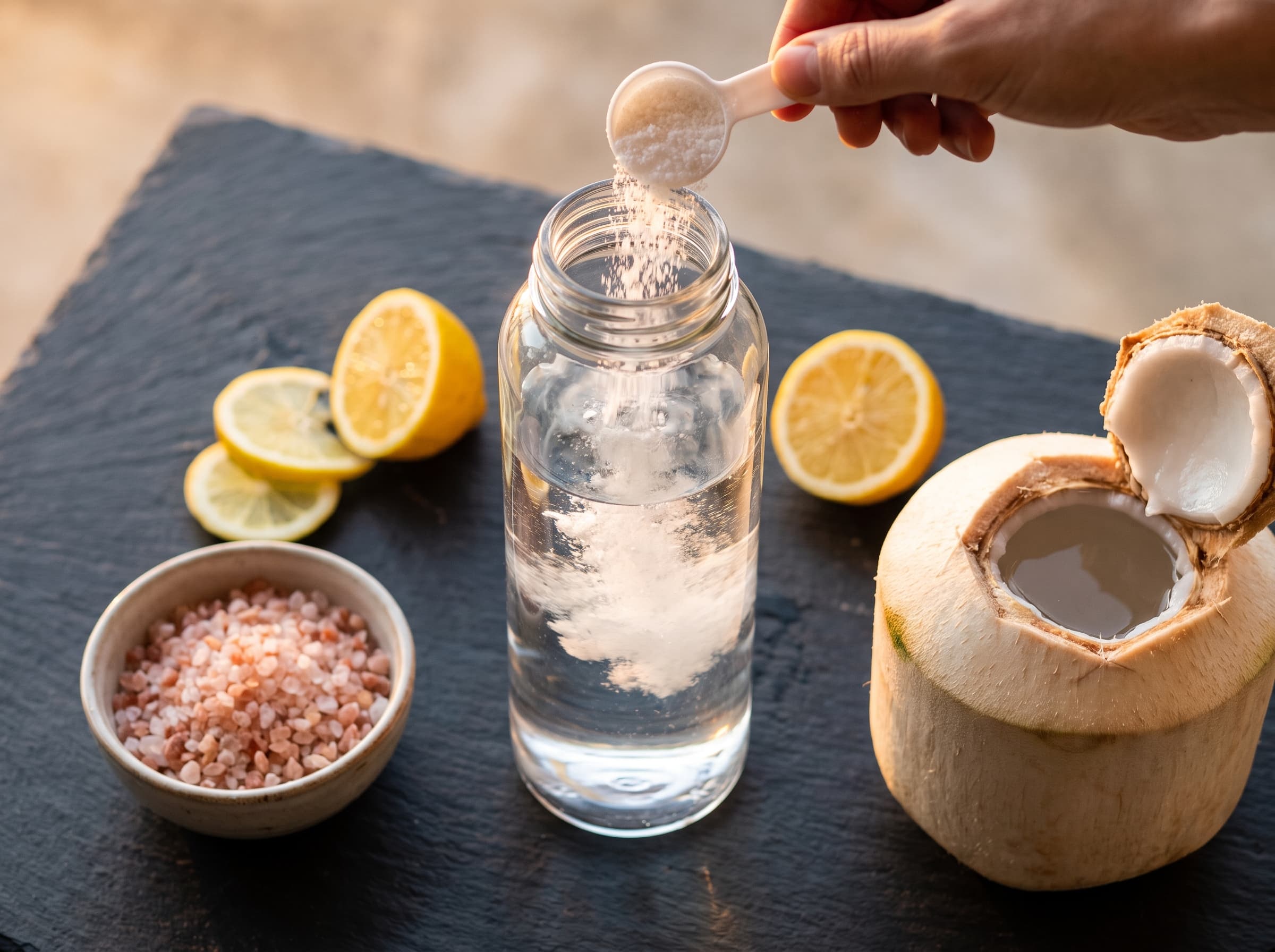
1/4 tsp table salt + 2 tbsp lemon juice + 1 tsp honey or sugar + pinch of salt substitute (for potassium, if available) in 500ml water. Cheap, effective, no artificial colours.
3. Commercial electrolyte powders (India-available)
Brands like Electral, Enerzal, and imported options (LMNT, Nuun via import) work well; check the label for actual sodium content, some "electrolyte" drinks sold in India are mostly sugar with minimal sodium (under 50mg per serving), which won't meaningfully help.
4. Coconut water + a pinch of salt
The best of both worlds for moderate sessions: coconut water's potassium plus a pinch (1/8 tsp) of table salt stirred in brings the sodium up to a useful range without needing a packaged product.
Coaching that does this for you
Reading is step one. A coach turns it into a plan built around your body, food & schedule.
100% online · Indian meal plans · weekly progress reviews · daily WhatsApp support.
Start Your Journey →When You Genuinely Don't Need Electrolytes
Not every gym session needs a sports drink. Skip the electrolyte add-on if:
- Your session is under 45 to 60 minutes in an air-conditioned gym
- You're doing primarily strength training with long rest periods (low sweat volume)
- You eat a normal Indian diet (which is already sodium-replete for most people, average Indian sodium intake is well above WHO recommendations)
Over-supplementing electrolytes when you don't need them just adds unnecessary sodium to an already sodium-heavy diet. This guide is specifically for the hot-weather, long-duration, heavy-sweat scenarios where genuine depletion happens.
Signs You're Under-Replacing Electrolytes (Not Just "Under-Hydrated")
- Cramping in the last third of a session, especially calves/hamstrings
- Headache or dizziness that water alone doesn't fix
- Feeling worse after drinking a lot of plain water post-workout (mild hyponatremia symptom)
- Visible salt residue on workout clothes
- Persistent fatigue on hot-weather training days despite adequate sleep
From our coaching data: In a sample of recorded classes from 17 Aug to 21 Oct 2026, water comes up in about 6 in 10 classes. Coaches and members both mention it.
For YourTrainer Members: The Practical Protocol
- Under 60 min, indoor/AC: water only, sip throughout
- 60 to 90 min or outdoor heat: half an ORS sachet in 500ml water, sipped across the session
- 90+ min or heavy sweat (visible salt marks): full ORS approach, one sachet across 1L water over the session, plus a banana or coconut water post-workout for potassium
- Track it once: weigh yourself before and after one hard session (before drinking anything post-workout). Each kg lost = ~1L of fluid + electrolytes to replace before your next session.
When Electrolytes Actually Matter
Electrolytes aren't marketing hype, but they're also not needed for every workout. The real trigger is sweat volume and session duration, not just "feeling thirsty." For most gym-goers doing 45 to 60 minute sessions in a cooled gym, water is genuinely enough. For anyone training hard, training outdoors, or training in Indian heat for 75+ minutes, a simple ORS-based approach costs less than ₹10 per session and solves the actual sodium deficit that causes cramping and fatigue, far more effectively than sports drinks that are mostly sugar and colour.
Want a Hydration Plan Built for Your Training Load?
Your sweat rate, training volume, and climate all change how much sodium you actually need. As part of YourTrainer coaching, we build hydration and electrolyte protocols specific to your training schedule, not a generic one-size-fits-all recommendation.
- Related: 12-Week Muscle Building Plan for Indian Vegetarians
- Related: Best Time to Workout in Bangalore (Weather & AQI)
- Start Your Journey
Coach Anish, YourTrainer
Did you find this helpful?

About Anish Agarwal
Founder & Head Coach, YourTrainer · NASM & K11 Certified Personal Trainer · coaching since 2022
Featured in Dietitians.io, Fitness Interview, NRI Pulse, The MASALA Study. Press and media
Anish Agarwal is a NASM and K11 certified personal trainer coaching fat loss, body transformation, strength, and nutrition for clients across India since 2022. He founded YourTrainer to make expert, science-based coaching accessible online and in Bengaluru. Coach Anish's profile and the YourTrainer story.
Online 1-on-1 Coaching
Start Your Journey
Get a personalised training + Indian nutrition plan built around your goal, coached online, anywhere in India or abroad.
Trusted by 1,000+ clients coached across India & abroad
Free 30-min discovery call · No obligation