Soaked Nuts & Seeds in the Morning: Healthy Habit or Myth?
Does soaking almonds and walnuts overnight unlock more nutrition, or is it folklore? The phytic-acid science, plus the food-safety risk nobody mentions.
Quick Answer
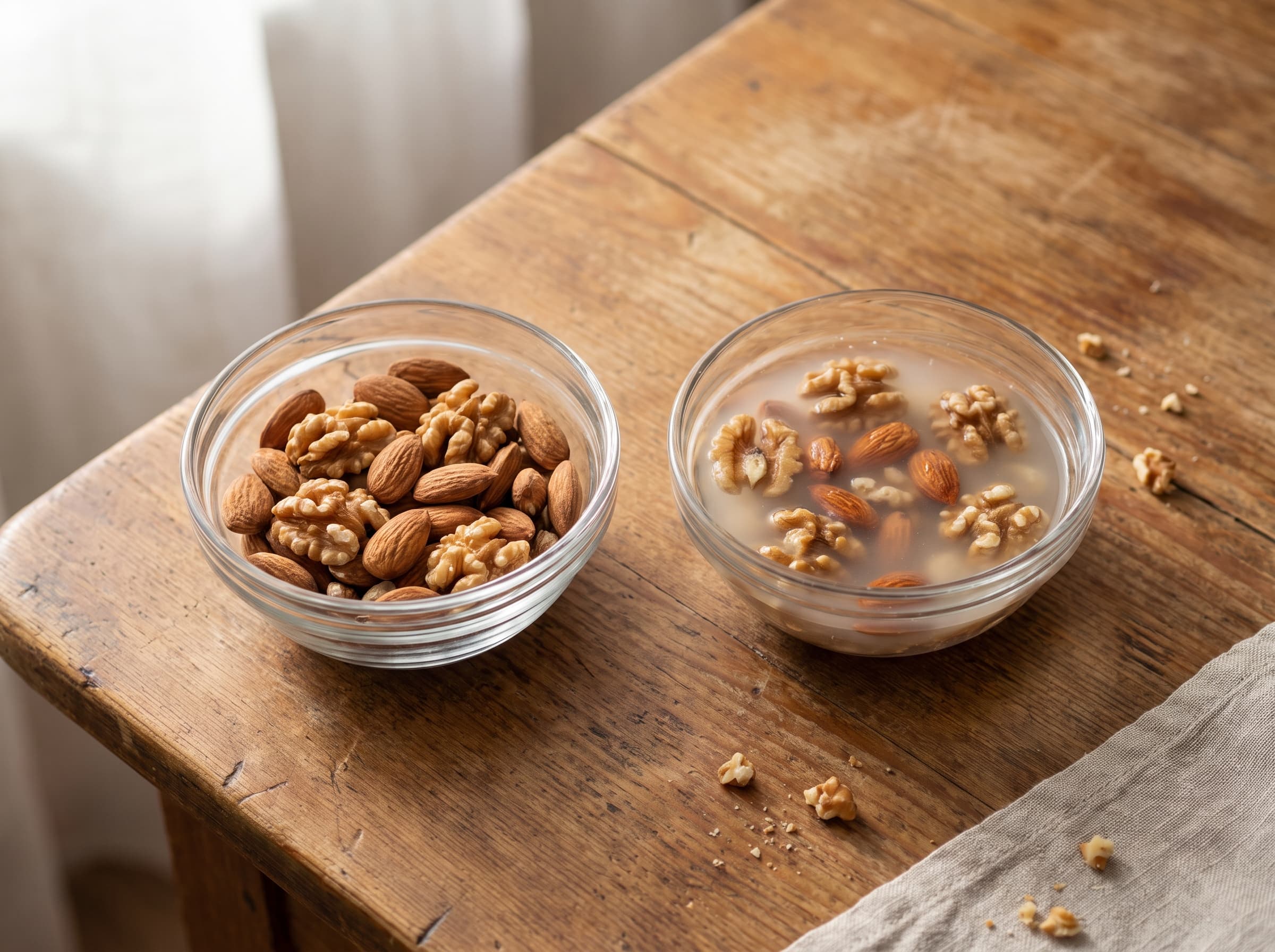
Soaking nuts overnight is partly true, partly overblown. Soaking does reduce phytic acid (an anti-nutrient that blocks mineral absorption) by roughly 5 to 20% in nuts, a real but modest effect, much smaller than the 50 to 70% reduction soaking achieves in grains and legumes. Soaking also softens texture and can make nuts easier to digest for some people. What soaking does not do: meaningfully boost protein, "activate enzymes" in any way your body benefits from, or provide the dramatic nutrient-absorption boost social media claims. The bigger overlooked issue: soaked nuts left at room temperature for hours are a genuine food-safety risk.
"Soaking your almonds isn't wrong, it's just not doing 80% of what Instagram claims it's doing. The habit is fine. The mythology around it isn't.", Coach Anish Agarwal
Disclaimer: This article is educational, based on peer-reviewed nutrition research (phytic acid/mineral bioavailability studies). It isn't medical advice for specific conditions like nut allergies or digestive disorders.
Where the Soaking Habit Comes From
Soaking nuts and seeds overnight is a genuinely old practice in Indian households, badam (almonds) soaked and peeled before school, akhrot (walnuts) soaked for exams, methi (fenugreek) seeds soaked for digestion. The traditional reasoning was mostly about digestibility and taste, not a formal "anti-nutrient" theory. The modern viral version of the claim (soaking "unlocks" nutrients, "activates" enzymes, dramatically boosts protein absorption) is a more recent overstatement layered onto a reasonable old habit.
What Phytic Acid Actually Does (And Doesn't Do)
Phytic acid is a compound found in nuts, seeds, grains, and legumes that binds to minerals like iron, zinc, calcium, and magnesium, reducing how much your body can absorb from that specific food. This is real, measurable, and worth knowing, but the effect size matters:
- Grains and legumes (rice, wheat, lentils, chickpeas): soaking + sprouting can reduce phytic acid by 40 to 70%. This is the category where soaking makes the biggest measurable difference.
- Tree nuts (almonds, walnuts, cashews): soaking reduces phytic acid by roughly 5 to 20%, depending on soak time and nut type. Real, but modest.
- Seeds (flax, sesame, sunflower): similar modest reduction, in the 10 to 20% range for most soak durations used at home (6 to 12 hours).
For context: if you eat a varied Indian diet with adequate protein (dal, dairy, eggs, or meat), the phytic acid in a handful of almonds isn't meaningfully limiting your iron or zinc status. Phytic acid matters most for people relying heavily on grains/legumes as a primary mineral source with limited dietary diversity, not for someone eating a normal mixed diet with a small daily serving of nuts.
The Claims That Don't Hold Up
"Soaking activates enzymes that help digestion"
Nuts contain enzyme inhibitors that soaking can partially deactivate, but there's no strong evidence this meaningfully changes digestion or absorption for most healthy adults eating a small daily portion. The "enzyme activation" framing is more marketing language than physiology.
"Soaking increases protein content"
False. Soaking doesn't add protein, it can very slightly increase bioavailability of existing protein in some legumes via reduced anti-nutrient binding, but the effect in nuts specifically is minimal. The protein content of the almond doesn't change; at most, a small amount becomes marginally easier to absorb.
"Raw nuts are toxic / soaked nuts are the only safe way to eat them"
Overstated. Raw, unsoaked nuts are safe for the vast majority of people and have been eaten that way across cultures for millennia. Soaking is a preference and a minor digestibility aid, not a safety requirement.
What Soaking Genuinely Does Well
- Softer texture: genuinely easier to chew and digest for people with sensitive digestion or older adults
- Easier to blend: soaked nuts blend more smoothly into smoothies, chutneys, or nut milk
- Modest phytic acid reduction: real, if small, benefit for mineral absorption
- Reduces bitterness in some nuts (walnuts especially) by leaching tannins
Coaching that does this for you
Reading is step one. A coach turns it into a plan built around your body, food & schedule.
100% online · Indian meal plans · weekly progress reviews · daily WhatsApp support.
Start Your Journey →The Food-Safety Issue Nobody Talks About
This is the part that gets skipped in most "soaked almonds benefits" content: nuts soaked at room temperature for 8+ hours, especially in warm Indian weather, are a real bacterial growth risk. Room-temperature water with organic material sitting for hours is exactly the environment bacteria like Salmonella or Bacillus cereus can multiply in, particularly during summer months without refrigeration.
Safe soaking practice:
- Soak in the refrigerator, not on the kitchen counter, especially in summer
- Use clean, filtered water
- Don't soak longer than 8 to 12 hours
- Rinse thoroughly before eating
- Don't reuse soak water for cooking without boiling it first
So: Should You Keep Soaking?
Yes, if you like the texture and the ritual, there's no downside to soaking done safely (refrigerated, reasonable duration). But don't soak because you think it's unlocking dramatically more nutrition; the honest phytic-acid benefit is modest (5 to 20%), not the "unlocks nutrients" framing that circulates online. If you're skipping nuts entirely because you don't have time to soak them, that's the actual nutritional loss, eating raw, unsoaked almonds is far better than skipping them because soaking feels mandatory.
Soaking Nuts: Worth It or Not?
Soaked nuts and seeds: a reasonable, mildly beneficial habit for digestibility and a modest phytic-acid reduction, not the enzyme-activating, protein-boosting superfood hack it's often presented as. The real risk isn't skipping the soak; it's leaving nuts at room temperature for hours in Indian heat. Soak in the fridge if you enjoy it, eat them raw if you don't have time, both are fine.
Want a Nutrition Plan Based on Evidence, Not Trends?
We build meal and macro plans around what actually moves the needle for your goals, not viral claims. If you want a diet plan that separates real nutrition science from social media noise, this is exactly what YourTrainer coaching does.
- Related: Indian Protein Myths, What Science Actually Says
- Related: How to Hit 100g Protein as a Vegetarian
- Start Your Journey
Coach Anish, YourTrainer
Sources
- Indian Food Composition Tables (IFCT) 2017 · ICMR, National Institute of Nutrition
- Nutrient Requirements for Indians (RDA and EAR) · ICMR, National Institute of Nutrition
- Healthy diet · World Health Organization
- Dietary profiles and associated metabolic risk factors in India (ICMR-INDIAB survey) · Nature Medicine
Figures for Indian foods follow IFCT 2017 (ICMR-NIN). Coaching guidance on this site is educational and is not a substitute for medical advice. See how we use sources.
Did you find this helpful?

About Anish Agarwal
Founder & Head Coach, YourTrainer · NASM & K11 Certified Personal Trainer · coaching since 2022
Featured in Dietitians.io, Fitness Interview, NRI Pulse, The MASALA Study. Press and media
Anish Agarwal is a NASM and K11 certified personal trainer coaching fat loss, body transformation, strength, and nutrition for clients across India since 2022. He founded YourTrainer to make expert, science-based coaching accessible online and in Bengaluru. Coach Anish's profile and the YourTrainer story.
Online 1-on-1 Coaching
Start Your Journey
Get a personalised training + Indian nutrition plan built around your goal, coached online, anywhere in India or abroad.
Trusted by 1,000+ clients coached across India & abroad
Free 30-min discovery call · No obligation