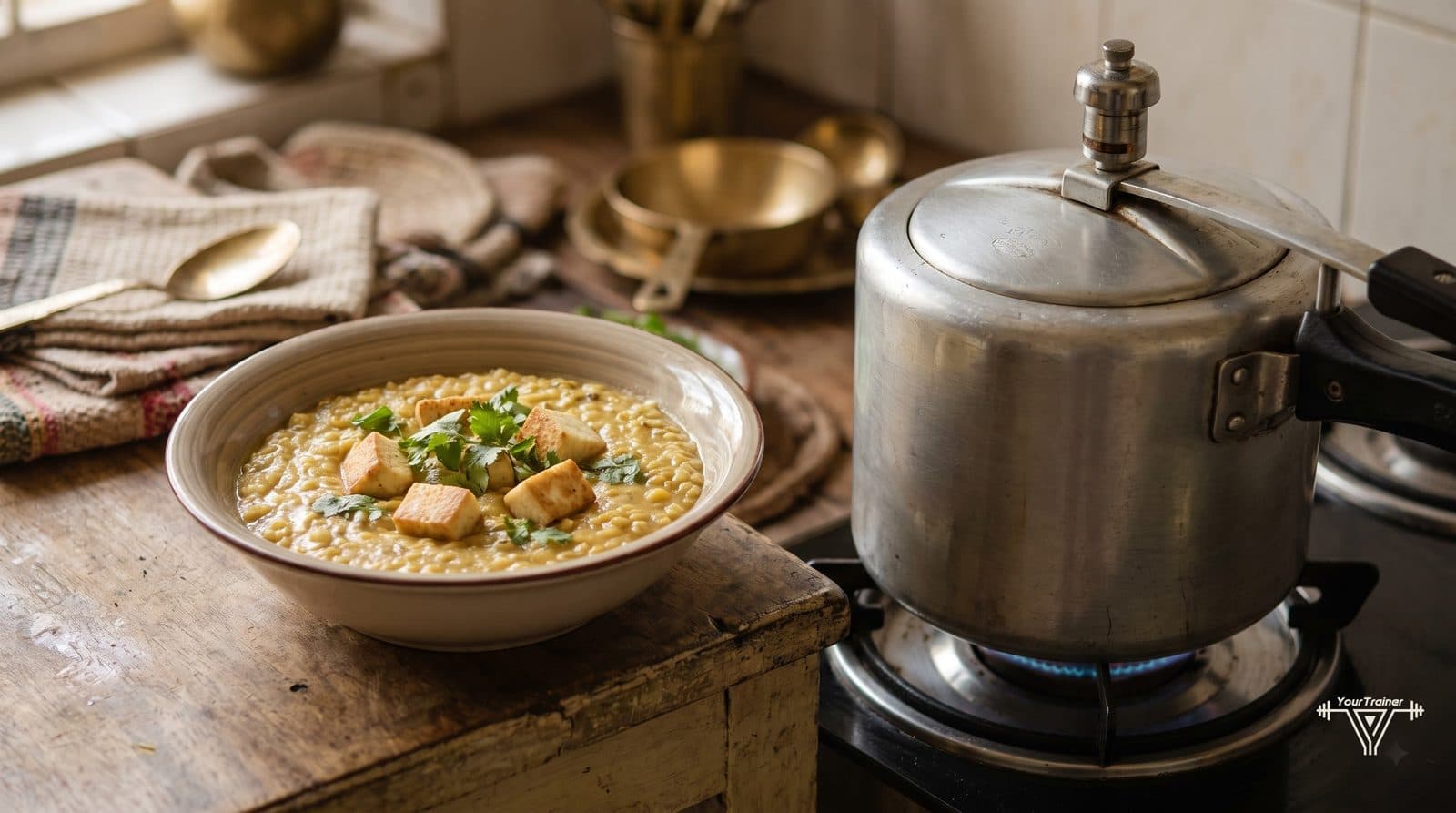
High-Protein South Indian Breakfast: Idli, Dosa and Upma, Upgraded
Idli and dosa are low in protein by default. Five batter and topping changes that take a South Indian breakfast from 6 g to 25 g of protein without changing how it tastes.
Quick answer: A standard South Indian breakfast of 2 idlis and sambar delivers about 8.6 g of protein. Five changes take the same meal to 25 g or more: swap a third of the batter rice for moong dal, add egg or paneer, use peanut chutney instead of coconut, add a katori of curd, and treat sambar as a vegetable rather than the protein.
Recipe at a Glance
Breakfast in our members' food logs
24.6 g
median protein at breakfast
375 kcal
median breakfast
58%
of breakfasts reached 20 g protein
70 kcal
1 idli, with 2 g protein
Source: A sample of member food logs from the YourTrainer app, 19 April to 17 September 2026. Members only, aggregated, each food logged by at least three members in the sample, using the app's food-database values for the portion logged
Two or three idlis on their own give under 7 g of protein, so members who hit 20 g paired them with eggs, curd or whey. Read the full food-log study.
The Problem Nobody Names
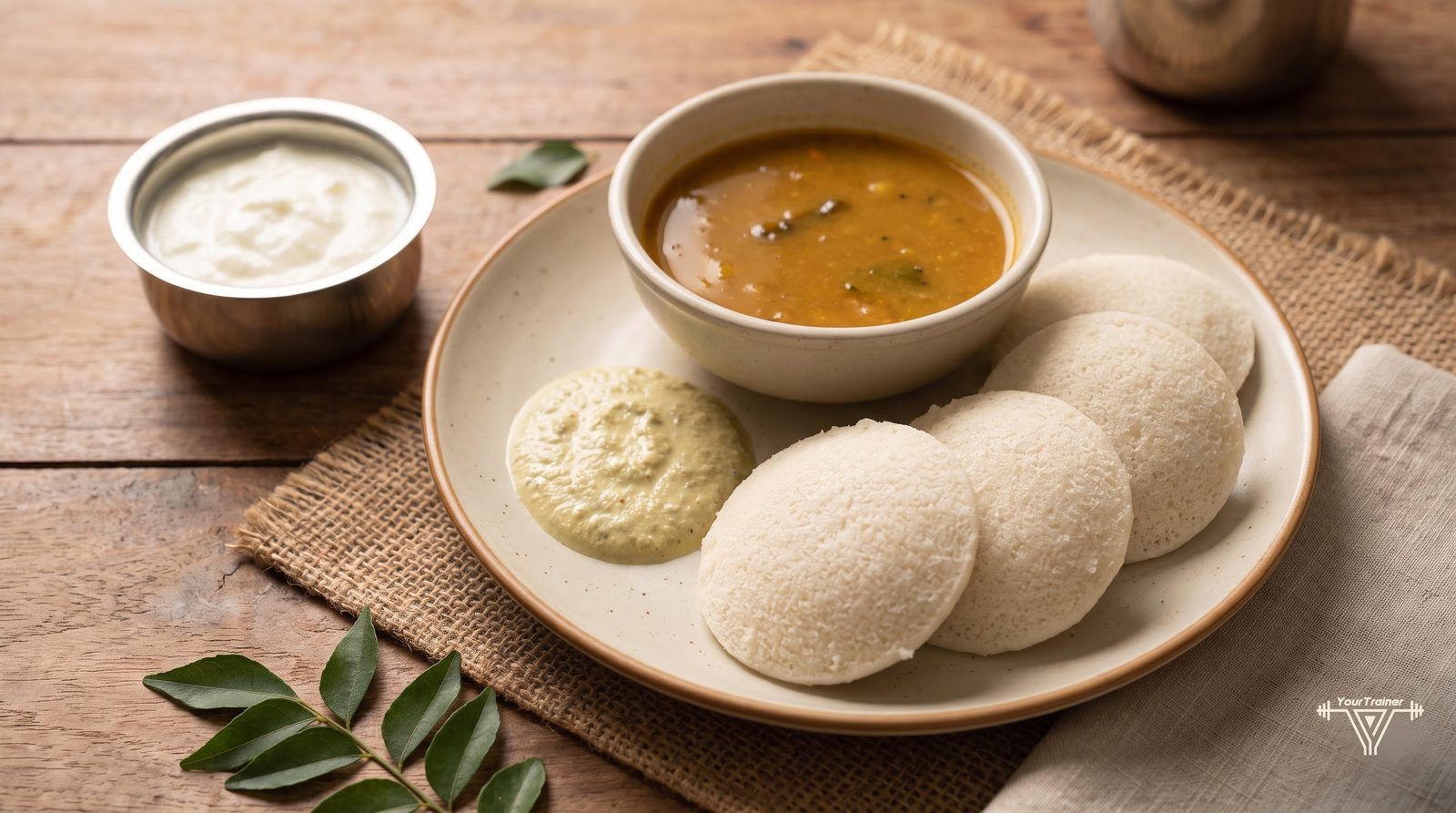
South Indian breakfast has a strong reputation for being healthy, and in one important sense it earns it. Idli is steamed rather than fried, fermentation improves digestibility, and the calorie load is genuinely modest. An idli is about 58 calories.
The gap is protein. The batter is predominantly rice, with urad dal present more for fermentation and texture than for nutrition. Run the standard plate through the numbers:
| Item | Protein | Calories |
|---|---|---|
| 2 idlis | 3.6 g | 116 |
| 1 katori sambar | 5.0 g | 105 |
| 2 tbsp coconut chutney | 1.2 g | 75 |
| Total | 9.8 g | 296 |
Under 10 g of protein for a full meal. For anyone training, or over 40, or trying to hold muscle in a calorie deficit, that is a meal that has to be fixed rather than eaten more of. Eating six idlis instead of two triples the calories and still leaves you around 11 g.
Fix 1: Change the Batter
The highest-leverage change happens before cooking. Replace one third of the rice in your idli or dosa batter with soaked moong dal or additional urad dal.
- Ratio: instead of 3 parts rice to 1 part urad dal, use 2 parts rice, 1 part urad dal, 1 part moong dal.
- Result: two idlis move from 3.6 g to roughly 9 to 10 g of protein.
- Fermentation: unaffected. Moong ferments readily.
- Taste: slightly nuttier, marginally denser. Most families do not notice after the first batch.
If you buy ready-made batter, stir in 2 tablespoons of roasted gram flour (besan) per cup. It will not ferment further at that stage, but it adds roughly 3 g of protein per cup with no texture penalty.
Fix 2: Pesarattu Instead of Dosa
Pesarattu is the Andhra moong dal dosa, and it is the single best-performing South Indian breakfast on protein. It is made from whole green moong soaked and ground, with no rice at all in the traditional version.
One pesarattu delivers roughly 12 to 14 g of protein against a plain dosa at 3.6 g, for a similar calorie count. Soak whole moong for 4 to 6 hours, grind with ginger and green chilli, and cook exactly like a dosa. It does not need fermentation, so it works as a same-morning decision.
Fix 3: Egg or Paneer on Top
If you eat eggs, the fastest upgrade is the egg dosa. Pour the batter, let the base set for about 40 seconds, crack an egg on top and spread it thin with the back of a spoon. The egg cooks into the dosa rather than sliding off. That is 6.3 g of protein for 78 calories.
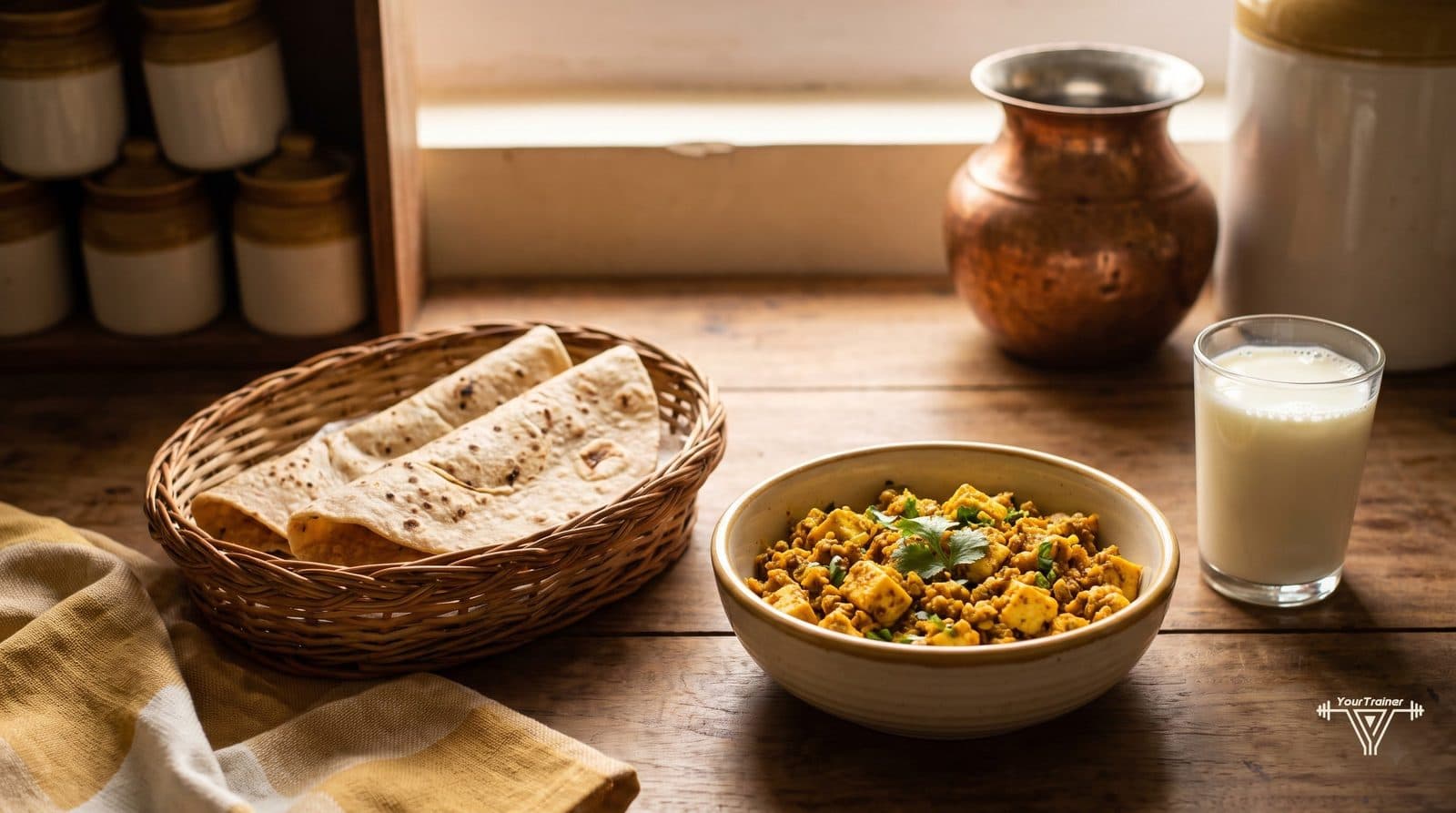
For vegetarians, paneer bhurji as a dosa filling works the same way. Crumbled paneer with onion and turmeric adds about 18 g of protein per 100 g. It is also a better use of paneer than a heavy gravy, because there is no cream involved.
Coaching that does this for you
Reading is step one. A coach turns it into a plan built around your body, food & schedule.
100% online · Indian meal plans · weekly progress reviews · daily WhatsApp support.
Start Your Journey →Fix 4: Change the Chutney
Coconut chutney is the quiet calorie problem on the South Indian plate. Two tablespoons is 75 calories with 1.2 g of protein, and almost nobody stops at two tablespoons. Four servings is 150 calories of mostly fat.
| Chutney | Protein per 2 tbsp | Calories |
|---|---|---|
| Coconut | 1.2 g | 75 |
| Peanut | 3.5 g | 85 |
| Roasted gram (putnala) | 4.2 g | 70 |
| Coriander and curd | 1.8 g | 35 |
Roasted gram chutney is the best trade on this table: more protein, fewer calories, and it is a traditional preparation rather than a health substitution.
Fix 5: Stop Treating Sambar as the Protein
Sambar is a vegetable dish with some dal in it, delivering about 5 g of protein per katori. It is a good dish. It is not a protein source at the volumes anyone actually eats.
Add a katori of curd (5.4 g) or Greek yogurt (15 g) alongside. Curd rice is already part of the South Indian repertoire, so this is not a foreign addition, just a rearrangement.
The Rebuilt Plate
| Item | Protein | Calories |
|---|---|---|
| 2 moong-boosted idlis | 9.5 g | 125 |
| 1 katori sambar | 5.0 g | 105 |
| 2 tbsp roasted gram chutney | 4.2 g | 70 |
| 1 katori Greek yogurt | 15.0 g | 88 |
| Total | 33.7 g | 388 |
Roughly 34 g of protein against the original 9.8 g, for 92 extra calories. That is the difference between a breakfast that supports training and one that does not.
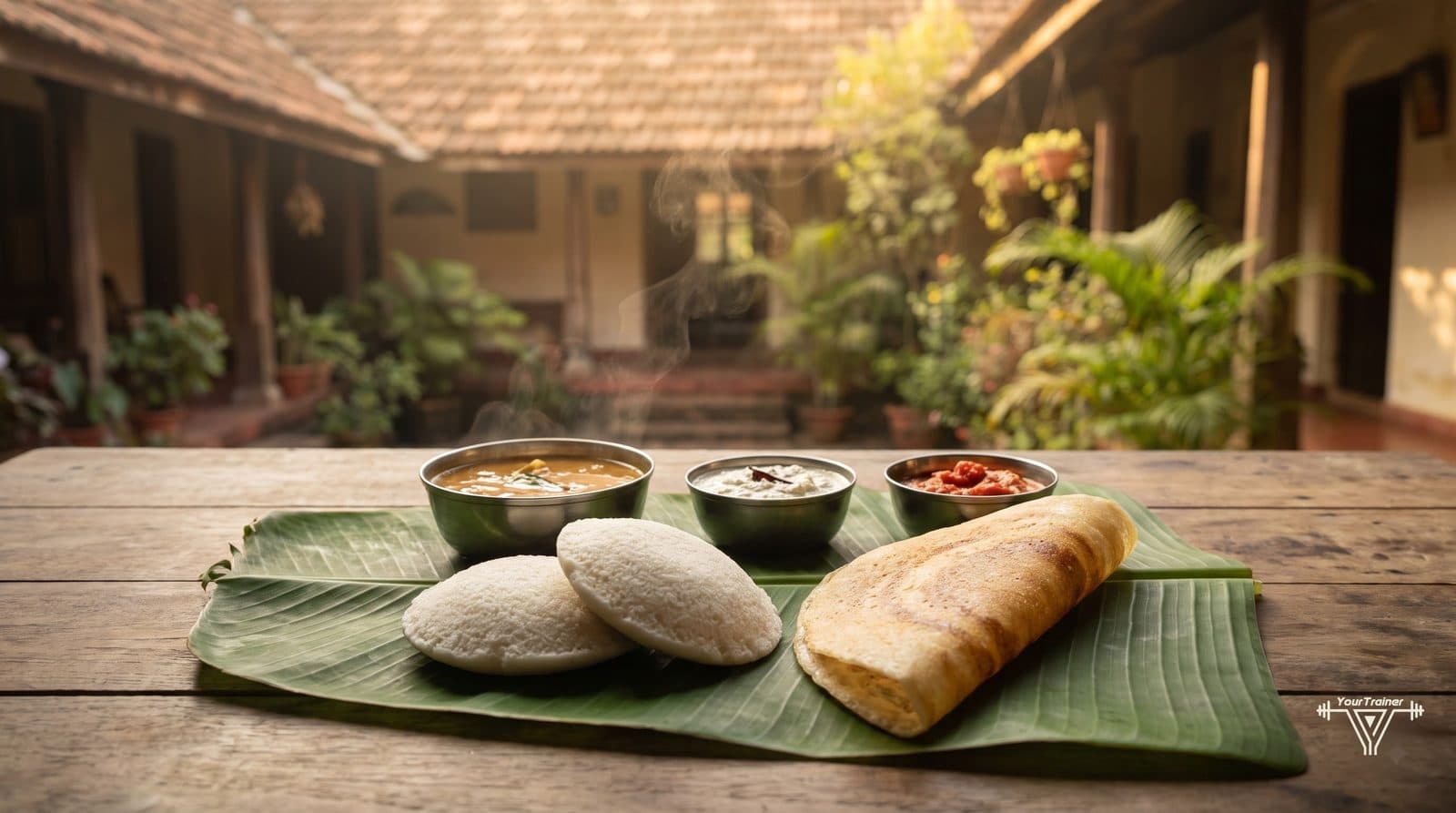
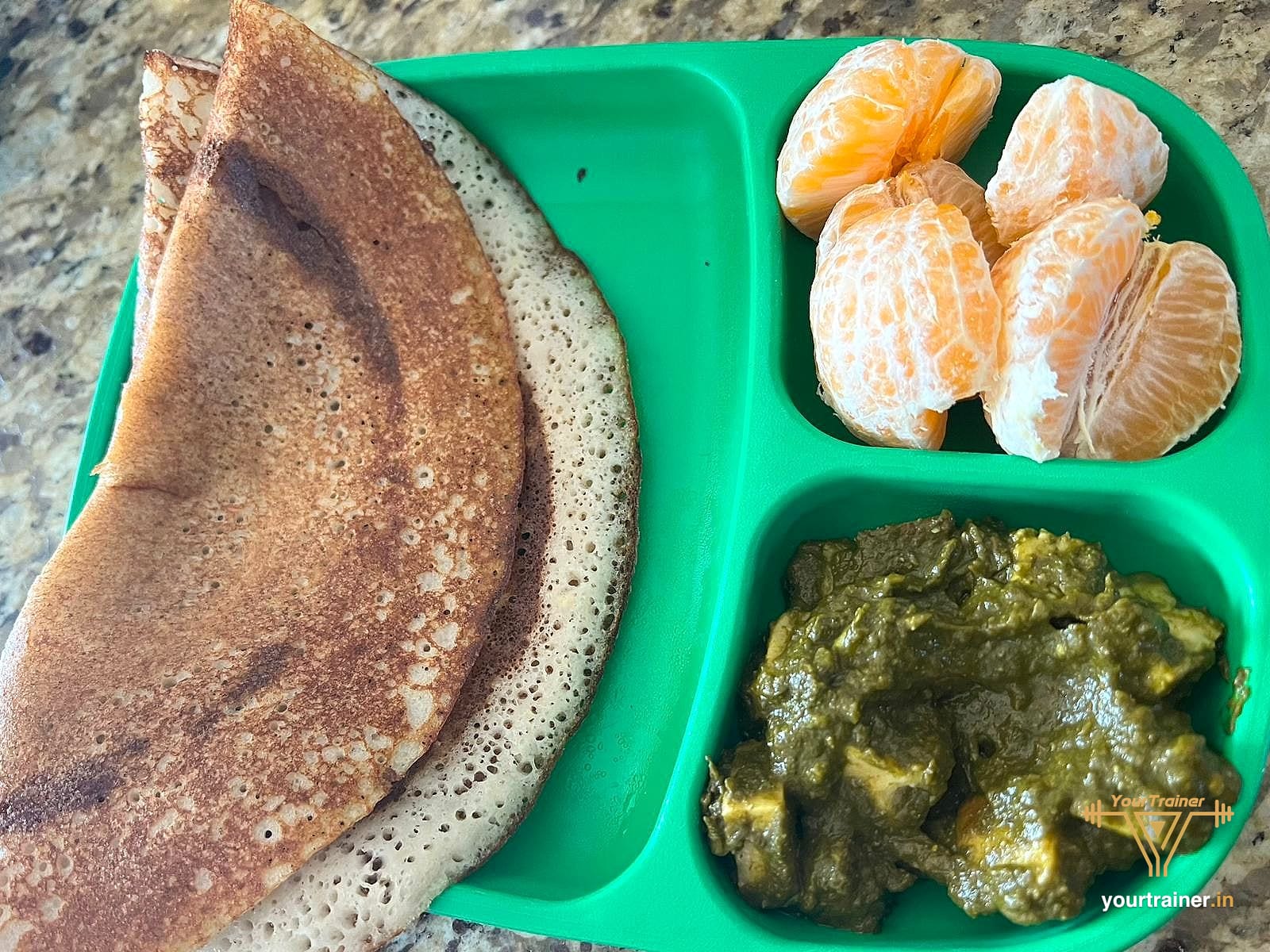
A real South Indian breakfast plate
| Food | Typical portion | Calories, protein |
|---|---|---|
| Whey protein | 1 scoop | 120 kcal, 24 g |
| Oats | 40 g | 150 kcal, 5 g |
| Boiled egg | 1 egg | 78 kcal, 6 g |
| Idli | 2 to 3 idlis | 140 kcal, 4.5 g |
| Poha | 1 plate | 250 kcal, 5 g |
Source: A sample of member food logs from the YourTrainer app, 19 April to 17 September 2026. Members only, aggregated, each food logged by at least three members in the sample, using the app's food-database values for the portion logged
Where This Fits
Breakfast is where most Indian diets lose 20 g of protein a day, and South Indian breakfast is the most extreme version of that pattern. Work out your own daily target with the protein calculator, then check what your current plate actually delivers using the Indian food calorie calculator, which includes idli, dosa, uttapam, medu vada and the chutneys.
Related reading: high-protein Indian breakfast without whey, moong dal chilla, and 15 high-protein Indian breakfast options.
Sources
- Indian Food Composition Tables (IFCT) 2017 · ICMR - National Institute of Nutrition
- Nutrient Requirements for Indians (RDA and EAR) · ICMR - National Institute of Nutrition
Figures for Indian foods follow IFCT 2017 (ICMR-NIN). Coaching guidance on this site is educational and is not a substitute for medical advice. See how we use sources.
Did you find this helpful?

About Anish Agarwal
Founder & Head Coach, YourTrainer · NASM & K11 Certified Personal Trainer · 6+ years experience
Anish Agarwal is a NASM and K11 certified personal trainer with 6+ years of experience coaching fat loss, body transformation, strength, and nutrition for clients across India. He founded YourTrainer to make expert, science-based coaching accessible online and in Bengaluru. More about Anish.
Online 1-on-1 Coaching
Start Your Journey
Get a personalised training + Indian nutrition plan built around your goal, coached online, anywhere in India or abroad.
★★★★★ Trusted by 1,000+ transformations across India & abroad
Free 30-min discovery call · No obligation