Strength Training for Bone Density: The Protocol for Women 40+
Bone density can drop 1 to 2% a year after menopause. The resistance training protocol that slows, and partly recovers, bone loss in women over 40.
Quick Answer
Strength training is one of the few interventions that can meaningfully slow, and in some cases partially reverse, bone density loss in women over 40. After menopause, women can lose 1 to 2% of bone mineral density per year due to falling estrogen levels, sharply raising osteoporosis and fracture risk. Resistance training that loads bones with real mechanical stress (not just light weights or bodyweight movements) signals the body to maintain and build bone tissue. The protocol that works: compound lifts at 70 to 85% of your max effort, 2 to 3 sessions per week, combined with some impact-based movement, not just walking or gentle yoga, which don't provide enough mechanical loading to meaningfully affect bone density.
If the weight is creeping up at the same time, see menopause weight gain: Indian diet and exercise.
"Bones respond to load the same way muscle does, if you're not lifting anything heavy enough to challenge them, they have no reason to stay strong.", Coach Anish Agarwal
Disclaimer: This article is educational, based on peer-reviewed exercise science and osteoporosis research. If you have diagnosed osteoporosis, osteopenia, or a prior fracture, work with your doctor to clear a resistance training program before starting, and consider a DEXA scan to establish baseline bone density.
Why Bone Density Drops Sharply After 40
Bone is living tissue that's constantly being broken down and rebuilt (a process called remodeling). Estrogen plays a major role in regulating this balance, it slows the rate of bone breakdown. As estrogen declines through perimenopause and menopause (typically starting in the 40s), bone breakdown begins to outpace rebuilding, and women can lose bone density at 1 to 2% per year in the years immediately around menopause, considerably faster than age-related bone loss in men or in premenopausal women.
This is why osteoporosis is roughly four times more common in women than men, and why fracture risk (particularly hip and spine) rises sharply in postmenopausal women. The good news: bone, like muscle, responds to mechanical loading, and unlike some age-related declines, this one is genuinely modifiable through training.
Why Walking and Light Yoga Aren't Enough
This is the piece that gets missed in general "stay active" advice: bone responds specifically to mechanical loading that exceeds what it normally experiences. Walking, gentle yoga, and swimming are excellent for cardiovascular health and joint mobility, but they don't apply enough novel mechanical stress to meaningfully stimulate bone formation in someone already accustomed to daily movement. Bones need a stimulus that's more than their normal load, which is exactly what progressive resistance training and impact-based movement provide, and low-impact steady activities generally don't.
The Protocol That Actually Builds Bone
1. Compound resistance training, 2 to 3x/week
Focus on multi-joint, load-bearing movements that stress the hip, spine, and wrist, the three most common osteoporotic fracture sites:
- Squats (goblet, barbell, or trap-bar): loads the hip and spine
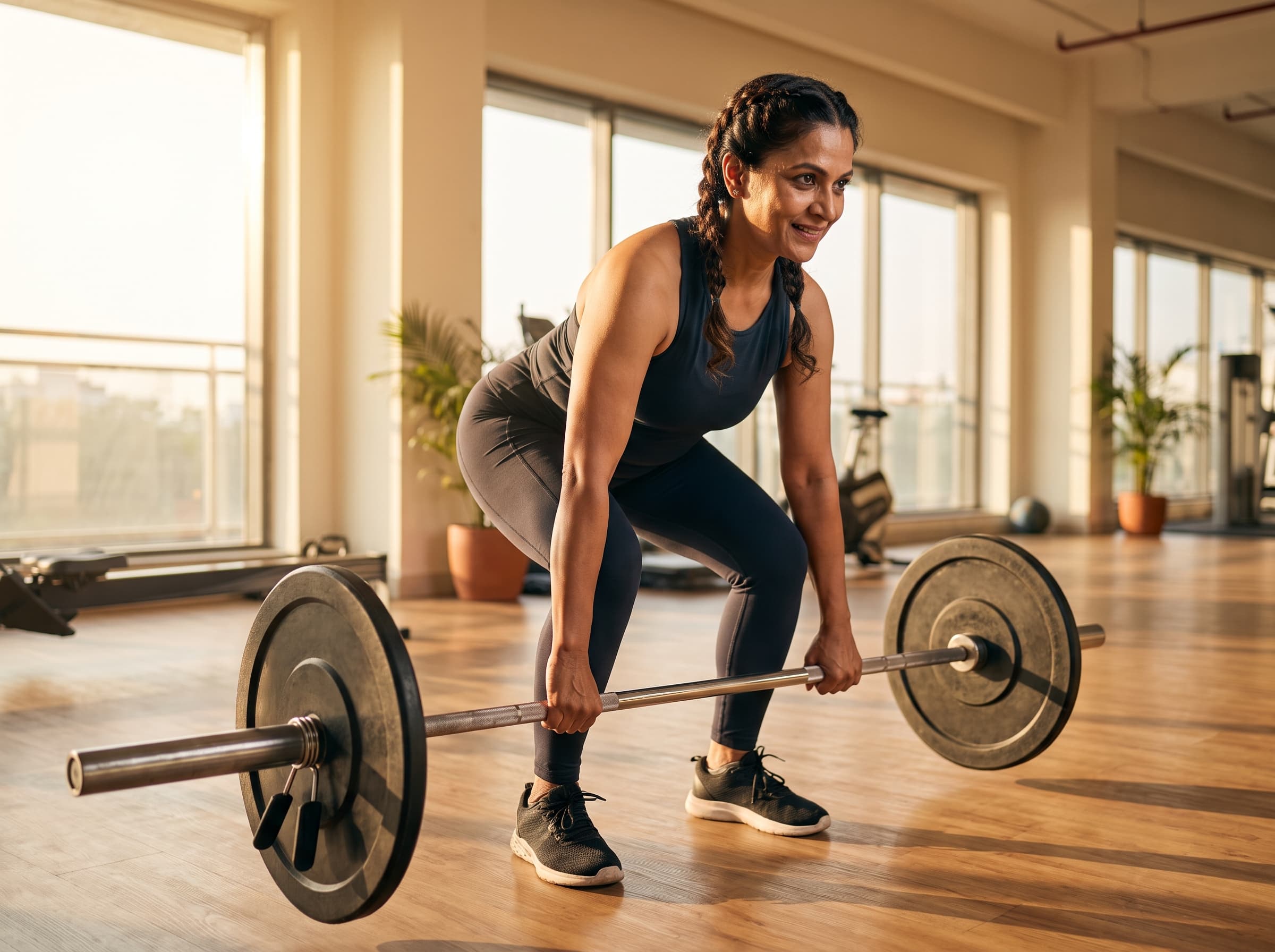
- Deadlifts (trap-bar is often easiest to learn safely), loads the hip and spine
- Overhead press: loads the wrist, shoulder, and spine
- Rows: supports upper-body bone density and posture
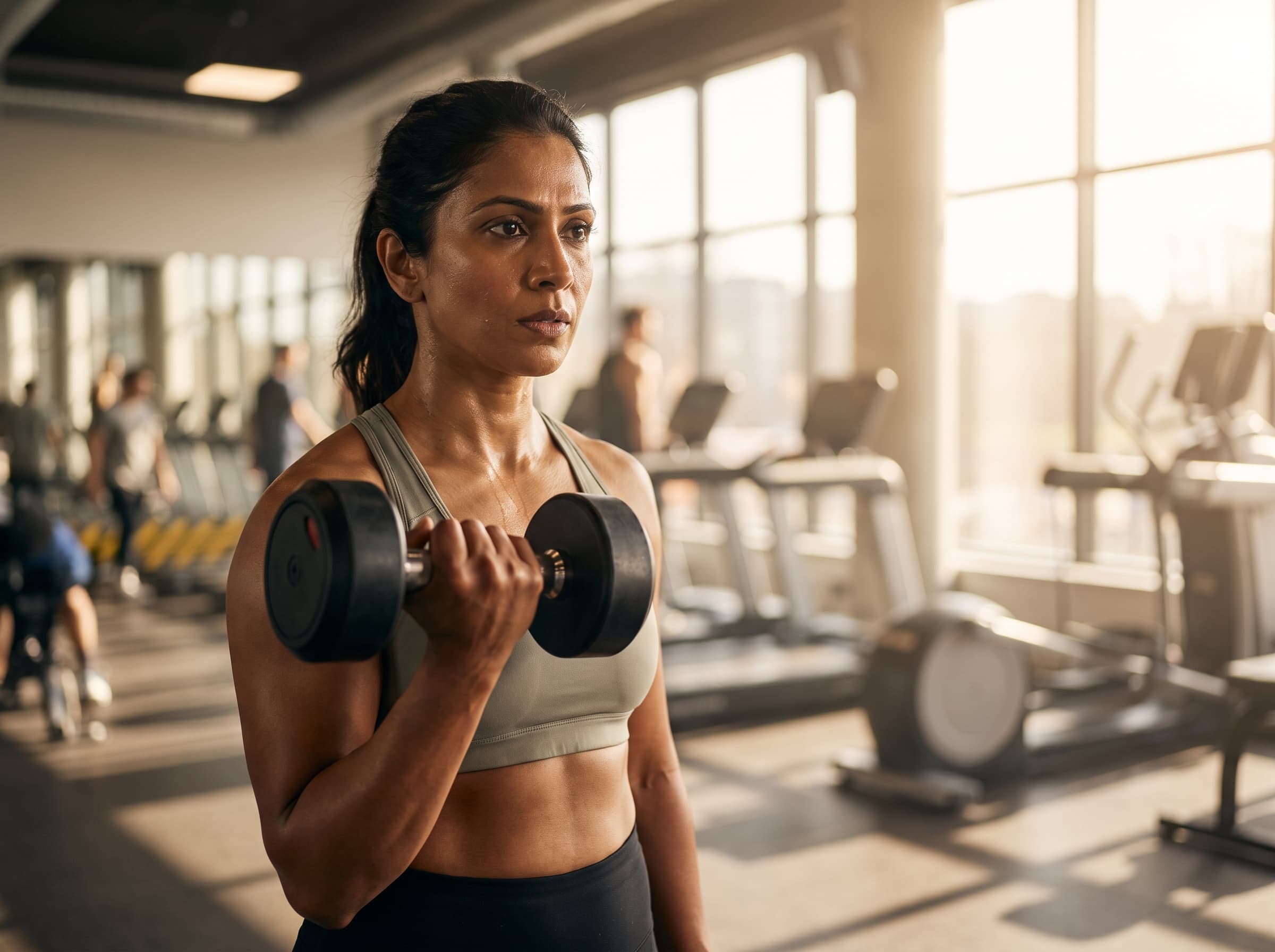
Intensity matters: research on bone-density-focused resistance training (including the well-known LIFTMOR trial) used loads around 70 to 85% of one-rep max, 8 to 12 reps for 2 to 3 sets. Light dumbbells and high-rep "toning" work don't provide sufficient mechanical stimulus, the load needs to be genuinely challenging.
2. Impact-based movement
Beyond resistance training, brief impact loading (jumping, hopping, or skipping) provides a different, complementary stimulus that's particularly effective for hip bone density. Even 10 to 20 controlled jumps, 3x/week, has shown measurable benefit in research, this doesn't need to be extensive, just consistent and genuinely impactful.
3. Adequate protein and calcium/vitamin D status
Training provides the stimulus, but bone remodeling needs raw materials. Adequate protein intake (supports the bone matrix, not just muscle), sufficient calcium (dietary sources preferred; dairy, ragi, sesame, leafy greens are strong options in an Indian diet), and vitamin D (widely deficient in Indians, see our related article) all support the training stimulus translating into actual bone density change.
Coaching that does this for you
Reading is step one. A coach turns it into a plan built around your body, food & schedule.
100% online · Indian meal plans · weekly progress reviews · daily WhatsApp support.
Start Your Journey →Can You Actually Reverse Bone Loss, or Just Slow It?
Both, to a degree. Multiple controlled trials (including LIFTMOR, conducted in postmenopausal women with low bone density) found that high-intensity progressive resistance training not only slowed bone loss but produced small measurable increases in bone density at the spine and hip over 8 to 12 months, a genuinely notable finding, since bone density is generally assumed to be a one-way decline after menopause. The gains are modest (typically 1 to 3% over the trial period) but meaningfully change fracture-risk trajectory, especially when started earlier rather than after a diagnosis.
Safety Notes for Getting Started
- If you have diagnosed osteoporosis or a prior fragility fracture, get medical clearance and ideally work with a trainer experienced in bone-health programming before lifting heavy
- Start with technique-focused, lighter-load sessions for 4 to 6 weeks to build movement competency before progressing toward the 70 to 85% 1RM range
- Avoid high-impact jumping if you have significant existing bone density loss without medical clearance, resistance training alone still provides substantial benefit
- A DEXA scan (if accessible) gives you an actual baseline to track progress against, rather than guessing
Bone Density After 40 Is Modifiable
Bone density loss after 40 isn't inevitable decline you have to accept, it's a modifiable response to reduced mechanical loading and hormonal change, and resistance training is one of the few tools that directly addresses the mechanical side of that equation. Walking and gentle movement are good for general health but insufficient stimulus for bone. A structured strength program with genuinely challenging loads (70 to 85% 1RM), 2 to 3x/week, combined with some impact work and adequate protein/calcium/vitamin D, is the evidence-backed path to slowing, and in some cases partially reversing, bone density loss.
Want a Bone-Health-Focused Strength Program?
Starting resistance training after 40, especially around menopause, benefits from programming that accounts for your bone health specifically, not a generic beginner routine. YourTrainer coaching builds progressive strength programs designed around your actual goals, including bone density and long-term musculoskeletal health.
- Related: Sarcopenia, Why Muscle Loss Accelerates With Age
- Related: Vitamin D Deficiency in Indians, Symptoms & Fix
- Start Your Journey
Coach Anish, YourTrainer
Sources
- High prevalence of metabolic obesity in India: the ICMR-INDIAB national study · Indian Journal of Medical Research
- Healthy diet · World Health Organization
- Nutrient Requirements for Indians (RDA and EAR) · ICMR, National Institute of Nutrition
Figures for Indian foods follow IFCT 2017 (ICMR-NIN). Coaching guidance on this site is educational and is not a substitute for medical advice. See how we use sources.
Did you find this helpful?

About Anish Agarwal
Founder & Head Coach, YourTrainer · NASM & K11 Certified Personal Trainer · coaching since 2022
Featured in Dietitians.io, Fitness Interview, NRI Pulse, The MASALA Study. Press and media
Anish Agarwal is a NASM and K11 certified personal trainer coaching fat loss, body transformation, strength, and nutrition for clients across India since 2022. He founded YourTrainer to make expert, science-based coaching accessible online and in Bengaluru. Coach Anish's profile and the YourTrainer story.
Online 1-on-1 Coaching
Start Your Journey
Get a personalised training + Indian nutrition plan built around your goal, coached online, anywhere in India or abroad.
Trusted by 1,000+ clients coached across India & abroad
Free 30-min discovery call · No obligation