Is Poha Good for Uric Acid? Yes, and Here Is What to Put With It
Poha is flattened rice, a low-purine staple, so it is fine on a high uric acid diet. The bowl's real weakness is protein. What our members' food logs show about Indian breakfasts.
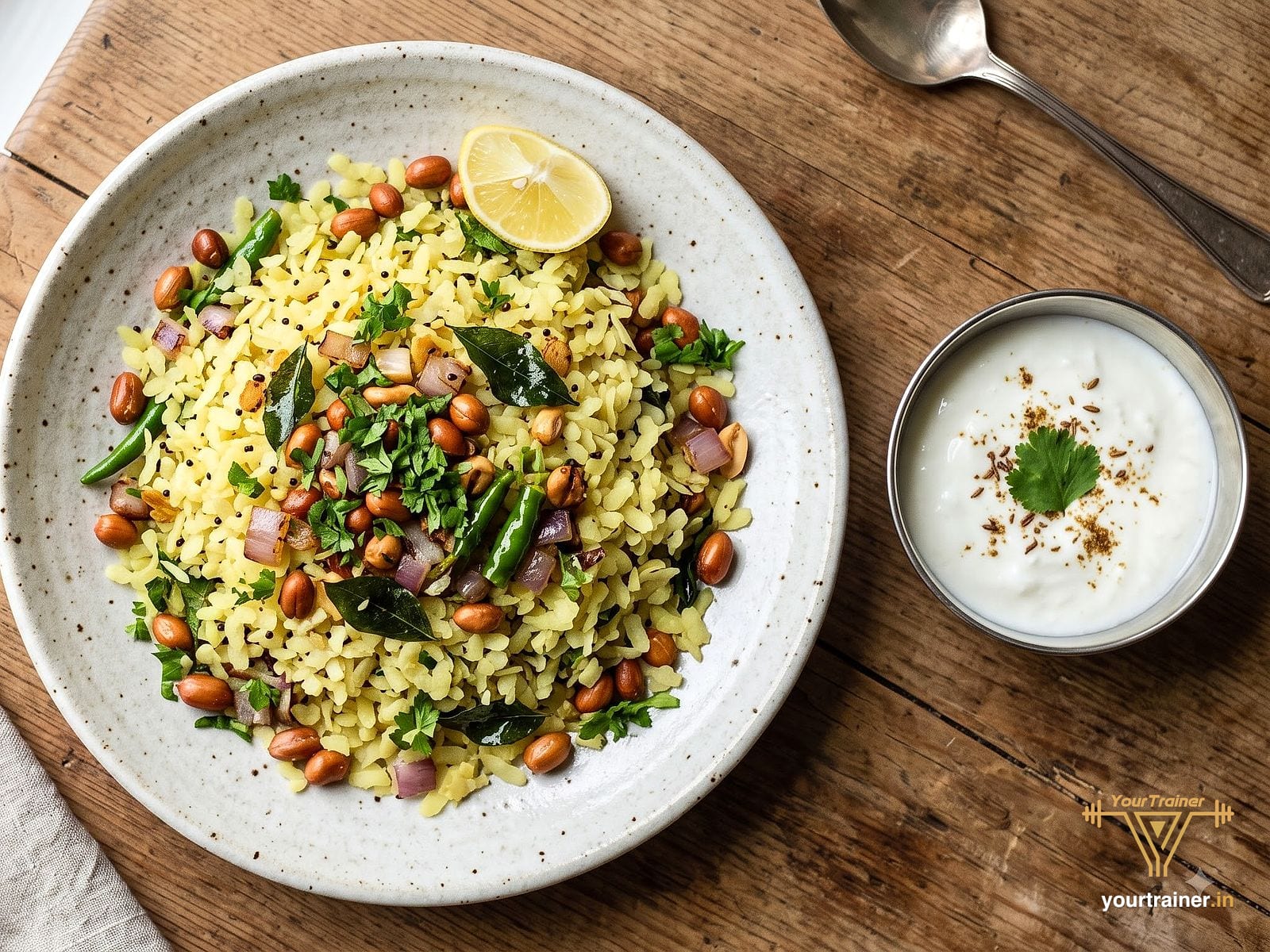
Yes. Poha is a sensible breakfast on a high uric acid diet. It is flattened rice, so it sits with the low-purine staples, and nothing in the gout evidence asks you to avoid it. What decides whether your poha morning helps or hurts is the rest of the plate: the peanuts and the portion, and whether any protein turns up at all.
What Indian breakfasts actually look like
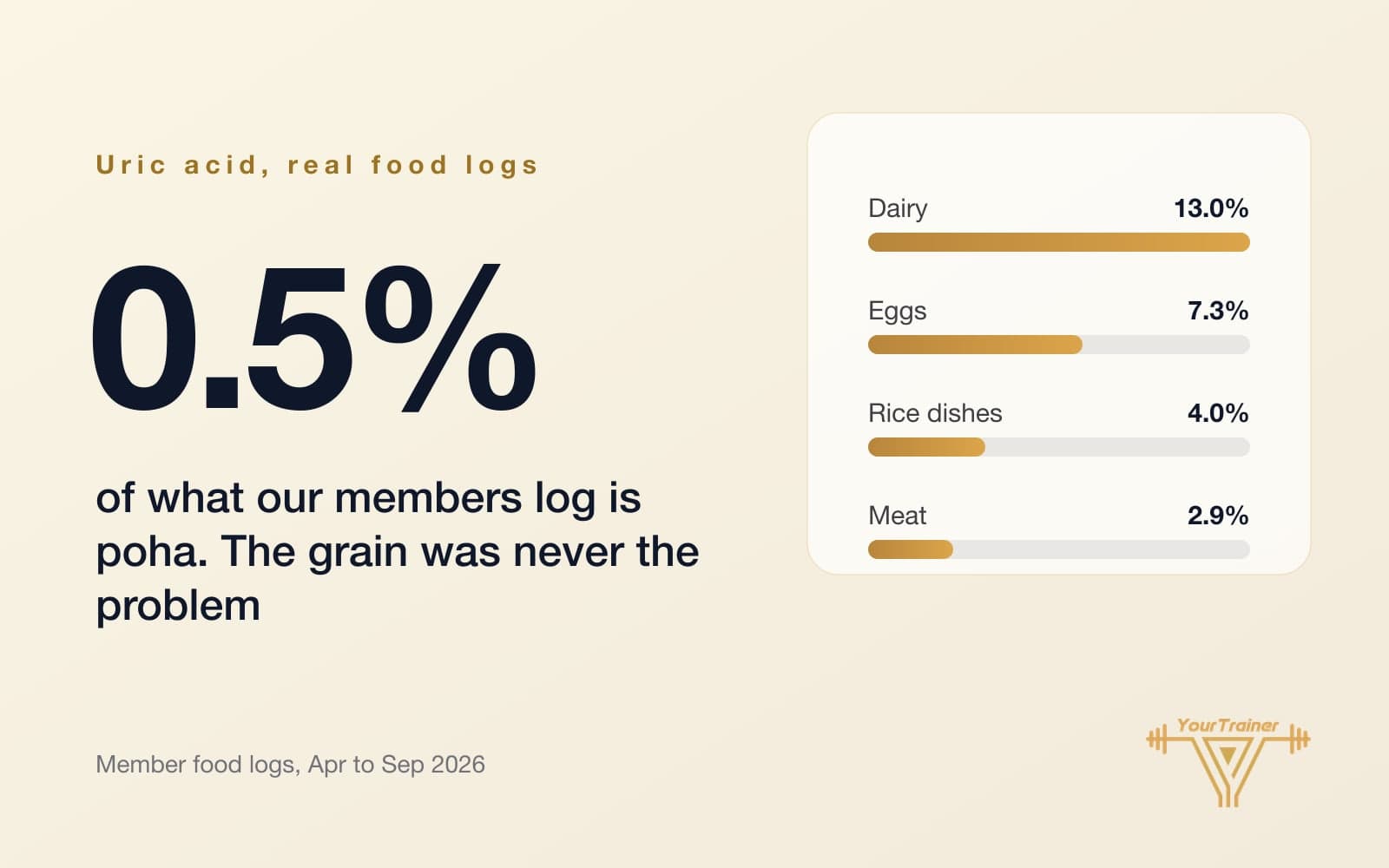
13.0%
of logged items mention dairy, the single largest group
7.3%
mention eggs, which are low in purines
4.0%
are rice dishes; poha itself is 0.5%
2.9%
mention meat, where dietary purines actually concentrate
Source: A sample of member food logs in the YourTrainer app, 16 April to 21 September 2026. Share of logged items whose name mentions that food, aggregated across members. An item can mention more than one food, so the shares do not add to 100
Here is the part most uric acid articles skip. The 2020 American College of Rheumatology gout guideline rates the diet advice for gout as conditional, and says plainly that changing what you eat produces only small changes in blood urate. Food matters more as a flare trigger than as a cure. That is why our coaches spend far more time on weight, alcohol and sugary drinks than on which vegetable you had at dinner.
Turn the numbers into meals
Knowing the calories is the easy part. Eating to them through a normal Indian week is where most people slip.
A YourTrainer coach plans your week around the dal, roti, rice and sabzi you already eat, reviews your plate photos and adjusts every week. It runs fully online, so it works the same in Bengaluru or Boston.
Start Your Journey →Coached online, wherever you live:Online personal trainer in India·Coaching for Indians in the USA·Online coaching for NRIs
Why poha is fine and what to add
Poha is a grain. Grains are not where dietary purines concentrate. The 2020 American College of Rheumatology gout guideline points at three things instead: purine-heavy animal foods, alcohol, and high-fructose corn syrup. Poha is none of them.
The real weakness of a poha breakfast is protein. On its own a bowl is mostly carbohydrate, so you are hungry by eleven and the day's protein target slips. Dairy is the most commonly logged group in our members' data, which is convenient here, because dairy is also the one food group linked with lower urate.
| Add this | Why it helps |
|---|---|
| A katori of curd | Dairy is associated with lower urate, and it adds protein |
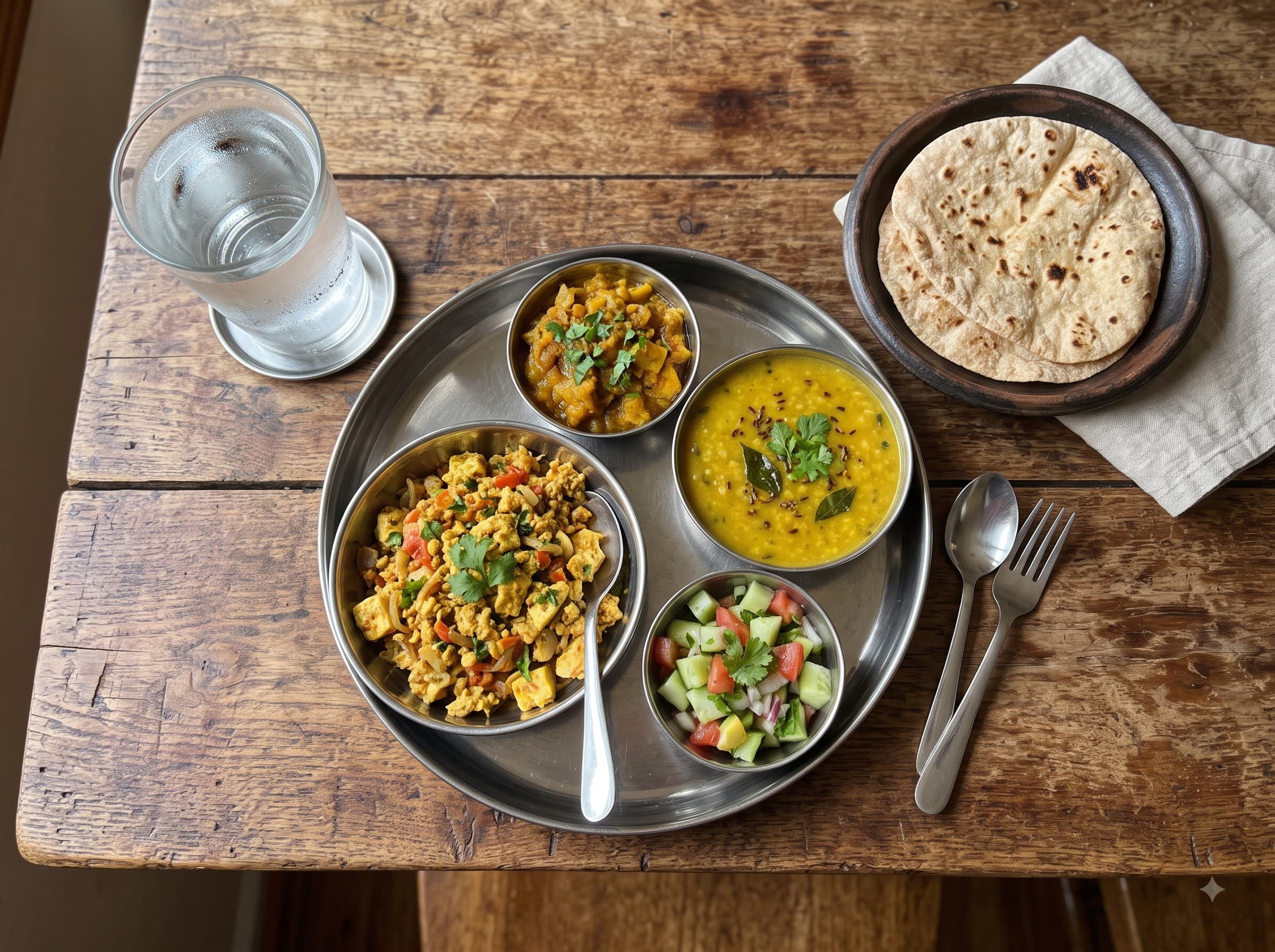
| Two eggs, or paneer bhurji | Eggs are low in purines and keep you full to lunch |
| A handful of sprouts stirred in | Fibre and protein without changing the dish |
Source: Coach practice at YourTrainer, consistent with the <a href="/health-sources" style="color:#9c7322;font-weight:700;text-decoration:underline;">2020 American College of Rheumatology gout guideline</a>
Coach's tip: If you take one thing from this page, make it the drink and not the dish. Sugary drinks and alcohol have far stronger evidence against them than your breakfast grain does.
Quick answers
Is poha good for uric acid?
Yes. Poha is flattened rice, a low-purine staple, and no gout guideline asks you to avoid it. Pair it with curd or eggs so the meal carries some protein.
Can I eat poha daily with high uric acid?
Daily is fine for most people. Watch the portion and what goes on top rather than the poha itself, and keep alcohol and sugary drinks down, which is where the stronger evidence sits.
Are the peanuts in poha a problem?
No. Peanuts are not a high-purine food and are not restricted in the gout guideline. A normal scattering in a bowl of poha is not what moves your urate.
What is the daily purine limit?
Japanese gout guidance commonly uses under 400 mg of purines a day. The American College of Rheumatology takes a different approach and only conditionally recommends limiting purines, noting the effect on blood urate is small.
The rest of this series
Start with the full uric acid diet plan, or check a single food against the evidence in the uric acid food checker.
How we counted
- A sample of member food logs from the YourTrainer app, 16 April to 21 September 2026. Members only, aggregated, never per person.
- Figures are the share of all logged food items that fell into each group, matched on the food name members typed.
- We report shares and medians only. No counts of people, meals or entries.
- Clinical statements come from the 2020 American College of Rheumatology gout guideline. Nothing here is medical advice or a substitute for your doctor's urate targets.
More on what our members eat in our food-log study, and portion sizes in the katori guide.
Did you find this helpful?

About Anish Agarwal
Founder & Head Coach, YourTrainer · NASM & K11 Certified Personal Trainer · 6+ years experience
Anish Agarwal is a NASM and K11 certified personal trainer with 6+ years of experience coaching fat loss, body transformation, strength, and nutrition for clients across India. He founded YourTrainer to make expert, science-based coaching accessible online and in Bengaluru. More about Anish.
Online 1-on-1 Coaching
Start Your Journey
Get a personalised training + Indian nutrition plan built around your goal, coached online, anywhere in India or abroad.
★★★★★ Trusted by 1,000+ transformations across India & abroad
Free 30-min discovery call · No obligation