High Uric Acid Diet Plan India: What to Eat + Avoid (Gout & Hyperuricemia 2026)
High uric acid affects about 1 in 5 urban Indians. A diet and exercise plan with low-purine Indian foods, what to avoid, and how to bring uric acid down.
⚠ Lifestyle information only. Not medical advice. If you are on uric-acid-lowering medication (allopurinol, febuxostat), do not change your prescription without your doctor's guidance.
Quick answer: Uric acid above 7.0 mg/dL (men) or 6.0 mg/dL (women) is hyperuricemia. In Indians, high uric acid is typically driven by fructose consumption (packaged juice, cold drinks, mithai), alcohol, excess red meat/seafood, and dehydration. Diet + hydration changes can reduce uric acid by 1-2 mg/dL within 4 weeks.
Key Numbers
Food-by-food answers from the same data: dal and uric acid, poha, curd and paneer, chicken, mutton and fish portions, and the palak and mushroom myth. Or check a single dish with the uric acid food checker.
What Indian households actually eat
13.0%
of logged items mention dairy, linked with lower urate
2.9%
mention meat, where dietary purines concentrate
2.5%
mention dal and lentils
1.4%
mention spinach, mushroom, cauliflower or peas
Source: A sample of member food logs in the YourTrainer app, 16 April to 21 September 2026. Share of logged items whose name mentions that food, aggregated across members. An item can mention more than one food, so the shares do not add to 100
Why Urban Indians Have High Uric Acid
- 🥤 Fructose (the #1 cause): Cold drinks, packaged juice, aam papad, mithai all spike uric acid. Fructose is metabolised to uric acid; glucose is not.
- 🍺 Alcohol (especially beer): Beer is a double hit: high in purines + reduces uric acid excretion
- 🐟 High-purine seafood: Prawns, crab, mussels, anchovies are very high-purine
- 🥩 Excess red meat: Mutton, beef, organ meats (kidney, liver), high purines
- 💧 Dehydration: Common in summer, especially in field jobs. Less urine = less uric acid excretion
- 💊 Certain medications: Low-dose aspirin, diuretics, some BP meds increase uric acid
Indian Foods: HIGH Purine (Avoid/Limit)
| Food | Purine Level | Verdict |
|---|---|---|
| Mutton / Goat meat | Very High | Max 1-2x/week, small portions |
| Prawns / Shrimp | Very High | Avoid during gout flare; limit otherwise |
| Beer (all types) | Very High | Avoid completely if gout is active |
| Organ meats (kidney, liver) | Extremely High | Avoid |
| Cold drinks / packaged juice | High fructose | Cut completely, fructose = uric acid |
| Mithai / sweets (gulab jamun, jalebi) | High fructose | Limit strictly |
Coaching that does this for you
Reading is step one. A coach turns it into a plan built around your body, food & schedule.
100% online · Indian meal plans · weekly progress reviews · daily WhatsApp support.
Start Your Journey →Indian Foods SAFE for High Uric Acid (Low Purine)
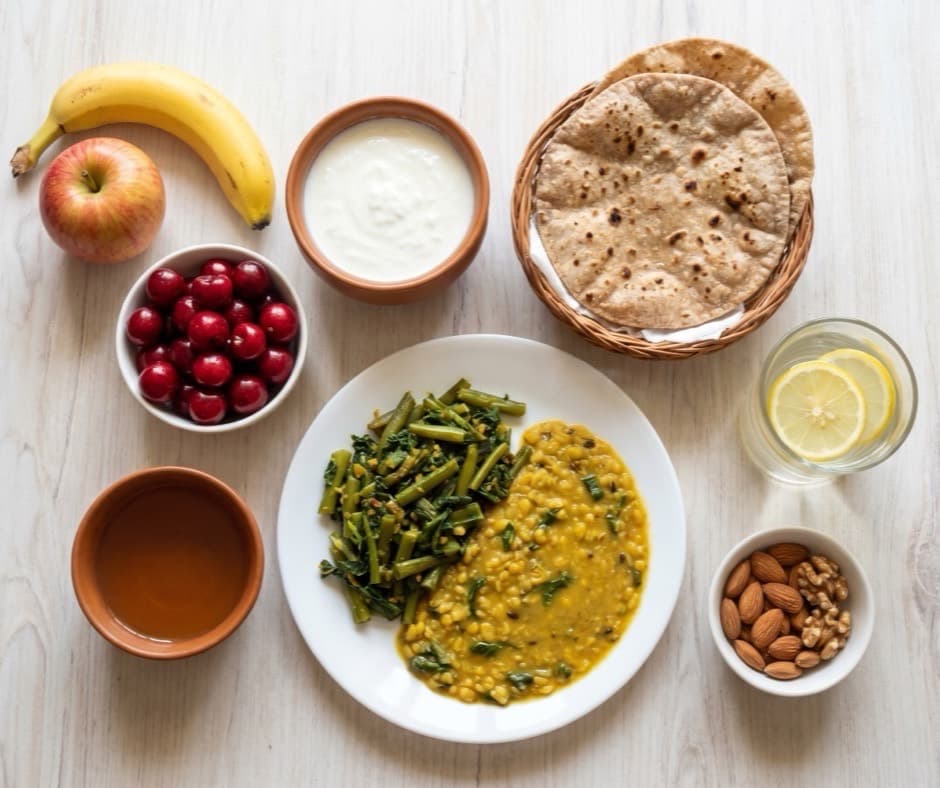
- ✅ Dal: Despite being protein-rich, dal is low-to-moderate purine. Safe to eat daily (1-2 bowls)
- ✅ Paneer and dairy: Dairy is uricosuric (promotes uric acid excretion). Paneer, curd, milk are protective
- ✅ Eggs: Low purine. 2 eggs/day is fine even with high uric acid
- ✅ Chicken (white meat): Moderate purine, safe in controlled portions (100-150g/day)
- ✅ Vegetables (most): Asparagus, mushrooms, cauliflower, spinach are moderate-purine but NOT associated with gout in studies
- ✅ Rice, roti, oats: Grain carbs are low-purine
- ✅ Coffee (black): Studies show coffee drinkers have lower uric acid levels. 2-3 cups/day beneficial
- ✅ Vitamin C: 500mg/day vitamin C supplements reduce uric acid by 0.35 mg/dL on average
- ✅ Cherries / amla: Cherry consumption reduces gout flares (small study, but safe to include)
The #1 Intervention: Hydration
Drink 3 litres of water daily.
Most Indians with high uric acid drink 1-1.5 litres/day. Doubling this alone can reduce uric acid by 0.5-1.0 mg/dL within 2 weeks. Set a 3L daily target with a measured bottle. This is non-negotiable.
7-Day Low-Purine Indian Meal Plan
Sample Day
Exercise and Uric Acid
- ✅ Regular moderate exercise lowers uric acid by improving insulin sensitivity and kidney excretion
- ✅ Strength training 3x/week + 8,000 steps daily is the target
- ⚠️ Extreme endurance (marathon, long cycling) can temporarily spike uric acid, avoid during active gout
- ⚠️ Stay hydrated during and after workouts: dehydration during exercise raises uric acid acutely
One food at a time
To look up a single food against the evidence, use the uric acid food checker, which grades Indian foods by measured gout risk rather than purine content alone.
We also took the questions people actually search for and answered them one food at a time, using the same food-log sample:
- Is poha good for uric acid?
- Dal and uric acid
- Curd, paneer and uric acid
- Chicken, mutton and fish with high uric acid
- Spinach, mushroom and cauliflower
When Medication Is Needed
Diet alone manages most cases. Medication (allopurinol/febuxostat) is warranted when:
- Uric acid >9 mg/dL persistently
- Tophi (urate crystal deposits) have formed
- Recurrent gout attacks (3+ per year)
- Kidney stones due to urate crystals
- Kidney disease (CKD) with elevated uric acid
Managing Uric Acid Through Food
Cut fructose (cold drinks, packaged juice, excess mithai), drink 3L water daily, limit alcohol and red meat, eat dairy + dal + paneer freely. Uric acid typically drops 1-2 mg/dL in 4-6 weeks with consistent adherence. A structured nutrition plan makes this easy, which is exactly what we build at YourTrainer.
Sources
- High prevalence of metabolic obesity in India: the ICMR-INDIAB national study · Indian Journal of Medical Research
- Appropriate body-mass index for Asian populations and its implications for policy and intervention strategies · WHO Expert Consultation, The Lancet (2004)
- Healthy diet · World Health Organization
Figures for Indian foods follow IFCT 2017 (ICMR-NIN). Coaching guidance on this site is educational and is not a substitute for medical advice. See how we use sources.
Did you find this helpful?

About Anish Agarwal
Founder & Head Coach, YourTrainer · NASM & K11 Certified Personal Trainer · coaching since 2022
Featured in Dietitians.io, Fitness Interview, NRI Pulse, The MASALA Study. Press and media
Anish Agarwal is a NASM and K11 certified personal trainer coaching fat loss, body transformation, strength, and nutrition for clients across India since 2022. He founded YourTrainer to make expert, science-based coaching accessible online and in Bengaluru. Coach Anish's profile and the YourTrainer story.
Online 1-on-1 Coaching
Start Your Journey
Get a personalised training + Indian nutrition plan built around your goal, coached online, anywhere in India or abroad.
Trusted by 1,000+ clients coached across India & abroad
Free 30-min discovery call · No obligation