Calcium & Osteoporosis in Indian Women: Beyond the Milk Myth
Weak bones are not a 'not enough milk' problem. The four-part plan: calcium, vitamin D, protein, strength training, plus vegetarian calcium sources for women.
Quick Answer
Indian women are at high risk of weak bones and osteoporosis, not because they don't drink enough milk, but because calcium alone doesn't build bone. You also need vitamin D (to absorb the calcium), protein (the framework bone is built on), and strength training (the signal to keep bone strong). Most Indian women are low in all four. Fixating on "drink more milk" while ignoring vitamin D deficiency, low protein, and zero resistance training is why bone density keeps dropping despite decent calcium intake. Bone health is a four-part system, not a milk problem.
You can eat plenty of calcium and still lose bone if you're low on vitamin D (can't absorb it), low on protein (no framework to build on), or never load your bones with strength training (no signal to stay strong). All four have to be in place.
Disclaimer: Educational content based on bone-health and nutrition research, not medical advice. If you have osteopenia, osteoporosis, or fracture risk, work with your doctor, a bone-density (DEXA) scan gives you a real baseline.
Why Indian Women Are Especially at Risk
Several factors stack up for Indian women:
- Widespread vitamin D deficiency: without it, you absorb only a fraction of the calcium you eat.
- Low protein intake: bone is a protein scaffold hardened with minerals; too little protein weakens the structure.
- Little to no strength training: bone responds to mechanical load; without it, there's no signal to maintain density.
- Early menopause: oestrogen protects bone, and its earlier decline accelerates loss.
The Dairy Myth (For Vegetarians and the Lactose-Intolerant)
Milk is a good calcium source, but it's not the only one, and many Indian adults are lactose intolerant. Plenty of vegetarian, non-dairy foods deliver calcium well. You will not develop weak bones simply because you don't drink milk, as long as you get calcium from other sources plus vitamin D, protein, and loading.
Best Calcium Sources for Indian Women
| Source | Notes |
|---|---|
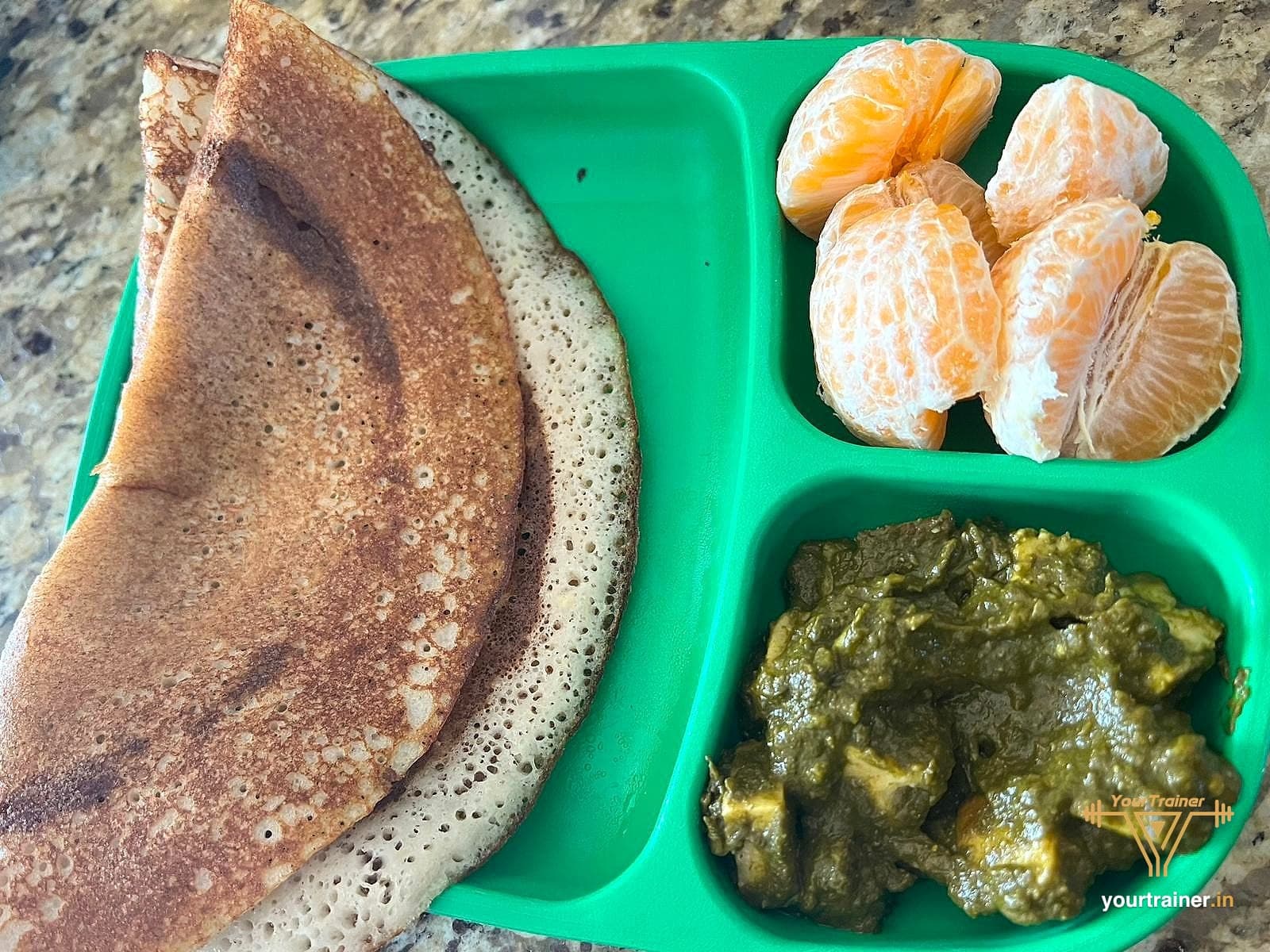
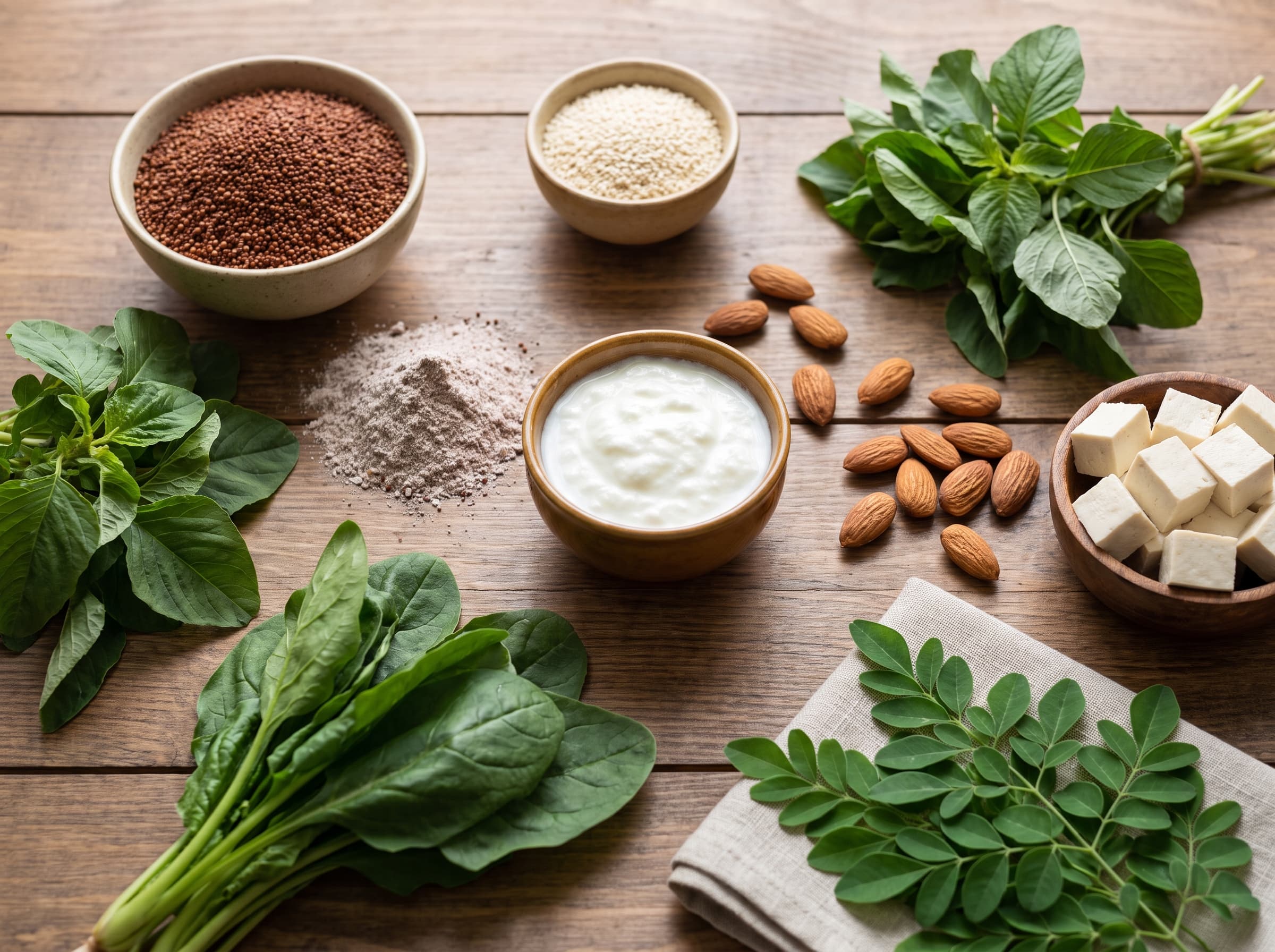
| Ragi (finger millet) | One of the richest vegetarian calcium sources, ragi dosa, roti, porridge |
| Sesame seeds (til) & tahini | Very high calcium; add to chutneys, laddoos, sprinkle on food |
| Curd, paneer, milk | Excellent if you tolerate dairy |
| Leafy greens (amaranth, methi) | Good calcium plus micronutrients |
| Almonds, moringa (drumstick leaves) | Solid supporting sources |
| Rajma, chana, tofu | Contribute calcium plus the protein your bones need |
Coaching that does this for you
Reading is step one. A coach turns it into a plan built around your body, food & schedule.
100% online · Indian meal plans · weekly progress reviews · daily WhatsApp support.
Start Your Journey →The Four-Part Bone Plan
From dairy or vegetarian sources above. Spread it across meals, your body absorbs calcium better in smaller doses than one large hit.
Test your level. Without adequate vitamin D you absorb only a fraction of your calcium. Sunlight, fortified foods, and supplementation (if deficient, under guidance) all help.
Bone is built on a protein framework. Adequate protein supports both bone and the muscle that protects you from falls. Palm-sized source each meal.
Load-bearing exercise tells your bones to stay dense. Walking helps a little; genuinely challenging resistance training helps far more. This is the piece almost everyone skips.
Bone density peaks in your late 20s/early 30s and declines after. The best time to protect your bones is years before menopause, but strength training and good nutrition improve bone health at any age, even after a diagnosis.
Closing the Four-Part Bone Gap
Weak bones in Indian women aren't a "not enough milk" problem, they're a four-part gap: calcium, vitamin D, protein, and strength training, with most women short on all four. You can get plenty of calcium from ragi, sesame, greens, and legumes without dairy, but calcium only works if vitamin D lets you absorb it, protein gives bone its framework, and strength training signals your bones to stay strong. Fix all four, ideally before menopause, and your bones stay strong for decades.
Want a Bone-Protective Nutrition and Strength Plan?
Bone health is exactly the kind of thing that's easy to ignore until it's a problem. YourTrainer coaching builds a plan covering all four levers, calcium sources that fit your diet, vitamin D and protein targets, and a safe strength routine, so you protect your bones for the long run.
- Related: Strength Training for Bone Density (Women 40+)
- Related: Vitamin D Deficiency in Indians, Symptoms & Fix
- Related: How to Hit 100g Protein as a Vegetarian
- Start Your Journey
Coach Anish, YourTrainer
Sources
- High prevalence of metabolic obesity in India: the ICMR-INDIAB national study · Indian Journal of Medical Research
- Healthy diet · World Health Organization
- Nutrient Requirements for Indians (RDA and EAR) · ICMR, National Institute of Nutrition
Figures for Indian foods follow IFCT 2017 (ICMR-NIN). Coaching guidance on this site is educational and is not a substitute for medical advice. See how we use sources.
Did you find this helpful?

About Anish Agarwal
Founder & Head Coach, YourTrainer · NASM & K11 Certified Personal Trainer · coaching since 2022
Featured in Dietitians.io, Fitness Interview, NRI Pulse, The MASALA Study. Press and media
Anish Agarwal is a NASM and K11 certified personal trainer coaching fat loss, body transformation, strength, and nutrition for clients across India since 2022. He founded YourTrainer to make expert, science-based coaching accessible online and in Bengaluru. Coach Anish's profile and the YourTrainer story.
Online 1-on-1 Coaching
Start Your Journey
Get a personalised training + Indian nutrition plan built around your goal, coached online, anywhere in India or abroad.
Trusted by 1,000+ clients coached across India & abroad
Free 30-min discovery call · No obligation