Regional Indian Cuisine Compared: Which Diet Is Actually Healthiest?
South Indian, Punjabi, Bengali, Gujarati and Maharashtrian diets compared on protein, fat, fibre and glycemic load, with the specific weakness and strength of each.
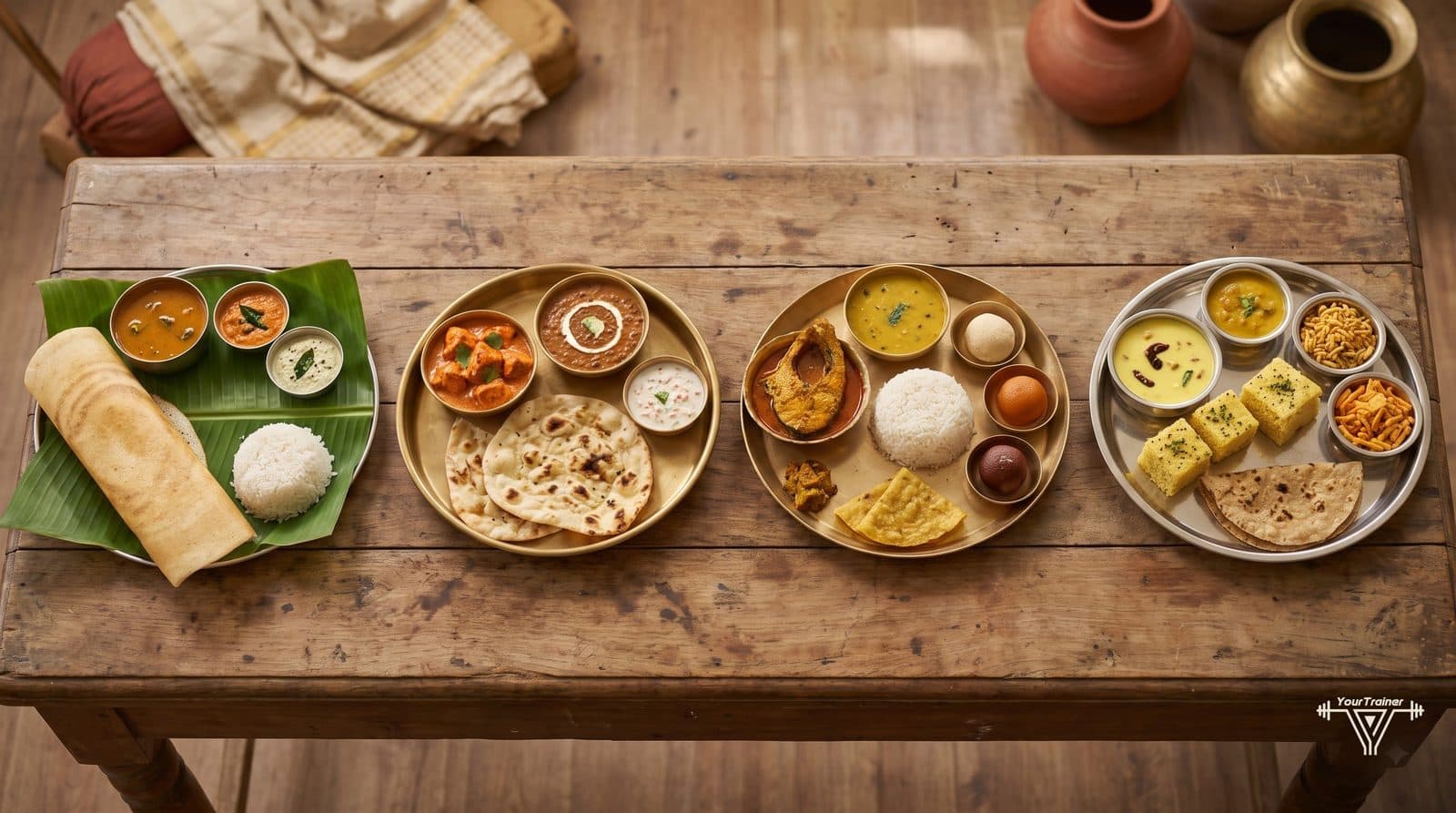
Quick answer: There is no single healthiest Indian cuisine. Bengali and coastal diets lead on protein because of daily fish. South Indian leads on cooking method because of steaming. Gujarati leads on fibre but carries the highest added sugar. Punjabi has the strongest protein base but the heaviest fat preparation. Each has a specific, fixable weakness.
Key Numbers
Why This Comparison Is Usually Done Badly
Most regional cuisine comparisons collapse into stereotypes. Punjabi food is heavy, South Indian food is light, Gujarati food is healthy because it is vegetarian. The reality is more specific and more useful, because each cuisine has a structural strength and a structural weakness that can actually be addressed.
The comparison below uses a representative daily menu from each region, cooked the way it is actually cooked at home rather than an idealised version.
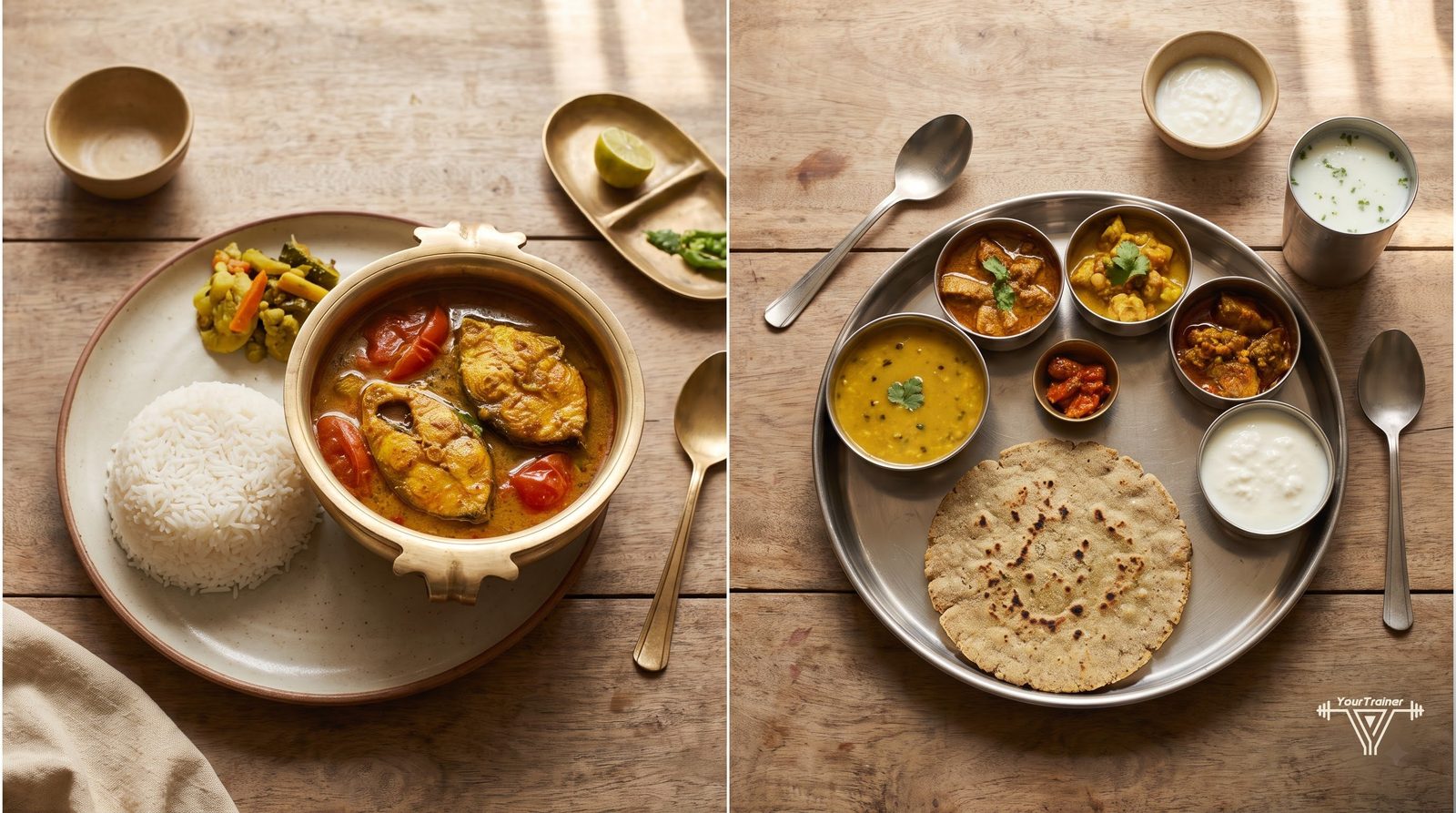
The Numbers
| Cuisine | Protein | Fat | Fibre | Main weakness |
|---|---|---|---|---|
| Bengali | High (30 to 35 g/meal) | Moderate | Moderate | White rice volume |
| Coastal (Kerala, Goa) | High (28 to 34 g) | High (coconut) | Moderate | Coconut fat load |
| Punjabi | Moderate to high (20 to 26 g) | High (ghee, cream) | Moderate | Fat preparation |
| South Indian | Low (10 to 15 g) | Moderate | Low to moderate | Rice dominance, low protein |
| Gujarati | Moderate (18 to 22 g) | Moderate | High | Added sugar |
| Maharashtrian | Moderate (18 to 24 g) | Moderate | High (millets) | Varies widely |
Coaching that does this for you
Reading is step one. A coach turns it into a plan built around your body, food & schedule.
100% online · Indian meal plans · weekly progress reviews · daily WhatsApp support.
Start Your Journey →Bengali and Coastal: The Protein Advantage
Fish at most meals is a genuine structural advantage that vegetarian-dominant regions cannot easily match. A Bengali lunch of rice, dal and a fish curry lands around 30 to 35 g of protein. The equivalent vegetarian North Indian thali is 15 to 18 g.
The weakness is rice volume. Bengali portions of white rice are typically large, which pushes the carbohydrate load and the glycemic response up. The fix is not switching cuisine, it is reducing rice by one katori and keeping the fish.
Coastal Kerala and Goan food share the fish advantage but add substantial coconut fat. Coconut is not harmful in itself, but coconut oil and thick coconut gravies add up quickly, and the calories are easy to underestimate.
Punjabi: Strong Base, Heavy Method
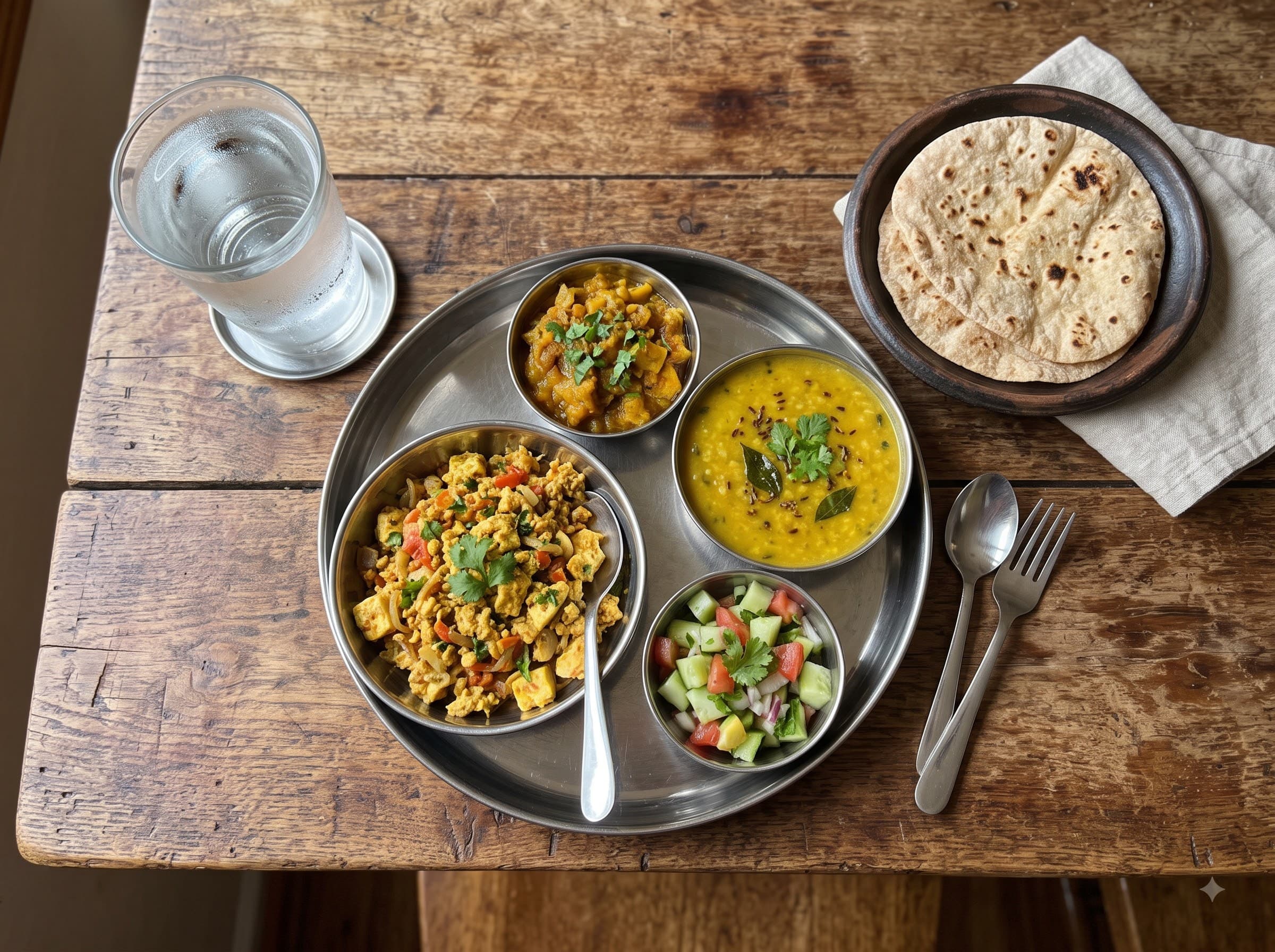
This is the cuisine most unfairly maligned. Wheat, dairy and legumes are an excellent nutritional foundation, and Punjabi food has more accessible protein than most Indian regional diets thanks to paneer, curd, milk and rajma.
The problem is entirely in preparation. Ghee on every roti, cream in the dal, butter in the gravy. Dal makhani at 285 calories per katori versus plain toor dal at 140 is the same legume with a different finish.
Cooked with restraint on the ghee and cream, Punjabi food scores near the top. This is the cuisine with the largest gap between its potential and its typical execution.
South Indian: Best Method, Weakest Protein
Steaming is genuinely superior to frying, and idli deserves its reputation. But the fermented rice batter base means South Indian breakfast is carbohydrate dominant, and two idlis with sambar deliver under 10 g of protein.
Coconut chutney is the second issue. At 75 calories per two tablespoons and rarely measured, it quietly adds 150 to 200 calories to an otherwise light meal.
South Indian food responds better than any other regional cuisine to a single fix: raise the protein. Pesarattu instead of dosa, roasted gram chutney instead of coconut, curd alongside. We covered the specifics in the South Indian breakfast article.
Gujarati: The Sugar Blind Spot
Gujarati cuisine has the highest legume and fibre intake of any Indian regional diet, which is a real advantage for gut health, satiety and glycemic control.
Working against it is the routine addition of sugar or jaggery to dal, shaak and rotla dough. This is a flavour principle rather than a dessert habit, so it does not register as sweet eating. It is a plausible contributor to why metabolic syndrome rates remain high in some Gujarati populations despite an otherwise strong vegetarian diet.
Maharashtrian: The Millet Advantage
Jowar and bajra bhakri feature far more prominently than in most other regional diets. Millets carry more fibre and a lower glycemic load than wheat or rice, and bajra brings meaningful iron.
The variation within the cuisine is wide, from a fibre-rich bhakri and zunka meal to a misal pav that is largely refined carbohydrate and oil.
The Actual Conclusion
Regional cuisine is not what determines health outcomes. Preparation method, portion size and protein content do, and all three vary enormously within every region.
The practical move is to identify your own cuisine's specific weakness and address that one thing. South Indian, add protein. Punjabi, cut the cooking fat. Gujarati, remove the added sugar. Bengali, reduce the rice. Each is a single change rather than a diet overhaul.
Run your own regional plate through the Indian food calorie calculator to see where yours actually lands, and set your protein floor with the protein calculator.
Related reading: the 60-dish calorie chart and Indian protein sources ranked.
Sources
- Indian Food Composition Tables (IFCT) 2017 · ICMR - National Institute of Nutrition
- Nutrient Requirements for Indians (RDA and EAR) · ICMR - National Institute of Nutrition
- Healthy diet · World Health Organization
- Dietary profiles and associated metabolic risk factors in India (ICMR-INDIAB survey) · Nature Medicine
Figures for Indian foods follow IFCT 2017 (ICMR-NIN). Coaching guidance on this site is educational and is not a substitute for medical advice. See how we use sources.
Did you find this helpful?

About Anish Agarwal
Founder & Head Coach, YourTrainer · NASM & K11 Certified Personal Trainer · 6+ years experience
Anish Agarwal is a NASM and K11 certified personal trainer with 6+ years of experience coaching fat loss, body transformation, strength, and nutrition for clients across India. He founded YourTrainer to make expert, science-based coaching accessible online and in Bengaluru. More about Anish.
Online 1-on-1 Coaching
Start Your Journey
Get a personalised training + Indian nutrition plan built around your goal, coached online, anywhere in India or abroad.
★★★★★ Trusted by 1,000+ transformations across India & abroad
Free 30-min discovery call · No obligation