Protein Per Rupee: India's Cheapest Protein Sources, Ranked
A cost-per-gram-of-protein table for 20 Indian foods. Soya chunks beat whey by a wide margin, eggs beat paneer, and the supplement aisle is rarely the answer.
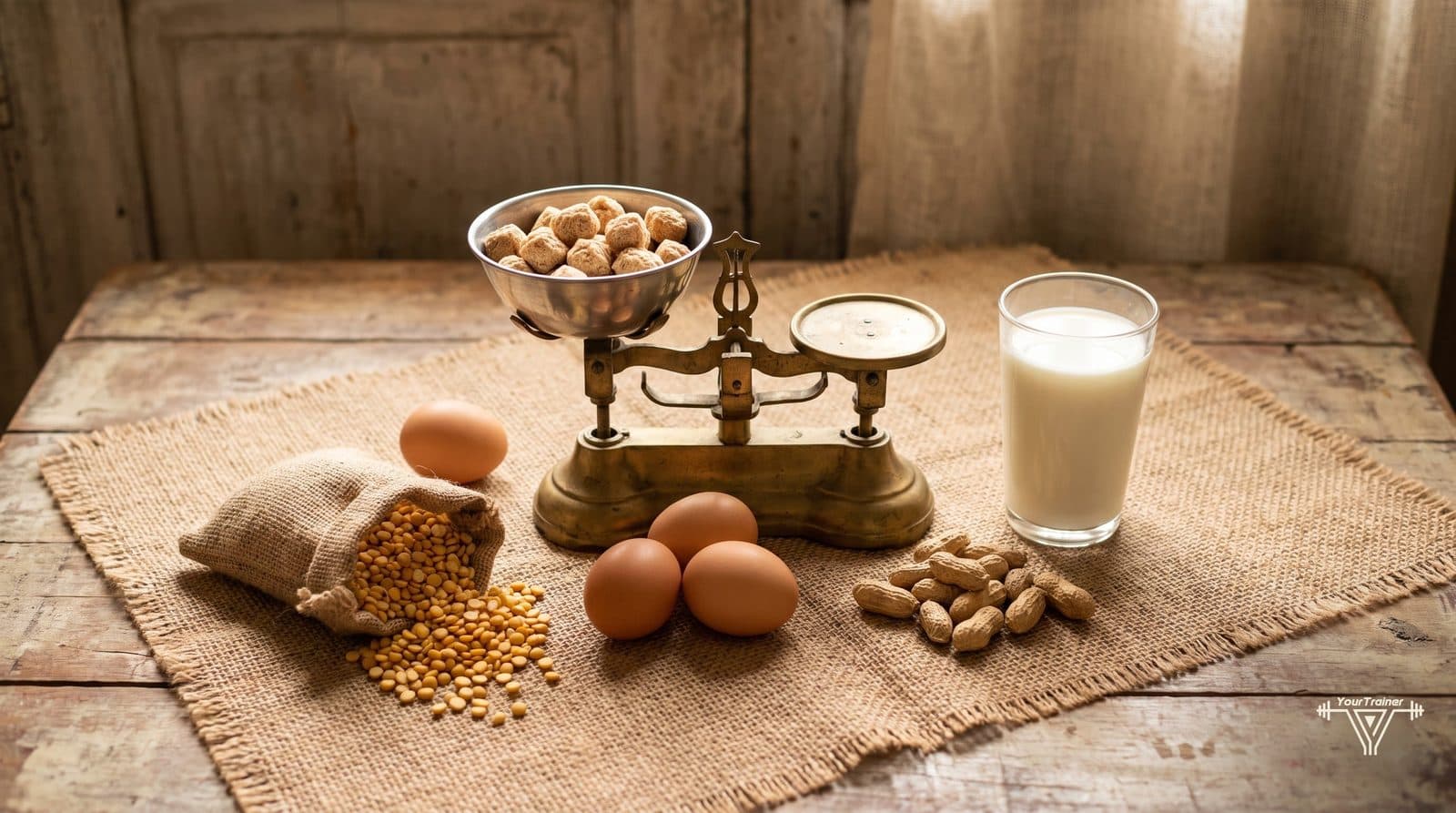
Quick answer: Soya chunks are India's cheapest protein at roughly 0.25 rupees per gram, followed by eggs at about 0.5, milk and dal near 0.9, and paneer near 1.4. Whey protein costs roughly 2 to 3 rupees per gram, making it about ten times the cost of soya chunks for the same protein.
Key Numbers
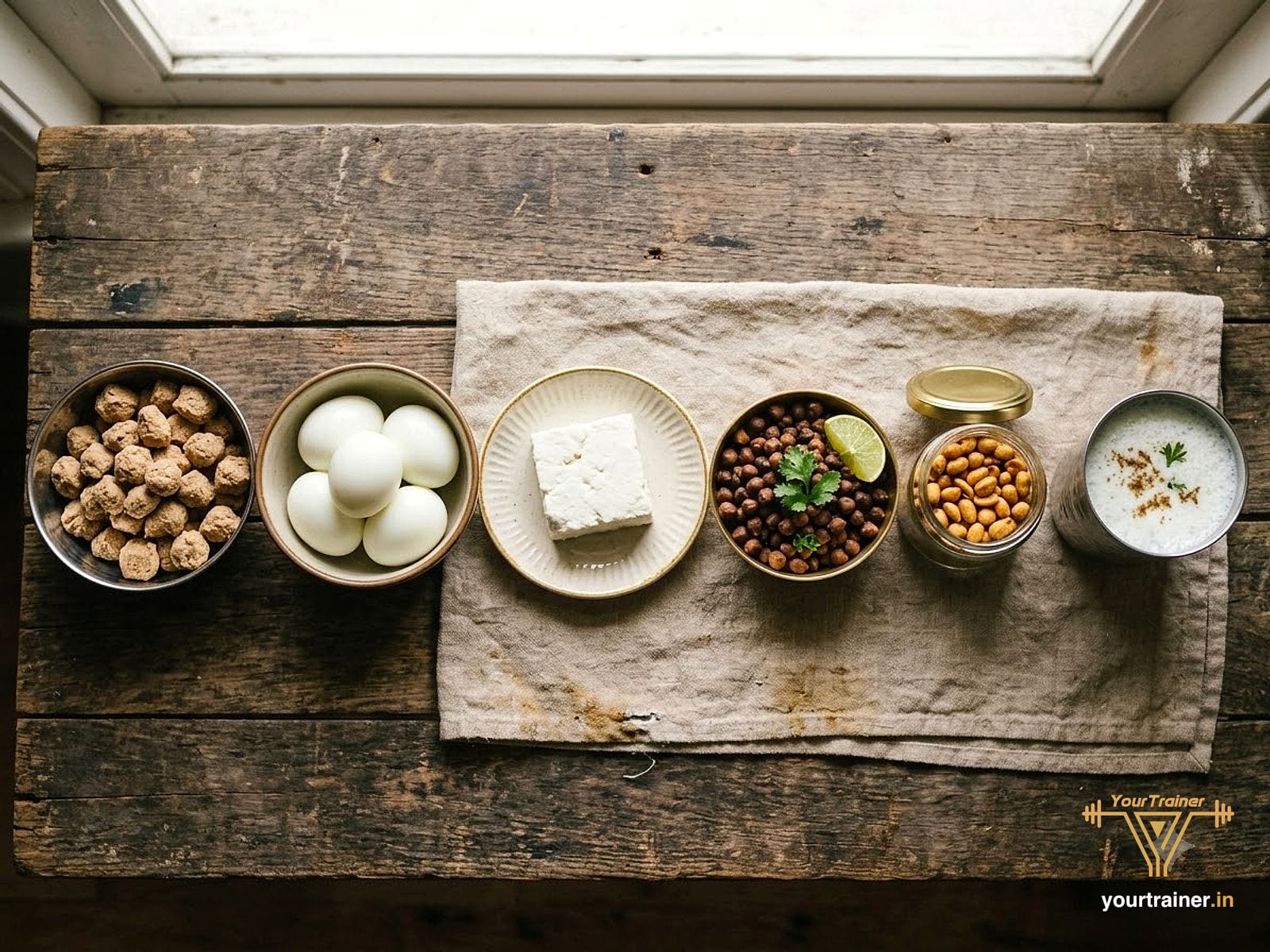
Protein our members actually logged
24 g
in 1 scoop of whey, the third most-logged food
39 g
in 75 g of dry soya chunks
13 g
in 2 boiled eggs
9 g
in a typical 50 g serving of paneer
Source: A sample of member food logs from the YourTrainer app, 19 April to 17 September 2026. Members only, aggregated, each food logged by at least three members in the sample, using the app's food-database values for the portion logged
Cost per gram matters, and so does the portion people really eat. Read the food-log study.
Why Cost Per Gram Is the Only Fair Comparison
Comparing food prices per kilogram tells you almost nothing about protein value. Paneer and soya chunks cost roughly the same per kilogram, but soya chunks carry about three times the protein by weight. The only comparison that matters for someone trying to hit a protein target on a budget is rupees per gram of protein.
Prices below reflect typical Indian retail in mid 2026 and will vary by city and brand. The ranking holds even with substantial price movement, because the gaps are large.
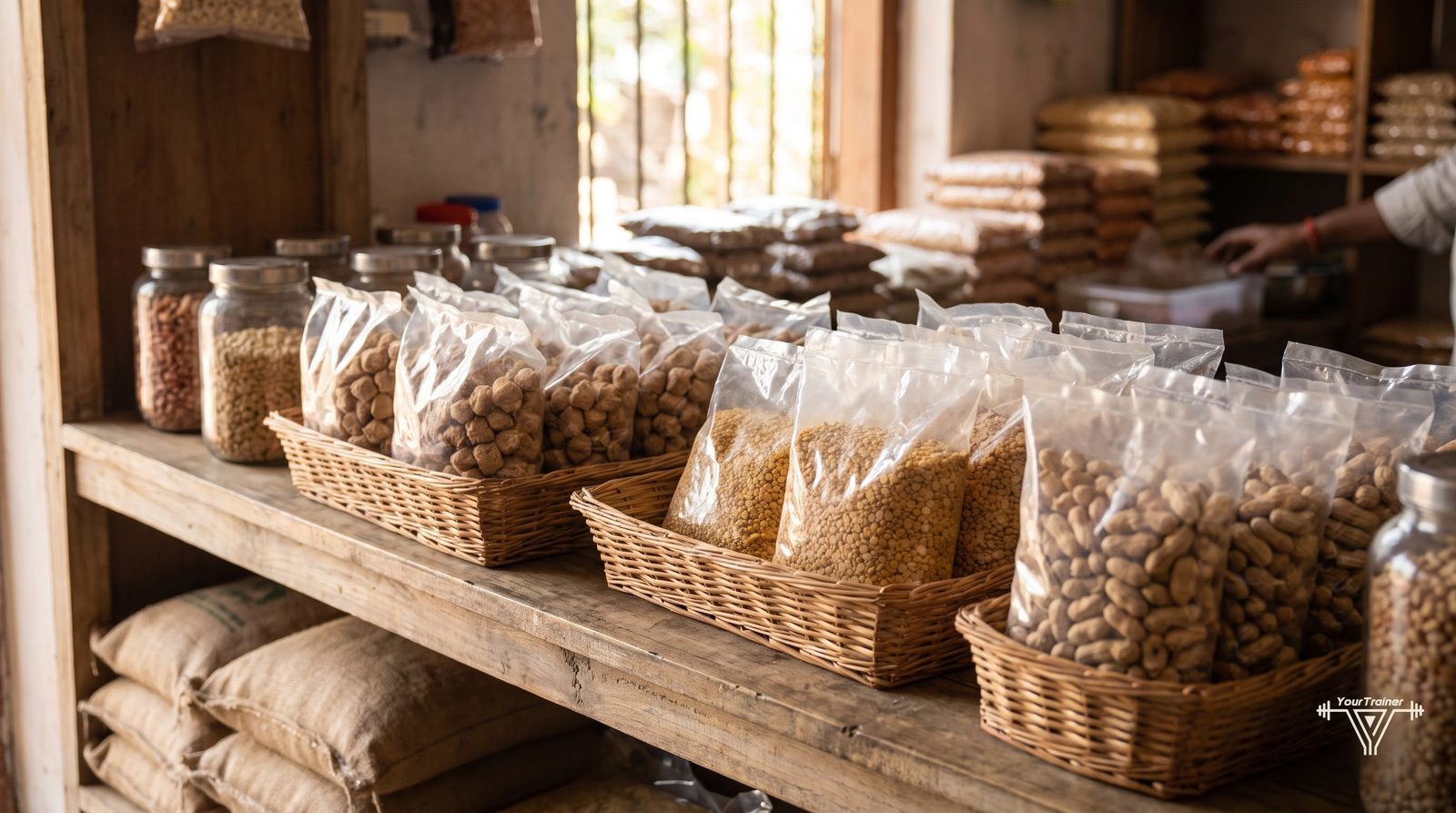
The Ranking
| Food | Protein per 100 g | Approx price | Rs per g protein |
|---|---|---|---|
| Soya chunks (dry) | 52 g | Rs 130/kg | 0.25 |
| Eggs | 13 g | Rs 7 each | 0.53 |
| Chana (dry) | 19 g | Rs 90/kg | 0.47 |
| Rajma (dry) | 22 g | Rs 130/kg | 0.59 |
| Toor dal | 22 g | Rs 160/kg | 0.73 |
| Peanuts | 26 g | Rs 160/kg | 0.62 |
| Milk (toned) | 3.2 g | Rs 60/litre | 0.94 |
| Curd (homemade) | 3.6 g | Rs 60/litre milk | 0.90 |
| Moong dal | 24 g | Rs 150/kg | 0.63 |
| Paneer | 18 g | Rs 250/kg | 1.39 |
| Chicken | 27 g | Rs 260/kg | 0.96 |
| Greek yogurt (packaged) | 10 g | Rs 300/kg | 3.00 |
| Whey protein | 75 g | Rs 2,000/kg | 2.67 |
| Protein bar | 20 g | Rs 150 each (60 g) | 7.50 |
Turn the numbers into meals
Knowing the calories is the easy part. Eating to them through a normal Indian week is where most people slip.
A YourTrainer coach plans your week around the dal, roti, rice and sabzi you already eat, reviews your plate photos and adjusts every week. It runs fully online, so it works the same in Bengaluru or Boston.
Start Your Journey →Coached online, wherever you live:Online personal trainer in India·Coaching for Indians in the USA·Online coaching for NRIs
What the Table Actually Shows
Soya chunks are in a category of their own. Nothing else in Indian retail comes close on cost per gram of protein. One katori of cooked soya chunks delivers about 26 g, matching four katoris of dal, for roughly 15 rupees.
Eggs are the best animal protein value. At around 7 rupees each for 6.3 g, eggs beat chicken, paneer and every dairy option on cost while carrying excellent amino acid quality.
Protein bars are the worst value in the table by a factor of ten. At roughly 7.5 rupees per gram they cost thirty times what soya chunks do. They are a convenience product, and worth understanding as such.
Packaged Greek yogurt is expensive for what it is. Straining your own curd through a muslin cloth produces the same thing at roughly a third of the cost.
A 100 g Protein Day Under 150 Rupees
| Meal | Food | Protein | Cost |
|---|---|---|---|
| Breakfast | 3 eggs plus 1 glass milk | 27 g | Rs 36 |
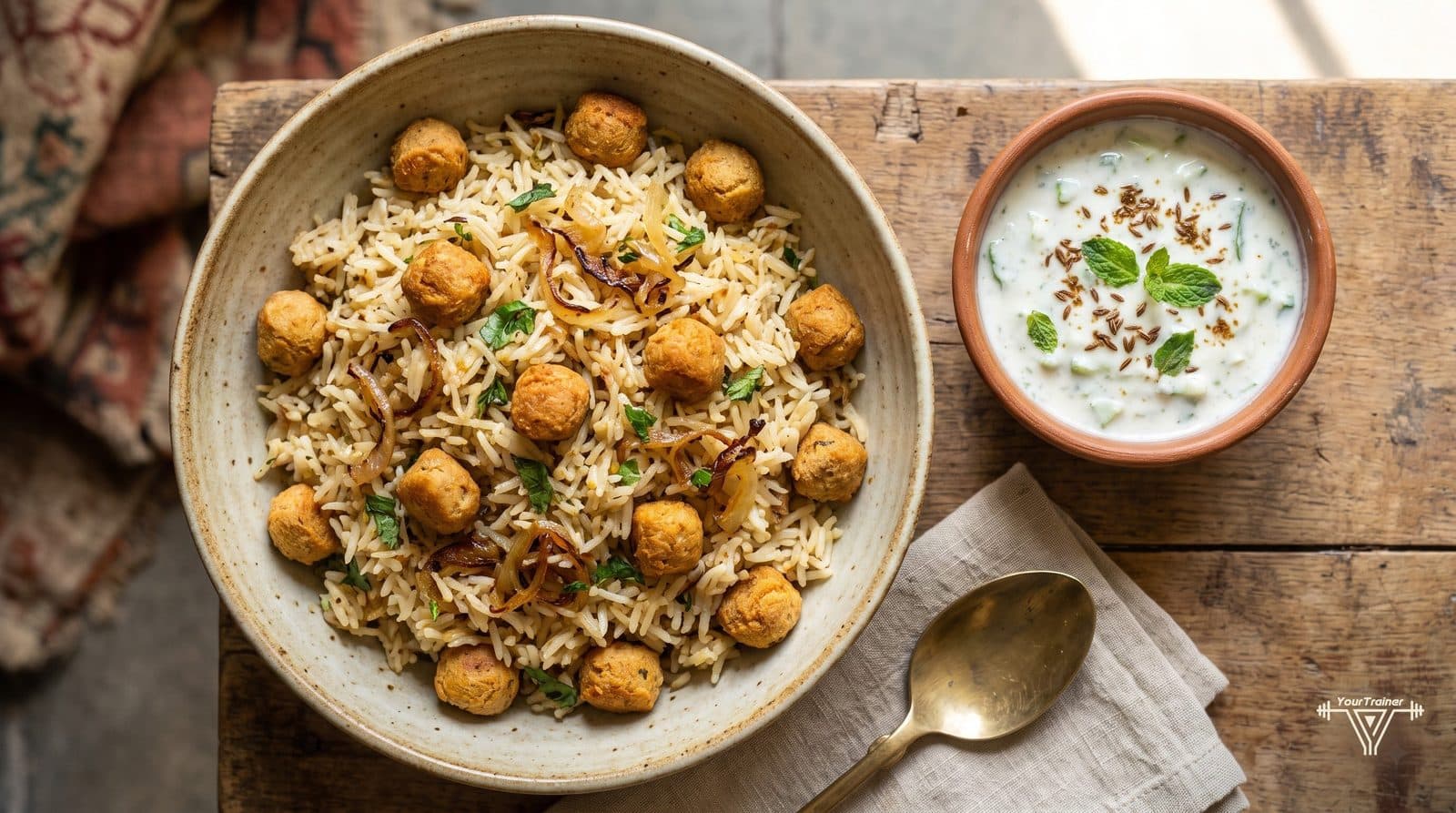
| Lunch | 1 katori soya pulao plus curd | 31 g | Rs 32 |
| Snack | 1 katori roasted chana | 8 g | Rs 12 |
| Dinner | 2 katori dal plus 2 rotis plus curd | 24 g | Rs 38 |
| Extra | 30 g peanuts | 8 g | Rs 6 |
| Total | 98 g | Rs 124 |
That is a genuine 98 g of protein for about 124 rupees, using food available in any Indian kirana store. No supplements involved.
When Whey Is Still Worth Buying
Value and usefulness are different questions. Whey is poor value per gram but genuinely useful in specific cases:
- You are vegetarian and consistently landing 30 g short despite trying.
- Your appetite is suppressed after training, which is common.
- You travel constantly and cannot rely on food access.
What it should not be is the first purchase someone makes when starting out. Fixing meal structure with soya, eggs and dal costs less and does more.
Real portions from our members' food logs
| Food | Typical portion | Calories, protein |
|---|---|---|
| Whey protein | 1 scoop | 120 kcal, 24 g |
| Chicken breast | 150 g | 248 kcal, 46.5 g |
| Soya chunks | 75 g dry | 248 kcal, 39 g |
| Boiled eggs | 2 eggs | 156 kcal, 13 g |
| Dal | 1 bowl | 150 kcal, 9 g |
| Paneer | 50 g | 133 kcal, 9 g |
| Dahi (curd) | 100 g | 61 kcal, 4 g |
Source: A sample of member food logs from the YourTrainer app, 19 April to 17 September 2026. Members only, aggregated, each food logged by at least three members in the sample, using the app's food-database values for the portion logged
The Soya Question
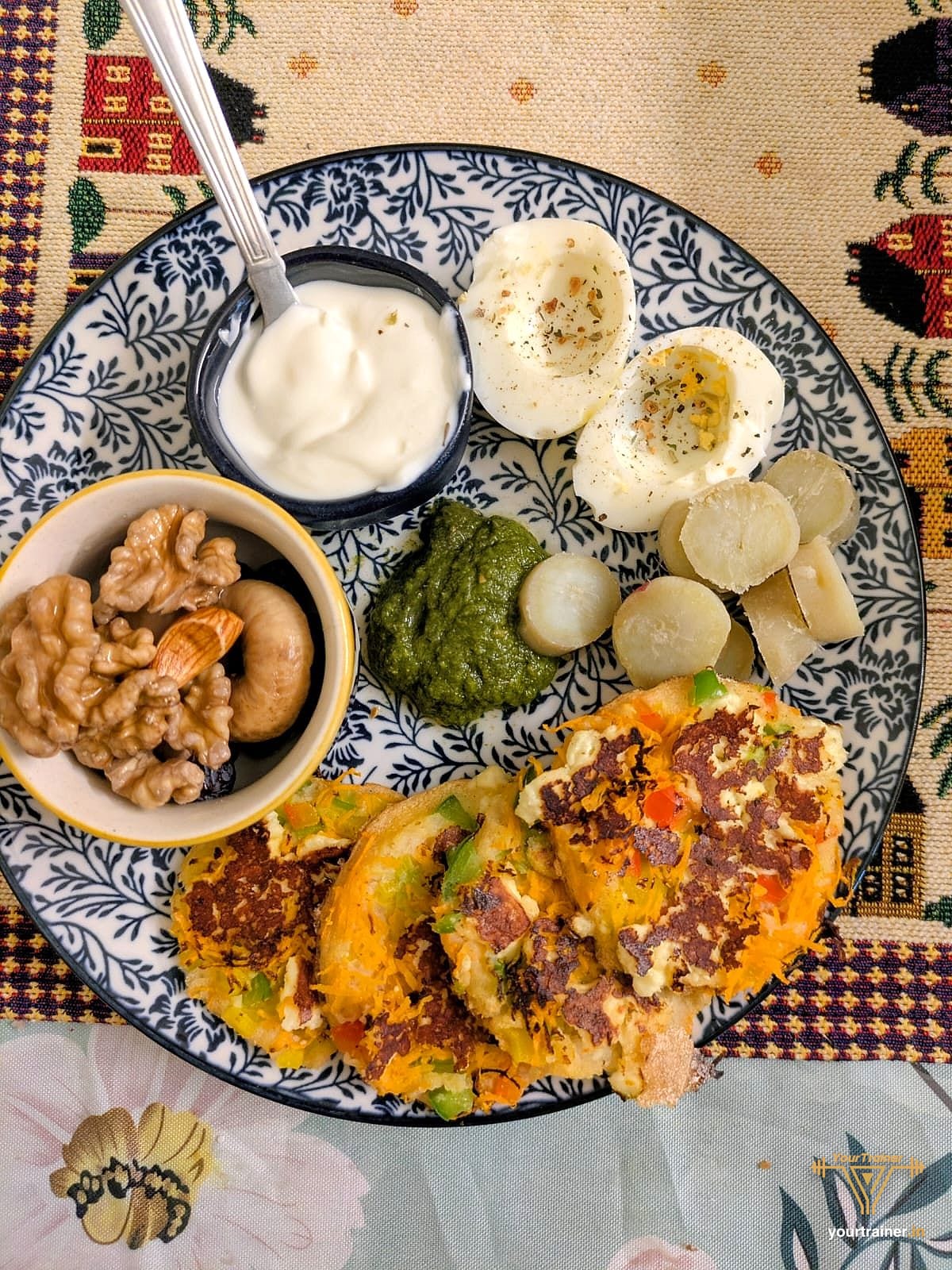
Because soya chunks lead this table so decisively, the safety question comes up constantly. The concern about soy and testosterone in men is not supported by the evidence at dietary intakes. Meta-analyses of controlled trials have found no meaningful effect on testosterone or estrogen levels at normal consumption.
The reasonable cautions are narrower: people with existing thyroid conditions should keep intake moderate and ensure adequate iodine, and as with any single food, variety beats relying on one source for everything.
Work out how many grams you actually need with the protein calculator, then check what your current day delivers in the Indian food calorie calculator.
Related reading: the 100 rupee vegetarian gym diet, Indian protein sources ranked, and whey versus plant protein.
Sources
- Indian Food Composition Tables (IFCT) 2017 · ICMR - National Institute of Nutrition
- Nutrient Requirements for Indians (RDA and EAR) · ICMR - National Institute of Nutrition
- Healthy diet · World Health Organization
- Dietary profiles and associated metabolic risk factors in India (ICMR-INDIAB survey) · Nature Medicine
Figures for Indian foods follow IFCT 2017 (ICMR-NIN). Coaching guidance on this site is educational and is not a substitute for medical advice. See how we use sources.
Did you find this helpful?

About Anish Agarwal
Founder & Head Coach, YourTrainer · NASM & K11 Certified Personal Trainer · 6+ years experience
Anish Agarwal is a NASM and K11 certified personal trainer with 6+ years of experience coaching fat loss, body transformation, strength, and nutrition for clients across India. He founded YourTrainer to make expert, science-based coaching accessible online and in Bengaluru. More about Anish.
Online 1-on-1 Coaching
Start Your Journey
Get a personalised training + Indian nutrition plan built around your goal, coached online, anywhere in India or abroad.
★★★★★ Trusted by 1,000+ transformations across India & abroad
Free 30-min discovery call · No obligation