Intermittent Fasting for Indians: 16:8 Schedule, Meals & Mistakes
16:8 intermittent fasting guide for Indians: 12 pm–8 pm eating window, what you can drink while fasting, protein requirements, common mistakes, and whether IF suits your goals.
⚠ Lifestyle coaching information only. Not medical advice. Intermittent fasting is a nutritional approach; if you are pregnant, have a history of disordered eating, are underweight, or take insulin or sulfonylureas for diabetes, consult your doctor before starting.
Quick answer: 16:8 intermittent fasting means fasting for 16 hours and eating within an 8-hour window - a popular rhythm for Indians is 12 pm to 8 pm, allowing you to eat lunch and family dinner then fast overnight. Water, black coffee, green tea, and plain (sugar-free, milk-free) tea are allowed while fasting. IF does not beat a calorie deficit; it's a tool to control your eating window and reduce late-night snacking. Pair it with adequate protein (1.6–2.2 g/kg body weight) and strength training 3–4 times weekly to preserve muscle and see lasting results. Common mistakes include bingeing during the eating window, skipping protein, and breaking fasts on fried or sugary foods.
16:8 Intermittent Fasting Essentials
What Intermittent Fasting Actually Is
Intermittent fasting (IF) is a pattern of eating and fasting - not a diet that restricts which foods you eat, but when you eat them. The 16:8 method is one of the most popular: you fast for 16 consecutive hours, then eat all your food within an 8-hour window.
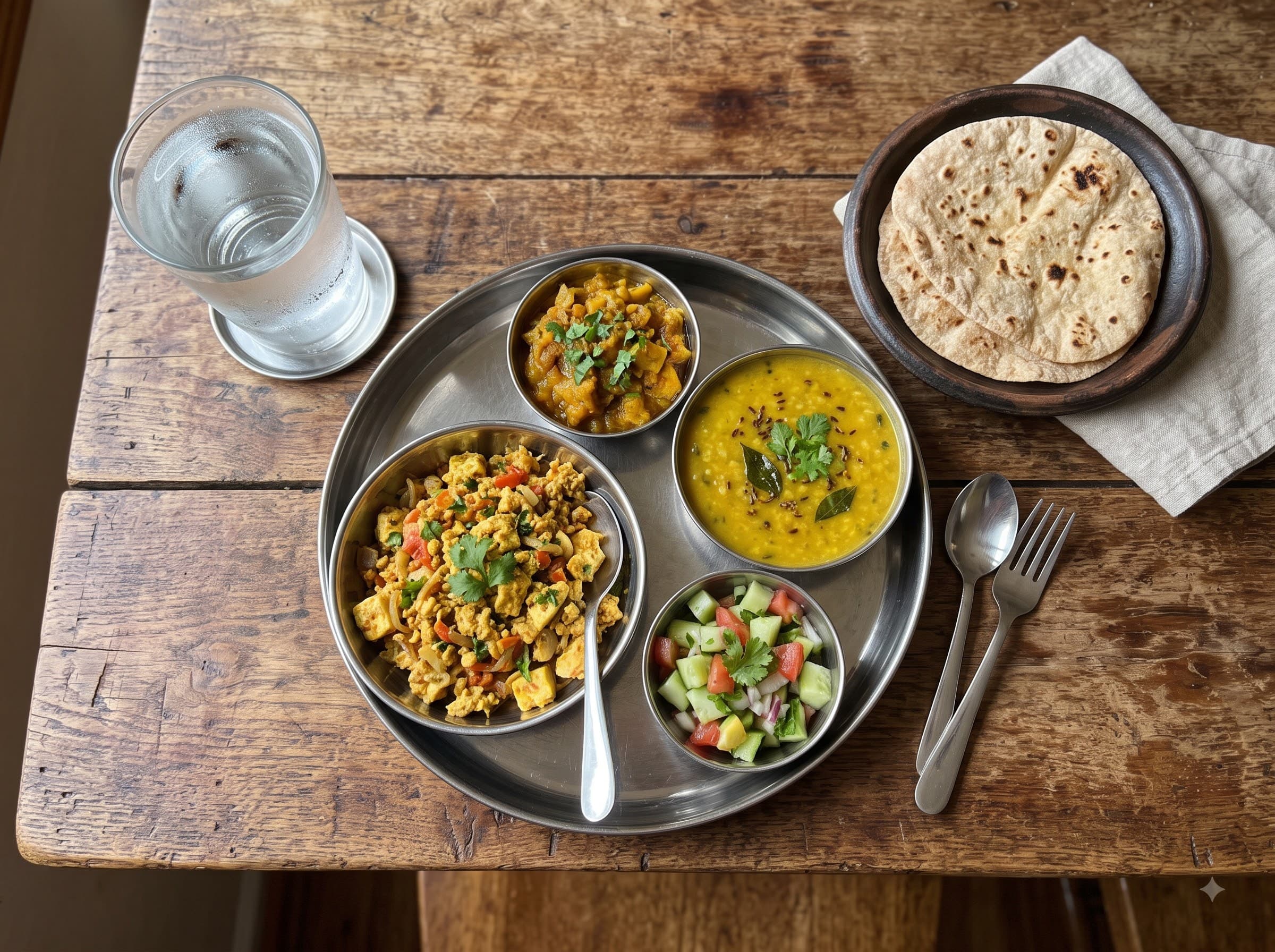
In India, this aligns naturally with many family routines. Skipping breakfast or having just tea, then eating lunch (12 pm) and dinner (7–8 pm), then fasting overnight until lunch the next day fits the culture and social rhythm. Research suggests this pattern may support metabolic flexibility, reduce late-night snacking, and control total calorie intake - but only if you don't overeat during your window.
For NRIs abroad managing different meal times, 16:8 can also work: shift your window to 11 am–7 pm or 1 pm–9 pm depending on your schedule. The key is consistency.
What You Can Drink While Fasting
The fasting window allows zero-calorie, non-stimulating beverages. Here's what India's favorite drinks look like on IF:
- Water: Unlimited. Room temperature or chilled - both are fine. Add lemon if you like; the small amount of citric acid won't break your fast.
- Black coffee (no milk, no sugar): Fine. Caffeine is allowed. Espresso, filter coffee, instant - any method works.
- Plain green tea: Allowed. Steep it yourself; avoid packed chai lattes or added honey.
- Plain black tea (no milk, no sugar): Fine in moderation. Avoid milk chai, which breaks the fast.
- Herbal tea: Chamomile, tulsi, ginger tea (unsweetened) - all allowed.
- Avoid: Sugary drinks, milk (including lactose-free), protein shakes, coffee with cream/butter (fat stimulates insulin), diet sodas (sweeteners debate, but best avoided).
Tea culture clarity: Indian "chai" - black tea with milk and sugar - breaks your fast. But black tea or green tea without milk or sugar is fine. If you love chai, drink it during your eating window, not fasted hours.
The 16:8 Schedule That Works for Indians
The most popular 16:8 window for Indians is 12 pm to 8 pm. Here's why it works:
| Time | Activity | Notes |
|---|---|---|
| 8 pm–12 pm (next day) | Fasting window | 16 hours. Water, black tea/coffee, green tea only. |
| 12–1:30 pm | First meal (lunch) | Roti + sabzi + dal + protein. Break fast with whole foods, not fried snacks. |
| 1:30–7 pm | Eating window (open) | Snacks, fruits, tea (with milk is OK now). Normal meals and calories. |
| 7–8 pm | Dinner + close window | Family dinner. Last meal before 8 pm. Then fast begins. |
This schedule avoids breakfast (saving time and calories), aligns with lunch and dinner when families eat together, and creates a natural overnight fast. Many Indians already skip breakfast due to early morning routines or habit, so 16:8 feels natural.
Why IF Works (and Why It Doesn't)
Intermittent fasting works because it:
- Reduces eating occasions: Fewer windows = fewer temptations and snacks. Late-night binge-eating (the real culprit in weight gain) stops naturally when you've committed to fasting.
- Simplifies calorie control: You don't have to count calories obsessively; you just eat normal meals in your window. Most people naturally eat less without tracking when their eating time is limited.
- May improve hunger hormones: Research suggests that fasting periods allow insulin to drop and ghrelin (hunger hormone) to stabilize, making you less ravenous during the eating window.
But here's the critical truth: IF does not beat a calorie deficit. If you eat 3,000 calories in 8 hours instead of spreading it across 16, you will not lose weight. IF is a tool for controlling when and how much you eat, not a metabolic hack. Some people naturally eat fewer calories on IF; others overeat massively during their window and gain weight despite the shortened eating time.
The real edge: IF works best for people who struggle with late-night snacking, have a history of grazing, or find portion control during multiple meals hard. If you're someone who can portion-control across breakfast, lunch, and dinner, a regular 3-meal diet may work just as well.
Common IF Mistakes (and How to Fix Them)
Most people fail at 16:8 not because the schedule is hard, but because they sabotage themselves during the eating window:
Mistake 1: Bingeing During the Window
Eating 4,000 calories of samosas, pakoras, and sweets between 12–8 pm defeats the purpose. Your body doesn't know it's fasted 16 hours; it knows calories exceeded output.
Fix: Eat whole foods first. Roti, dal, chicken, vegetables fill your stomach and signal satiety. Fried foods and sweets are easy to overeat; save them for a small portion at the end of your window.
Mistake 2: Too Little Protein
If you fast for 16 hours and then eat only rice and vegetables (no protein), your body will break down muscle for energy. Especially on 16:8, protein becomes critical because you're eating less frequently.
Fix: Aim for 1.8–2.2 g protein per kg of body weight daily. If you weigh 70 kg, that's 126–154 g protein. In India: dal (15 g per cooked cup), chicken (25 g per 100 g), paneer (25 g per 100 g), yogurt (10 g per cup), eggs (6 g per egg). Spread protein across both meals in your eating window.
Mistake 3: Breaking Your Fast on Junk
After 16 hours, your digestive system is quiet. Breaking fast on fried samosas or sugary chai can cause bloating, energy crashes, or glucose spikes that drive hunger back up immediately.
Fix: First meal should be balanced: roti + dal + sabzi + protein. Hydrate well. Avoid sugar, fried foods, and excessive caffeine immediately after fasting. Your stomach will thank you, and your blood sugar will stay stable.
Mistake 4: Skipping Strength Training
IF without resistance training often means muscle loss. Your body gets smaller, but not leaner. You lose strength and metabolic rate drops.
Fix: Do 3–4 strength-training sessions per week during IF. Push-ups, weights, or bodyweight circuits signal to your body: "keep the muscle." Combine with adequate protein intake (point 2 above).
Coaching that does this for you
Reading is step one. A coach turns it into a plan built around your body, food & schedule.
100% online · Indian meal plans · weekly progress reviews · daily WhatsApp support.
Start Your Journey →Is 16:8 Right for You?
Intermittent fasting works well for:
- People who snack late at night or have trouble resisting food temptations
- Those with busy mornings (no time for breakfast anyway)
- Anyone who prefers fewer, larger meals over frequent small ones
- People combining IF with strength training and adequate protein
Skip IF if you:
- Are pregnant, nursing, or planning pregnancy
- Are underweight or have a history of eating disorders
- Take insulin or sulfonylureas (diabetes meds that lower blood sugar; fasting can be dangerous)
- Have a history of disordered eating or restrictive patterns
- Are new to fitness and need frequent meals for energy and recovery
If any of these apply, check with your doctor before starting. For everyone else, IF is a tool worth trying for 4–6 weeks to see if it fits your lifestyle and supports your goals.
The 30-Day Transition Plan
If you're considering 16:8, start gradually instead of jumping in:
- Week 1–2: Skip breakfast, eat lunch at 12 pm, dinner by 8 pm. Drink only water/tea before lunch. This is a natural 13–14 hour fast.
- Week 3: Extend the fast window. Last meal at 7:30 pm, first meal at 11:30 am. This is 16 hours.
- Week 4+: Lock in your 16:8 window (12 pm–8 pm) and be consistent. Your body adapts; hunger during fasting hours will decrease by week 3–4.
If you feel dizzy, constantly hungry, or unable to focus during fasting, you may need a smaller fast window (14:10 or 15:9) or more calories during eating. Listen to your body; IF is a tool, not a punishment.
For NRIs: If you're managing a different time zone, adjust your window to fit your local schedule. A 10 am–6 pm or 1 pm–9 pm window works just as well as 12 pm–8 pm. The benefit comes from consistency, not the specific clock hours.
The 4 IF Protocols, Ranked for Indian Life
1. 14:10 - Recommended starting point
Eat between 8 AM and 6 PM. Skip nothing - you still get breakfast, lunch, an evening snack, and an early dinner. Best for: first-time fasters, women, anyone with PCOS or thyroid, families that eat dinner together at 6-7 PM.
Indian-life fit: 9/10. You can have your morning chai (with milk = breaks fast, plain or black does not), eat breakfast at 9 AM, lunch at 1 PM, snack at 4:30 PM, dinner at 6:30 PM. No social friction.
2. 16:8 - The popular one, but harder
Eat between 12 PM and 8 PM, OR 10 AM and 6 PM. Skip breakfast OR skip a late dinner.
Indian-life fit: 6/10. Skipping breakfast is fine if you live alone. In an Indian household, it's a daily negotiation with mom/spouse who worry about your health. Late-dinner skip (eating 8 AM-4 PM) clashes with family dinner culture even harder.
Best for: solo professionals, urban couples without strict family routines.
3. 18:6 - For experienced fasters only
6-hour eating window - usually 12 PM to 6 PM, or 2 PM to 8 PM. Two meals a day max.
Indian-life fit: 5/10. Too restrictive for most Indians long-term. Often causes binge-prone eating in the 6-hour window because hunger is genuinely high. Many women report cycle disruption at this intensity.
4. 5:2 - Two low-cal days/week
5 normal eating days, 2 days of ~500 kcal (typically Mon + Thu). Not technically time-restricted IF.
Indian-life fit: 7/10. Easier to plan around social events than daily fasting. The "low-cal day" Indian style: dal + sabzi + 1 katori rice + dahi = ~500 kcal and satisfying.
What Breaks the Fast (The Indian-Specific List)
Anything with calories breaks your fast. The question is what's "close enough to zero" to be acceptable:
Definitely breaks the fast
- Chai with milk (40-80 kcal depending on milk + sugar)
- Coffee with milk or sugar
- Any fruit, even small (apple = 50-80 kcal)
- Buttermilk, lassi, even unsweetened
- Coconut water (~45 kcal/glass)
- Lemon water with sugar/honey
Acceptable during fast
- Plain black coffee (~5 kcal)
- Plain black or green tea, no milk, no sugar (~2 kcal)
- Plain water, sparkling water
- Lemon water (no sweetener) - minimal calories
- Sodium-only electrolytes (salt + water)
Note: the "strict autophagy purist" view says even black coffee breaks the fast because it triggers some cellular signalling. For practical fat loss and insulin sensitivity, this distinction doesn't matter. Black coffee/tea is fine.
IF + Specific Indian Health Conditions
IF with diabetes
Generally safe for Type 2 not on insulin or sulfonylureas. The fasting window can dramatically improve insulin sensitivity - many of our diabetic clients see HbA1c drops of 0.5-1.5% in 3 months on 14:10. Always coordinate with your endocrinologist before starting, especially if you're on glucose-lowering medication. Read our complete diabetes reversal diet plan first.
IF with PCOS
Mixed evidence. Some women see real improvement in cycles + insulin markers. Others (especially lean PCOS or those under significant work/family stress) see worse outcomes - period disruption, hairfall, fatigue. Start with 14:10 and monitor for 8 weeks. If anything worsens, scrap it. See our PCOS workout plan for the full picture.
IF with hypothyroidism
Generally fine for managed hypothyroid. Just take levothyroxine first thing in fasted state with water - perfect IF compatibility. Don't combine IF with very low calories - T3 production drops further. See our thyroid diet plan.
IF for women under 30 / underweight / pregnant / breastfeeding
Generally not recommended. Hormonal sensitivity is high in these states, and the risks (cycle disruption, milk supply, growth) usually outweigh the benefits.
Your Next Step
Intermittent fasting is a sustainable tool when paired with whole foods, adequate protein, and strength training - not a crash diet. If you're ready to reduce snacking, control your eating window, and build lasting habits, 16:8 could be the framework you need.
Want a personalized nutrition and training plan tailored to your goals? Whether you're managing weight, building muscle on IF, or optimizing your eating window around your gym schedule, our online fat-loss coaching program will show you exactly how to structure your meals and workouts. Read our detailed fat-loss nutrition guide to learn more.
Ready to transform your body and build confidence in your health? Start your free discovery call with Coach Anish today - discuss your goals, get a clear plan, and take the first step toward lasting change.
Sources
- Indian Food Composition Tables (IFCT) 2017 · ICMR - National Institute of Nutrition
- Nutrient Requirements for Indians (RDA and EAR) · ICMR - National Institute of Nutrition
- Healthy diet · World Health Organization
- Dietary profiles and associated metabolic risk factors in India (ICMR-INDIAB survey) · Nature Medicine
Figures for Indian foods follow IFCT 2017 (ICMR-NIN). Coaching guidance on this site is educational and is not a substitute for medical advice. See how we use sources.
Did you find this helpful?

About Anish Agarwal
Founder & Head Coach, YourTrainer · NASM & K11 Certified Personal Trainer · 6+ years experience
Anish Agarwal is a NASM and K11 certified personal trainer with 6+ years of experience coaching fat loss, body transformation, strength, and nutrition for clients across India. He founded YourTrainer to make expert, science-based coaching accessible online and in Bengaluru. More about Anish.
Online 1-on-1 Coaching
Start Your Journey
Get a personalised training + Indian nutrition plan built around your goal, coached online, anywhere in India or abroad.
★★★★★ Trusted by 1,000+ transformations across India & abroad
Free 30-min discovery call · No obligation